
Selecting the right firmness for a single spring mattress requires balancing your body weight with your primary sleeping position. Because a single mattress has a compact footprint, the way your weight is distributed across its surface directly impacts how the spring coils compress and support your spine. Generally, side sleepers and lighter individuals benefit from softer to medium tension that cushions pressure points, while stomach sleepers and heavier individuals require medium-firm to firm support to prevent the midsection from sinking. Finding the correct balance ensures your spine remains neutrally aligned throughout the night, preventing chronic back pain and morning stiffness.
Understanding How Mattress Firmness Is Measured
The mattress industry typically rates firmness on a standardized scale from 1 to 10, where 1 represents an extremely soft surface and 10 represents an incredibly rigid, board-like feel. Most single spring mattresses on the market fall within the 3 to 8 range. A rating of 3 to 4 is generally classified as soft, 5 to 6 as medium, and 7 to 8 as medium-firm or firm. While this scale provides a helpful starting point, it is highly subjective and can vary significantly between different manufacturers.
To understand how a spring mattress actually feels, you must distinguish between the initial comfort layer and the underlying support core. The comfort layer, often made of foam, fiber, or latex, sits directly beneath the fabric cover and dictates the immediate cushioning you feel when you first lie down. Beneath this layer lies the spring core—typically consisting of pocket springs or open coils—which provides the deep upward resistance and structural support. A mattress can have a plush comfort layer but still offer robust support due to a stiff spring system underneath.
Products mentioned in this guide
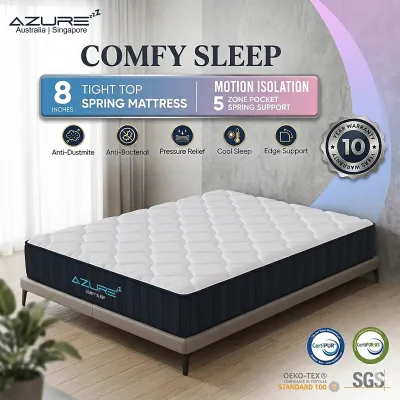
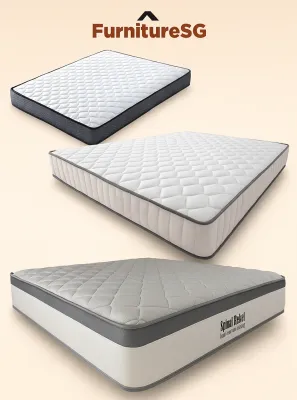
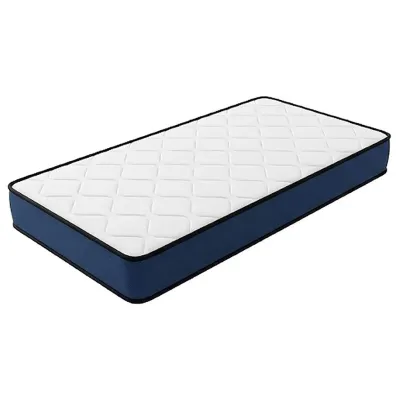
![[SG] [CLEARANCE] Pocketed Spring Spring Mattress from SLEEP TECH Cloud Mattress Single Super Single Queen and King Size](https://img.lazcdn.com/g/p/d9fd4bb40448ada26abd1a44619b237a.jpg_400x400q80.jpg_.webp)
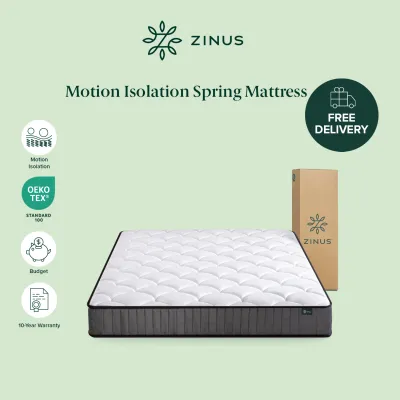
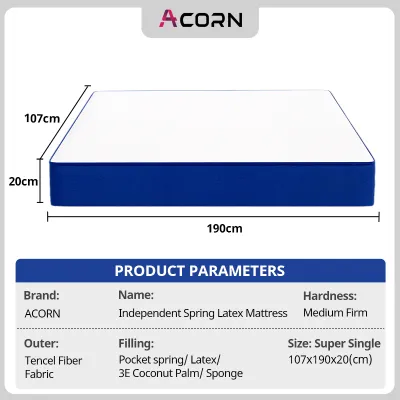
![[Bulky] DREAMAX Equinox Rest 8 Inch Comfort Pocket Spring Mattress / 20cm / Bed (SG) / sd](https://img.lazcdn.com/g/p/c25e074503162de8fade85f5c4b33c8d.jpg_400x400q80.jpg_.webp)
Prices are valid at publication and may change. Please refer to the product page for the latest price.
Because “medium” is not a universally standardized metric, a mattress labeled as medium by one brand might feel like a medium-firm to another. This variation makes physical testing or utilizing home trial periods essential. When shopping for a single spring mattress, relying solely on the numerical rating is rarely sufficient; you must verify how the specific combination of comfort materials and coil tension responds to your unique body shape.
Evaluating Your Body Weight for Proper Support
Your body weight is the primary force acting upon the mattress, directly determining how deep you sink into the comfort layers and how much the spring coils compress. Lighter individuals, typically defined as those weighing under 60 kilograms, exert less downward pressure on the bed. Consequently, they often perceive mattresses as being firmer than their official ratings suggest because they do not compress the comfort layers enough to reach the contouring zones. For these sleepers, a softer mattress is often necessary to experience adequate pressure relief.

Conversely, heavier individuals, particularly those weighing over 90 kilograms, exert substantial downward force. Without sufficient resistance from the spring core, heavier sleepers risk sinking too deeply into the mattress, a phenomenon known as “hammocking.” This excessive sinkage forces the spine out of its natural alignment, leading to muscle strain and joint discomfort. To prevent this, individuals in higher weight brackets require a stronger underlying spring system—often featuring thicker coil gauges—and firmer comfort layers to maintain a flat, supportive sleeping surface.
When selecting a single spring mattress, always check the manufacturer’s specifications for maximum weight capacities and recommended weight ranges. Because a single mattress has a smaller surface area than a queen or king, the weight is concentrated over a narrower zone, making structural integrity even more critical. Verifying these specifications ensures the mattress will support your weight over its intended lifespan without premature sagging or loss of tension.
Matching Firmness to Your Dominant Sleep Position
Your dominant sleeping posture dictates where your body requires cushioning and where it demands rigid support to keep your spine in a neutral position. Side sleepers require a mattress that contours to the wider parts of the body, specifically the shoulders and hips. If the mattress is too firm, these areas experience high pressure, leading to restricted blood circulation, tossing and turning, and hip or shoulder pain. A softer to medium spring mattress allows these protruding areas to sink just enough to keep the spine straight.
Back sleepers require a highly balanced surface that supports the natural “S” curve of the spine. If the mattress is too soft, the pelvis sinks too deep, flattening the lumbar curve; if it is too firm, the mattress fails to fill the gap in the lower back, leaving the lumbar muscles tense throughout the night. A medium to medium-firm single spring mattress typically provides the ideal combination of gentle contouring for the buttocks and firm upward support for the lower back.
Stomach sleepers face the greatest risk of spinal misalignment and lower back strain. Sleeping on the stomach naturally coaxes the lumbar spine into an exaggerated arch. If the mattress is soft, the heavy midsection sinks deep into the bed, worsening this arch and putting severe pressure on the lower back ligaments. To prevent this, stomach sleepers require a firm mattress that keeps the hips and shoulders on a relatively level plane.
Combination sleepers, who rotate through multiple positions during the night, need a highly responsive mattress that facilitates easy movement. A single spring mattress with pocket coils is excellent for this, as the springs quickly adapt to shifts in weight. For these sleepers, a true medium firmness is usually the safest choice, offering enough give for side sleeping while maintaining sufficient resistance for back and stomach intervals.
Cross-Referencing Weight and Sleep Position for Your Ideal Firmness
To find your starting point, you must cross-reference your weight category with your dominant sleeping position. For example, a lighter side sleeper should look toward the softer end of the spectrum (around a 3 to 5 rating) to ensure their shoulders and hips can sink sufficiently. A heavier side sleeper, however, will require a medium to medium-firm mattress (around a 6 to 7 rating) because their extra weight will naturally compress a medium mattress to the same depth that a lighter sleeper compresses a soft one.
For back sleepers, lighter individuals generally find comfort on a medium mattress (5 rating), while heavier back sleepers should opt for a medium-firm to firm model (7 to 8 rating) to prevent pelvic sinkage. Stomach sleepers must almost always skew firmer: a lighter stomach sleeper might manage on a medium-firm bed (6 rating), but a heavier stomach sleeper will almost certainly require a very firm mattress (8 rating) to keep their spine safe from hyperextension.
| Sleep Position | Lighter (<60 kg) | Average (60-90 kg) | Heavier (>90 kg) |
|---|---|---|---|
| Side Sleeping | Soft to Medium (3-5) | Medium (5-6) | Medium-Firm (6-7) |
| Back Sleeping | Medium (5) | Medium-Firm (6-7) | Firm (7-8) |
| Stomach Sleeping | Medium-Firm (6) | Firm (7-8) | Firm to Extra-Firm (8+) |
| Combination | Medium (5) | Medium (5-6) | Medium-Firm (6-7) |
Remember that this matrix serves as a baseline guide rather than an absolute rule. Individual comfort preferences, joint health, and personal habits play a significant role in what feels comfortable. Always prioritize objective spinal alignment—ensuring your ears, shoulders, hips, and knees are aligned—over subjective, temporary feelings of plushness when making your final decision.
Testing and Verifying Your Mattress Choice Before Purchase
When testing a single spring mattress in a showroom, avoid the common mistake of simply sitting on the edge or lying down for a mere ten seconds. To get an accurate assessment, spend at least fifteen to twenty minutes resting in your actual, dominant sleeping position. Wear loose, comfortable clothing and allow your body to fully settle into the comfort layers so you can observe whether your muscles relax or if you feel tension building in your lower back or shoulders.
If you are purchasing your single spring mattress from an online retailer or brand website, pay close attention to their sleep trial policies. A reliable sleep trial should last at least 30 nights, which is the typical time required for your body to adjust to a new support system. Carefully review the return conditions, checking if you are responsible for return shipping costs or restocking fees, which can sometimes range from S$50 to S$150 in the local market. Ensure you keep the mattress clean and use a protector during the trial to avoid voiding the return policy.
Additionally, pay close attention to edge support, which is exceptionally critical on a single mattress. Because a single mattress has a narrow width (typically around 91 cm in standard dimensions), you will naturally sleep closer to the edges than you would on a larger bed. Sit and lie near the perimeter to verify that the springs do not collapse outward, which can make you feel as though you are rolling off the bed. Strong edge reinforcement, often achieved through thicker perimeter coils or foam encasement, effectively maximizes the usable sleep surface of your single mattress.
Frequently Asked Questions (FAQ)
Can I Adjust the Firmness of My Spring Mattress After Purchase?
Yes, you can modify the feel of your mattress to some degree, though it is much easier to make a firm mattress softer than it is to make a soft mattress firmer. If your new single spring mattress feels too rigid, adding a plush mattress topper made of memory foam, latex, or down can provide the immediate pressure relief and contouring your comfort layer lacks.
Making a soft mattress firmer is significantly more challenging because you cannot easily alter the tension of the underlying spring core. Before attempting to add rigid support boards under the mattress or changing the bed base, check your manufacturer’s warranty. Using an unapproved foundation or placing boards directly under the mattress can void your warranty and restrict airflow, potentially leading to moisture buildup.
Does a Single Mattress Feel Different Than Larger Sizes of the Same Model?
The core materials, coil gauge, and overall firmness design remain identical across all sizes of the exact same mattress model. However, the perceived firmness can feel slightly different on a single mattress due to its compact dimensions.
Because a single mattress has a smaller surface area, you are always sleeping closer to the reinforced edges. This proximity to the perimeter can make the entire mattress feel slightly firmer and more rigid than a queen or king size of the same model, where you sleep further from the edges. Additionally, ensure that your single bed frame provides a flat, rigid foundation, as any sagging in the slats will directly compromise the support of the spring unit.

Community discussion
Share your experience or ask a question. Comments are reviewed before publication.