
To choose a reliable hanger rack stand that won’t tip over, you must look past surface aesthetics and evaluate the physical principles of stability: a low center of gravity, a wide base footprint, robust joint connections, and verified weight limits. In Singapore’s space-conscious residential landscape, where compact HDB flats and condominiums require highly efficient storage solutions, a flimsy entryway rack is more than an inconvenience. It represents a persistent safety hazard to household members and can easily damage delicate flooring when it collapses under the weight of bags, umbrellas, and outerwear.
Selecting a high-quality freestanding organizer requires an understanding of how furniture brands balance structural engineering with material selection. Many mass-market options prioritize low shipping weights and cheap manufacturing, resulting in top-heavy designs that fail under everyday loads. By focusing on verifiable structural specifications—such as base weight, tube thickness, and joint design—you can confidently select a brand that remains upright and secure, even when loaded to capacity.
Why Freestanding Coat Racks Tip Over
The primary reason freestanding hanger rack stands tip over is a fundamental imbalance in the distribution of weight, which shifts the unit’s center of gravity outside its supporting base. When a rack is empty, its center of gravity typically resides low and dead-center along the main vertical pole. However, as soon as you hang heavy items like winter coats, backpacks, or wet umbrellas near the top hooks, that center of gravity climbs upward. The higher the center of gravity, the less force is required to tilt the rack past its tipping point.
Products mentioned in this guide
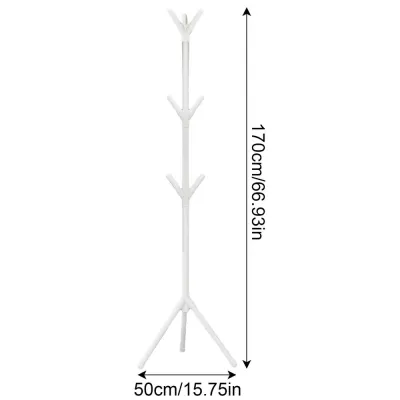


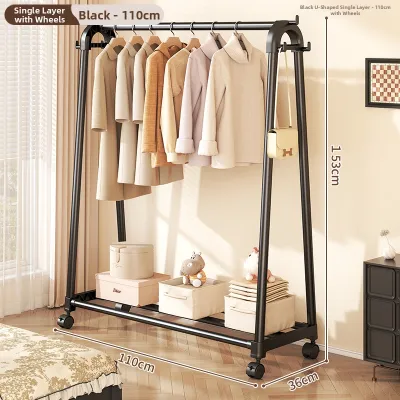
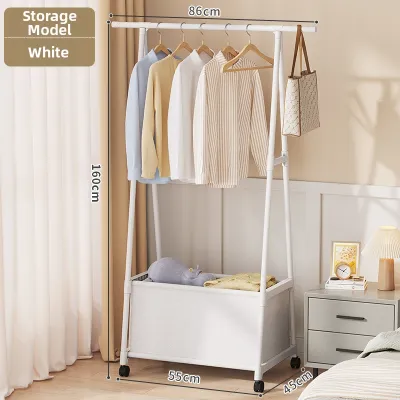
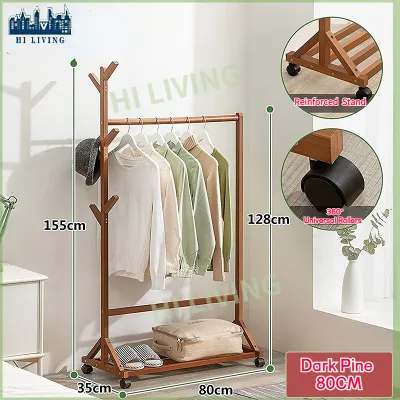
Prices are valid at publication and may change. Please refer to the product page for the latest price.
Single-pole structures with lightweight or narrow bases are particularly susceptible to this physical vulnerability. Many budget brands construct their vertical poles from hollow, thin-walled metal or lightweight softwood while utilizing a base of identical, low-density material. Because the base lacks the necessary mass to anchor the unit, any uneven distribution of weight at the top immediately pulls the entire structure sideways. If you place a heavy laptop bag on one side without an equivalent counterweight on the opposite side, gravity will inevitably pull the rack down.
Beyond static weight distribution, dynamic forces represent a frequent and sudden cause of structural collapse. The simple act of pulling a tightly hung jacket off a hook, or accidentally brushing against the rack while walking through a narrow hallway, introduces lateral kinetic energy. This movement acts as a lever, multiplying the force exerted on the base. If the base footprint is too narrow or the floor surface is exceptionally smooth, this leverage easily overcomes the static friction and stability of the stand, sending it crashing to the floor.
Core Stability Features to Evaluate in Any Brand
To identify a hanger rack stand brand that delivers genuine reliability, you must look beyond marketing terms like “heavy-duty” or “premium quality.” Instead, evaluate the physical specifications of the product, focusing on the engineering of the base, the density of the materials used, and the design of the structural connections. A reliable brand will openly provide these detailed measurements, allowing you to verify their stability claims before making a purchase.

Base Design and Footprint
The design of the base is the single most critical factor in determining whether a freestanding rack will remain upright. Tripod bases utilize three angled legs to distribute weight, creating a stable triangular support polygon, but they require sufficient leg splay to prevent tipping between the contact points. Four-legged bases offer a broader square support area, which naturally resists tilting in multiple directions, provided all four legs make uniform contact with the floor. Flat, weighted solid bases—often made of heavy cast iron, solid steel plate, or natural stone like marble—provide the lowest possible center of gravity, making them exceptionally stable despite having a more compact footprint.
When evaluating any base design, compare the width of the footprint directly to the overall height of the hanger rack stand. As a general rule of thumb, a stable freestanding rack should have a base diameter or width that is at least one-quarter to one-third of its total height. For a standard 180 cm rack, this translates to a minimum base footprint of 45 cm to 60 cm. Additionally, verify whether the brand includes high-quality anti-slip rubber pads or silicone floor protectors on the underside of the base. In Singaporean homes featuring smooth marble, polished vinyl, or varnished parquet flooring, these pads are essential to prevent the rack from sliding, sliding can cause sudden shifts in balance and subsequent tipping.
Material Weight and Joint Construction
The density of the materials used in the frame directly dictates the rack’s structural integrity and its resistance to bending under load. High-quality brands construct their stands from heavy-gauge steel tubing, solid wrought iron, or dense hardwoods such as oak, beech, or rubberwood. In contrast, low-cost alternatives often utilize thin-walled, hollow aluminum or cheap composite woods that easily flex, warp, or snap when subjected to uneven loads. When shopping online, look for brands that explicitly state the wall thickness of their metal tubes (ideally 1.0 mm or thicker) or the net weight of the entire product; a heavier overall product weight is a reliable indicator of denser, more stable materials.
Equally important is how the individual components of the rack are joined together. Welded joints, common in premium fully assembled or minimally assembled metal racks, offer maximum rigidity because they fuse the metal into a single, continuous structure. For flat-pack furniture that requires home assembly, evaluate the connection hardware. Brands that use threaded metal inserts, heavy-duty bolts, and locking washers provide a far more secure connection than those relying on simple wood screws driven directly into pre-drilled holes. Wood screws and cheap plastic connectors inevitably strip, loosen, and wobble over time as the rack is loaded and unloaded, compromising the entire unit’s stability.
Verifying Weight Capacity Claims
A common pitfall when evaluating hanger rack stands is misinterpreting the manufacturer’s stated weight capacity. Many brands advertise a high total weight limit, such as “holds up to 50 kg,” without clarifying how that weight must be distributed. In practical everyday use, a rack is rarely loaded perfectly evenly. If a brand claims a high capacity but does not specify a per-hook limit, the individual hooks or the upper pole joints may fail under a concentrated load, even if the total weight is well below the advertised maximum.
To protect your home and belongings, look for reputable brands that provide clear, granular weight specifications. A reliable specification sheet will detail both the maximum total distributed load and the maximum weight capacity for individual hooks or hanging rails (for example, “total capacity 40 kg, maximum 5 kg per hook”). Brands that invest in independent load testing and certification are always preferable to those that use vague, unverified marketing jargon. If a manufacturer cannot provide specific weight limits for individual components, it is highly likely that the product has not been engineered to withstand concentrated, real-world loads.
Recommended Hanger Rack Stand Structures by Use Case
Different household environments, spatial constraints, and storage habits require distinct structural designs to achieve optimal stability. By matching the physical profile of the hanger rack stand to your specific living situation and usage patterns, you can maximize safety and efficiency.
Heavy-Duty Flat Base Stands for Maximum Load
For busy households, high-traffic entryways, or users who need to store heavy items like winter coats, leather jackets, and loaded backpacks, a heavy-duty flat base stand is the ideal choice. These models feature a thick, solid metal or stone base plate that concentrates the bulk of the product’s weight at the very bottom, ensuring a remarkably low center of gravity. The flat design minimizes the vertical clearance needed at the floor level, allowing the base to sit flush against the ground.
- Best use case: Heavy outerwear, multiple bags, and high-traffic entryways.
- Stability advantage: Low center of gravity and wide, flat contact area.
- Limitation: Requires more floor space and can be a tripping hazard if the base extends too far into walkways.
While budget-friendly options under S$30 often compromise on base weight, premium models priced over S$100 typically feature heavy stone or cast-iron bases that resist tipping under severe loads.
Tripod or Splayed-Leg Stands for Compact Spaces
If you are furnishing a compact entryway, a narrow hallway, or a tight corner in a bedroom, a tripod or splayed-leg hanger rack stand offers an excellent balance of stability and spatial economy. The angled legs of a tripod design flare outward from the central pole, creating a wide, stable stance at the ground level while keeping the upper portion of the rack narrow and unobtrusive. This splayed configuration allows you to tuck the feet of the rack into corners or around other furniture pieces, maximizing your usable floor area.
- Best use case: Tight corners or narrow hallways where a wide flat base won't fit.
- Stability advantage: Splayed legs provide a wider support polygon than a single pole while keeping the upper footprint small.
- Limitation: Lower total weight capacity compared to flat bases; requires careful, even loading to prevent tipping.
Wall-Anchored or Leaning Racks for Maximum Safety
In households with active pets, toddlers, or elderly family members, minimizing the risk of tipping is a critical safety priority that freestanding units may not fully guarantee. For these environments, wall-anchored or leaning “ladder” style racks provide the ultimate stability solution. Leaning racks rest against the wall at an angle while their feet sit firmly on the floor, while wall-anchored models are physically secured to the wall studs or masonry using brackets and screws.
- Best use case: Families prioritizing child and pet safety over freestanding flexibility.
- Stability advantage: Eliminates the tipping risk entirely by transferring the load to the wall structure.
- Limitation: Requires drilling into suitable wall types; not ideal for renters who cannot modify walls or make permanent installations.
Before purchasing a wall-anchored model, always check the manufacturer instructions and the applied product’s label to ensure compatibility with your wall type (such as concrete, brick, or drywall). If instructions conflict or the wall material is unidentified, stop and consult a qualified professional.
How to Vet Brand Reliability When Shopping Online
With the abundance of furniture options available on online marketplaces and e-commerce platforms, distinguishing a structurally sound hanger rack stand from a flimsy imitation can be challenging. Because you cannot physically shake the rack or feel its weight before purchasing, you must rely on strategic research and critical analysis of the product listing and customer feedback to assess build quality.
Begin by thoroughly analyzing customer reviews, paying close attention to user-submitted photos and videos rather than relying solely on star ratings. Filter reviews to look for specific keywords such as “wobbly,” “swings,” “bent,” “stripped screws,” or “tipped over.” User photos are incredibly valuable because they reveal the product’s true proportions, material finishes, and how it behaves under a real load. If multiple photos show the vertical pole leaning slightly to one side or show joints that appear misaligned, it is a clear sign of poor quality control and weak structural integrity.
Next, evaluate the level of technical detail provided in the product description. Reputable furniture brands take pride in their engineering and will provide comprehensive dimensional diagrams, explicit material specifications (such as the exact type of wood or the gauge of the steel), and clear, step-by-step assembly instructions. If a listing only offers generic lifestyle images and lacks basic dimensions like base diameter, total height, or net product weight, the manufacturer may be hiding subpar materials or a dangerously narrow footprint.
Finally, assess the brand’s customer service reputation and the availability of replacement parts. Reliable brands typically offer clear warranty terms, accessible customer service channels, and support for assembly issues. Check if the seller offers replacement hardware, such as extra bolts or specialized tension keys, which are crucial if a screw becomes stripped over years of use. A brand that stands behind its product with responsive support and replaceable components is far more likely to have invested in durable, stable engineering in the first place.
Safe Loading and Maintenance Practices
Even the most robustly engineered hanger rack stand can tip over if it is subjected to improper loading or neglected over its lifespan. To ensure your rack remains perfectly stable and safe, you must establish smart daily habits and perform occasional structural maintenance.
The “heavy items at the bottom” rule: Always place heavy backpacks, wet umbrellas, and thick winter coats on the lowest hooks or shelves close to the base. This practice keeps the overall center of gravity as low as possible, significantly increasing the force required to tilt the unit. Reserve the upper hooks exclusively for lightweight items like hats, scarves, and light cardigans. Additionally, make a conscious effort to distribute items evenly around the entire circumference of the rack rather than clustering everything on a single side.
Regular joint maintenance: Over weeks and months of daily use, the repeated vibrations of hanging and removing items can cause screws, bolts, and joints to slowly back out and loosen. A slightly loose joint introduces play into the frame, allowing the vertical pole to wobble and dramatically increasing the risk of a sudden tip-over. Make it a habit to check the tightness of all connection points every few months—and immediately after moving the rack to a new location—using the appropriate hex key or screwdriver. If you notice a joint starting to wobble, tighten it immediately to restore structural rigidity.
Floor surface considerations: Avoid placing a freestanding hanger rack stand on thick, plush rugs or uneven carpet edges. High-pile carpets compress unevenly under weight, creating an unstable foundation and a natural pivot point that makes tipping much easier. For maximum stability, place the rack on a flat, hard, and level surface. If you must place it on a rug, ensure the rug is thin and flat, and verify that all contact feet of the rack sit fully and evenly on the same surface level.
Frequently Asked Questions (FAQ)
How much weight can a standard freestanding hanger rack hold?
The weight capacity of a freestanding hanger rack stand varies dramatically depending on its base design, material density, and overall height. A lightweight, budget-friendly rack may only safely support 10 to 15 kg of evenly distributed weight, whereas a heavy-duty model with a solid steel or cast-iron base can easily hold 30 to 50 kg or more. Rather than relying on generic estimates, always locate the manufacturer’s official specifications on the product packaging or instruction manual. Pay close attention to the distinction between total distributed weight capacity and individual hook weight limits, and never exceed the recommended maximums to avoid structural failure.
Are wooden hanger racks more stable than metal ones?
A hanger rack’s material name alone does not determine its stability; instead, stability depends on structural physics, base weight, and joint quality. A thick, heavy-gauge steel metal tube paired with a wide, weighted base will be significantly more stable and resistant to tipping than a lightweight, narrow wooden pole with short legs. However, a high-quality rack crafted from dense, solid hardwood with robust, bolted joints can offer exceptional stability and easily outperform cheap, thin-walled metal tube alternatives. When comparing wood and metal, focus on the overall weight of the unit, the width of its footprint, and the rigidity of its connection joints rather than the material type alone.

Community discussion
Share your experience or ask a question. Comments are reviewed before publication.