
Finding the ideal shoe rack with seat for a small Singapore entryway requires balancing a compact footprint with practical storage and seating comfort. In typical HDB flats and condominiums, the foyer must remain clear for daily transit and emergency access while serving as the primary transition zone. The ideal solution is a slim-profile unit with a depth of 30 centimeters or less, featuring either vertical open shelving or tilt-out drawers, paired with a sturdy integrated bench. By focusing on precise measurements, moisture-resistant materials, and high capacity-to-footprint ratios, you can select a furniture piece that keeps your entryway organized, safe, and welcoming.
Assessing Your Entryway Space and Clearance Constraints
Before browsing online marketplaces or visiting local furniture showrooms, you must establish the exact spatial boundaries of your entryway. In Singapore, HDB and condominium layouts often feature narrow corridors, recessed niches, or immediate transitions into the living area. Grab a measuring tape and record the maximum width, depth, and height of the designated area. Do not rely on visual estimation, as even a discrepancy of two centimeters can prevent your front door from opening fully.
When planning the layout, your primary consideration must be the trajectory of the main door. Most Singapore apartment doors swing inward, which means a shoe rack placed directly behind or adjacent to the door can severely limit its opening angle. Map out the full swing radius of your door and mark this arc on the floor using masking tape. Any furniture you introduce must sit entirely outside this zone, leaving a buffer of at least 10 to 15 centimeters to prevent accidental collisions when family members or guests enter the home.
Products mentioned in this guide
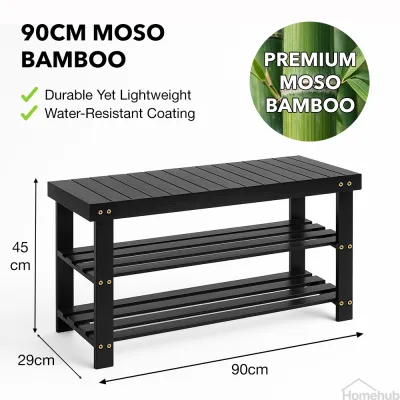
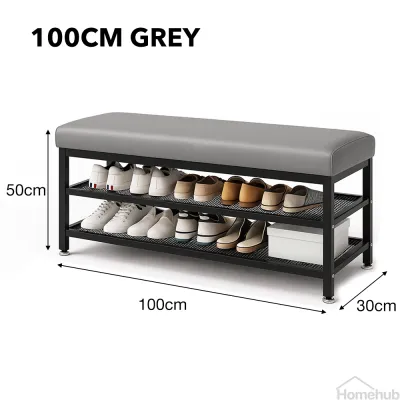
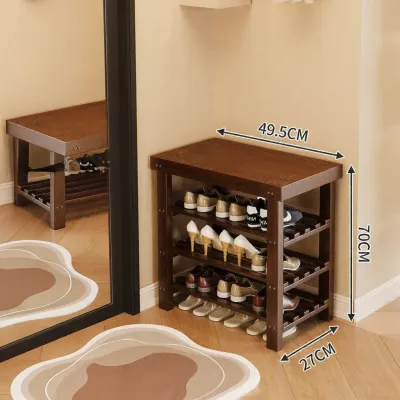
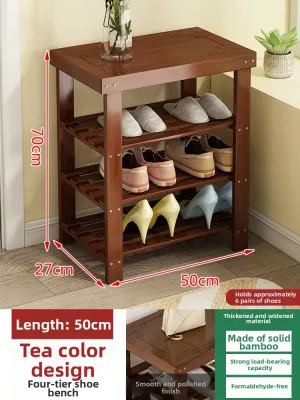
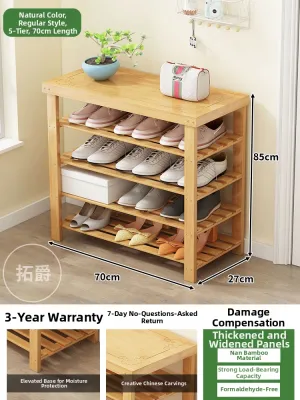
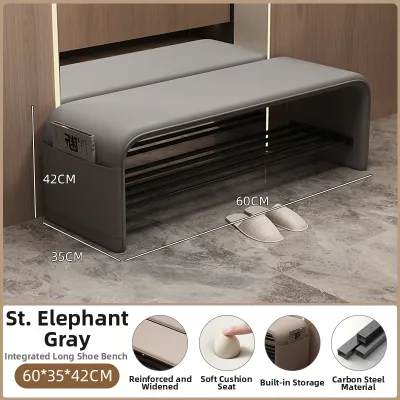
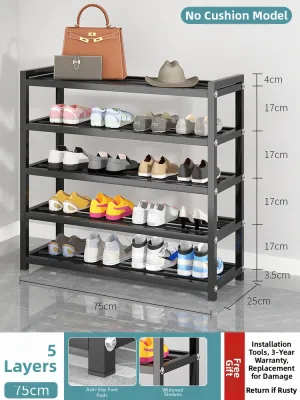
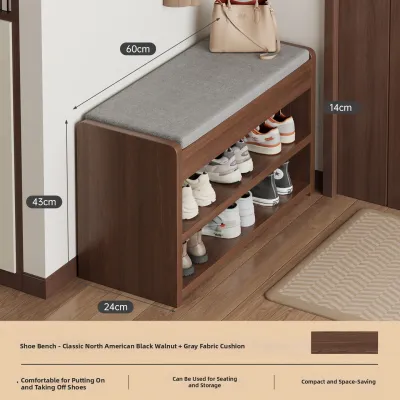
Prices are valid at publication and may change. Please refer to the product page for the latest price.
Additionally, you must account for communal safety regulations and general walking clearance. If you plan to place a small unit outside your flat in the common corridor, Singapore Civil Defence Force (SCDF) guidelines require you to maintain a minimum clear escape path of 1.2 meters. For indoor placement, which is highly recommended to protect your furniture from external elements, aim to preserve an indoor walkway width of at least 90 centimeters. This clearance ensures that two people can pass each other comfortably and allows you to carry groceries into the home without bumping into the furniture.
Evaluating Dimensions and Capacity-to-Footprint Ratios for a Shoe Rack with Seat
Managing Depth and Walkway Clearance
In a narrow foyer, depth is the most critical dimension of any shoe rack with seat. Standard shoe racks often feature a depth of 35 to 40 centimeters, which can easily choke a compact Singapore entryway. For tight spaces, look for slim-profile designs that compress the depth to 24 to 30 centimeters. These ultra-slim units often utilize angled shelves or vertical tilt-out compartments to store shoes vertically rather than flat, significantly reducing the outward projection of the cabinet.

When evaluating product specifications, look beyond the basic cabinet depth listed on the retailer’s website. You must check whether the stated measurements include protruding hardware such as cabinet handles, decorative knobs, or seat cushions that overhang the main frame. If you select a unit with tilt-out drawers, calculate the total depth when the drawers are fully opened. A drawer that extends too far can block the walkway entirely during use, creating a temporary hazard and making it difficult to access your footwear comfortably.
Balancing Vertical Storage and Seating Height
A successful entryway bench must balance the ergonomics of sitting with the practical need for vertical storage. A standard, comfortable seating height for adults ranges between 40 and 48 centimeters from the floor. This height allows you to sit with your feet flat on the ground, providing optimal stability while you bend over to tie laces or adjust straps. If the seat is too low, older family members may struggle to stand up; if it is too high, children and shorter adults will find it uncomfortable to use.
This ergonomic constraint directly impacts the number of horizontal shelves you can fit beneath the seat. A typical 45-centimeter-tall bench can comfortably accommodate two tiers of standard shelving, which is ideal for flat shoes, sandals, and sneakers. However, if your household frequently wears high heels or ankle boots, these taller items will require more vertical clearance. To accommodate them without raising the seat to an uncomfortable height, look for designs that offer a single tall compartment on one side of the bench, or opt for a slightly wider unit that redistributes the storage horizontally.
Maximizing the Capacity-to-Footprint Ratio
To get the most value out of your limited floor space, you must evaluate the capacity-to-footprint ratio of each design. This ratio compares the number of shoe pairs a unit can store against the actual square meterage of floor space it occupies. For example, a simple open-slat bench might occupy 0.3 square meters of floor space but only hold six pairs of shoes. In contrast, a tilt-out cabinet with a top seat might occupy the exact same footprint but hold up to 12 or 15 pairs by utilizing multi-layered internal compartments.
Look for space-maximizing interior features such as adjustable or removable shelves. These allow you to customize the shelf heights to match your current footwear collection, eliminating wasted vertical space above flat shoes. Double-layered racks inside tilt-out drawers are another highly efficient option, as they use staggered dividers to nestle shoes together closely, effectively doubling the storage capacity of a single compartment without increasing the external depth of the cabinet.
Structural Stability and Material Checks for Humid Climates
Because a shoe rack with seat serves a dual purpose, it must meet strict structural standards to ensure user safety. Before purchasing, verify the manufacturer’s stated weight capacity for the seating surface. A reliable entryway bench should safely support a dynamic load of at least 100 to 120 kilograms to accommodate an adult sitting down. Avoid units that do not explicitly state a weight limit, as weak joints or thin top panels can buckle over time, leading to structural failure and potential injury.
Singapore’s tropical, highly humid climate poses unique challenges for wooden and metal furniture. High humidity levels can cause untreated solid wood to warp, cheap particle board to swell and crumble, and low-grade metals to rust. When reviewing product specifications, do not rely solely on generic material names like “wood” or “metal” as a guarantee of durability. Instead, look for explicit quality indicators such as water-resistant melamine coatings, moisture-cured polyurethane finishes, or rust-resistant powder-coated steel frames.
Ventilation is equally critical for preventing mold growth and unpleasant odors in damp footwear. Closed cabinets without airflow will trap moisture from rain-soaked shoes or humid air, creating an ideal environment for mildew. To prevent this, prioritize designs with slatted shelves, open-backed frames, or cabinet doors featuring woven rattan panels or ventilation grilles. These features promote continuous air circulation, allowing your shoes to dry naturally and keeping the interior of the cabinet fresh.
Finally, check the base of the unit for stability and floor protection. Look for models equipped with adjustable leveling feet, which allow you to compensate for uneven tile or vinyl flooring common in older HDB flats. Non-slip rubber pads on the bottom of the legs are also essential; they prevent the bench from sliding when you sit down and protect your entryway flooring from scratches. If you select a taller, narrower cabinet with an integrated seat, ensure it comes with an anti-tip wall anchoring kit, and follow the manufacturer’s installation instructions precisely to secure the unit to your concrete or drywall.
Smart Placement and Multi-Functional Configurations
Utilizing Recessed Areas and Awkward Corners
Many HDB and condo entryways feature structural pillars, recessed wall niches, or awkward corners that are easily dismissed as dead space. With careful planning, you can turn these architectural quirks into highly functional storage zones. Measure the depth and width of any recessed alcoves near your front door. A custom-fit or carefully selected slim shoe bench can slide directly into these niches, creating a streamlined, built-in look that leaves the main corridor completely unobstructed.
If your entryway transitions immediately into a sharp corner, consider utilizing an L-shaped shoe bench or a corner-specific unit. These designs are engineered to wrap around or sit flush against perpendicular walls, maximizing seating and storage space without protruding into the direct line of foot traffic. By utilizing these often-overlooked areas, you can keep your primary walking paths clear while still enjoying the convenience of a dedicated place to sit and store your footwear.
Integrating Everyday Carry and Organization
In a compact home, every piece of furniture must work twice as hard. To reduce visual clutter and eliminate the need for multiple small organizers, look for a shoe rack with seat that integrates storage for your everyday carry items. Some models feature a small pull-out drawer directly beneath the seat cushion, which is perfect for storing house keys, access cards, sunglasses, and shoe horns. Others include a small top tray or a raised side shelf that serves as a dedicated drop zone when you walk through the door.
For even greater utility, seek out units that feature integrated side hooks or a tall, attached coat rack frame. These hooks provide a convenient spot to hang wet umbrellas, reusable shopping bags, or lightweight jackets, keeping them off the floor and organized in one central location. By consolidating your seating, shoe storage, and daily organization into a single compact footprint, you can maintain a clean, minimalist aesthetic in your foyer without sacrificing functionality.
Modular and Expandable Options
Your storage needs are rarely static; a growing family or an expanding shoe collection can quickly overwhelm a small entryway bench. To future-proof your purchase, consider modular or expandable shoe rack systems. These designs typically consist of a sturdy base bench that can be paired with matching stackable shelves or side cabinets. This allows you to start with a minimal, low-profile setup and gradually add vertical storage tiers as your collection grows.
When expanding your setup vertically, always prioritize safety and structural integrity. Ensure that any stackable components are designed to lock securely into the base unit using the manufacturer’s supplied brackets or dowels. Never stack incompatible units or exceed the maximum recommended height, as this can compromise the center of gravity and make the furniture unstable when you sit down. Additionally, verify that the increased height does not block light switches, intercom systems, or entryway lighting fixtures.
Pre-Purchase Verification and Delivery Logistics
Once you have identified the perfect shoe rack with seat, you must plan the logistics of getting it into your home. This is particularly crucial for residents of high-rise HDB flats and condominiums in Singapore, where narrow lift doors, tight stairwells, and long common corridors can present significant obstacles. Check the packaged dimensions of the product on the retailer’s website and compare them against the height, width, and diagonal clearance of your building’s passenger lift. If the item is delivered fully assembled and cannot fit into the elevator, you may face additional delivery surcharges or be forced to return the item.
Furthermore, verify whether the shoe rack requires on-site assembly. Flat-packed furniture is easier to transport through tight spaces, but it requires a clear, flat floor area inside your home to assemble safely. Ensure you have enough room in your living room or hallway to lay out the parts and follow the instruction manual before moving the completed unit into its final position in the entryway.
Finally, always verify the retailer’s return policy and warranty terms before finalizing your purchase. Double-check your hand-measured entryway clearances one last time against the exact product specifications listed online. If you are purchasing from an online marketplace, read through customer reviews specifically to check for reports of minor dimensional discrepancies, missing assembly hardware, or shipping damage. Taking these precautionary steps will save you the hassle of dealing with complicated return shipments and ensure a smooth, successful installation.
Frequently Asked Questions (FAQ)
How do I prevent a slim shoe rack from tipping over when sitting on it?
To prevent a slim shoe rack from tipping, you must manage its center of gravity and secure it properly. Always place heavier shoes, such as boots or heavy sneakers, on the bottom shelves to weight the base. When sitting down, sit fully on the center of the designated seat rather than leaning heavily on the front edge or outer corners. If the unit is exceptionally narrow (under 28 centimeters) or tall, it is highly recommended to use the manufacturer’s supplied anti-tip wall anchors to secure the frame directly to your entryway wall, preventing any dynamic movement from destabilizing the unit.
Can a shoe rack with a seat block the main door from opening fully?
Yes, if placed incorrectly, a shoe rack can easily obstruct your main door’s swing path. To prevent this, map the exact arc of your inward-opening door and maintain a clear buffer zone of at least 15 centimeters beyond the fully opened door edge. If your entryway is exceptionally tight, choose an ultra-slim unit with a depth of 24 centimeters or less, and position it on the wall opposite the door hinges. This placement ensures the door can swing open completely against the adjacent wall without colliding with the furniture, keeping your entry path safe and unobstructed.

Community discussion
Share your experience or ask a question. Comments are reviewed before publication.