
Maximising living space in Singapore’s high-density housing, such as HDB flats and condominiums, requires furniture that works twice as hard without compromising on comfort or convenience. Motorised or electric sofa beds have emerged as a premium solution for multi-functional living, offering seamless transitions from a stylish lounge to a supportive bed at the touch of a button. However, because these units combine heavy mechanical frames, electrical components, and upholstery, choosing a reliable model requires looking far beyond aesthetics. To find a unit that offers long-term value, you must evaluate the motor mechanism, spatial requirements, material durability under local climate conditions, and the strength of local after-sales support.
Understanding Motor Mechanisms and Space Requirements
The heart of any electric sofa bed is its motorised drive system, which dictates how smoothly, quickly, and safely the unit transitions between configurations. Most models in the market fall into two categories: fully electric systems and semi-electric systems with manual assists. Fully electric models handle the entire transition automatically via a remote control or integrated buttons, requiring virtually no physical effort from the user. Semi-electric models, on the other hand, use a motor to unlock or partially deploy the frame, requiring you to manually guide or click the remaining sections into place. When evaluating these systems, pay close attention to the operational noise and deployment speed; a high-quality motor should operate with a low, consistent hum rather than a strained, high-pitched whine, and the transition should take no more than thirty to forty-five seconds.
Spatial planning is critical when integrating a motorised sofa bed into a compact Singaporean living room or study. Unlike traditional manual sofa beds, electric models require a dedicated clearance zone that accounts for both the mechanical swing radius and the electrical cabling. Many standard models require a “wall gap” or rear clearance of ten to twenty centimetres to allow the backrest to tilt backward during deployment. If you are tight on space, look specifically for “zero-wall” or “wall-hugger” mechanisms that slide forward on a track as they open, allowing the sofa to sit flush against your wall. Additionally, map out the path of the power cord; it must reach a wall outlet easily without being stretched tight, pinched under the heavy metal frame, or positioned where it creates a tripping hazard.
Products mentioned in this guide
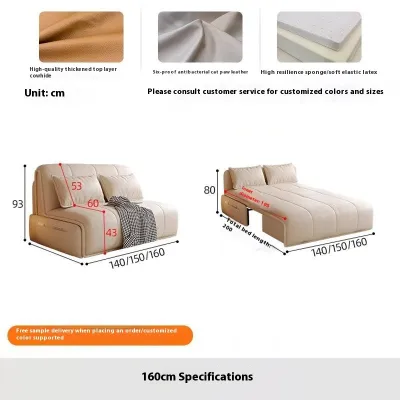
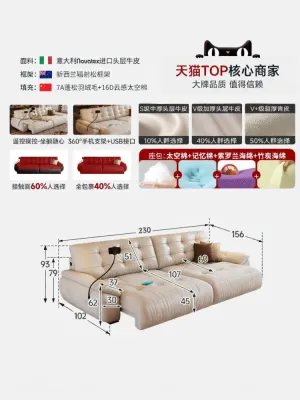
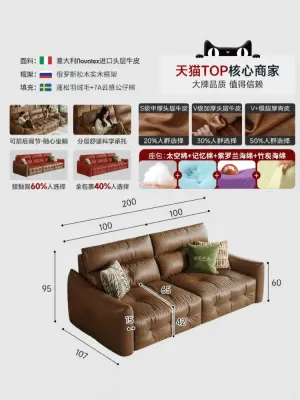
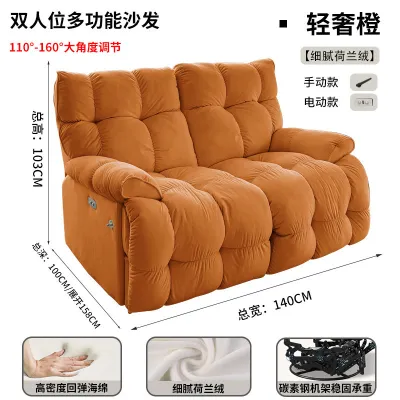

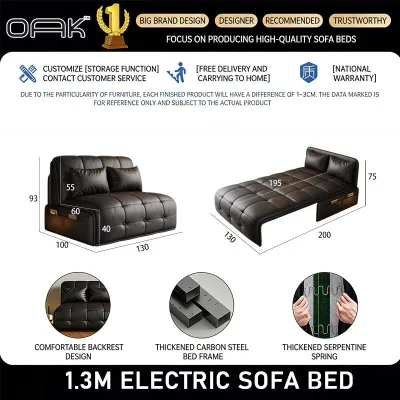
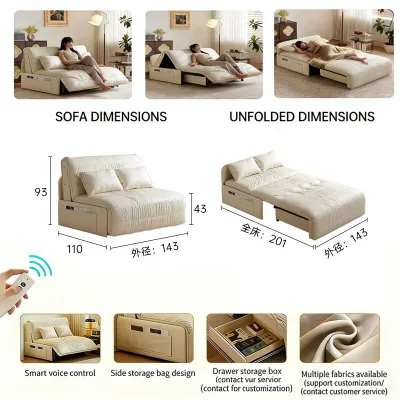
![[Free installation] Electric Recliner Sofa Chair | Single Zero Gravity Motorized Lounge Chair | Rotating Lazy Sofa Bed with Warranty](https://img.lazcdn.com/g/p/76a9b5a7220bfea1b826a65095b7fbbc.jpg_400x400q80.jpg_.webp)
Prices are valid at publication and may change. Please refer to the product page for the latest price.
The structural weight of an electric sofa bed is significantly higher than that of a standard sofa due to the steel folding frame, motor, and transformer. This concentrated weight makes structural stability and flooring compatibility major considerations for Singapore homeowners. On softer flooring materials like natural parquet or luxury vinyl tiles (LVT), the heavy metal feet of a motorised sofa bed can leave permanent indentations or scratches during transition vibrations. To protect your floors, verify that the unit uses wide, non-marking rubberised feet or nylon glides, and consider placing a low-pile, high-density rug underneath to distribute the weight. Furthermore, check the manufacturer’s specified weight capacity for both the seating and sleeping configurations to ensure the frame can safely support multiple occupants without warping the metal tracks.
Evaluating Multi-Functional Features for Daily Use
Modern electric sofa beds often come packed with integrated features designed to enhance daily convenience, but it is essential to distinguish between genuine utility and unnecessary mechanical complexity. Built-in storage compartments, such as under-chaise drawers or hollow armrests, are highly practical in space-constrained homes for storing bedding, pillows, and bolsters. Integrated USB charging ports and power outlets built into the armrests offer modern convenience, but they also introduce additional wiring inside the sofa frame. Adjustable headrests and lumbar supports can significantly improve ergonomic comfort during long movie nights, provided their adjustment hinges are robust and do not interfere with the bed’s fully flat sleeping profile.

The choice of upholstery material is a make-or-break decision for any furniture piece in Singapore’s hot and highly humid climate. While genuine leather offers classic luxury and easy cleaning, it can feel sticky and warm without continuous air conditioning. Synthetic polyurethane (PU) leathers are common budget-friendly alternatives, but lower-grade PU is prone to peeling and cracking when exposed to humidity and body oils over time. For a tropical climate, high-performance fabrics treated with moisture-resistant and stain-resistant coatings are often the most practical choice. These fabrics offer excellent breathability, prevent moisture buildup that leads to musty odours, and allow you to easily wipe away accidental spills before they penetrate the underlying foam.
Every added feature introduces a trade-off in terms of weight, bulkiness, and long-term maintenance. A sofa bed loaded with dual motors, storage compartments, adjustable headrests, and built-in electronics will be exceptionally heavy, making it difficult to move for cleaning or room rearrangement. Furthermore, complex electrical configurations mean more potential points of failure over years of daily use. When choosing a model, prioritize structural integrity and mattress comfort over electronic novelties. A simple, robust electric mechanism paired with high-quality, breathable upholstery will almost always outlast a feature-heavy unit built on a flimsy frame.
Assessing Brand Reliability and After-Sales Support
Purchasing an electric sofa bed is a significant financial investment, making the reliability of the brand and the accessibility of their after-sales support a primary decision factor. Because motorised furniture contains moving parts subject to wear and tear, a comprehensive warranty is your main safeguard against premature failure. When reviewing warranty terms, look for a clear breakdown of coverage rather than a generic “five-year warranty” label. A reliable brand will typically offer separate warranty periods: a long-term warranty (often five to ten years) for the structural metal frame, a mid-term warranty (two to five years) for the electric motor and control systems, and a shorter warranty (one to two years) for the fabric upholstery and foam cushioning.
Before finalizing your purchase, verify the local availability of replacement parts and authorized repair technicians in Singapore. Motorised components, transformers, and remote controls are proprietary; if a minor electrical component fails three years down the road, you will need a direct replacement from the manufacturer. Ask the retailer directly whether they maintain a local inventory of spare parts or if components must be shipped from overseas, which can leave your sofa bed stuck in an unusable position for weeks. Additionally, confirm whether the brand employs their own in-house technicians or contracts out to third-party repair services, as dedicated brand technicians generally possess deeper expertise in troubleshooting their specific motorized mechanisms.
While online shopping offers unparalleled convenience, you should never purchase an electric sofa bed without testing it in a physical showroom first. Online product descriptions and videos can easily mask operational flaws, such as jerky movements, loud motor grinding, or unstable frame wobbling. Visiting a showroom allows you to physically sit and lie on the unit to evaluate the density of the foam and the supportiveness of the mattress. It also gives you the opportunity to operate the motor mechanism multiple times, observing whether the transition is smooth, quiet, and consistent, and to inspect the quality of the welds and joints on the underside of the frame.
Pre-Purchase Checklist: Measuring and Testing In-Store
To avoid the frustration of a delivery day disaster, you must approach the purchase with a precise measurement and testing strategy. Start by measuring your designated living space and creating a detailed floor plan. You will need three critical sets of dimensions: the folded sofa dimensions (width, depth, and height), the fully extended bed length, and the remaining walking clearance around the perimeter when the bed is deployed. Ensure there is at least sixty centimetres of clear walking space around the foot and sides of the extended bed so you do not have to climb over other furniture to move around the room.
When you visit the showroom, bring a tape measure and follow a systematic testing checklist to evaluate the floor model. First, operate the electric mechanism through three complete open-and-close cycles to check for consistent speed and smooth transitions. Listen closely for any clicking, scraping, or straining noises that indicate poor alignment or an underpowered motor. Next, lie down on the fully extended bed in your typical sleeping positions; check if you can feel the hard metal support bars beneath the mattress, and inspect the transition zones between the sofa cushions to ensure there are no uncomfortable gaps or uneven ridges. Finally, apply firm downward pressure to the outer edges of the extended bed to verify that the frame remains stable and does not tip or flex excessively.
The final step in your pre-purchase checklist is verifying the delivery logistics with the retailer. Because electric sofa beds are incredibly heavy and often ship as single, fully assembled chassis to protect the internal wiring, they can be exceptionally difficult to maneuver through tight spaces. Measure your home’s entry points, including the width and height of your front door frame, any narrow hallway turns, and the interior dimensions of your condominium or HDB lift. Share these exact measurements with the retailer before purchasing to confirm that the delivery team can safely transport the unit to your living room without damaging your walls or the sofa itself.
Maintenance and Safety Guidelines for Motorized Units
Maintaining a safe operating environment is paramount when using motorised furniture, particularly in households with young children or pets. The powerful scissor-like metal hinges and tracks underneath an electric sofa bed generate significant pinch points during deployment and retraction. Always ensure that the immediate floor area is completely clear of toys, loose cables, pets, and small children before pressing the button to operate the motor. Never allow children to play on the sofa while it is transitioning, and keep the remote control or power switch out of reach of unsupervised children to prevent accidental activation.
Routine maintenance of the electrical and mechanical components will significantly extend the operational lifespan of your sofa bed. Dust and pet hair are major enemies of electric motors and moving tracks, as they can clog the gears and cause the motor to overheat. Vacuum underneath the sofa regularly using a brush attachment to keep the motor housing and tracks clean, and periodically check the power cable for any signs of wear, fraying, or pinching. To protect the sensitive electronic control board and transformer, keep drinks and liquid cleaning agents far away from the electrical housing, and always plug the unit into a high-quality surge protector to guard against voltage spikes.
Recognising the early warning signs of mechanical or electrical distress can prevent minor issues from turning into costly, irreparable damage. Stop using the motorised mechanism immediately and disconnect the power supply if you notice any unusual grinding or squeaking noises, if the frame extends unevenly or binds on one side, or if the motor stalls midway through a transition. Attempting to force a jammed frame or continuing to run a straining motor can burn out the electrical coils or permanently warp the steel tracks. In these scenarios, always contact an authorized local technician to inspect and service the unit rather than attempting a DIY mechanical repair.
Frequently Asked Questions (FAQ)
Can I use an extension cord for an electric sofa bed?
It is highly recommended to plug your electric sofa bed directly into a dedicated wall outlet rather than using an extension cord or multi-plug adapter. Motorised furniture relies on consistent electrical current to operate safely; low-quality or overloaded extension cords can cause voltage drops, which strain the motor and can lead to overheating or premature electrical failure. If your room layout absolutely requires an extension cord, ensure you use a heavy-duty, surge-protected power strip rated for the specific wattage and amperage requirements detailed in your sofa bed’s user manual. Never run the power cord under rugs or heavy furniture where heat can build up or where the cable can be pinched and damaged.
How long do the motors in electric sofa beds typically last?
The lifespan of an electric sofa bed motor depends heavily on the build quality of the components, the frequency of daily transitions, and how strictly you adhere to the manufacturer’s weight limits. Under normal residential use—such as deploying the bed once or twice a week—a high-quality, well-maintained motor can easily perform reliably for five to ten years. To maximize this lifespan, avoid overloading the bed beyond its rated capacity, keep the mechanical tracks clean and free of debris, and never force the mechanism if it encounters resistance. Refer to the manufacturer’s warranty period as a primary indicator of the motor’s expected durability, as brands that offer longer coverage typically use higher-grade, industrial-tested motors.

Community discussion
Share your experience or ask a question. Comments are reviewed before publication.