
Choosing a fabric wardrobe for a small HDB bedroom requires looking beyond aesthetic appeal and low price tags. In Singapore’s humid climate and compact living spaces, a poorly constructed wardrobe can quickly sag, mold, or collapse under the weight of your clothing. To find a high-quality option, you must evaluate structural specifications, joint materials, fabric density, and spatial clearances. This guide provides a practical framework to help you select a reliable, durable fabric wardrobe that fits seamlessly into your HDB layout.
Space Planning and Clearance Checks for HDB Bedrooms
HDB bedrooms, particularly in newer Build-To-Order (BTO) flats, often present tight spatial constraints. Before purchasing any portable wardrobe, you must measure your available floor space and compare it against the finished dimensions of the unit. A standard HDB common bedroom is approximately 9 to 10 square meters, meaning every centimeter counts. When planning the layout, ensure there is a clear walking path of at least 60cm between the wardrobe and other furniture, such as the bed frame or study desk.
Vertical space is another critical factor. Many fabric wardrobes range from 150cm to over 180cm in height. Utilizing vertical space is an excellent way to maximize storage in a small room, but you must check for overhead obstructions. Ensure the top of the wardrobe will not block air conditioning units, wall-mounted fans, light fixtures, or electrical switches. Additionally, leave at least 10cm of clearance between the top of the wardrobe and the ceiling to allow for air circulation and to make assembly easier.
Products mentioned in this guide
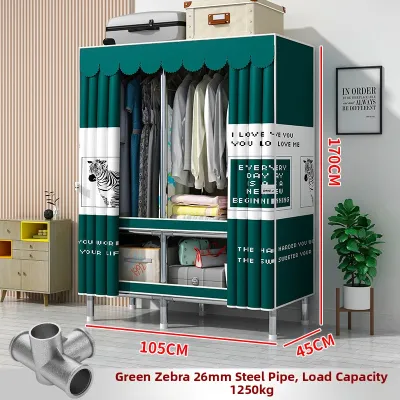
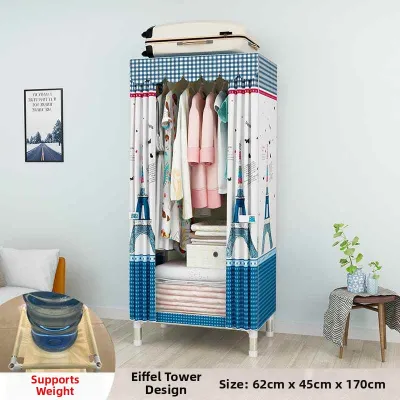
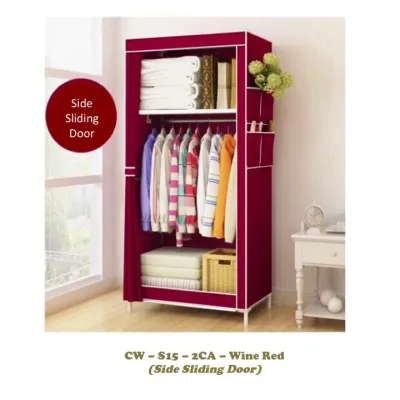
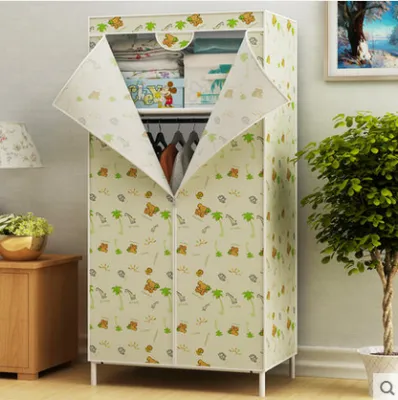
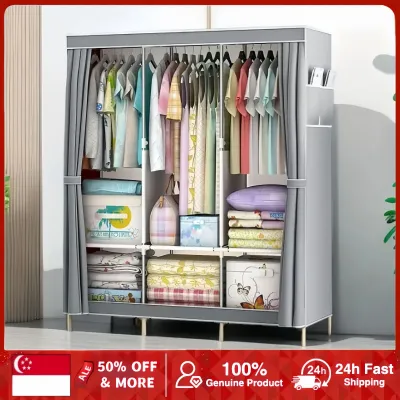
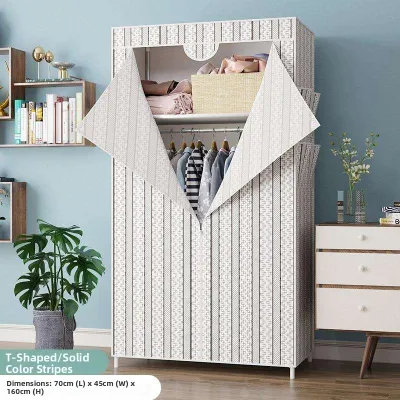
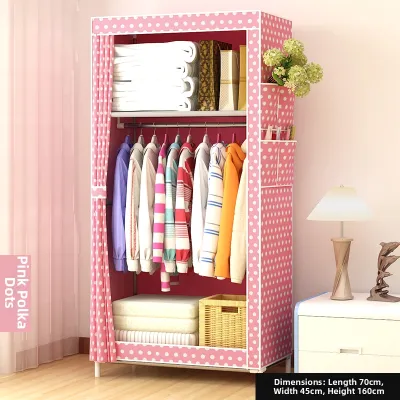
Prices are valid at publication and may change. Please refer to the product page for the latest price.
The mechanism of the wardrobe cover also dictates how much clearance you need in front of the unit. Fabric wardrobes typically feature zippered doors that either roll up to the top or unzip from the center and fold back to the sides. If you choose a model with side-draping doors, ensure they do not drape over nearby furniture or block walkways when open. For roll-up covers, verify that the straps or buckles are easy to reach and secure, especially if the wardrobe is tall.
Finally, do not overlook the logistics of delivery and assembly. Even though fabric wardrobes are lightweight and arrive flat-packed, the packaging can be surprisingly long and heavy. Measure your HDB lift entrance, front door, and bedroom doorway to ensure the flat-pack box can be easily carried inside. Having a clear path from the front door to the bedroom prevents accidental damage to your walls and makes the unboxing process much smoother.
Evaluating Frame Materials and Structural Stability
The structural integrity of a fabric wardrobe depends entirely on its frame. When browsing online marketplaces or local furniture stores, pay close attention to the frame material specifications. Common options include carbon steel, stainless steel, and powder-coated iron pipes. Avoid frames made of thin, untreated metal, as they are highly susceptible to bending under the weight of hanging clothes and can rust quickly in Singapore’s humid air.

To verify the strength of the frame, check the manufacturer’s listed tube diameter and wall thickness. High-quality fabric wardrobes typically feature metal tubes with an outer diameter of 19mm to 25mm. Tubes with a diameter of 13mm or 16mm are common in budget models but are generally only suitable for light, temporary storage. Additionally, look for powder-coated finishes, which provide a protective barrier against moisture and help prevent rust over time.
The joints and corner connectors are the primary load-bearing points of the wardrobe and are often the first parts to fail. Many standard models use plastic connectors made of polypropylene (PP) or acrylonitrile butadiene styrene (ABS). Over time, exposure to heat and humidity can make these plastic joints brittle, leading to cracking and structural collapse. For long-term durability, look for wardrobes that feature reinforced nylon connectors, thickened ABS joints, or metal screw-in connectors.
Stability is another crucial consideration, especially for taller or narrower units. Because fabric wardrobes are lightweight, they can easily become top-heavy when loaded with clothes. Check the product specifications to see if the manufacturer includes anti-tip features, such as wall-anchoring straps or brackets. If you live in an HDB flat with concrete walls, you will need to use appropriate wall plugs and screws to secure these anchors safely. If wall anchoring is not possible, prioritize wider, lower-profile wardrobes that naturally have a lower center of gravity.
Assessing Fabric Covers and Zipper Durability
The fabric cover serves as the protective shield for your clothing, keeping out dust, light, and pests. When evaluating different brands, read the product descriptions and care labels carefully to identify the material composition. The two most common materials used for covers are non-woven fabric and Oxford fabric. Non-woven fabric is highly breathable and inexpensive, but it is prone to tearing and can degrade rapidly when exposed to sunlight or tension.
For a durable, long-lasting wardrobe, Oxford fabric is highly recommended. Look for covers made of polyester or nylon Oxford fabric with a denier rating, such as 210D or 600D. The “D” stands for denier, which measures the thickness of the individual threads; a higher denier rating indicates a thicker, stronger, and more tear-resistant fabric. Oxford fabric is also much easier to wipe clean with a damp cloth and holds up well to daily opening and closing.
Zippers are another critical component that undergoes constant wear and tear. Look for wardrobes equipped with heavy-duty metal zippers or reinforced nylon coil zippers. Inspect the product photos or specifications for double-stitched seams around the zipper tracks. Single-stitched seams are highly prone to splitting when the wardrobe is fully packed and the fabric is under tension. Additionally, check that the Velcro straps or buckles used to hold the door flaps open are securely stitched to the main cover.
Humidity management is a priority in tropical climates to prevent musty odors and mold growth. Check if the fabric cover features breathable ventilation panels or mesh windows, which allow air to circulate while still keeping dust out. Some high-quality covers also feature a water-resistant or moisture-resistant backing. However, ensure that the cover is not completely airtight, as trapped moisture can quickly ruin your garments.
Assembly Conditions and Weight Distribution
Setting up a fabric wardrobe correctly is essential for its safety and longevity. Before you begin assembly, clear a flat, clean area on your bedroom floor. Lay out all the metal tubes, connectors, and fabric shelves, and group them by size or part number. Most fabric wardrobes are designed for tool-free assembly, but having a rubber mallet on hand can be incredibly helpful. A mallet allows you to tap the metal tubes firmly into the plastic connectors, ensuring a tight, secure fit without cracking the joints.
During assembly, ensure that every single tube is fully inserted into its corresponding connector. Even a tiny gap of a few millimeters can cause the frame to stand crookedly, which distributes weight unevenly and significantly increases the risk of collapse. Once the frame is fully assembled, double-check its squareness before sliding the fabric cover over the top. Pull the cover down gently and evenly to avoid putting excessive stress on the seams.
Proper weight distribution is the key to maintaining structural integrity over time. Always place heavier items, such as storage boxes, shoes, folded denim, and bed linens, on the bottom shelves. This lowers the center of gravity of the entire unit, making it much more stable. Reserve the hanging rods for lighter garments like shirts, blouses, and summer dresses. Avoid clustering all your hanging clothes on one side of the rod; instead, distribute them evenly across the entire length to prevent the rod from bending.
Routine maintenance will help extend the lifespan of your fabric wardrobe. Regularly wipe down the metal frame with a dry microfiber cloth to remove dust. If the fabric cover becomes dusty, use the upholstery brush attachment on your vacuum cleaner to clean it gently. Avoid washing the cover in a washing machine unless the care label explicitly states it is safe to do so, as machine washing can ruin water-resistant coatings and shrink the fabric, making it impossible to fit back over the frame.
Frequently Asked Questions (FAQ)
Can fabric wardrobes support heavy winter coats or suits?
Fabric wardrobes can support heavier garments like winter coats or suits, but you must strictly adhere to the manufacturer’s specified weight limits. Standard hanging rods typically support between 5kg and 15kg, depending on the thickness of the metal tube. To store heavy items safely, distribute them evenly across the rod rather than clustering them in one spot. If you have multiple heavy coats, consider folding them neatly and placing them on the lower shelves, where the weight is supported directly by the frame’s vertical legs rather than a suspended rod.
How do I prevent mold on the fabric cover in a humid room?
To prevent mold in Singapore’s humid climate, avoid placing your fabric wardrobe directly against external walls, which can collect condensation; leave a gap of at least 5cm to 10cm to allow air to circulate. Keep the room well-ventilated by opening windows or using a dehumidifier regularly. When cleaning, check the fabric care instructions to see if the cover can be wiped down with a mild disinfectant. Always ensure the cover and the clothes inside are completely dry before zipping the wardrobe shut.
Are fabric wardrobes safe for homes with young children or pets?
Fabric wardrobes can pose a tip-over hazard if children or pets attempt to climb them. To ensure safety, always secure the wardrobe to the wall using anti-tip straps or wall anchors. Keep the heaviest items on the bottom shelves to maintain a low center of gravity, and avoid placing toys, pet treats, or other appealing items on the upper shelves where they might encourage climbing. Regularly inspect the joint connectors for any signs of cracking or wear to ensure the structure remains stable.

Community discussion
Share your experience or ask a question. Comments are reviewed before publication.