
Selecting a modular sliding wardrobe for a Singapore HDB bedroom requires balancing space-saving design with structural adaptability. Sliding doors are highly practical for compact BTO and resale layouts because they eliminate the swing clearance required by traditional hinged doors, allowing you to place your bed closer to the wardrobe. When paired with a modular interior, these systems offer the flexibility to customize shelves, drawers, and hanging rods to your specific storage needs. Because HDB bedrooms vary in ceiling height, beam placement, and wall alignment, there is no single universally perfect brand. Instead, finding the right provider depends on evaluating their ability to handle local spatial constraints, the quality of their track mechanisms, and the precision of their on-site measurement and installation services.
Identifying Space Constraints in HDB Bedrooms
Before choosing a wardrobe system, you must evaluate the physical limitations of your HDB bedroom. These constraints dictate where the wardrobe can stand, how wide the doors can be, and what structural adaptations are necessary.
Bed-to-wardrobe clearance is the first critical factor. While sliding doors do not swing outward into the room, you still need comfortable standing space in front of the wardrobe. Ideally, maintain a clearance of at least 50 to 60 centimeters between the wardrobe doors and the edge of your bed frame. This ensures you can stand, slide the doors open, and reach your clothes without feeling cramped or bumping into the bed.
Products mentioned in this guide
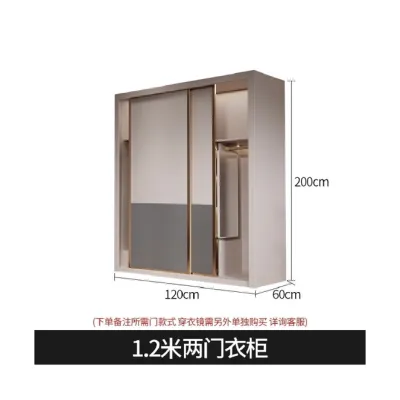

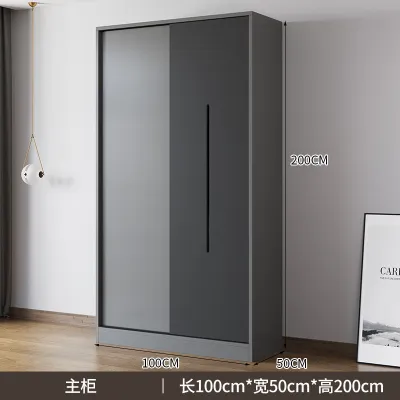
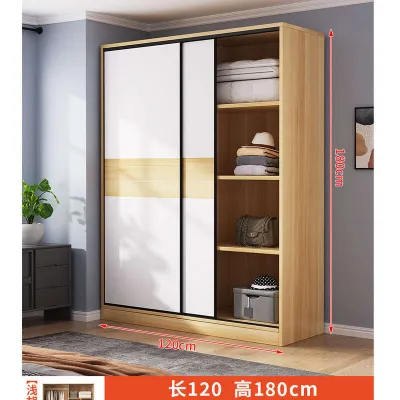
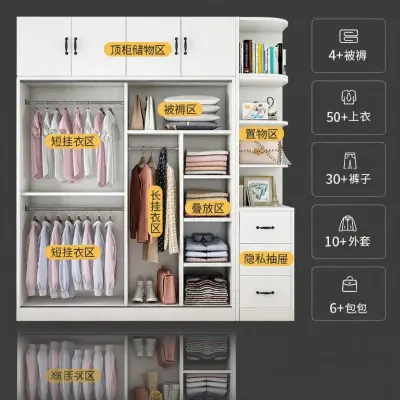
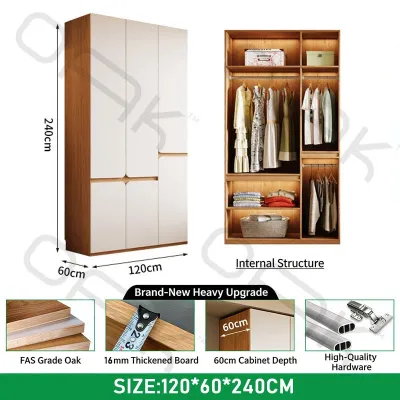
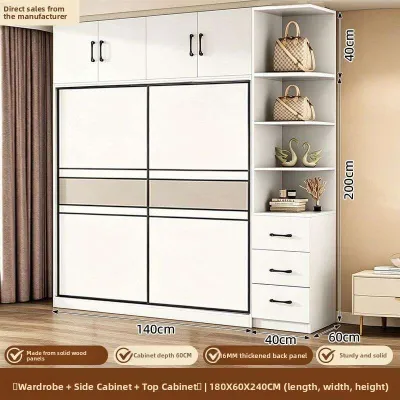
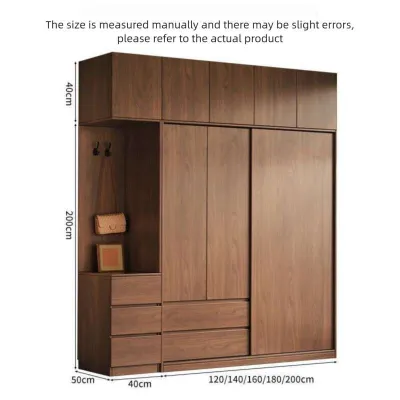
Prices are valid at publication and may change. Please refer to the product page for the latest price.
Ceiling heights and structural beams present another common challenge in both older resale flats and newer BTO layouts. Structural concrete beams often protrude from the ceiling or run along the corners of the room, preventing standard flat-top wardrobes from fitting flush against the wall. To avoid awkward, dust-gathering gaps, look for modular brands that offer custom filler panels, also known as scribe panels. These panels are trimmed on-site to seal the space between the top of the wardrobe carcass and the uneven ceiling or beam.
Air-conditioner ledges, copper piping, and electrical trunking also restrict wardrobe placement. In Singapore, air-conditioning lines often run along the upper walls of bedrooms, which can block a full-height wardrobe. Additionally, you must map the locations of wall-mounted power points, light switches, and window frames. Blocking these fixtures can make daily life inconvenient, so your wardrobe footprint must be planned to leave them accessible or integrate them safely.
How to Evaluate Modular Wardrobe Brands for HDB Flats
With numerous furniture retailers and custom carpentry options available in Singapore, evaluating brands requires a structured framework. Focus on their technical capabilities, modular flexibility, and installation standards rather than aesthetic marketing alone.

On-site measurement and customization services are essential because HDB walls and floors are rarely perfectly level. A reliable brand should send a professional to conduct precise laser measurements of your bedroom before finalizing the order. They must also provide custom scribe panels that can be adjusted on-site to accommodate out-of-square walls, ensuring a seamless fit that looks built-in.
Modular component flexibility determines how well the wardrobe adapts to your lifestyle. Check if the brand offers standardized carcass widths, such as 50, 75, or 100 centimeters, which can be combined to fill your available wall space efficiently. The internal system should allow you to mix and match components—like pull-out trouser racks, drawers, and adjustable shelving—without requiring expensive custom fabrication.
Warranty and after-sales support are critical indicators of long-term reliability. The moving parts of a sliding wardrobe are subject to daily wear and tear. Look for brands that offer explicit, multi-year warranties on their sliding track mechanisms, rollers, and soft-close dampers. A warranty on the structural integrity of the engineered wood boards is also important to protect against premature sagging.
Installation expertise is the final piece of the puzzle. Securing a heavy, full-height wardrobe requires anchoring it safely to HDB concrete walls or partition walls. The installation team must understand local building guidelines and use appropriate anchoring hardware. Furthermore, ask about their dust-mitigation protocols, such as using vacuum-assisted cutting tools, to minimize the mess created during on-site assembly.
Critical Measurements and Clearance Checks Before Ordering
To avoid costly mistakes, you must verify several critical dimensions and spatial allowances before placing your order. These measurements ensure your clothes fit comfortably and the doors operate smoothly.
Minimum depth requirements are often overlooked. While a standard clothes hanger is about 40 to 45 centimeters wide, your clothes need adequate clearance so they do not brush against the sliding doors. If shirts or coats rub against the doors, they can obstruct the sliding motion or cause the doors to jump off their tracks. To prevent this, aim for an internal usable depth of at least 55 centimeters.
Track and frame allowances must be added to your depth calculations. Sliding door track systems are physically thick, typically requiring an additional 8 to 10 centimeters of depth within the wardrobe frame just to house the tracks and door panels. Therefore, if you require 55 centimeters of internal hanging space, the total external depth of your wardrobe must be at least 63 to 65 centimeters. Ensure your bedroom layout can accommodate this total external depth without blocking walkways.
Door overlap and access width also affect usability. Sliding wardrobes consist of overlapping door panels, meaning you can only ever access one section of the wardrobe at a time. When planning your internal layout, ensure that pull-out drawers and baskets are not positioned in the central overlap zone where the doors meet. If they are, the doors will block the drawers from opening fully, rendering them useless.
Inspecting Track Systems and Material Durability
The longevity of a sliding wardrobe depends heavily on its mechanical hardware and its resistance to Singapore’s tropical climate. Inspecting these elements beforehand prevents premature failure.
Track and roller mechanisms are the most important mechanical components. Sliding wardrobes generally use either top-hung or bottom-rolling systems. Top-hung systems suspend the doors from an upper track, keeping the bottom floor clear of heavy tracks, but they require a very sturdy top frame to support the weight. Bottom-rolling systems support the door weight on the floor track, which is highly stable but requires regular cleaning to prevent dust and hair from clogging the rollers. Look for systems equipped with anti-jump mechanisms to keep the doors securely on the tracks.
Door panel materials and weight directly impact roller wear. Heavy door panels made of solid wood, thick glass, or large mirrors require heavy-duty rollers and robust aluminum frames to prevent warping. Lightweight engineered wood panels or acrylic inserts put less strain on the tracks but must be reinforced to ensure they do not flex over time.
Edge banding and moisture resistance are vital in Singapore’s humid climate. Low-quality engineered wood can absorb moisture from the air, leading to swelling, warping, or delamination of the outer laminate. Inspect the edge banding on the modular panels. High-quality modular wardrobes use hot-melt polyurethane (PUR) or laser edge banding to create a hermetic seal, protecting the inner core from moisture and extending the wardrobe’s lifespan.
Configuring Modular Layouts for Maximum Storage
A well-planned internal layout maximizes the limited footprint of an HDB bedroom. Organize your wardrobe modules based on your actual clothing inventory and daily habits.
Zoning for different garment types ensures every centimeter of space is utilized. Allocate a tall section (around 150 to 160 centimeters) for long dresses or coats, a double-hanging section (around 90 to 100 centimeters each) for shirts and trousers, and dedicated shelving units for folded items.
Adjustability and future-proofing are key benefits of modular systems. Your storage needs will inevitably change over time. Choose a system that features pre-drilled holes along the inner sides of the carcass, allowing you to adjust shelf heights or swap out hanging rods for drawers in the future without needing to drill new holes or damage the structure.
Accessibility and ergonomics dictate where items should be placed. Position your most frequently used items—such as daily workwear, underwear, and accessories—in the ‘active zone’ between waist and eye level. Use the bottom sections for heavy pull-out baskets or shoe storage, and reserve the hard-to-reach top shelves (above 200 centimeters) for seasonal bedding, luggage, or items you only access a few times a year.
Frequently Asked Questions (FAQ)
Do I need a building permit to install a built-in sliding wardrobe in an HDB flat?
Generally, you do not need a specific HDB renovation permit to install standard built-in wardrobes, as they are considered carpentry work rather than structural modifications. However, if your installation involves hacking existing walls to create a recessed wardrobe space, or if you are anchoring exceptionally heavy structures to structural columns, you must engage an HDB-registered renovation contractor. Always ensure your contractor complies with HDB’s guidelines regarding noise, working hours, and structural safety.
Can modular sliding wardrobes be relocated if I move to a new HDB flat?
While modular wardrobes are designed as individual carcasses that can theoretically be dismantled and reassembled, relocating them to a new HDB flat can be challenging. The custom filler panels and scribe pieces used to fit the wardrobe to your original bedroom’s walls and ceiling beams will rarely match the dimensions of your new room. Additionally, repeated dismantling can weaken the joint fasteners in engineered wood boards, and the sliding tracks may become misaligned during transport, so relocation is often only practical if the new room has identical or larger dimensions and you are prepared to replace the filler panels.

Community discussion
Share your experience or ask a question. Comments are reviewed before publication.