
Finding the right school bag rack for a compact HDB entryway requires balancing space-saving design with robust structural support. In Singapore’s typical high-density apartments, the foyer or entryway is often a multi-functional transition zone shared with shoe cabinets, umbrella stands, and the main door swing. A foldable school bag rack offers an elegant solution to keep heavy school bags off the floor while preserving precious floor space when the bags are not in use. The ideal choice is a wall-mounted, low-profile rack that folds flat against the wall when empty, ensuring that the narrow walkway remains completely unobstructed for daily foot traffic.
Key Dimensions to Check for Compact HDB Entryways
Walkway clearance is the first and most critical metric to evaluate. In many HDB layouts, the entryway corridor is relatively narrow, sometimes measuring less than 1.2 meters in width. When selecting a foldable rack, measure its folded depth—the distance it protrudes from the wall when all hooks or shelves are tucked away. Ideally, a folded rack should project no more than 5 to 8 centimeters from the wall to prevent shoulders, bags, or groceries from catching on the unit as family members walk past.
Equally important is the fully extended footprint of the rack when it is actively holding bags. A loaded school bag can easily protrude 25 to 35 centimeters from the wall, which can significantly restrict a narrow passage. You must map out this extended footprint against the swing paths of your main wooden door, the metal gate, and any adjacent built-in carpentry like shoe cabinets or distribution board (DB) box doors. Ensure that even when the rack is fully loaded, there is still comfortable clearance to open and close doors without collision.
Products mentioned in this guide
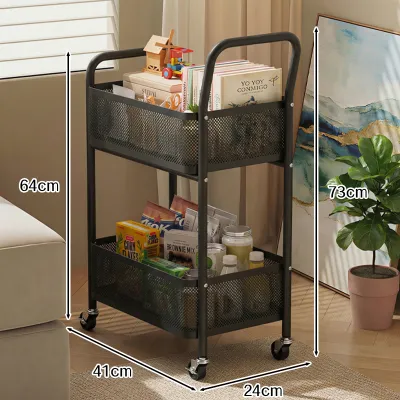
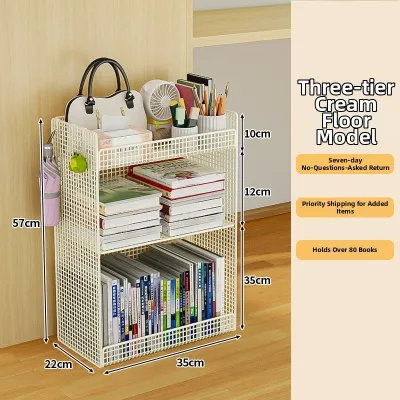
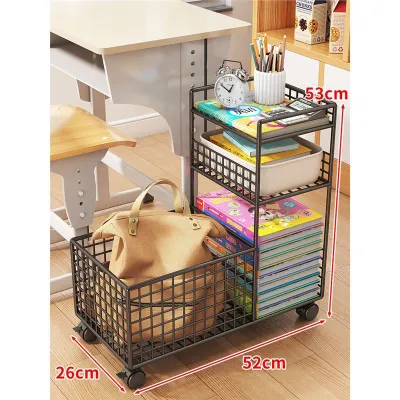
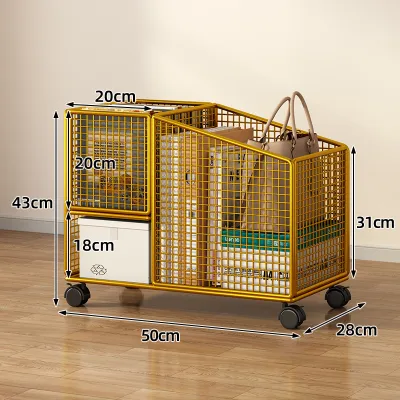
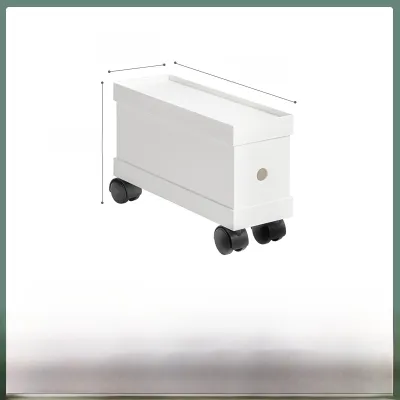
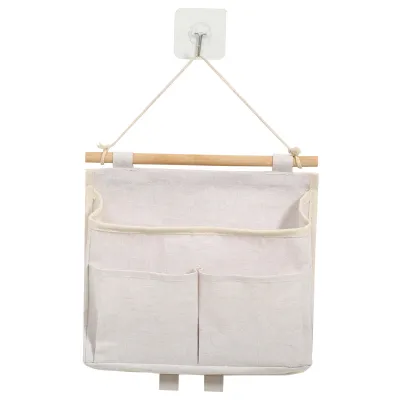
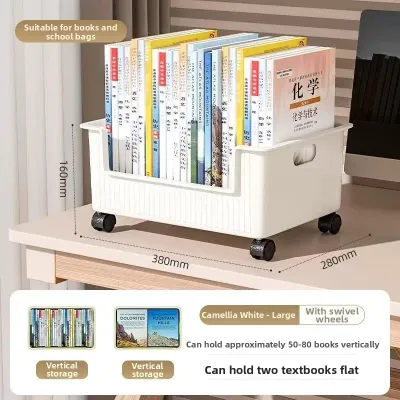
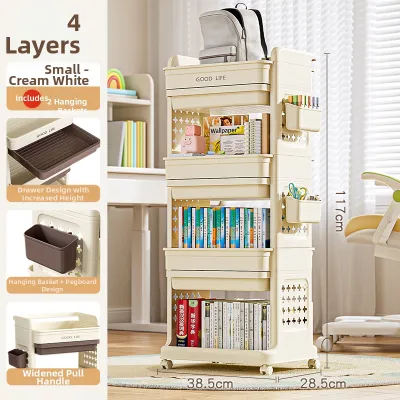
Prices are valid at publication and may change. Please refer to the product page for the latest price.
Finally, consider the vertical and horizontal spacing of the hooks relative to your family’s daily needs. If you have multiple school-going children, a single hook will quickly become overloaded, leading to piled bags that protrude further into the walkway. Look for a rack that offers multiple hooks spaced at least 15 to 20 centimeters apart horizontally, or opt for a vertically stacked design that utilizes unused wall height. This vertical distribution keeps the horizontal footprint compact while providing dedicated spots for primary school backpacks, secondary school bags, and co-curricular activity (CCA) gear.
Comparing Foldable Mechanisms for Daily Convenience
Foldable school bag racks generally employ one of two primary mechanisms: flat-folding flip hooks or swing-arm rotating brackets. Flat-folding designs, often resembling piano keys or recessed pegs, feature individual hooks that pull down when needed and snap back flush into a wooden or metal frame when empty. This design is exceptionally space-efficient because it completely eliminates protruding parts when the rack is not in use, making it highly suitable for the tightest HDB entryways.

Swing-arm or rotating mechanisms, on the other hand, allow the entire support arm to swing parallel to the wall. While these can accommodate bulkier items, they require a wider horizontal clearance along the wall to swing freely. If your entryway wall space is limited by a nearby DB box or intercom unit, a flat-folding flip-hook system is usually the more practical choice as it operates strictly on a forward-and-backward axis without requiring lateral clearance.
Daily usability depends heavily on how easily the mechanism can be operated, especially by younger children. A rack that requires complex latches or significant physical force to unfold will likely be left permanently open, defeating its space-saving purpose. Look for smooth, gravity-assisted or spring-loaded mechanisms that a primary school student can easily pull down with one hand.
Pay close attention to the hardware design and joint construction. Exposed hinges and complex folding joints can become safety hazards, potentially pinching small fingers during operation. Furthermore, exposed metal joints tend to accumulate dust and lint over time, which can be difficult to clean in Singapore’s humid climate. Concealed hinges or magnetic closures not only provide a sleeker, more minimalist aesthetic that blends with modern HDB interior designs but also minimize maintenance and safety risks.
Verifying Weight Capacity and Material Durability
A student’s school bag in Singapore can easily weigh between 4 to 8 kilograms, packed with textbooks, files, water bottles, and personal devices. Therefore, verifying the weight capacity of a foldable rack is paramount to prevent wall damage or structural failure. Never assume a rack is sturdy simply because it is made of a heavy material like solid oak or stainless steel; instead, look for the manufacturer’s certified maximum weight load per hook and for the entire unit.
The material composition must also be evaluated against Singapore’s high-humidity tropical climate. Entryways are semi-exposed areas subject to moisture from open corridors, wet umbrellas, and damp shoes. If choosing a metal rack, verify that it has undergone rust-resistant surface treatments, such as powder coating or anodization, to prevent corrosion over time. For wooden racks, ensure the material is sealed with a moisture-resistant lacquer or polyurethane coating to prevent warping, mold growth, or splitting at the joints.
Inspect the physical finishing of the hooks and frame to protect both your family and your belongings. Sharp edges or rough finishes can easily snag and tear expensive school bag fabrics, nylon straps, or uniforms. Opt for racks with rounded hook profiles, smooth edge banding, and anti-scratch protective tips. These small design details also prevent painful accidental bumps when family members navigate the narrow entryway in a rush during the morning school run.
Evaluating Installation Methods for HDB Walls
The method you use to mount the foldable rack determines its ultimate weight capacity and safety. Mechanical drilling using expansion anchors (wall plugs) remains the most secure installation method for supporting heavy school bags. For concrete walls, which are common in HDB structural columns and household shelter walls, you will need a rotary hammer drill and masonry wall plugs to ensure a permanent, rock-solid hold. If mounting onto non-structural drywall partitions, you must use specialized toggle bolts or hollow-wall anchors to distribute the weight safely across the plasterboard.
Adhesive-based or damage-free mounting strips are often tempting for their ease of installation, but they carry significant limitations. While some heavy-duty adhesives claim high weight capacities, they are highly dependent on wall surface preparation, paint adhesion, and environmental humidity. The dynamic load of a child dropping a heavy bag onto a hook can easily exceed the shear strength of adhesive strips, leading to paint peeling and the rack falling off the wall. Consequently, adhesive mounting is generally not recommended for primary school bags unless the rack is only holding light accessories like hats or empty tote bags.
Consider your long-term housing plans and rental agreements before choosing an installation method. If you are renting an HDB flat, drilling holes may require prior landlord approval or eventual restoration. In such cases, look for compact, over-the-door foldable racks that hang securely over internal doors or shoe cabinet doors without requiring any drilling. If you do drill, ensure you keep a small tub of wall putty and matching paint on hand so you can easily patch and repair the wall when relocating or renovating.
Building Your Shortlist Based on Family Needs
To build a practical shortlist, start by analyzing your household’s specific daily routine and the number of school-going children. A single-child household might only require a compact three-hook vertical folding panel that takes up minimal horizontal wall space. For multi-child families, a wider horizontal rail with individually folding hooks allows each child to have a designated station, preventing arguments and keeping bags organized side-by-side without overlapping.
Next, physically simulate the layout in your entryway before making a purchase. Use masking tape to outline the exact dimensions of the prospective rack on your wall, both in its folded and fully extended states. Walk past the taped area, open your main door completely, and simulate retrieving shoes from your cabinet to ensure the rack’s physical presence does not disrupt these daily movements. This simple visual exercise can prevent costly purchasing mistakes and ensure the rack fits seamlessly into your spatial flow.
Finally, compile your findings into a personalized decision checklist. Your checklist should compare the folded depth (aiming for under 8 centimeters), the verified weight capacity (minimum 10 kilograms per hook for peace of mind), the compatibility of the mounting hardware with your specific HDB wall type, and the total cost in S$. By filtering options through these strict spatial and structural criteria, you can confidently select a durable, space-saving foldable school bag rack that keeps your HDB entryway organized and safe.
Frequently Asked Questions (FAQ)
Can adhesive hooks support the weight of a fully loaded school bag?
Generally, standard adhesive hooks are not recommended for supporting a fully loaded school bag. While some specialized adhesive strips are rated for heavy loads, they are designed for static weight and can easily fail under the dynamic force of a bag being hung up or pulled down. Singapore’s high humidity can also weaken adhesive bonds over time, leading to sudden failure that can damage your wall paint or the bag’s contents. For safety and durability, always use mechanical fasteners like screws and wall plugs to secure a school bag rack.
How do I measure my entryway to ensure the rack won't block the door?
To measure your entryway accurately, start by opening your main door and metal gate to their maximum angles and measuring the remaining clear wall space. Next, measure the width of your walkway; you should maintain at least 90 centimeters of clear passage for comfortable movement. Measure the depth of the rack when fully extended with a bag hanging on it, and subtract this from your walkway width to ensure you still have adequate clearance. Finally, check that the height of the rack allows children to reach it easily while keeping the bags clear of any floor-level shoe racks or benches.

Community discussion
Share your experience or ask a question. Comments are reviewed before publication.