
Maximising space in a Singapore Housing & Development Board (HDB) flat requires a strategic approach to home organization. With typical floor plans ranging from compact 2-room Flexi units to standard 4-room and 5-room layouts, floor space is always at a premium. A foldable storage rack offers an ideal, non-permanent solution to decluttering without committing to heavy, built-in carpentry. These versatile organizers can be deployed instantly to handle seasonal items, kitchen appliances, or laundry supplies, and then collapsed flat when more physical space is needed for hosting or daily activities. By utilizing vertical space and narrow gaps, homeowners can maintain a clean, open aesthetic while keeping essential items within arm’s reach.
Key Selection Criteria for HDB Layouts
When selecting a foldable storage rack for an HDB flat, the primary consideration is the balance between its fully deployed footprint and its collapsed dimensions. A rack that takes up too much floor area when open defeats the purpose of space-saving furniture. Homeowners should evaluate the exact width, depth, and height of the unit in both states. A high-quality rack should fold down to a thickness of under ten centimeters, allowing it to slide easily into narrow gaps beside refrigerators, washing machines, or wardrobe units when not in use.
Another critical factor is the installation method. Because many HDB residents prefer to avoid drilling into walls—especially in rental units or on reinforced household shelter walls—non-permanent options are highly favored. Freestanding bases, tension poles, and heavy-duty adhesive mounts provide excellent stability without leaving permanent marks or violating structural guidelines. If you choose a tension-based or adhesive system, always verify the manufacturer’s surface requirements to ensure the rack remains secure over time.
Products mentioned in this guide
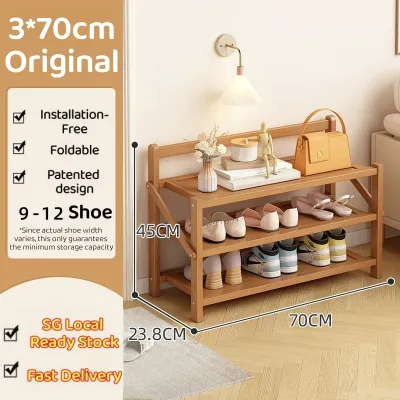
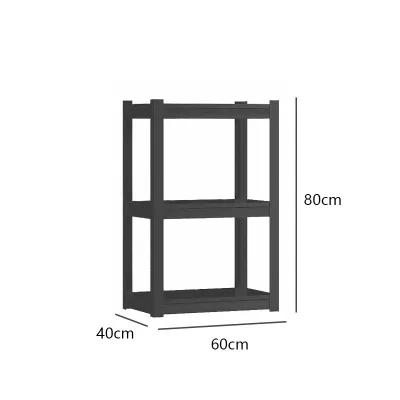
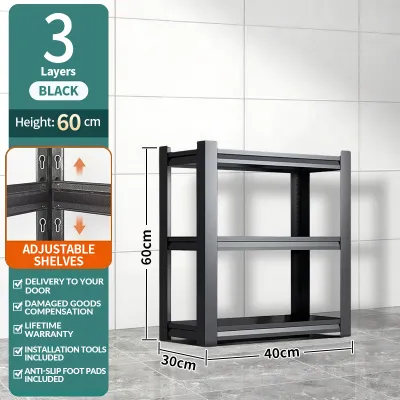
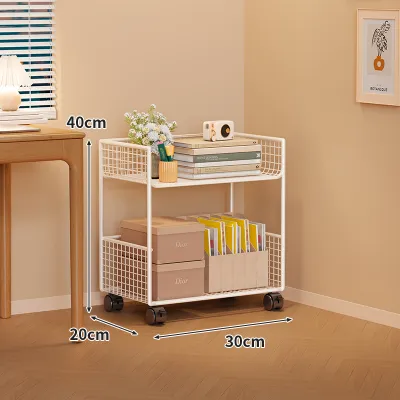
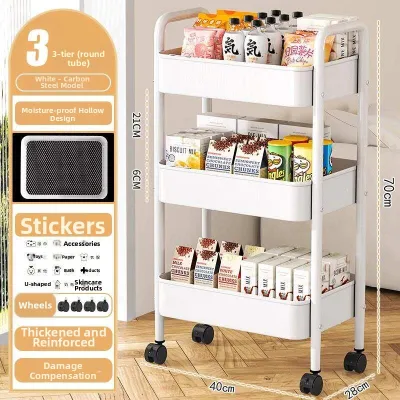
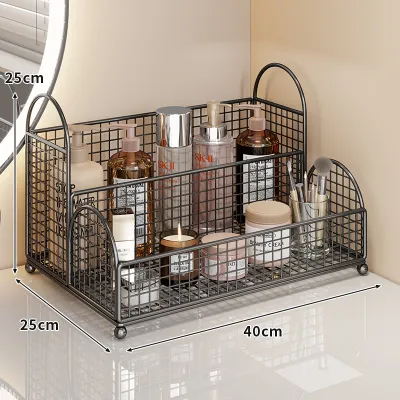
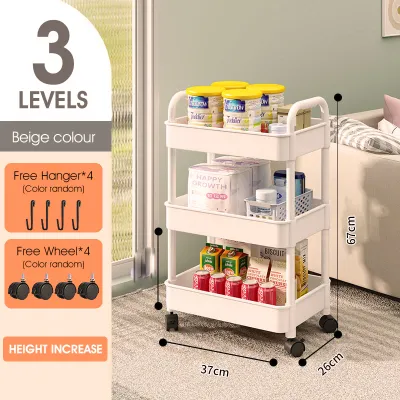

Prices are valid at publication and may change. Please refer to the product page for the latest price.
Finally, the folding mechanism itself must be assessed for ease of use and physical clearance. Some racks utilize a simple accordion-style collapse, while others feature drop-leaf panels or telescopic frames. Each mechanism requires a specific amount of clearance space to unfold safely. Before purchasing, ensure that the surrounding area has enough clearance to accommodate the unfolding motion without striking nearby walls, light fixtures, or other furniture pieces.
Types of Foldable Storage Racks for Compact Spaces
Different areas of an HDB flat demand distinct storage configurations to maximize utility. Understanding how various folding mechanisms function allows you to match the right rack type to your specific spatial challenges. Whether you need to organize a service yard, a kitchen countertop, or a study room, selecting the appropriate design ensures both structural safety and daily convenience.

Freestanding Tiered Shelving
Freestanding tiered shelving units are the workhorses of home organization, particularly in high-traffic areas like the kitchen, service yard, or living room. These multi-tier collapsible racks are designed to hold heavier, bulkier items such as microwave ovens, rice cookers, laundry detergents, or storage boxes. Because they do not require wall anchoring, they can be positioned anywhere along a flat wall or inside a utility closet.
When choosing a freestanding tiered rack, the base width and the overall center of gravity are paramount. A narrow base with multiple high tiers can become top-heavy and prone to tipping if loaded incorrectly. Look for models with a wider bottom footprint and robust locking hinges that secure the shelves in place when fully deployed. This structural design ensures the rack remains stable even when loaded with heavy household supplies.
Wall-Mounted and Drop-Leaf Options
For homes with extremely limited floor space, wall-mounted and drop-leaf foldable racks offer a way to exploit underutilized vertical surfaces. These units typically feature shelves that fold flat against the wall when not in use, instantly clearing up floor area. They are highly effective in narrow entryways, small kitchens, or compact study corners where a permanent table or shelf would block movement.
It is essential to distinguish between true no-drill adhesive options and those that require structural screws. Adhesive-mounted shelves are convenient but have strict weight limits and are best suited for lightweight items like spices, keys, or small decorative pieces. You must verify that your wall surface—whether it is painted drywall, concrete, or glazed kitchen tiles—is compatible with the adhesive. For heavier loads, structural screws anchored into concrete walls are necessary to prevent the shelf from pulling away from the wall.
Rolling and Collapsible Utility Carts
Rolling utility carts that fold flat combine mobility with space-saving design, making them incredibly versatile for dynamic HDB households. These carts can be wheeled into the kitchen during meal preparation, moved to the service yard for laundry day, or rolled into the living room to serve as a temporary side table. When the task is finished, the cart collapses into a slim profile that can be tucked away effortlessly.
When evaluating these mobile racks, pay close attention to the quality of the caster wheels and the ergonomics of the handle. At least two of the wheels should feature robust locking mechanisms to keep the cart stationary when in use. Additionally, check the collapsed thickness of the cart. A unit that folds down to five or six centimeters can easily slide under a sofa, beneath a bed frame, or behind a door, keeping it completely out of sight when not needed.
Space Planning and Measurement Guide
Successful space planning requires precise measurements before making any furniture purchase. To ensure your new foldable storage rack fits seamlessly into your HDB layout, start by measuring the available floor clearance and ceiling height in the designated area. Do not rely on visual estimation; even a discrepancy of one or two centimeters can prevent a rack from unfolding properly or block a nearby door swing path.
Another commonly overlooked detail is the thickness of baseboards and skirting boards along the bottom of your walls. These architectural features can prevent flat-folding units from sitting completely flush against the wall, which may affect their stability or cause them to protrude further into walkways than expected. Measure the depth of your skirting boards and factor this dimension into your overall space calculations.
To visualize how the rack will interact with your daily routine, sketch a simple floor plan of the room. Mark the positions of existing furniture, electrical outlets, and light switches. Ensure that when the rack is fully deployed, it does not block access to power points or obstruct main walkways. Maintaining clear traffic paths is not only essential for daily comfort but also a critical safety measure to ensure emergency exits remain completely unobstructed.
Material, Stability, and Safety Checks
The durability and safety of a foldable storage rack depend heavily on its materials and construction quality. Inspect the joint materials closely, as these are the primary points of wear and tear. Metal hinges and steel rivets offer significantly better long-term folding endurance compared to plastic clips, which can become brittle and crack over time under the humid tropical climate of Singapore.
Always consult the manufacturer’s labels and product manuals to verify the maximum load capacity. Pay attention to both the weight limit per individual tier and the total weight capacity of the entire unit. Distributing weight evenly across the shelves is crucial; overloading a single shelf can warp the material or compromise the folding mechanism, leading to sudden structural failure.
To protect your home’s flooring, check for the inclusion of anti-slip foot pads or rubber floor protectors. Foldable racks, especially metal ones, can easily scratch smooth HDB flooring surfaces such as vinyl, laminate, or homogeneous tiles when moved or unfolded. High-quality rubber or silicone feet not only prevent unsightly scratches but also provide essential grip, preventing the rack from sliding or wobbling on slick surfaces.
Sourcing and Verifying Specifications Before Purchase
When shopping for foldable storage racks on online marketplaces or brand websites, thorough research is key to avoiding low-quality products. Cross-reference the listed product dimensions, material specifications, and weight limits across multiple platforms to ensure consistency. If a listing lacks detailed measurements or structural specifications, treat it with caution and seek clarification from the seller.
User reviews and feedback sections are invaluable resources for assessing real-world performance. Look specifically for comments regarding assembly difficulty, the stiffness of the folding mechanism, and the overall stability of the rack when loaded. Pay attention to reviews from buyers who have used the product for several months, as these often highlight potential durability issues that may not be apparent immediately after unboxing.
Finally, review the retailer’s return policies and warranty coverage before finalizing your purchase. A reliable warranty should cover structural defects, missing hardware, or damage sustained during transit. Knowing that you can easily return or exchange a defective unit provides peace of mind, ensuring that your investment in home organization is fully protected.
Frequently Asked Questions (FAQ)
Can I use adhesive-mounted foldable racks on HDB household shelter walls?
It is generally not recommended to use heavy-duty adhesive-mounted racks on the walls of an HDB household shelter. The walls of these shelters are finished with a specific, thick layer of protective paint that can peel or flake off under the constant downward tension of a loaded adhesive rack. If the paint shears away, the rack will fall, potentially damaging your items and the wall surface. For household shelters, freestanding tiered shelving units or over-the-door hanging organizers are much safer alternatives, as they do not rely on wall adhesion or drilling to remain stable.
How do I prevent a freestanding foldable rack from tipping over?
To ensure a freestanding foldable rack remains perfectly stable, always place your heaviest items on the bottom tiers. This lowers the overall center of gravity, making the unit much less likely to tip forward or wobble. Additionally, ensure the rack is placed on a completely level floor surface. If your HDB flooring has slight unevenness, look for racks equipped with adjustable screw-in foot pads, which allow you to fine-tune the height of each corner to eliminate any wobbling during daily use.
Community discussion
Share your experience or ask a question. Comments are reviewed before publication.