
Selecting the ideal foldable fabric sofa for a small Housing & Development Board (HDB) living room requires balancing spatial efficiency, mechanical durability, and material comfort. Because HDB layouts often feature tight entryways and multi-functional living zones, a successful purchase depends on precise spatial planning, careful mechanism evaluation, and proactive fabric maintenance rather than relying on a single universal model. By focusing on how a sofa transitions between its folded and unfolded states, you can maximize your floor area without compromising on daily comfort or aesthetic appeal.
Assessing Your HDB Living Room Space and Layout
When planning your living room layout, you must account for the dual footprint of a foldable sofa. A foldable model has two distinct sets of dimensions: the compact seated configuration and the fully extended bed configuration. To ensure a proper fit, measure the designated floor area using a steel measuring tape, noting both the width and the maximum depth when the sofa is completely unfolded.
Mapping out clear walking paths around the extended sofa is essential for maintaining a functional home. Ensure there is a clearance of at least 60 to 75 centimeters around the perimeter of the unfolded sofa. This clearance allows household members to walk through the living room to access the kitchen, balcony, or bedrooms without having to climb over the furniture or squeeze against walls.
Products mentioned in this guide

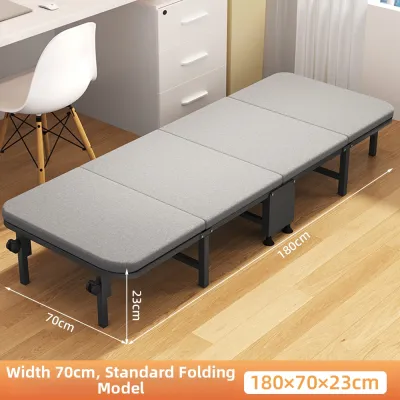
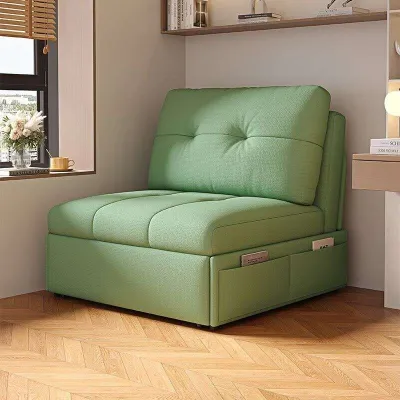
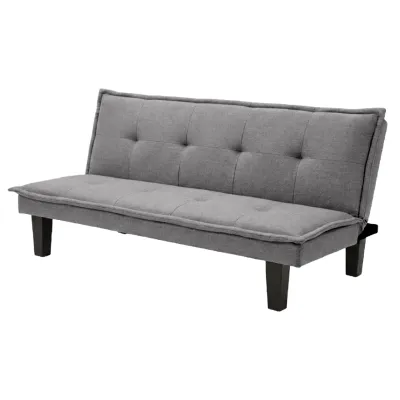
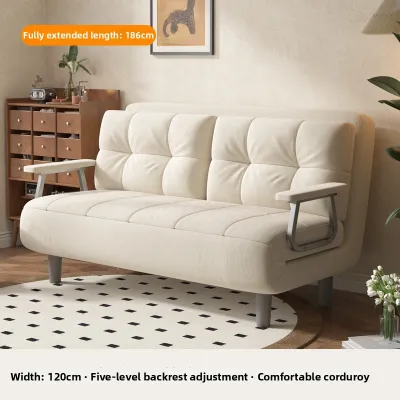
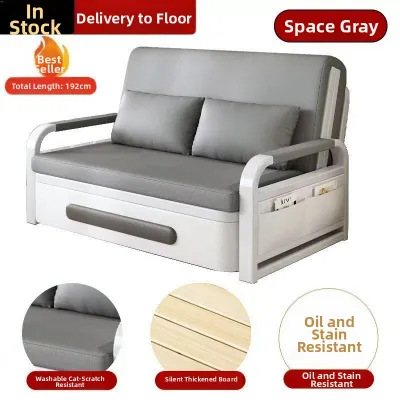
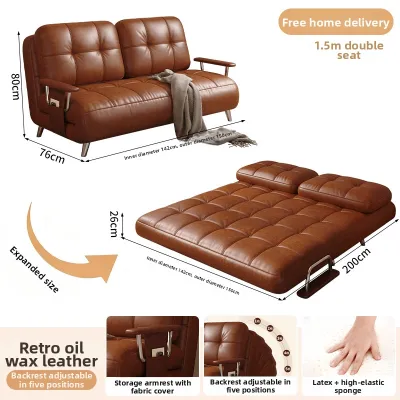
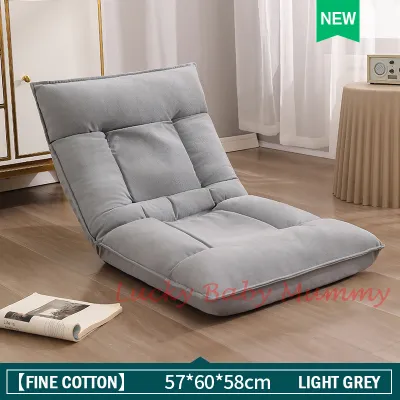
Prices are valid at publication and may change. Please refer to the product page for the latest price.
Delivery logistics present another critical spatial constraint that is frequently overlooked. Older HDB estates may have smaller lift cabins, narrow common corridors, or tight stairwell turns that can block the delivery of bulky furniture. Measure the height, width, and diagonal clearance of your HDB lift doors, your main entrance door, and any internal hallways to confirm that the packaged sofa can safely reach your living room.
Adjacent furniture and wall fixtures can also obstruct the smooth operation of a folding mechanism. For example, a click-clack sofa requires a gap between the backrest and the wall to tilt backward and lock into place. If you place the sofa flush against a wall, you will have to pull the entire heavy frame forward every time you want to unfold it, which can scratch your flooring over time.
Finally, take note of the placement of power outlets, light switches, and wall-mounted electronics. An unfolding sofa must not block access to essential wall sockets, especially if you plan to plug in side lamps, phone chargers, or media consoles nearby. Ensuring that the path of the unfolding mechanism does not collide with low-hanging wall shelves, television mounts, or standing fans will prevent accidental damage to both your home and your new furniture.
Evaluating Foldable Mechanisms and Structural Stability
Foldable sofas utilize several distinct mechanism types, each offering unique spatial and operational trade-offs. Click-clack mechanisms are highly popular for small spaces because they operate with a simple tilt-and-shift motion, making them lightweight and easy to transition. However, they require dedicated rear clearance and often feature a split down the center of the mattress, which some users find uncomfortable for long-term sitting or sleeping.

Pull-out and trundle mechanisms extend forward from the base of the sofa, making them excellent for narrow living rooms where wall clearance is limited but floor space in front of the sofa is open. These models typically house a thicker, more supportive mattress beneath the seat cushions, though they require more physical effort to pull out and contain more moving parts that require regular maintenance.
Futon-style frames use a simple bi-fold or tri-fold wooden or metal frame where the seat and backrest flatten out in a single motion. While highly durable and straightforward to operate, futons often have a more casual, rustic appearance that may not align with modern, minimalist HDB interior designs. They also tend to expose the frame elements, which requires careful coordination with your existing decor.
To ensure long-term structural stability, check the manufacturer’s official specifications for weight capacity and frame materials. Look for frames constructed from kiln-dried hardwood or reinforced steel, as these materials resist warping and structural sagging under daily use. Avoid frames made entirely of low-grade particleboard, which can degrade rapidly under the mechanical stress of repeated folding and unfolding.
Inspect the locking mechanisms, hinges, and joints for smooth operation and secure locking in both sofa and bed modes. High-quality hinges should transition between positions smoothly without grinding, squeaking, or requiring excessive force. Loose or poorly aligned hinges can cause the frame to wobble, compromising safety and accelerating wear on the surrounding fabric and padding.
Evaluate the thickness and density of the integrated cushioning or mattress to determine if it provides adequate support. High-density polyurethane foam or pocket spring systems are ideal, as they distribute body weight evenly and resist flattening over time. Testing the firmness of the seat cushions will help you verify whether the sofa can support daily sitting without bottoming out against the underlying metal or wooden frame.
Choosing Fabric Materials for Singapore's Climate
Singapore’s tropical climate, characterized by high humidity and warm temperatures, demands careful consideration of fabric upholstery. Review the manufacturer’s fabric care labels for breathability and moisture resistance to prevent heat retention and sweat buildup. Synthetic fibers, such as high-grade polyester and nylon blends, are highly suitable for humid environments because they do not trap moisture as easily as natural fibers.
Prioritize foldable sofas that feature fully removable and machine-washable covers. In a small HDB flat where the sofa serves as the primary seating area, accidental spills, sweat, and dust accumulation are inevitable. Removable covers simplify stain management and allow you to maintain a hygienic living environment without the need for expensive professional deep-cleaning services.
Evaluate the texture and weave density of the fabric to minimize dust accumulation and ensure comfort against the skin. Tight, flat weaves are highly durable and less likely to trap dust mites, pet hair, or allergens compared to loose, heavily textured fabrics like chenille or boucle. A smooth, tightly woven fabric also feels cooler to the touch, which enhances comfort during warm afternoon hours.
Always check the manufacturer’s recommended cleaning methods before applying any household cleaners or fabric protectors. Some fabrics can be damaged or discolored by water-based cleaning agents, while others require specific dry-cleaning solvents. Following the official care guidelines preserves the integrity of the fabric fibers and ensures that any built-in stain-resistant or anti-microbial treatments remain effective over time.
Building Your Shortlist: Pre-Purchase Verification Checklist
Before finalizing your purchase, compile a comparison matrix of your top foldable sofa candidates to verify their compatibility with your home. Cross-reference the exact product dimensions, weight limits, and unfolding clearances with the physical measurements you took of your HDB living room. This step ensures that you do not accidentally purchase a model that blocks your main walkway or collides with adjacent furniture.
Confirm the delivery conditions, assembly requirements, and any potential additional service fees in S$ with the retailer. Some retailers include professional assembly in the purchase price, while others charge extra fees, particularly if your HDB block requires the delivery team to carry the sofa up stairwells due to lift limitations. Clarifying these costs upfront prevents unexpected expenses on delivery day.
Review the warranty terms, return policies, and the availability of replacement parts specifically for the folding mechanism. A robust warranty should cover the internal frame and mechanical hinges for at least one to two years, as these are the components most vulnerable to wear. Knowing that replacement parts are accessible provides peace of mind and extends the overall lifespan of your investment.
If you discover any discrepancies between the manufacturer’s specifications and your measured space, stop and consult the retailer or a qualified professional. Do not attempt to force a sofa into a space that does not meet the minimum clearance requirements. Taking the time to resolve these spatial conflicts before delivery will save you from the hassle and potential fees associated with returns and exchanges.
Frequently Asked Questions (FAQ)
Is a foldable fabric sofa suitable for everyday sleeping?
While foldable fabric sofas are highly convenient for occasional guests, most models are not designed to replace a dedicated bed for everyday sleeping. The joints, hinges, and gaps inherent in folding mechanisms can create uneven pressure points that may lead to discomfort or back strain over extended periods of daily use.
If you plan to use a foldable sofa as your primary bed, check the manufacturer’s guidelines to ensure the model is rated for daily sleep. Prioritize designs that feature a thick, high-density foam mattress or an independent pocket spring system supported by sturdy wooden slats, which provide better spinal alignment than simple metal mesh bases.
How can I prevent mold and odors on fabric sofas in humid weather?
To protect your fabric upholstery from humidity damage, vacuum the sofa weekly using an upholstery attachment to remove organic dust, skin cells, and pet dander, which serve as food sources for mold. Ensure your living room is well-ventilated by opening windows to promote airflow, or run a dehumidifier during the wet monsoon seasons.
Before applying any commercial fabric protectors, deodorizers, or home remedies, check the care label to ensure compatibility with your specific fabric type. Always spot-test any cleaning solution or moisture-absorbing spray on an inconspicuous area of the sofa first to ensure it does not cause discoloration, staining, or fiber degradation.

Community discussion
Share your experience or ask a question. Comments are reviewed before publication.