
Finding the right fabric sofa bed for a typical Singapore HDB living room requires balancing daily seating comfort with occasional sleeping functionality. Because HDB flats—ranging from compact 2-room Flexi units to standard 3-room, 4-room, and 5-room layouts—have defined floor areas, every square centimeter counts. The most suitable sofa bed must not only fit comfortably when folded but also leave enough clearance for movement when fully extended into a bed.
To achieve this balance, you must look beyond aesthetics. The selection process involves precise spatial planning, assessing the delivery path, understanding folding mechanisms, and choosing resilient fabrics that can withstand a warm, humid climate. By focusing on these practical dimensions, you can transform your living room into a highly functional, multi-purpose space without creating a cramped or cluttered environment.
Measure Your Space and Delivery Route
Before browsing styles, you must establish the physical boundaries of your living room. Start by measuring the designated wall length where the sofa will rest, ensuring you account for baseboards, power outlets, and light switches. Use a physical measuring tape to map out the maximum footprint of the sofa in both its closed and fully extended states. Mark these dimensions on your floor using masking tape to visualize how much walking space remains around the furniture.
Products mentioned in this guide
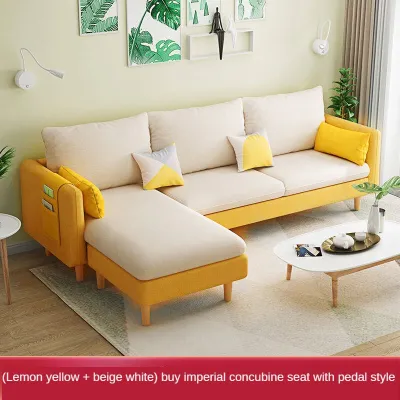
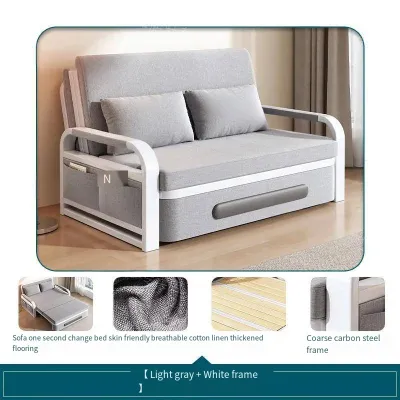
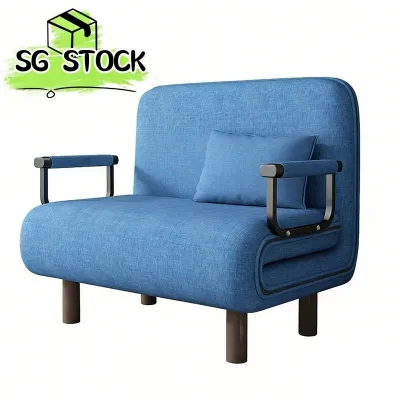
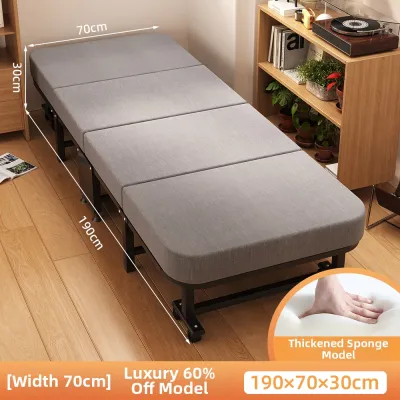

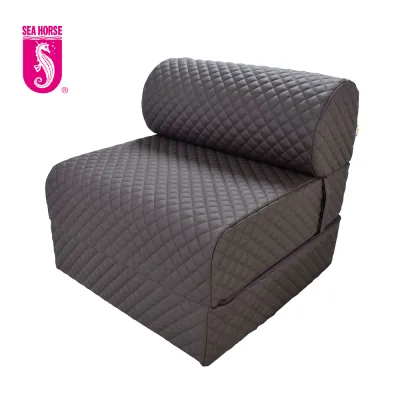
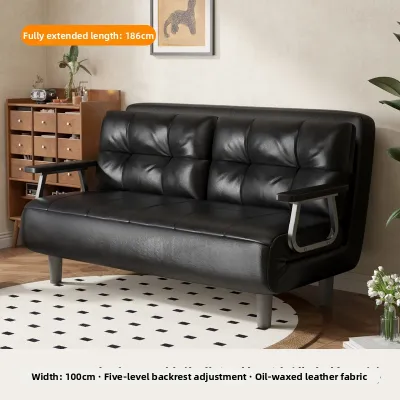
Prices are valid at publication and may change. Please refer to the product page for the latest price.
Clearance is not just about floor space; it also involves vertical and swinging clearances. Check the swing paths of nearby bedroom doors, main doors, and balcony doors to ensure they do not collide with the sofa bed when it is opened. Additionally, verify that the extended bed does not block access to low-hanging air conditioning units, wall-mounted fans, or window treatments like curtains and blinds. Maintaining a clear path of at least 60 to 70 centimeters around the extended bed is essential for comfortable movement.
The most common delivery bottleneck in HDB estates is the journey from the unloading bay to your living room. You must measure the height and width of your HDB unit’s main door, safety gate, and any narrow hallway turns inside the flat. Do not forget to check the dimensions of the estate’s passenger lift, including the door opening width, internal cabin height, and diagonal depth. If your building requires using the stairs, measure the clearance at every landing turn to ensure the delivery team can safely maneuver the packaged sofa bed without damaging the walls or the furniture frame.
Determine the Ideal Dimensions for Seating and Sleeping
Selecting the right seating capacity directly impacts the daily flow of your HDB living room. A standard 2-seater fabric sofa bed is highly suited for smaller 3-room flats or study rooms, offering a compact footprint that leaves ample space for side tables or indoor plants. For larger 4-room and 5-room flats, a 3-seater configuration provides comfortable daily seating for the household while offering a wider sleeping surface that can accommodate taller guests or couples.

When evaluating the sleeping surface, pay close attention to the mattress thickness and dimensions specified by the manufacturer. Sofa bed mattresses are typically thinner than standard bedroom mattresses to allow for folding, but they should still offer adequate support. Check the manufacturer’s specifications for the exact width and length of the sleeping area to ensure it matches your guest requirements. A wider sleeping surface is ideal for couples, while a narrower single-size equivalent is sufficient for solo sleepers and saves valuable floor space.
Visual proportion is just as important as physical dimensions in a compact HDB living room. A sofa with an excessively deep seat or a very high backrest can dominate the room visually, making the ceiling feel lower and the space feel smaller. Opt for designs with a moderate seat depth and a low-to-medium backrest height to maintain an open, airy feel. Balancing these proportions ensures the sofa bed integrates seamlessly into your living room decor without overwhelming the surrounding furniture.
Select a Space-Saving Style and Folding Mechanism
The folding mechanism determines how easily the sofa transitions into a bed and how much clearance is required in front of the unit. Pull-out mechanisms typically feature a frame that rolls forward from beneath the seat cushions, requiring significant floor space in front of the sofa but keeping the backrest close to the wall. In contrast, click-clack and futon-style mechanisms operate by flattening the backrest downward, which requires you to leave a gap between the back of the sofa and the wall, or slide the sofa forward before converting it.
To maximize the usable seating area within a limited horizontal footprint, prioritize armless designs or sofas with slim, low-profile armrests. Wide, padded armrests can add up to 30 to 40 centimeters of unnecessary width to the sofa’s overall footprint without adding any actual seating space. By choosing slim-arm or armless models, you maximize the internal seating and sleeping width while keeping the external dimensions as compact as possible.
Built-in storage is a highly practical feature for HDB flats where storage space is at a premium. Many modern fabric sofa beds feature integrated storage compartments beneath the seat cushions or within a chaise lounge section. This hidden space is highly suitable for storing extra pillows, bedsheets, blankets, and duvets, keeping your living room organized and eliminating the need to find additional wardrobe space for guest bedding.
Evaluate Fabric Choices for Daily Use and Maintenance
Because a sofa bed serves a dual purpose, its fabric must endure both daily sitting and occasional sleeping friction. When shopping, check the manufacturer’s product specifications for durability indicators, such as the Wyzenbeek or Martindale rub count, which measure abrasion resistance. A higher rub count indicates a tighter, more durable weave that is less likely to wear thin or tear over years of frequent folding and unfolding.
In Singapore’s humid climate, maintaining hygiene is crucial, especially when guests sleep on the sofa. Prioritize fabric sofa beds that feature fully removable and machine-washable covers. Removable covers allow you to wash away sweat, dust mites, and accidental spills easily, extending the lifespan of the fabric and keeping the sleeping environment fresh. If the covers are not removable, check if the fabric has been treated with water-resistant or stain-resistant finishes.
The texture and weave of the fabric also play a significant role in comfort and maintenance. Tight weaves, such as flat-woven polyesters or synthetic linen blends, offer excellent breathability in warm weather and are highly resistant to pilling and snagging. Avoid loose weaves or highly textured fabrics if you have pets, as claws can easily pull the threads. Always consult the manufacturer’s care label to verify the recommended cleaning methods, as some fabrics may require professional dry cleaning rather than water-based spot cleaning.
Avoid Common Sizing and Placement Mistakes
One of the most frequent mistakes when placing a sofa bed is blocking essential wall utilities. Before finalizing the position of your sofa, locate all power outlets, television ports, and network sockets. Ensure that when the sofa bed is fully extended, it does not cover these outlets or pinch power cords against the wall, which can create safety hazards or restrict access to your electronics.
Another common oversight is failing to account for the physical effort and clearance needed to operate the folding mechanism. Some mechanisms require you to stand at the front or sides of the unit to pull or lift the frame. If the sofa is placed too close to coffee tables, TV consoles, or dining sets, you will find yourself constantly moving heavy furniture just to open the bed. Always plan for a clear operational zone around the sofa.
Finally, do not overlook the structural stability and weight capacity of the frame. Sofa beds contain moving metal or wooden joints that experience stress during conversion. Check the manufacturer’s guidelines regarding the maximum weight capacity for both the seating and sleeping configurations. Placing excessive weight on a frame that is not rated for it can warp the mechanism, damage the joints, and compromise the safety of anyone using the bed.
Frequently Asked Questions (FAQ)
Can a sofa bed be used as a primary bed for daily sleeping?
While modern sofa beds are highly functional, they are generally designed for occasional guest use rather than daily sleeping. The mattresses in most sofa beds are thinner and offer less orthopedic support than standard bedroom mattresses, which can lead to discomfort over time. Additionally, daily folding and unfolding put continuous stress on the mechanical joints and the fabric, which may void the manufacturer’s warranty or accelerate wear and tear. Always check the manufacturer’s usage guidelines and warranty terms if you plan to use the sofa bed frequently.
How do I clean and maintain a fabric sofa bed?
To keep your fabric sofa bed in optimal condition, start by locating the manufacturer’s care label, which typically uses standard cleaning codes (such as W for water-based cleaners, S for solvents, or WS for both). Establish a regular maintenance routine that includes vacuuming the upholstery with a soft brush attachment to remove dust and debris from the crevices and folding joints. For accidental spills, perform immediate spot cleaning using a clean, damp cloth and a mild detergent approved by the manufacturer. If a stain persists or if the fabric requires deep sanitization, consult a professional upholstery cleaning service to avoid damaging the fibers or shrinking the covers.
Community discussion
Share your experience or ask a question. Comments are reviewed before publication.