
Selecting a door rack hanging system for a compact Singapore apartment entryway requires balancing spatial efficiency with structural safety. In space-constrained HDB flats and modern condominiums, the foyer often serves multiple purposes, leaving little room for bulky freestanding furniture. A well-chosen over-the-door rack maximizes vertical space, keeping daily essentials like bags, keys, and umbrellas organized and off the floor. However, finding the perfect fit involves more than just picking an appealing design; it requires precise measurements of your door’s dimensions, an understanding of your door’s material, and a clear assessment of your household’s daily storage habits.
Measure Your Door and Entryway Clearance Before Buying
Before purchasing any hanging storage system, taking accurate measurements of your door and the surrounding entryway is the most critical step to ensure a seamless fit. Standard interior doors in Singapore often range from 35mm to 40mm in thickness, while main entrance fire-rated doors can be 45mm to 50mm or thicker. Measure this dimension carefully using a tape measure to ensure the over-the-door brackets can sit flush without sliding, rattling, or preventing the door from closing.
The top clearance—the gap between the top edge of the door leaf and the head jamb—is equally vital. If this gap is too tight, the metal bracket of the rack will scrape against the frame, damaging the paint and making the door difficult to operate. A practical way to test this is the coin test: place a two-dollar coin (approximately 2mm thick) on top of the door and gently close it. If the door closes smoothly without resistance, most standard low-profile brackets will fit. If it catches, you will need to look for ultra-thin brackets or alternative mounting methods.
Products mentioned in this guide
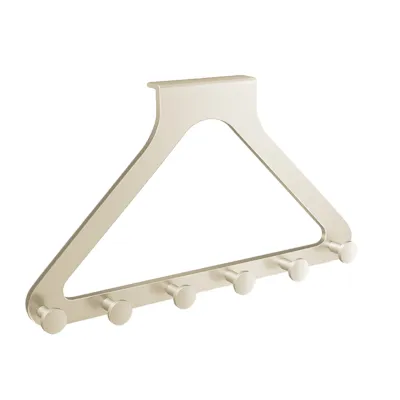
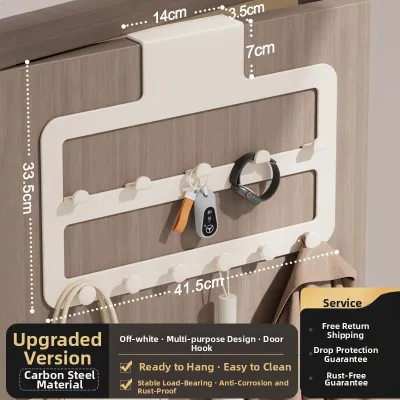
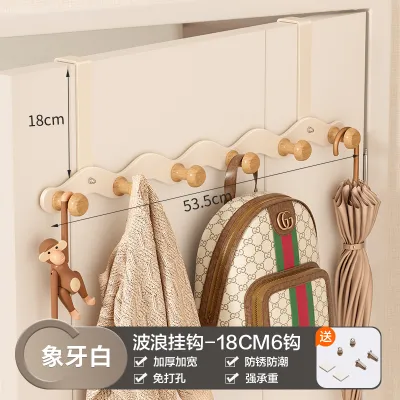
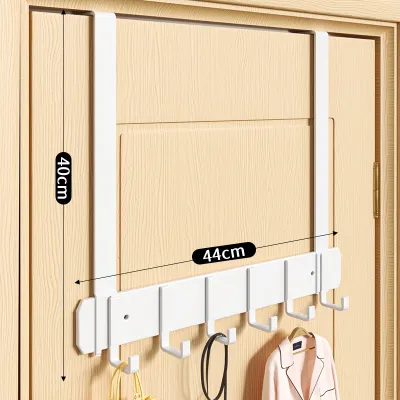
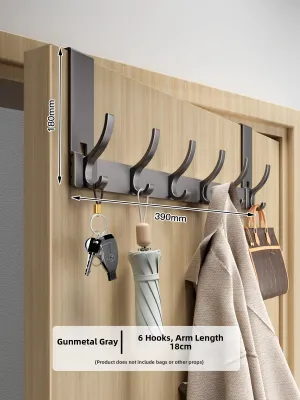
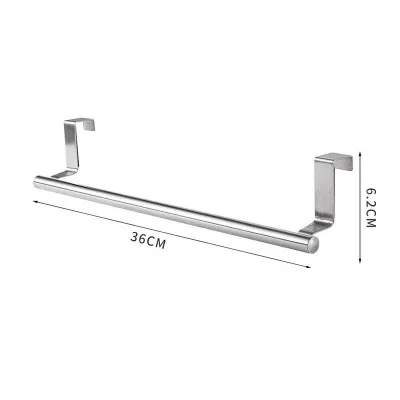
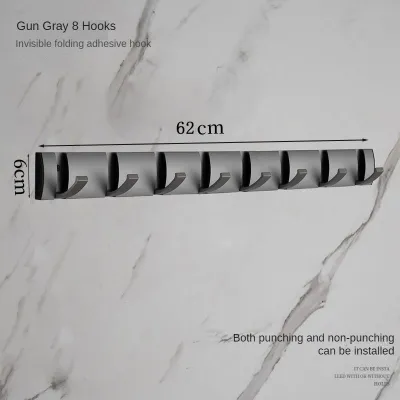
Prices are valid at publication and may change. Please refer to the product page for the latest price.
Additionally, observe the door’s swing arc and the available floor space in your foyer. In tight BTO layouts, the door might swing close to a shoe cabinet, a distribution board (DB) box, or an adjacent wall. Ensure that any items hanging on the rack will not strike these obstacles, which could damage both the wall and the hanging items. Finally, take note of door stoppers, weather stripping, and heavy-duty hinges. Weather stripping or acoustic seals installed along the door frame can reduce the available clearance, making it harder for brackets to sit flush, so these must be accounted for before finalizing your purchase.
Select the Right Rack Width and Depth for Narrow Spaces
Matching the physical dimensions of the coat rack to your specific spatial constraints is essential for maximizing storage without creating a physical bottleneck in your home. The width of the rack should always be narrower than the door panel itself. A rack that extends too close to the edges of the door can catch on the door frame or architrave when the door is opened or closed. Ideally, leave at least 10 to 15 centimeters of clearance on each side of the rack to prevent accidental collisions and paint scrapes.

The depth of the rack—how far the hooks protrude from the door surface—is a critical factor in narrow corridors. In a tight entryway, a deep rack loaded with bulky bags or jackets can create a physical obstacle, making it difficult for family members to pass through comfortably. For narrow corridors, opt for a low-profile design with shallow hooks or folding hooks that lie flat when not in use.
Visual weight also plays a significant role in how spacious your entryway feels. Heavy, solid wood backboards or dark, chunky metal frames can dominate a compact foyer, making it feel cluttered. To keep the space feeling open and airy, consider minimalist wireframe designs, light-colored finishes, or sleek metallic finishes that blend in with the door’s color. Before purchasing from online marketplaces or local home decor retailers, always verify the exact product dimensions listed in the specifications rather than relying solely on product photos, which can often be misleading.
Choose a Hook Configuration That Fits Your Daily Storage Needs
An effective door rack hanging system must align with your household’s daily routine and storage requirements. To determine the ideal configuration, calculate the required number of hooks based on your household size. A family of four will have different storage needs compared to a couple. Allocate at least two hooks per person for daily essentials like work bags, school backpacks, hats, and light outerwear, and consider leaving a dedicated hook for guests.
Hook spacing is just as important as the number of hooks. Closely spaced hooks might seem like they offer more storage, but they often lead to overlapping items. When bags and jackets are piled on top of each other, retrieving a single item becomes frustrating, and the visual clutter increases. Furthermore, in Singapore’s humid tropical climate, damp umbrellas or raincoats need adequate airflow to dry properly. Wider hook spacing (at least 8 to 10 centimeters apart) ensures items remain accessible and can dry without trapping moisture.
Different hook styles serve different purposes:
- Flat hooks: Ideal for wide straps, such as those on tote bags or backpacks, as they distribute weight evenly and prevent strap deformation.
- Rounded knobs: Gentle on delicate fabrics, preventing pointed indentations on light jackets, scarves, or hats.
- Folding hooks: Excellent for ultra-compact spaces, as they can be tucked away when empty to maintain a clean, flush profile.
Always check the manufacturer’s stated weight capacity for both individual hooks and the entire unit. Overloading a single hook can cause it to bend or snap, while exceeding the total weight limit can strain the door hinges or warp the door frame over time.
Verify Door Material and Top-Edge Compatibility
The material of your door dictates how much weight it can safely support and how stable the rack will be. Solid wood doors, commonly used for main entrances in Singapore, are highly durable and can easily support heavier loads. Hollow-core doors, often used for bedrooms or internal partitions, have a cellular cardboard interior and thin plywood or veneer faces. These doors are much more fragile; heavy loads can cause the brackets to press into the wood, leaving permanent dents or cracks.
Before installing any rack, inspect the top edge of your door. Some modern doors feature beveled edges, decorative routing, or metal protective trims. These design elements can prevent standard square-shaped brackets from sitting flat, leading to instability and wobbling whenever the door is moved. If your door has an unusual top-edge profile, look for adjustable brackets that can be tightened to fit the specific shape.
To prevent scratches, scuffs, or peeling paint, choose a rack that includes protective padding, such as high-density foam, rubber, or felt strips, on the inside of the brackets and the back of the frame. If the rack does not come with padding, you can easily apply adhesive felt pads to protect your door’s finish. If your door is made of delicate glass panels, has a highly decorative top edge, or is a hollow-core door that cannot support the weight of your items, it is best to abandon over-the-door models. In these scenarios, look for wall-mounted racks anchored securely into concrete walls or a slim, freestanding coat tree that fits into a corner.
Avoid Common Sizing and Placement Mistakes in Small Foyers
One of the most common mistakes is ignoring the door’s opening direction and swing path. If the door opens inward against a wall, a loaded rack will prevent the door from opening fully, reducing the usable width of your entryway and potentially damaging the plaster or paint on the adjacent wall. Always ensure there is enough clearance behind the door to accommodate the depth of the rack and the items hanging on it.
Buying a rack that is too wide can lead to scraping against the door frame. Over time, this friction will strip the paint or laminate off both the door frame and the rack, leading to unsightly wear and tear. Additionally, hanging heavy, wet items like large golf umbrellas, wet raincoats, or heavy leather bags can put immense leverage on the top of the door. This constant downward pull can gradually misalign the door hinges, causing the door to sag, squeak, or fail to latch properly.
Finally, ensure that the thickness of the bracket does not prevent the door from latching securely. If the top clearance is too tight, the door might require significant force to close, which can damage the lock mechanism or the door frame over time. Always verify that the door can be locked and unlocked smoothly with the rack installed.
Frequently Asked Questions (FAQ)
Will an over-the-door rack damage my apartment door?
Damage is rarely caused by the rack itself, but rather by improper fit, excessive weight, or friction from daily use. To protect your door, always use brackets lined with foam, rubber, or felt padding to absorb vibrations and prevent direct metal-to-wood contact. Additionally, distribute weight evenly across the rack and avoid overloading hollow-core doors, which are highly susceptible to denting and structural strain.
Can I use a door hanging rack on a door with an automatic closer?
Automatic door closers, which are standard on fire-rated HDB main doors and condominium entrance doors, present a unique challenge. The closer mechanism and its arm are mounted at the top of the door, often blocking the exact area where over-the-door brackets need to sit. Before purchasing, measure the clearance around the closer arm. If the arm or housing obstructs the top edge, a standard over-the-door rack will not fit. In these cases, look for specialized low-profile brackets that can bypass the mechanism, or opt for a wall-mounted rack to avoid interfering with the fire safety door’s self-closing function.

Community discussion
Share your experience or ask a question. Comments are reviewed before publication.