
Finding the right umbrella stand for a compact HDB entryway requires balancing space efficiency, stability, and moisture control. In Singapore’s tropical climate, sudden downpours make a reliable entryway organizer essential, but a bulky stand can quickly block your main walkway or interfere with your door swing. The ideal solution is a slim, stable unit that manages dripping water without encroaching on your limited floor space. By focusing on smart designs and precise measurements, you can keep your foyer dry, organized, and safe.
Measure Your Entryway Space and Clearance First
Before purchasing any organizer, measure the exact floor footprint available near your main door. HDB entryways, especially in modern Build-To-Order (BTO) flats, are often narrow corridors or shared foyers where every centimeter counts. Use a measuring tape to map out the width and depth of the proposed spot, ensuring there is at least 10 to 15 centimeters of clearance from the door’s active swing path so the door can open fully without striking the stand.
Consider how the stand will interact with your daily traffic patterns and existing furniture. If the stand sits too close to your shoe cabinet or digital lockset, you risk bumping into it every time you enter or leave. Walk through your typical entry routine to verify that a freestanding unit will not obstruct your natural movement, block access to lower cabinet doors, or create a tripping hazard in the dark.
Products mentioned in this guide
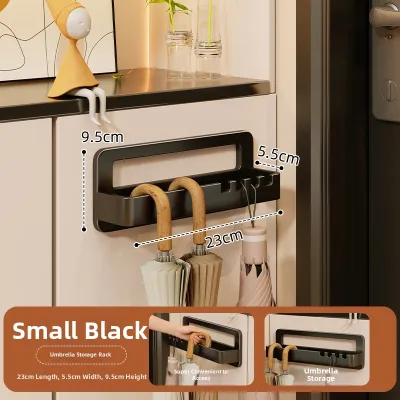
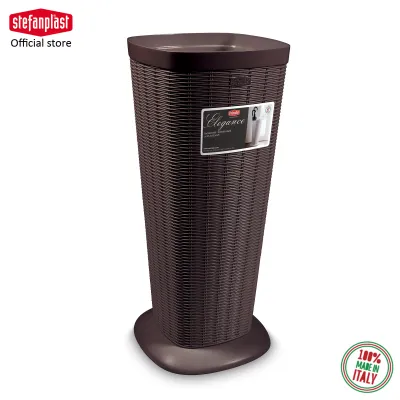
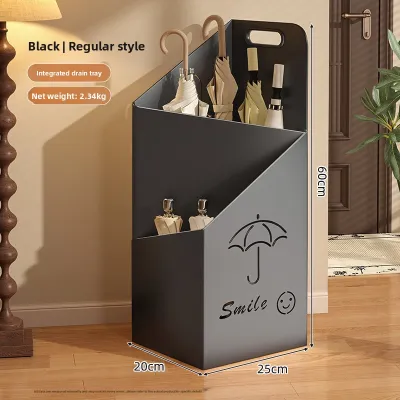
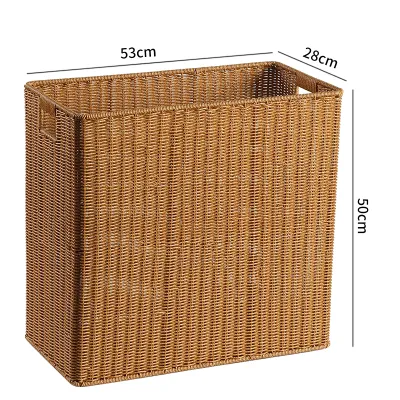
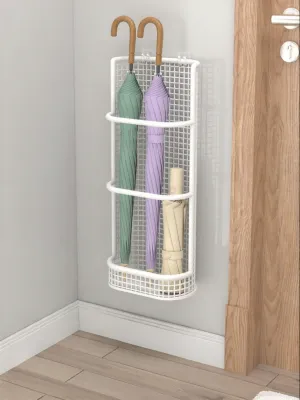
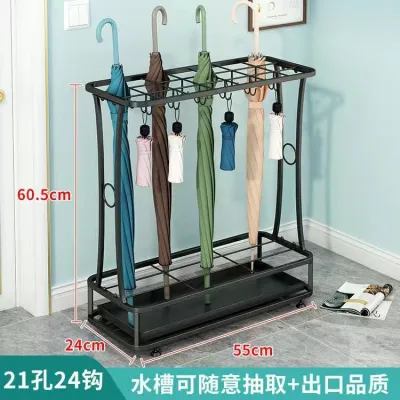
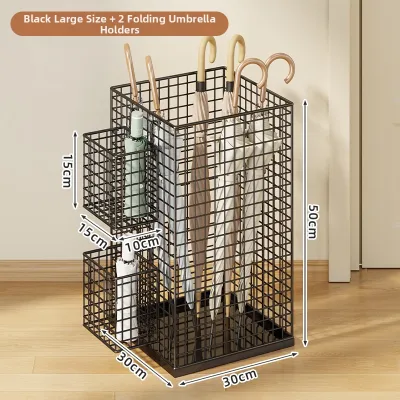
Prices are valid at publication and may change. Please refer to the product page for the latest price.
If you are leaning toward a wall-mounted rack, inspect the wall material and structure of your entryway. Many HDB household shelters or structural columns are made of reinforced concrete, which makes drilling highly difficult without heavy-duty rotary hammers. Additionally, check HDB renovation guidelines regarding drilling into common corridor walls or structural elements to avoid structural damage or compliance issues before planning any permanent installations.
Compare Space-Saving Umbrella Stand Designs
Slim freestanding models are highly popular because they require zero installation and can be repositioned easily. These designs typically feature a narrow rectangular or oval footprint that hugs the wall, making them easy to tuck into tight corners. However, you must assess the trade-off between a small footprint and overall height; a very tall, narrow stand can easily become top-heavy when loaded with long golf umbrellas, so look for models with a low center of gravity.

Wall-mounted racks offer the ultimate floor-clearing benefit, making them excellent for ultra-tight entryways. They keep the floor completely clear, which simplifies sweeping, mopping, and robot vacuum navigation. However, you must verify the load-bearing capacity of the mounting method and ensure the wall surface can support the weight of multiple wet umbrellas without peeling, cracking, or losing adhesion over time.
Multi-functional stands combine umbrella storage with other entryway essentials, such as shoe benches, key trays, or coat hooks. While this consolidation can save overall floor space by eliminating the need for separate organizers, it also carries a risk of visual clutter in a small HDB foyer. If you choose a multi-functional unit, ensure each section is clearly defined and that wet umbrellas do not drip onto dry shoes or wooden surfaces.
Foldable or collapsible designs provide excellent flexibility for households that only experience heavy rain during monsoon seasons. These stands can be deployed when wet weather strikes and tucked away inside a shoe cabinet or utility closet when dry, keeping your entryway completely clear most of the year. When evaluating these models, check the durability of the folding joints and ensure the material can withstand repeated folding and unfolding without weakening.
Evaluate Key Features for Tight Entryways
Moisture management is critical in confined spaces, making water drainage and drip trays a top priority. Look for stands with removable drip trays that collect runoff from wet umbrellas rather than letting it pool on your entryway tiles. This prevents water from causing dangerous slips or warping nearby wooden shoe cabinets and laminate flooring, which are highly sensitive to standing water.
The base weight and center of gravity determine whether a slim stand will remain upright or crash down. A high-quality compact stand should feature a weighted base—often made of heavy plastic, cast iron, or weighted resin—to counterbalance the height of full-sized umbrellas. Check the manufacturer’s specifications for the base weight before buying, especially if you plan to store multiple long-stemmed umbrellas.
Given Singapore’s high humidity, checking the material and finish is essential to prevent premature rust and deterioration. If choosing metal, verify that the manufacturer specifies a rust-resistant powder coating or uses stainless steel. For plastic or resin models, inspect the joints and seams to ensure they are watertight and will not leak onto your floors over time.
Align the stand’s capacity with your actual household needs rather than buying the largest option available. A household of two or three people rarely needs a stand that holds a dozen umbrellas. Choosing a compact unit designed for four to six umbrellas keeps the footprint minimal and prevents the entryway from looking overcrowded, while still providing dedicated slots for both long umbrellas and short folding models.
Position Your Stand Safely in Narrow Walkways
Safe placement is essential to maintain a clear and compliant HDB entryway. Position your stand completely clear of the main door swing and any designated emergency exit paths. In tight corridors, even a minor obstruction can impede a quick exit during an emergency or make it difficult to move large furniture items in and out of the flat.
Manage dripping water proactively by placing the stand on a water-resistant mat if your entryway features laminate or vinyl flooring. Even with a drip tray, wind-blown rain or careless insertion can cause water to splash onto surrounding walls and floors. Keeping a small microfiber cloth nearby allows you to wipe up stray drops immediately, protecting your home’s finishes from moisture damage.
For households with young children or active pets, securing tall or top-heavy units is a critical safety step. If a freestanding stand feels slightly unstable when fully loaded, consider placing it in a corner where two walls provide natural support. Alternatively, use discreet adhesive wall anchors to secure the top of the stand, preventing accidental tip-overs during play.
Frequently Asked Questions (FAQ)
Can I install a wall-mounted umbrella stand in an HDB without drilling?
Yes, you can use heavy-duty adhesive strips or magnetic mounts to install lightweight umbrella holders without drilling. However, these non-drilling methods have strict weight limits and perform best on smooth, non-porous surfaces like metal doors or glazed tiles. Always check the adhesive manufacturer’s weight rating and avoid overloading the rack with heavy, wet golf umbrellas. Additionally, ensure you comply with HDB guidelines regarding modifications to common property or structural walls.
How do I prevent a slim umbrella stand from tipping over?
To prevent a slim stand from tipping, distribute the weight evenly by placing heavier, longer umbrellas in the center or back of the stand. Avoid leaning all umbrellas to one side, which shifts the center of gravity and increases the risk of a fall. If the stand remains unstable, you can add weight to the base using decorative stones or install a simple anti-tip wall anchor to secure the frame to the adjacent wall.

Community discussion
Share your experience or ask a question. Comments are reviewed before publication.