
Selecting the right wardrobe for a Housing & Development Board (HDB) flat in Singapore requires a careful balance of spatial efficiency, material durability, and functional design. With standard bedroom sizes becoming increasingly compact, a 2 door sliding wardrobe has emerged as a highly popular choice. Unlike traditional hinged doors that require a clear swing radius, sliding doors glide parallel to the frame, allowing you to place beds, side tables, or study desks close to the wardrobe without obstructing access. However, finding a brand that delivers both structural longevity and a perfect fit for your specific layout requires looking beyond surface aesthetics.
To make an informed investment, homeowners must evaluate how different wardrobe brands design their products to handle the unique constraints of local housing. This includes understanding the physical dimensions of HDB bedrooms, assessing the engineering of sliding mechanisms, and comparing the long-term value of ready-made modular brands against custom carpentry. By focusing on these critical technical and practical factors, you can select a wardrobe brand that maximizes your storage space while standing up to Singapore’s humid tropical climate.
Understanding HDB Bedroom Dimensions for Sliding Wardrobes
Before browsing showroom displays or online catalogs, you must establish the exact physical boundaries of your bedroom. Standard HDB master bedrooms typically range from 10 to 14 square meters, while common bedrooms are often tighter, measuring between 9 and 11 square meters. In these compact layouts, every centimeter counts. While a 2 door sliding wardrobe is inherently space-saving, its external depth is generally greater than that of a hinged-door equivalent. This is because the sliding track mechanism itself requires an additional 5cm to 10cm of depth to allow the doors to bypass one another smoothly. Consequently, while a standard wardrobe might have an external depth of 60cm, a sliding door model often requires 65cm to 70cm of total depth. You must measure your available floor space carefully to ensure this extra depth does not narrow your bedroom walkways to less than 60cm, which is the minimum recommended width for comfortable movement.
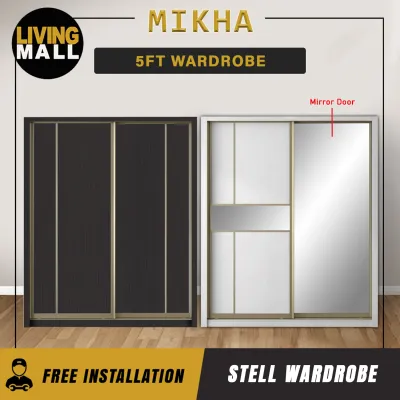
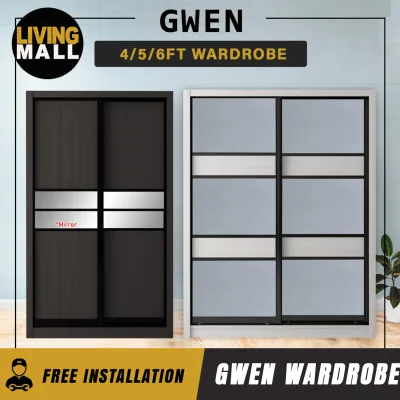
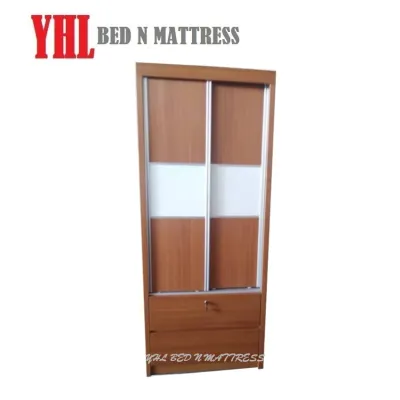
Products mentioned in this guide
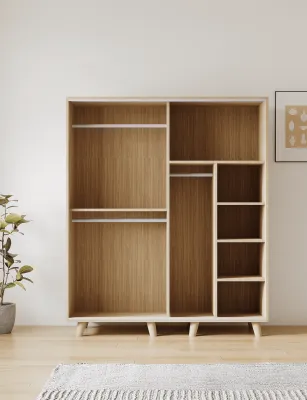
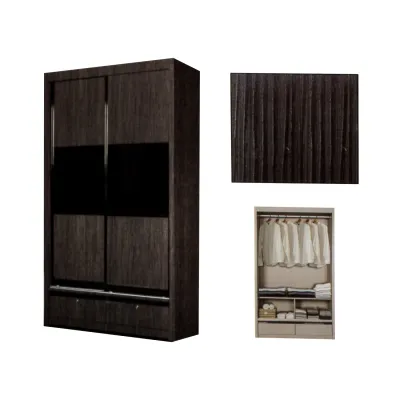
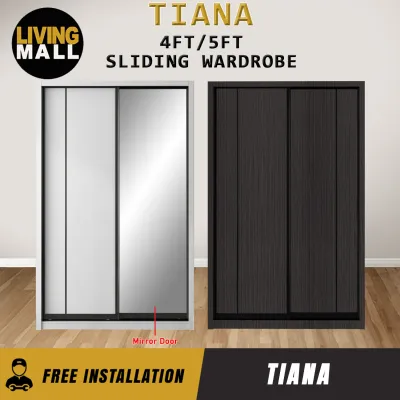
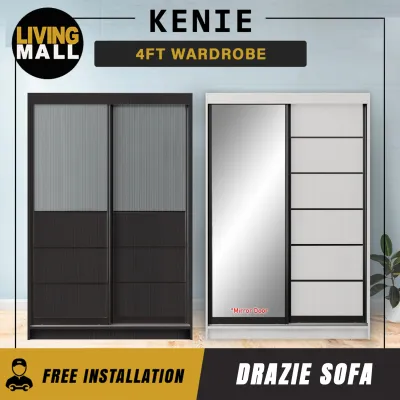
![[INNDESIGN.SG] Simple 2 Doors Wardrobe (Fully Assembled and Free Delivery)](https://img.lazcdn.com/g/p/19f1fcd73c3c1aed73f1e4543434ceac.jpg_400x400q80.jpg_.webp)
Prices are valid at publication and may change. Please refer to the product page for the latest price.
Ceiling height clearance is another critical factor that many homeowners overlook. Most standard HDB flats feature a floor-to-ceiling height of approximately 2.6 meters, though older flats or top-floor units may vary. If you are purchasing a ready-made modular wardrobe from a retail brand, these units typically come in standard heights of 2.0 to 2.4 meters. You must ensure there is a clearance of at least 10cm to 15cm between the top of the wardrobe and the ceiling. This gap is necessary not only for the installation process—allowing assembly teams to lift and secure the heavy sliding panels—but also to prevent the wardrobe from interfering with ceiling fan blades, air-conditioning louvers, or decorative plaster cornices.
Furthermore, you must map out potential door swing and access restrictions. Even though the wardrobe doors slide rather than swing, their lateral movement can still block adjacent fixtures. For instance, when you slide one door open, it will completely cover the other half of the wardrobe. You must ensure that this movement does not block access to wall-mounted light switches, electrical sockets, or window handles. Additionally, if you plan to place a study desk or a bedside table directly next to the wardrobe, verify that you can still slide the doors open wide enough to access the internal drawers and hanging rods without your furniture getting in the way. Finally, consider the delivery route: measure your HDB lift door, lift interior, and main entryway to ensure the large, pre-assembled sliding door panels can actually be transported into your home without damage.
Critical Build and Mechanism Features to Evaluate
The longevity of a 2 door sliding wardrobe depends almost entirely on the quality of its moving parts and the materials used in its construction. When evaluating different brands, the sliding track and roller mechanism should be your primary focus. High-quality brands utilize heavy-duty roller wheels equipped with precision ball bearings, which allow the doors to glide effortlessly with minimal effort. Look for systems that feature an “anti-jump” mechanism. This safety feature consists of specialized guides or spring-loaded rollers that lock the wheels securely into the track, preventing the heavy doors from jumping off the rails if they are opened too quickly or bumped accidentally.

In addition to the tracks, pay close attention to the door edges and closing mechanisms. Because sliding doors do not seal flat against the frame like hinged doors, they are prone to letting in dust and small insects. To combat this, reputable brands install dense, high-quality brush seals along the vertical edges of the doors. These seals close the microscopic gaps between the overlapping panels. Furthermore, soft-close dampers are an essential feature for any modern sliding wardrobe. These hydraulic or pneumatic tensioners catch the door as it nears the side panel and gently pull it closed, preventing the heavy doors from slamming. This not only reduces noise in a quiet bedroom but also protects the structural joints of the wardrobe from the constant impact of daily use.
The choice of board material is equally vital, especially given Singapore’s high relative humidity, which frequently hovers above 80%. Low-grade particleboard or poorly sealed medium-density fiberboard (MDF) can easily absorb moisture from the air, leading to warping, sagging shelves, and mold growth. When comparing brands, look for those that use moisture-resistant materials, such as high-quality plywood, blockboard, or moisture-resistant engineered wood. The edges of these boards must be sealed with thick Acrylonitrile Butadiene Styrene (ABS) edge banding rather than thin paper veneer. ABS banding provides a robust, impact-resistant barrier that prevents moisture from penetrating the core of the wood, ensuring your wardrobe remains structurally sound and mold-free over years of use.
Assessing Brand Reliability and After-Sales Support
When shopping for a 2 door sliding wardrobe, it is easy to get caught up in attractive laminate designs and clever internal organizers. However, the true value of a brand lies in its reliability, warranty terms, and post-installation support. Because sliding wardrobes rely heavily on mechanical components, you should carefully scrutinize the warranty policy of each brand. A standard structural warranty might cover the wooden frame for several years, but the moving parts—such as the tracks, rollers, and soft-close dampers—are far more likely to experience wear and tear. Prioritize brands that offer a dedicated, multi-year warranty specifically covering these moving components. A brand that stands behind its hardware with a clear, long-term warranty is a strong indicator of manufacturing quality.
To truly assess a brand’s build quality, you should visit their physical showroom rather than relying solely on online product listings. When testing a display unit, pay attention to the tactile feedback. Slide the doors back and forth several times; the movement should feel smooth, consistent, and virtually silent. If you feel any resistance, vibration, or hear grinding noises, it suggests poor track alignment or low-grade rollers. Gently push the wardrobe frame from the side to check its stability. A well-constructed wardrobe should feel solid and rigid, with no noticeable swaying. Inspect the internal joints and shelf supports as well—look for heavy-duty metal brackets and adjustable shelf pins rather than flimsy plastic pegs, which can easily snap under the weight of folded clothes.
Finally, always clarify the full breakdown of costs before making a purchase. Many furniture brands advertise a base price that excludes essential services. Ask if the price includes delivery and professional on-site installation, as assembling a sliding wardrobe requires precise leveling to ensure the doors slide correctly on uneven HDB floors. If your building has restricted lift access or if you live in a walk-up apartment, check if there are additional staircase fees for carrying heavy panels up manually. Additionally, if you are replacing an existing wardrobe, ask if the brand offers old furniture disposal services and what the associated fees are. Clarifying these details upfront will prevent unexpected expenses from inflating your renovation budget.
Ready-Made Brand Models vs. Custom Carpentry
Homeowners planning their HDB bedroom layout often face a major decision: should they purchase a ready-made modular wardrobe from a retail brand, or commission a local interior designer or carpenter to build a custom unit? Both options have distinct advantages and trade-offs in terms of budget, lead times, and long-term flexibility. Ready-made modular wardrobes are highly cost-effective, typically ranging from S$500 to S$1,500 depending on the materials and size. Because these units are mass-produced, their lead times are incredibly short—often delivered and installed within a few days to a week. This makes them an excellent choice for homeowners on a tight budget or a strict timeline.
However, ready-made wardrobes come in fixed, standardized dimensions (typically widths of 1.2 meters, 1.5 meters, or 1.8 meters). If your bedroom wall does not match these exact measurements, you will be left with awkward, unused gaps at the sides or top of the wardrobe, which can accumulate dust and look visually disjointed. In contrast, custom carpentry is built to the exact millimeter of your space, stretching seamlessly from wall to wall and floor to ceiling. This maximizes every square inch of storage and creates a clean, integrated look. However, this level of customization comes at a premium, with prices typically calculated per foot run, often totaling between S$2,000 and S$4,000 or more for a standard bedroom. Custom builds also require a much longer lead time, often taking four to eight weeks for fabrication and on-site installation.
Another crucial factor to consider is adaptability and future planning. Modular wardrobe brands often design their systems with adjustable internal configurations. This means you can easily reposition shelves, add extra drawers, or adjust the height of hanging rods as your storage needs change over the years. Furthermore, if you decide to rearrange your bedroom layout or move to a new home, a modular wardrobe can often be disassembled, moved, and reassembled. Custom carpentry, on the other hand, is permanently anchored to the walls and floor. It cannot be moved or adjusted without significant demolition work, meaning any future layout changes will require tearing down the existing structure and investing in entirely new furniture.
Frequently Asked Questions (FAQ)
Do sliding wardrobe tracks collect dust and require special cleaning?
Yes, bottom-running sliding wardrobe tracks naturally accumulate dust, hair, lint, and small debris over time due to gravity and foot traffic in the bedroom. If left uncleaned, this buildup can clog the roller wheels, causing the doors to glide unevenly, squeak, or even jump off the tracks. To maintain smooth operation, you should vacuum the bottom tracks once a week using a narrow crevice tool attachment to suck up loose dirt. For stubborn grime, wipe the tracks with a dry or slightly damp microfiber cloth. Avoid using harsh liquid cleaners, abrasive scrubbing pads, or heavy lubricants like WD-40 inside the tracks, as these oily substances will actually attract more dust and create a sticky paste that accelerates roller wear.
Is it safe to mount a sliding wardrobe directly on drywall partitions?
Mounting or anchoring a heavy sliding wardrobe directly onto a standard drywall partition requires extreme caution. Sliding wardrobes, especially those with solid wood frames or thick glass door panels, are incredibly heavy, and the lateral force generated by sliding the doors back and forth puts continuous stress on the wall. Standard drywall partitions in HDB flats are not designed to support such heavy, dynamic loads on their own. To ensure safety, the wardrobe must be anchored directly into the internal metal studs of the drywall partition using specialized heavy-duty toggle bolts, or secured to a solid concrete structural wall. If you are unsure about the load-bearing capacity of your bedroom walls, always consult a structural professional or a qualified carpenter to assess the wall type and implement the correct anchoring method.

Community discussion
Share your experience or ask a question. Comments are reviewed before publication.