
To determine how many pairs of shoes your solid wood shoe cabinet should hold, you must calculate your household’s active footwear inventory, add a buffer for seasonal items and guests, and translate this total into physical cabinet dimensions. For a typical household, this usually translates to four to six pairs of shoes per person for daily and seasonal rotation. Because solid wood is a heavy, rigid material with fixed shelf spans, selecting the correct size requires balancing your storage needs with the physical limits of your entryway and the structural specifications of the furniture.
Unlike lightweight synthetic alternatives, a solid wood cabinet is a long-term furniture investment that cannot be easily expanded or reconfigured once purchased. A cabinet that is too small leads to cluttered entryways, while an oversized cabinet can restrict movement. By focusing on your household’s specific habits, shoe styles, and spatial limitations, you can find the ideal balance between storage capacity and aesthetic appeal.
Assessing Your Household's Shoe Storage Needs
To calculate your total required shoe capacity, begin by auditing your current footwear collection by category. Gather every pair owned by each adult and child in the household and group them into daily wear, athletic shoes, formal footwear, and seasonal items. This exercise often reveals shoes that are rarely worn, which can be decluttered or moved to long-term storage elsewhere, leaving only the active collection for your primary entryway cabinet.
Products mentioned in this guide
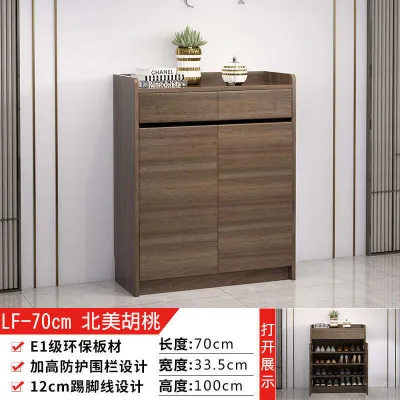
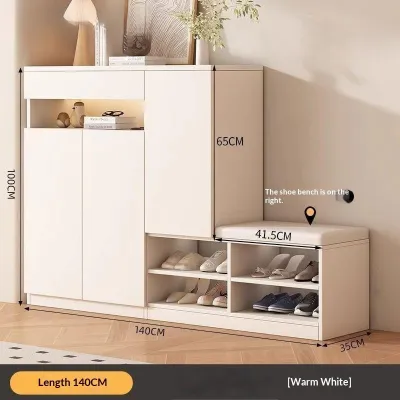
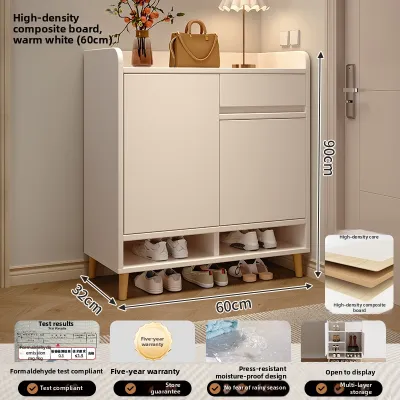
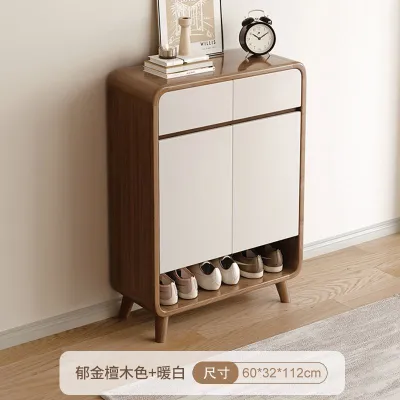
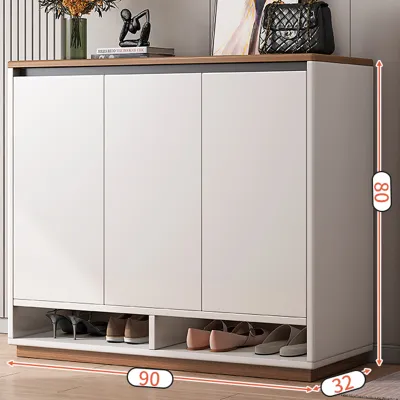
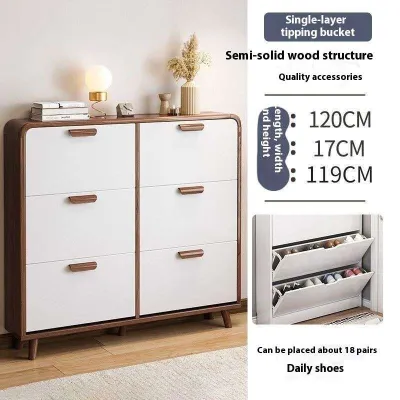
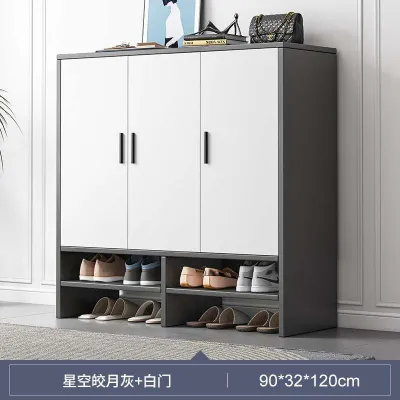
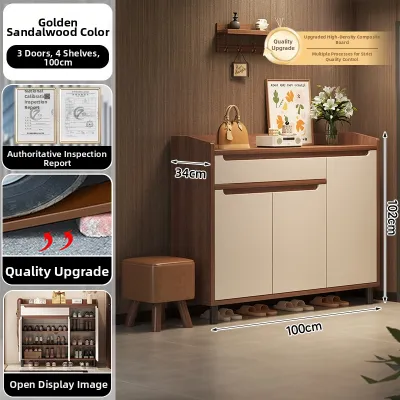
Prices are valid at publication and may change. Please refer to the product page for the latest price.
Next, factor in guest slippers and occasional footwear that require dedicated, easily accessible storage. In many households, particularly in Singapore, it is customary for residents and visitors to remove their shoes before entering the living space. Dedicating a specific shelf or a lower open compartment for guest slippers ensures they are always within reach and prevents visitors’ shoes from cluttering the threshold when you host gatherings.
It is also crucial to add a buffer for anticipated collection growth over the next one to two years. This is especially important for households with growing children whose shoe sizes increase rapidly, or for active individuals who regularly acquire specialized footwear for sports, hiking, or professional needs. A safe guideline is to add a ten to twenty percent capacity buffer to your calculated total to accommodate these future acquisitions without running out of space.
Finally, separate your everyday grab-and-go pairs from long-term seasonal or formal storage. Your primary entryway cabinet should prioritize high-accessibility zones for the shoes you wear daily, such as work shoes, school shoes, and casual sandals. Less frequently worn items, such as formal heels, dress shoes, or off-season boots, can be assigned to the upper shelves or deeper sections of the cabinet, or even stored in bedroom closets to free up prime entryway real estate.
Translating Pair Counts into Cabinet Dimensions
Once you have a target pair count, you must translate this number into physical cabinet dimensions. Start by measuring the widest and longest shoes in your household rather than assuming standard industry dimensions. A pair of men’s athletic sneakers or large work boots takes up significantly more horizontal and vertical space than children’s shoes or flat sandals. Use the sole length of the largest shoe in your house to determine the minimum internal depth required for the cabinet shelves.

With these measurements, you can calculate the total number of shelves needed based on a realistic estimate of how many pairs can fit side-by-side on a single shelf. For example, a standard shelf width of eighty centimeters typically accommodates three to four pairs of adult shoes. If your target capacity is twenty-four pairs, you will need approximately six to eight shelves, depending on the width of the cabinet and whether you need to adjust shelf heights for taller footwear like high-tops or ankle boots.
Because solid wood is a dense and heavy material, you must check the manufacturer’s specifications for shelf span limits and weight capacities. Long, unsupported solid wood shelves can bow or sag over time under the weight of multiple pairs of heavy leather boots or wet athletic shoes. Look for cabinets that feature sturdy center supports, thick shelf panels, or reinforced joinery to ensure the structure remains stable and level throughout its lifespan.
Additionally, evaluate whether a single wide cabinet or multiple narrower units better suits your home. A single, massive solid wood cabinet can be incredibly heavy, making delivery, assembly, and future room rearrangements challenging. Opting for two smaller, matching cabinets placed side-by-side or utilizing a combination of a primary entryway cabinet and a slim shoe bench can distribute the weight more evenly and offer greater layout flexibility.
Space and Placement Checks for Solid Wood Cabinets
Before finalizing your purchase, perform precise space and placement checks in your designated entryway. Use a metal measuring tape to record the exact width, depth, and height of the floor space, taking care to account for baseboards, skirting boards, light switches, and electrical outlets. Solid wood furniture cannot be squeezed into tight corners like flexible plastic racks, so your measurements must be highly accurate to avoid a costly misfit.
You must also verify the delivery access route from the street to your entryway. Solid wood cabinets are often delivered fully assembled or in large, heavy boxes that require significant clearance. Measure the height and width of your building’s lift doors, common corridors, stairwells, and your apartment’s front door frame to ensure the delivery team can safely transport the cabinet into your home without damaging the walls or the furniture.
Another critical factor is allocating sufficient clearance for door swings, drawer pulls, and ventilation. Ensure that the cabinet doors can open fully without striking adjacent walls, front doors, or other furniture pieces. Furthermore, because solid wood is sensitive to humidity and moisture, leave a gap of at least two to three centimeters between the back of the cabinet and the wall to promote air circulation and prevent mold growth, which is particularly common in humid tropical climates.
Lastly, confirm the load-bearing suitability of your floor and plan for secure anchoring. A fully loaded solid wood shoe cabinet is exceptionally heavy and can pose a serious safety hazard if it tips over. If you select a tall, narrow, or shallow cabinet design, check that the manufacturer includes wall-anchoring hardware, and verify that your entryway wall material (such as concrete or drywall) can securely support the anchors.
Common Sizing Mistakes to Avoid
One of the most common mistakes when choosing a shoe cabinet is failing to account for the extra vertical height required for tall boots or high-top sneakers. Standard shoe shelves are often spaced fifteen to twenty centimeters apart, which is insufficient for boots and forces users to bend the shafts or store them sideways, leading to creased leather and wasted shelf space.
Another frequent error is ignoring the swing radius of hinged solid wood doors. In narrow corridors or compact entryways, large swinging doors can completely block the walkway when opened, creating a bottleneck every time someone leaves or enters the home. If space is limited, consider cabinets with sliding doors, louvers, or open-front designs that do not require extra clearance to access your shoes.
Overloading shelves beyond the manufacturer’s recommended weight limits is another issue that can lead to structural damage. While solid wood is highly durable, excessive weight concentrated on a single long shelf can cause the wood to warp or split at the joint connections. Distribute your heaviest footwear, such as work boots and leather dress shoes, across the bottom shelves where the cabinet’s base provides the most structural support.
Finally, avoid planning your cabinet capacity down to the exact number of shoes you currently own. Leaving no room for future purchases or seasonal changes means your new cabinet will be instantly maxed out, forcing you to clutter the floor or purchase additional storage. Always choose a cabinet with adjustable shelving options and a slight capacity surplus to ensure your storage solution remains functional for years to come.
Frequently Asked Questions (FAQ)
Can I add extra shelves to a solid wood shoe cabinet later?
Adding extra shelves to an existing solid wood cabinet depends largely on whether the interior side panels feature pre-drilled adjustable peg holes or fixed structural supports. If your cabinet has adjustable peg holes, you can easily source matching solid wood shelves from the original manufacturer or have them custom-cut to size. Before installing new shelves, check the thickness of the side panels and the direction of the wood grain to ensure that inserting new shelf pins or brackets will not split or damage the wood.
How do I store tall boots in a standard solid wood shoe cabinet?
To accommodate tall boots without sacrificing the overall capacity of your cabinet, look for models with adjustable or removable shelving systems that allow you to create a dedicated tall zone on one side. If your cabinet has a fixed shelf layout, you can use boot shapers or hanging inserts to keep the shafts upright and prevent creasing, or store them flat on a standard shelf. Keep in mind that laying boots flat horizontally will consume the space of two to three standard pairs, so adjusting the shelf height remains the most space-efficient solution.

Community discussion
Share your experience or ask a question. Comments are reviewed before publication.