
An entryway bench in a typical Singapore home serves as the first line of defense against foyer clutter, but its primary purpose is active rotation rather than long-term storage. For a typical household of three to four people, an entryway bench generally needs between 6 to 12 shoe slots to accommodate daily-wear pairs. Determining your exact requirement involves balancing your household’s daily habits, the physical dimensions of your foyer, and the structural limits of the furniture. Rather than choosing a bench based on aesthetics alone, a systematic calculation ensures your entryway remains clear, safe, and highly functional.
Calculate Your Household's Baseline Shoe Capacity
To find your baseline, start with a simple formula: multiply the number of residents by their daily active pairs. In most Singapore households, each person keeps at least two pairs of shoes in active rotation—typically one pair of work or school shoes and one pair of casual sandals or sneakers. Add one pair of indoor slippers per person if your household practices a shoes-off policy at the door. For a family of four, this baseline immediately translates to 8 to 12 slots just for daily essentials.
Next, account for specialized footwear that frequently ends up at the entrance. Active lifestyles often require running shoes, football boots, or gym trainers that need to air out immediately after use. Singapore’s tropical climate also means sudden downpours, making quick access to slide-on sandals or rain-resistant footwear a necessity. If family members regularly participate in sports or outdoor activities, allocate at least one additional slot per active individual for these specialized pairs.
Products mentioned in this guide
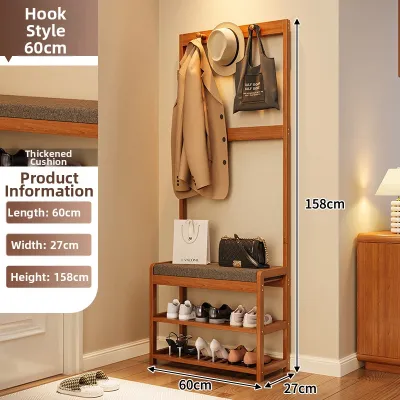
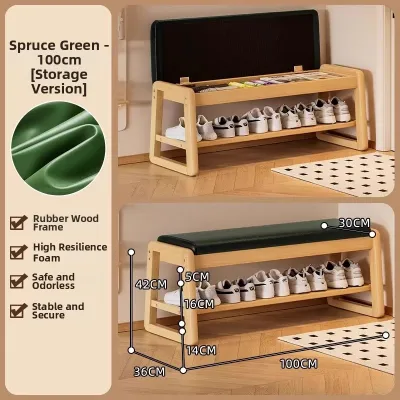
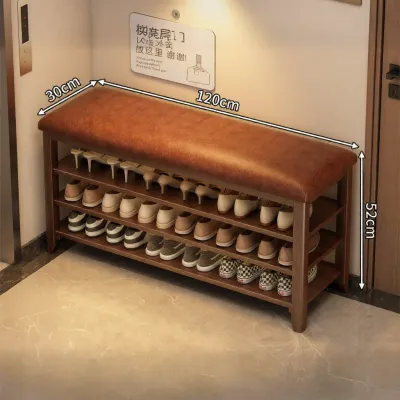
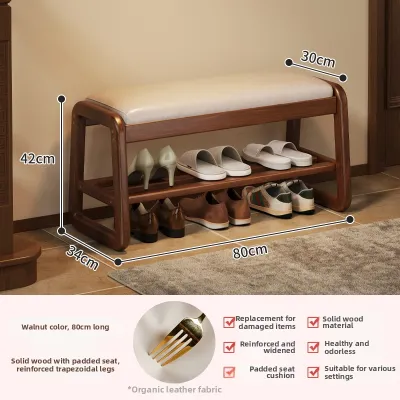
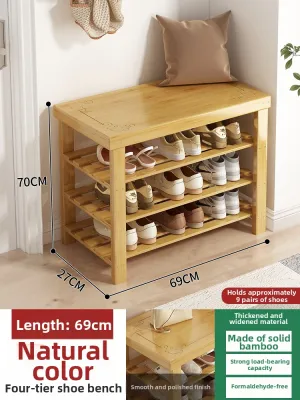
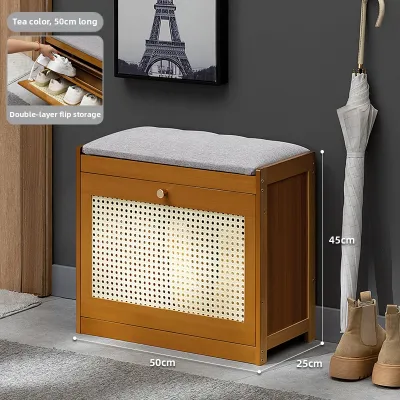
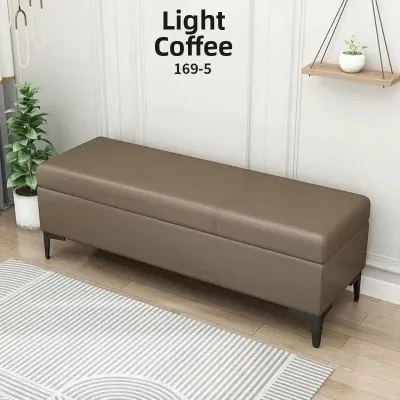
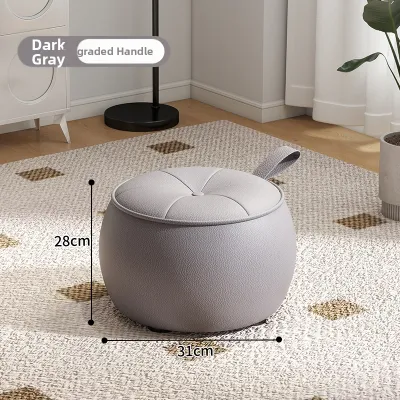
Prices are valid at publication and may change. Please refer to the product page for the latest price.
Do not forget to plan a buffer for guests and future household changes. Hosting friends and extended family is common, and having a designated lower shelf or open under-bench space for guest slippers prevents shoes from piling up in the common corridor. A buffer of two to four extra slots is generally sufficient for hosting. Additionally, if you plan to expand your family or if children are growing and transitioning to larger adult-sized shoes, factoring in this future growth now prevents the bench from becoming obsolete within a few years.
Translate Shoe Counts into Bench Dimensions and Layouts
Once you have a target shoe count, you must translate this number into physical furniture specifications. Never assume that a manufacturer’s advertised shoe capacity matches your family’s actual footwear. Adult shoes, particularly men’s formal shoes or wide trainers, require more horizontal and vertical space than children’s shoes or flat sandals. Always request the exact internal shelf dimensions—specifically the usable width, depth, and height of each compartment—from the retailer or manufacturer before purchasing.

The choice between open shelving and closed cabinet designs significantly impacts both visual clutter and actual storage capacity. Open shelves allow shoes to overhang slightly, which can be useful if you have larger shoe sizes, and they offer immediate access. However, closed cabinets with doors or drawers provide a cleaner look. Keep in mind that cabinet doors, hinges, and internal wooden frames occupy physical space, often reducing the usable internal width by several centimeters. This reduction can mean the difference between fitting three pairs of shoes per shelf or being forced to squeeze in only two, leaving wasted space.
To maximize slot efficiency, look for entryway benches that feature adjustable or removable shelves. Fixed shelves force you to store flat sandals in compartments designed for high-top sneakers, wasting valuable vertical space. Adjustable shelving allows you to lower shelves for flat shoes—effectively doubling your capacity by adding an extra tier—while raising others to accommodate taller footwear. Always verify the shelf support mechanism, checking that the pegs or brackets are sturdy enough to hold the weight of multiple pairs of heavy shoes without bending or slipping.
Verify Entryway Clearances and Furniture Delivery Limits
A high-capacity bench is useless if it blocks your home’s main thoroughfare. In Singapore, entryway layouts vary widely, from spacious executive condominium foyers to compact BTO flat corridors. Measure your available floor width and depth precisely. As a safety rule, maintain a clear walkway of at least 90 to 100 centimeters in front of the bench to allow two people to pass comfortably or to facilitate wheelchair and stroller access. Subtract this clearance from your foyer’s total width to determine the maximum allowable depth of your bench.
Next, map out all door swing arcs and access points. The bench must not obstruct the swing of your main entrance door, metal gate, or any adjacent bedroom or kitchen doors. Pay close attention to the location of your electrical distribution board box, shoe cabinet doors, and household shelter doors. If your bench is too tall or deep, it may prevent these doors from opening fully, creating a safety hazard during emergencies or routine maintenance.
Finally, consider the logistics of getting the bench into your home. Many high-quality entryway benches are delivered fully assembled to ensure structural stability. Before ordering, measure the height and width of your building’s lift doors, the internal lift cabin dimensions, and any tight corners in your corridor or stairwell. If you live in a condominium or HDB estate, check the building management guidelines regarding delivery hours and lift protection requirements. Ensuring the bench can physically fit through your doorway and lift prevents costly return fees and delivery mishaps.
Adapt Storage for Bulky Footwear and Organization Habits
Standard shoe slots are typically designed for flat shoes or low-profile sneakers, measuring around 10 to 15 centimeters in height. If your household collection includes high-top sneakers, boots, or platform heels, forcing them into these standard slots can damage the shoe structure or scuff the bench interior. Plan for at least one taller compartment with a vertical clearance of 20 to 30 centimeters. This dedicated space preserves the shape of your bulkier footwear and keeps the entryway looking organized.
If you prefer to use external storage boxes, plastic shoe drawers, or stackable organizers inside your bench, you must evaluate the space trade-offs. While these organizers protect shoes from dust and keep pairs neatly separated, their plastic or cardboard walls take up valuable internal volume. Measure the external dimensions of your preferred storage boxes and compare them against the bench’s internal compartment dimensions to ensure they fit without wasting space or preventing the cabinet doors from closing.
Tiered shelf inserts or double-decker shoe slots are excellent tools for maximizing vertical space in tall compartments. However, before stacking multiple pairs of heavy shoes on these inserts, check the manufacturer’s weight limits and stability guidelines for both the bench and the inserts. An overloaded shelf can sag over time, compromising the structural integrity of the bench. Ensure the bench itself is stable and, if necessary, anchored securely to the wall to prevent tipping when drawers are pulled out or when someone sits down to put on their shoes.
Frequently Asked Questions (FAQ)
Can an entryway bench double as storage for items other than shoes?
Yes, many entryway benches feature multi-purpose compartments, but dedicating space to non-footwear items directly reduces your shoe capacity. If you plan to store keys, mail, umbrellas, or bags in the bench, allocate specific drawers or top cubbies for these items. It is essential to check for internal dividers or solid partitions that keep these personal belongings completely separated from the lower shoe shelves. This prevents dirt, dust, and outdoor debris from your shoes from transferring onto your clean bags, keys, or mail.
How do I maintain ventilation in a closed entryway shoe bench?
Maintaining proper airflow is crucial for closed benches to prevent moisture buildup and unpleasant odors, especially in Singapore’s humid climate. When selecting a closed bench, check for built-in ventilation features such as rear ventilation holes, breathable mesh back panels, or louvered cabinet doors. For daily maintenance, avoid placing damp or sweaty shoes directly into a closed compartment; let them air out on an open mat first. Additionally, place charcoal deodorizers or moisture-absorbing sachets inside the compartments and replace them regularly to keep the storage environment dry and fresh.

Community discussion
Share your experience or ask a question. Comments are reviewed before publication.