
Finding the perfect balance between your shoe collection and the physical limits of your home is a common challenge, especially in space-conscious environments like Singapore’s HDB flats and condominiums. To determine the right shoe box capacity, you must execute a dual-track calculation: first, audit the physical dimensions and access needs of your footwear, and second, map out the precise architectural boundaries of your available space. This systematic approach ensures you purchase only the storage you need, avoiding both cluttered entryways and empty, wasted boxes.
By taking the time to measure your shoes and your home before buying any storage units, you protect your investment in your footwear. Improperly sized boxes can warp expensive leather, crush delicate heels, or leave your entryway looking disorganized. A structured plan allows you to maximize vertical space safely, maintain clear walkways, and keep your home compliant with local safety guidelines.
Audit Your Shoe Collection to Determine Baseline Capacity
To establish a reliable starting point, gather every pair of shoes in your household and conduct a comprehensive inventory. It is easy to underestimate the size of your collection when shoes are scattered across different entryways, bedrooms, or closets. Begin by counting the total number of pairs and then sorting them into three distinct functional categories: everyday wear, seasonal or occasional footwear, and long-term archival storage. Everyday shoes, such as school shoes, work heels, or daily sneakers, require immediate, low-barrier access. Seasonal or occasional items, like hiking boots, dress shoes, or travel footwear, can be stored in less accessible locations.
Products mentioned in this guide
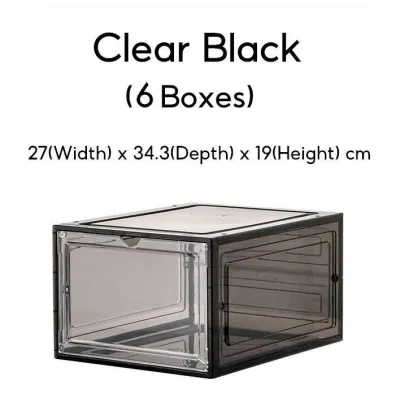
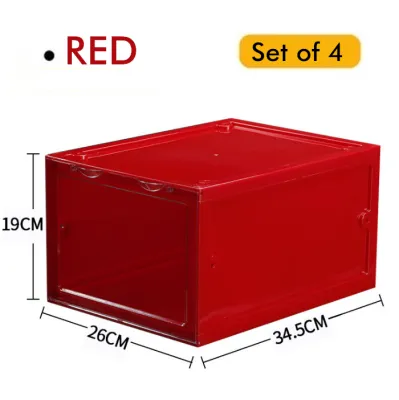
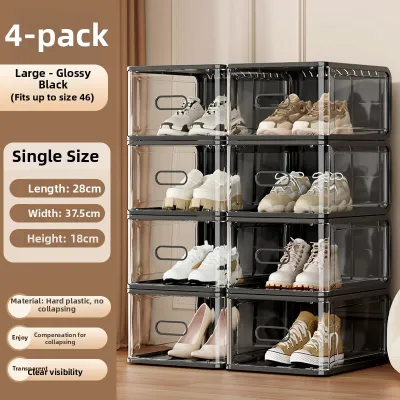
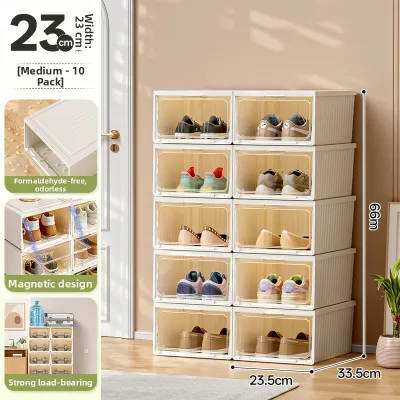
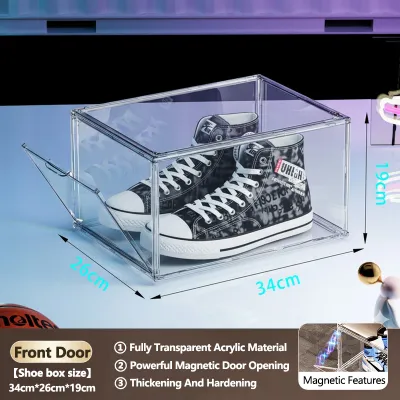
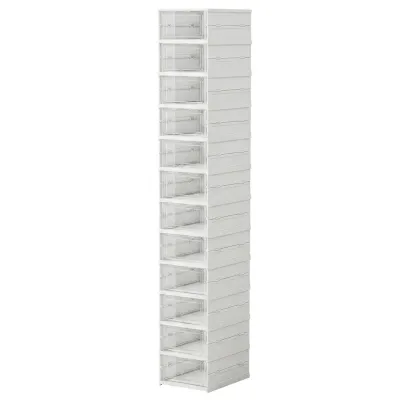
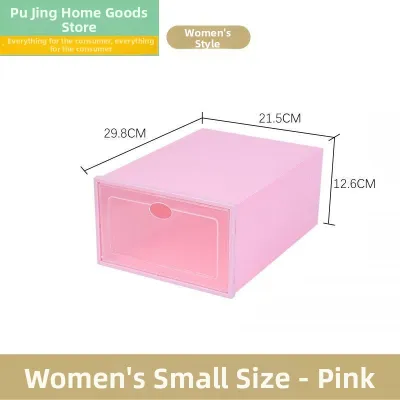
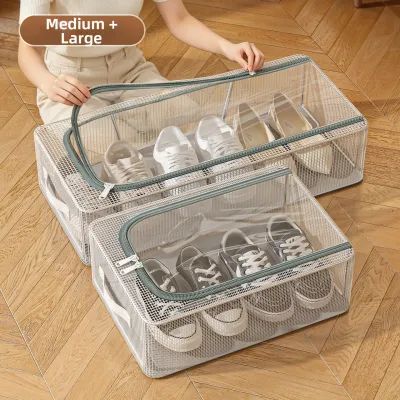
Prices are valid at publication and may change. Please refer to the product page for the latest price.
Next, analyze the physical dimensions of your footwear. Standard shoe boxes are designed for average-sized flat shoes, but a diverse collection often contains items that defy standard sizing. High-top sneakers, platform heels, heavy work boots, and ankle boots require significantly more vertical clearance and width. If you force these shoes into standard-sized boxes, you risk bending the collars, scuffing the materials, or preventing the box door from closing properly. Measure the height, width, and length of your largest pairs to identify how many oversized or extra-tall boxes you will need to purchase alongside standard units.
Finally, use your categorization to plan your spatial hierarchy. Separating daily-access shoes from archival pairs allows you to optimize your storage layout. Your daily-use footwear should reside in highly accessible zones, typically between waist and eye level, or on the lower shelves of an entryway unit. Archival shoes, on the other hand, can be designated for high-altitude stacking or relocated entirely to secondary storage zones, such as inside your household shelter or on the top shelves of a wardrobe. This division prevents your primary entryway from becoming congested and ensures that daily routines remain smooth and efficient.
Measure Your Available Space and Architectural Constraints
Before purchasing any storage containers, you must carefully measure the physical space where you plan to install them. Begin by determining the floor footprint—the absolute width and depth of the designated area. Whether you are placing the boxes in a narrow entryway, along a hallway, or inside a household shelter, use a metal measuring tape to capture the exact dimensions of the floor space. Do not rely on visual estimations, as even a discrepancy of two centimeters can prevent a modular storage unit from fitting into a recessed niche or behind a door.

Vertical clearance is equally critical, especially if you plan to stack boxes to maximize high-ceiling spaces. Measure the distance from the floor to the lowest overhead obstruction. In Singaporean homes, these obstructions frequently include wall-mounted light switches, electrical distribution boards (DB boxes), air conditioning copper pipe trunking, and decorative ceiling cornices. You must ensure that your stacked boxes do not block access to switches or cover structural trunking, which must remain accessible for maintenance. Always leave a safety margin of at least ten to fifteen centimeters at the top to allow for comfortable air circulation and to facilitate the removal of the topmost box lids if necessary.
Architectural constraints also dictate how your storage interacts with the flow of your home. You must measure the door swing arcs of nearby room doors, main entrance doors, and safety gates to guarantee that your shoe boxes do not impede their movement. Walkway clearance is another vital consideration; in high-traffic corridors, you should maintain enough open space for two people to pass each other comfortably. If you live in an HDB flat and plan to place storage in the common corridor, you must strictly adhere to the Singapore Civil Defence Force (SCDF) fire safety guidelines. These regulations require a minimum clear escape passage of 1.2 meters along the common corridor, and no permanent or temporary storage is permitted to obstruct this pathway or block access to dry risers and fire hose reels.
Calculate the Exact Number of Shoe Boxes and Layout
With your shoe inventory and space measurements complete, you can calculate the exact number of boxes required and design your storage grid. The first step is to match your shoe categories with the physical specifications of the boxes you intend to buy. It is vital to verify the manufacturer’s specifications for both the external dimensions and the internal usable capacity of the boxes. External dimensions tell you how many boxes will fit into your room, while internal dimensions tell you if your shoes will actually fit inside. For instance, a box with external dimensions of 34 cm in length and 24 cm in width might have an internal clearance of only 31 cm by 21 cm, which may not accommodate larger shoe sizes.
To determine your maximum safe stacking height, divide your total vertical clearance by the external height of a single shoe box. However, you must adjust this mathematical maximum to account for structural stability and practical usage. Heavy shoes, such as leather boots or thick-soled sneakers, should always be placed in the bottom rows of your stack to keep the center of gravity low. If your calculations suggest a stack of twelve boxes, but the manufacturer recommends a maximum stack of eight units for structural integrity, you must respect the manufacturer’s safety limit. To accommodate the remaining pairs, you will need to expand your layout horizontally by adding more columns.
Next, map out a clear grid layout consisting of columns and rows. To calculate the number of columns that can fit along your wall, divide the total width of your available floor space by the external width of a single shoe box. For example, if your entryway wall is 120 centimeters wide and your chosen shoe boxes are 25 centimeters wide, you can fit a maximum of four columns horizontally (100 centimeters total), leaving a comfortable ten-centimeter buffer on each side for ventilation and cleaning access. Multiply the number of columns by the safe number of rows to find your total capacity. If this grid capacity falls short of your audited shoe count, you must either declutter your collection, utilize secondary storage areas, or select a different box configuration with a more space-efficient footprint.
Choose the Right Shoe Storage Configuration for Your Layout
Selecting the right storage format depends heavily on your calculated capacity, aesthetic preferences, and how often you need to access your shoes. Stackable clear plastic shoe boxes are highly popular due to their modularity and high visibility. They allow you to see your entire collection at a glance, which is ideal for sneaker collectors or large households. When evaluating stackable plastic boxes, look closely at the door mechanisms. Drop-front doors are highly recommended because they allow you to retrieve shoes from the bottom of a tall stack without disturbing the boxes above. In contrast, top-opening or drawer-style boxes often require you to unstack the units, which becomes highly impractical for daily-use items.
Always check the product specifications of stackable boxes for interlocking mechanisms and weight limits. High-quality modular boxes feature physical tabs, slots, or magnetic connectors that lock adjacent units together, preventing individual columns from shifting or swaying. If you are planning a high stack, verify that the frames of the bottom boxes are reinforced to withstand the cumulative weight of the boxes and shoes above them without warping or cracking.
For high-capacity storage needs where structural stability is a primary concern, modular shoe racks or wooden cabinets are often a superior choice. These units provide a solid, unified frame that can support significant weight without the risk of individual components shifting. When choosing a cabinet or rack, verify the assembly conditions and the manufacturer’s anchoring requirements. Tall, shallow cabinets have a narrow footprint and can easily tip forward when multiple drawers are pulled open simultaneously. To ensure safety, look for units that include wall-mounting hardware, and confirm that your walls (whether concrete, drywall, or brick) can support the necessary anchors.
Avoid Common Space Planning and Capacity Mistakes
One of the most frequent mistakes homeowners make is purchasing shoe storage based solely on external dimensions, only to find that their high-top sneakers or wide-soled running shoes do not fit inside. Always subtract the thickness of the plastic or wood panels from the external dimensions to find the true internal usable space. If you are close to the threshold of a size limit, it is always safer to opt for the next size up to prevent your shoes from being compressed, which can damage delicate materials over time.
Another critical error is ignoring the manufacturer’s weight limits for stacked units. While plastic boxes may feel sturdy when empty, a stack of ten boxes loaded with heavy leather boots or steel-toed work shoes can exert immense downward pressure. This pressure can cause the lower frames to warp, making the doors difficult to open and compromising the stability of the entire column. Always distribute weight evenly, keeping the heaviest footwear at the very bottom and the lightest pairs at the top.
Additionally, never place shoe boxes in locations that block essential home utilities or safety features. In Singaporean homes, entryways often house the main electrical distribution board (DB box) or water meters. Your storage setup must never obstruct access to these panels; in an emergency, you or a technician must be able to reach them instantly without moving heavy stacks of shoes. Similarly, ensure your storage does not encroach on designated fire escape routes or block the ventilation grilles of your household shelter.
Finally, do not underestimate the importance of ventilation, particularly in Singapore’s hot and humid climate. Storing damp or sweat-laden shoes in completely sealed, airtight plastic boxes creates a breeding ground for mold, mildew, and unpleasant odors. This can permanently ruin leather linings and canvas materials. Look for shoe boxes designed with integrated ventilation holes or slotted rear panels that promote consistent airflow. Additionally, ensure there is a small gap between your storage units and the wall to prevent stagnant air pockets from forming.
Frequently Asked Questions (FAQ)
How high can I safely stack plastic shoe boxes?
You should always follow the manufacturer’s specific guidelines regarding maximum stacking height, as this limit depends on the material thickness, frame reinforcement, and interlocking design of the boxes. As a general rule of thumb for standard plastic boxes, stacks should not exceed six to eight units high unless they are constructed with heavy-duty, reinforced acrylic or polycarbonate frames designed for taller configurations. To maximize stability, ensure the boxes are placed on a completely flat, level floor, utilize the built-in interlocking tabs to connect adjacent columns, and place your heaviest footwear in the lowest boxes to keep the center of gravity as close to the ground as possible.
Do I need to anchor stacked shoe boxes to the wall?
Yes, anchoring is strongly recommended for any shoe storage configuration that exceeds chest height, particularly in households with young children, elderly family members, or active pets. Tall, narrow columns of plastic boxes or slim-profile shoe cabinets have a high center of gravity and can easily tip over if someone pulls on a door, bumps into the stack, or attempts to climb the units. Check your product manual for included anti-tip kits or wall-anchoring brackets. Securing the top of the stack or cabinet to a solid wall using appropriate anchors and screws provides essential stability, prevents accidental collapses, and ensures a safe living environment.

Community discussion
Share your experience or ask a question. Comments are reviewed before publication.