
To find the right hall cabinet storage capacity, you must balance your household’s active shoe count with the physical limits of your entryway. This involves auditing your current footwear collection, factoring in future purchases, and measuring your hallway’s width, depth, and clearance zones. By translating the physical dimensions of your shoes into internal cabinet measurements, you can select a storage solution that keeps your entryway organized without obstructing daily foot traffic.
Audit Your Shoe Collection and Household Growth
Begin by grouping your household’s shoes by user and frequency of use. Separate daily wear items like school shoes, work flats, and running sneakers from seasonal or special-occasion footwear such as formal heels, dress shoes, or hiking boots. This categorization helps you identify which shoes must reside in the primary hallway storage and which can be relegated to secondary storage elsewhere.
Next, note the physical profiles of your footwear. A standard pair of men’s flat shoes takes up about 20 to 22 cm of horizontal space, whereas bulky running shoes or wide sneakers might require 25 cm or more. High heels and ankle boots demand greater vertical clearance—often 15 to 20 cm—compared to flat sandals or loafers, which typically need only 10 to 12 cm. If your collection includes tall boots, they will require dedicated tall sections or adjustable shelves.
Products mentioned in this guide

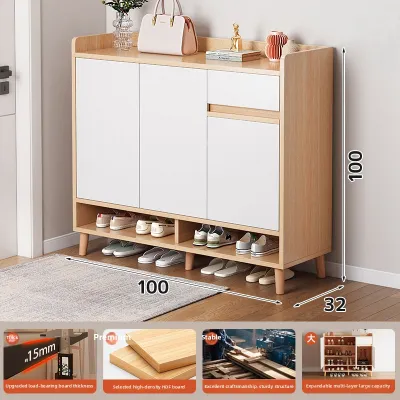
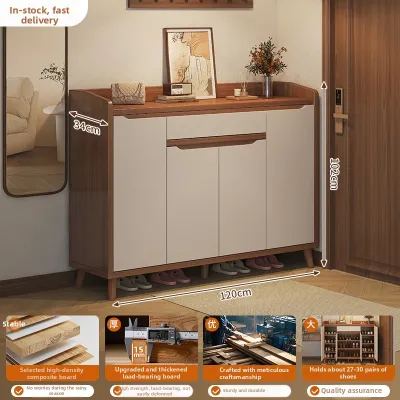
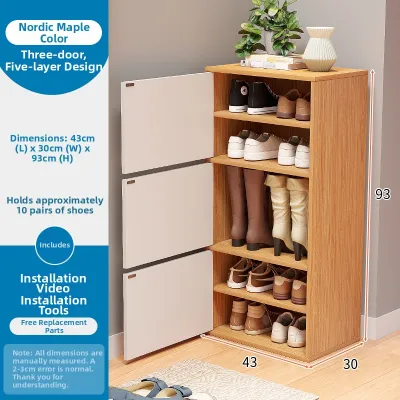
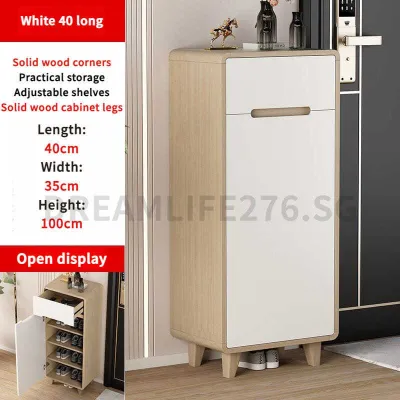
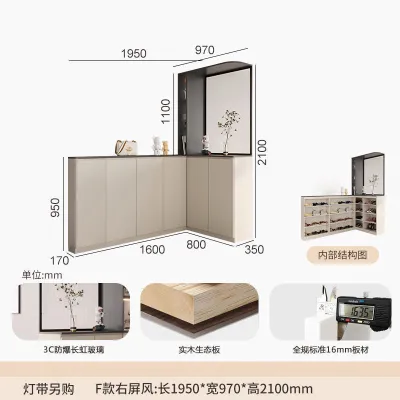
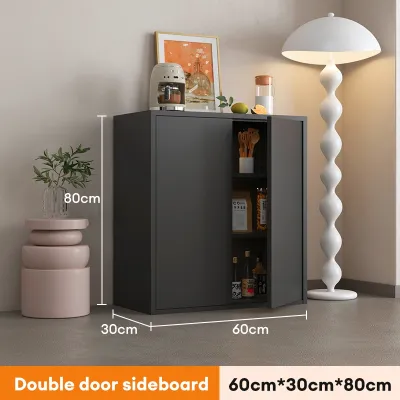
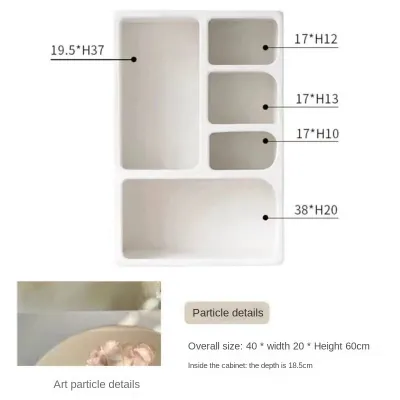
Prices are valid at publication and may change. Please refer to the product page for the latest price.
Finally, incorporate a realistic growth margin. A household’s shoe collection is rarely static. Adding a buffer of 15% to 20% to your current total count ensures your new cabinet will accommodate new purchases over the next one to two years. For a family of four with 30 pairs of shoes, planning for a capacity of 35 to 36 pairs prevents the cabinet from overflowing almost immediately after installation.
Measure Hallway Dimensions and Clearance Limits
Entryways and corridors are high-traffic zones where space is at a premium. Begin by measuring the maximum footprint your hallway can accommodate, including the available wall length, floor-to-ceiling height, and maximum allowable depth. Be sure to account for protruding elements such as baseboards, light switches, electrical distribution boards, intercom systems, and door frames.

Walkway clearance is critical for safety and comfort. In typical residential layouts, such as apartments or condominiums, entryways can be narrow. To maintain comfortable passage, aim for a minimum clear walkway width of 90 cm to 100 cm. If your hallway is exceptionally tight, a cabinet depth of 15 cm to 30 cm with slanted shelves may be necessary, whereas a standard flat-shelf cabinet usually requires a depth of 35 cm to 40 cm.
Check the swing radius of all doors in the vicinity. The main entrance door, nearby bedroom doors, and even the cabinet doors themselves must be able to open fully without colliding. If a swinging cabinet door blocks the path or hits the main door, consider sliding doors, open shelving, or drop-down drawer mechanisms that minimize the outward projection when open.
Translate Shoe Counts into Cabinet Tiers and Widths
Once you have your target shoe count and maximum external dimensions, look at the internal configuration. Fixed shelves offer structural stability but limit flexibility. Adjustable shelves, which use peg-and-hole systems, allow you to customize the height of each tier. This is highly efficient because you can reduce the clearance for flat shoes to 10 cm and increase it for boots, maximizing the total number of tiers within the same vertical height.
To calculate the capacity per shelf, divide the internal net width of the cabinet by the average width of your shoe pairs. For example, if a cabinet has an internal width of 80 cm and your average shoe pair is 22 cm wide, you can comfortably fit three pairs per shelf, with a small gap of 14 cm left over. Never use the external cabinet width for this calculation, as side panels typically reduce the usable internal width by 3 cm to 5 cm.
Consider how different internal mechanisms affect capacity. Slanted shelves reduce the required cabinet depth, making them excellent for narrow hallways, but they may slightly reduce the usable vertical height per tier. Pull-out drawers or rotating shoe racks provide excellent visibility and access to shoes stored at the back, but the mechanical hardware itself occupies space, slightly reducing the overall pair capacity compared to simple, static shelves.
Assess Ventilation and Material Care for Hallways
Entryway storage must handle the challenges of dust, odor, and moisture. In warm and humid tropical climates, enclosed cabinets without proper ventilation can trap moisture from damp shoes, leading to mold growth and unpleasant odors. Louvered doors, mesh panels, or perforated backboards are excellent design choices that promote continuous air circulation while keeping your footwear hidden from view.
Material selection is closely tied to durability in high-humidity environments. Check the manufacturer’s care labels and material specifications. Solid wood, engineered wood with water-resistant laminates, or powder-coated metals perform differently under varying humidity levels. Ensure that any edge banding is high-quality to prevent moisture from seeping into engineered wood cores, which can cause swelling and warping over time.
Plan for maintenance accessories within your capacity calculations. Leaving space at the bottom of the cabinet for a removable drip tray helps catch dirt, mud, or rainwater from wet shoes before it stains the cabinet floor. Additionally, allocate a small corner or shelf space for odor-absorbing charcoal bags, silica gel packs, or sanitizing sprays to keep the storage environment fresh and hygienic.
Common Capacity and Sizing Mistakes to Avoid
One of the most frequent errors is confusing external cabinet dimensions with internal net dimensions. A cabinet advertised as 90 cm wide might only have an 84 cm internal clearance due to thick side walls and center dividers. Always verify the internal shelf dimensions before purchasing to ensure your shoes will actually fit without being squeezed or bent.
Another common oversight is ignoring the depth and height of baseboards. If your hallway has prominent baseboards, a standard flat-backed cabinet cannot sit flush against the wall. This creates an unsightly gap where dust accumulates and, more importantly, compromises the stability of the unit. Look for cabinets with a baseboard cutout at the back, or plan to secure the cabinet to the wall using appropriate anchoring hardware that accounts for the gap.
Finally, do not prioritize maximum shoe capacity at the expense of hallway comfort and natural light. A massive, floor-to-ceiling cabinet might hold all your shoes, but it can make a narrow entryway feel dark, cramped, and unwelcoming. Balance your storage needs by opting for a mid-height cabinet that leaves wall space open for mirrors, hooks, or decorative lighting, which helps maintain an open and airy feel.
Frequently Asked Questions (FAQ)
How many pairs of shoes can a standard hall cabinet hold?
The capacity of a standard hall cabinet varies widely based on its internal net width, the number of tiers, and the style of shoes you own. To estimate capacity, measure the internal width of a single shelf and divide it by the average width of your shoe pairs (typically 20 cm to 25 cm). Multiply this number by the total number of shelves. For instance, a typical five-tier cabinet with an internal width of 80 cm will comfortably hold about 15 pairs of standard adult shoes (3 pairs per shelf across 5 shelves).
Should I choose an open rack or a closed hall cabinet?
The choice depends on your aesthetic preferences, maintenance habits, and hallway space. Open shoe racks offer maximum ventilation, instant access, and a visually lighter footprint, making them ideal for small, narrow hallways and daily-wear shoes. However, they expose your footwear to dust and can look cluttered if not kept organized. Closed hall cabinets provide a clean, streamlined look that hides clutter and protects shoes from dust, but they require adequate ventilation features—such as louvered doors—to prevent moisture and odor buildup, especially in humid climates.

Community discussion
Share your experience or ask a question. Comments are reviewed before publication.