
To find the ideal metal shoe rack for your household, you must balance your family’s total shoe count with the physical limits of your entryway. Calculating the right capacity involves auditing your current footwear collection, estimating future growth, and translating those numbers into physical tier configurations. By measuring your tallest shoes and matching those dimensions to adjustable metal shelves, you can maximize vertical storage without cluttering your living space.
Assessing Your Household's Shoe Collection
The foundation of an organized entryway starts with a comprehensive audit of your household’s footwear. Before browsing online marketplaces or local furniture stores, gather every pair of shoes owned by each family member. Grouping them by user allows you to see who requires the most storage and what types of shoes dominate the household collection.
Next, separate the collection by frequency of use. Daily wear items, such as school shoes, work heels, or running sneakers, need to be immediately accessible near the door. Occasional footwear, like formal dress shoes or hiking boots, can be designated for higher or lower shelves, while seasonal or rarely worn items might be better suited for long-term storage in bedroom closets.
Products mentioned in this guide
![[SG SELLER] Upgraded Multi Layer Metal Shoe Rack (5-8)/Minimalist Modern Design Rust-proof/space saving BTO HDB](https://img.lazcdn.com/g/p/a828e8ed935d1223b29087a944fc04ff.png_400x400q80.png_.webp)
![[SG spot] metal shoe rack minimalist design shoe rack BTO shoe rack HDB shoe rack rust-proof shoe rack 5-10 layers](https://img.lazcdn.com/g/ff/kf/Sbf43e544afd04067a995ec80e540911dp.jpg_400x400q80.jpg_.webp)
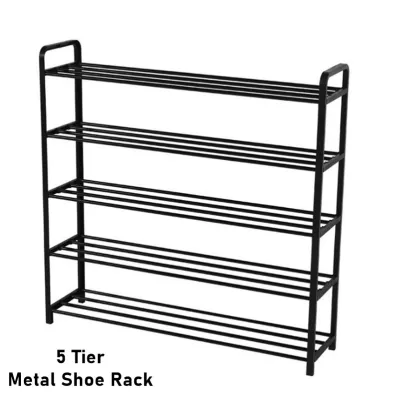
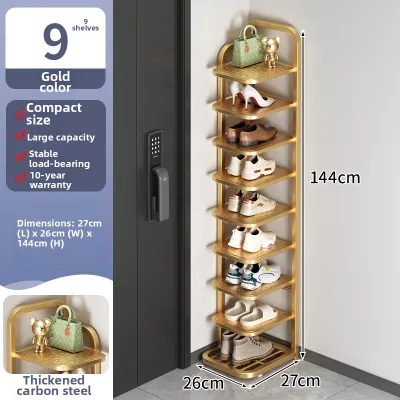
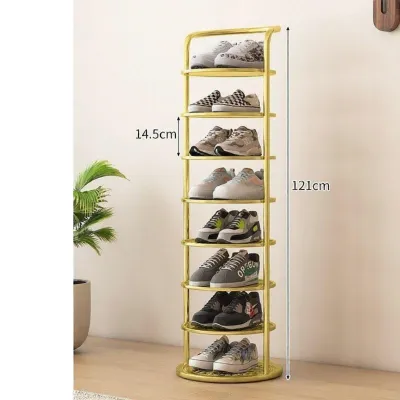
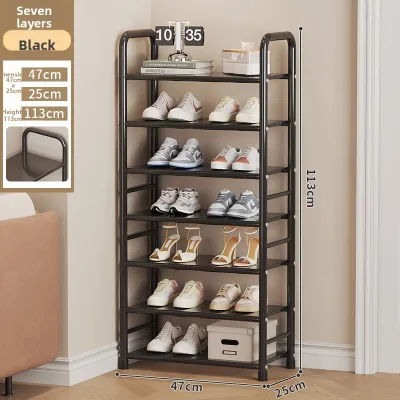
Prices are valid at publication and may change. Please refer to the product page for the latest price.
Pay close attention to the physical profiles of your shoes. A flat sandal takes up significantly less vertical and horizontal space than a high-top basketball sneaker or a pair of ankle boots. If your household has a diverse mix of footwear, counting “pairs” alone will lead to an underestimation of the space you actually need.
Finally, anticipate future household changes. If you have young children, their shoe sizes will increase rapidly, and their collection will grow to include specialized sports footwear. Planning for an extra twenty percent capacity now prevents the frustration of outgrowing your new metal shoe rack within a year or two.
Calculating Total Shoe Slots and Tier Configuration
Once you have a clear count of your active footwear, you can translate this inventory into physical dimensions. On average, a standard pair of adult shoes requires about 20 to 25 centimeters of horizontal shelf width. By dividing your total shoe count by the width of your preferred metal rack, you can estimate how many pairs will fit on a single tier.

For example, if you choose a compact metal rack with a width of 80 centimeters, you can comfortably fit three to four pairs of adult shoes per tier. If your household has thirty pairs of shoes in active rotation, you will need a minimum of eight to ten tiers to accommodate them all. This calculation highlights whether you need a single tall unit or multiple smaller racks side by side.
To make the most of this configuration, prioritize metal shoe racks with adjustable or removable tiers. Fixed-height shelves often lead to wasted vertical space above low-profile flats, while forcing you to bend or squeeze taller shoes into tight gaps. Racks featuring adjustable wire grids or peg-and-hole systems allow you to customize the height of each level to match your specific shoe mix.
Ergonomics should also guide your tier layout. Place daily wear shoes on the middle tiers, roughly between hip and knee height, so you can retrieve and store them without excessive bending or reaching. Keep heavy boots or muddy sneakers on the bottom tier to maintain stability and prevent dirt from dripping onto clean shoes below.
For the topmost shelves of a tall iron rack, reserve these spaces for lightweight, occasionally worn items or decorative storage baskets. This keeps the overall center of gravity lower, which is a critical safety consideration for any free-standing metal furniture unit in a busy household.
Matching Tier Height to Your Available Space
A high-capacity shoe rack is only useful if it fits seamlessly into your home’s layout. Begin by measuring the exact floor footprint of your intended installation area, paying close attention to the depth of the space. In many Singapore apartments, entryways are narrow corridors where a rack that is too deep can severely restrict movement or block the front door from opening fully.
Standard metal shoe racks typically range from 30 to 35 centimeters in depth, which is sufficient for most adult shoe sizes without protruding too far into the walkway. However, you must also account for the swing paths of nearby doors, including the main entrance, safety grilles, and adjacent utility closet doors. A rack that blocks these essential pathways creates a daily inconvenience and a potential safety hazard.
Vertical clearance is another critical factor, especially if you are considering a tall iron utility rack. Measure from the floor to any overhead obstructions, such as wall-mounted electrical distribution boxes, light switches, intercom systems, or decorative wall moldings. Ensure there is enough clearance to access these fixtures easily without having to move a fully loaded, heavy metal rack.
Take note of the skirting boards along the base of your walls. Many metal racks have straight legs that prevent the unit from sitting flush against the wall if the skirting boards are thick. Look for designs with recessed rear legs or adjustable leveling feet that can accommodate these architectural details, ensuring the rack remains stable and close to the wall.
Consider the visual impact of a tall metal structure in a compact foyer. Solid metal cabinets can feel heavy and dark, making a small entryway feel cramped. In contrast, open-frame iron or wire shoe racks allow light and air to pass through, creating a more spacious feel while promoting natural ventilation to keep your footwear dry and odor-free in humid climates.
Evaluating Metal Shoe Rack Stability and Load Limits
Metal and iron shoe racks are highly valued for their strength, but their structural integrity depends heavily on proper assembly and load distribution. Before purchasing, check the manufacturer’s specified weight capacity for both the individual tiers and the entire frame. Heavy leather boots, thick-soled sneakers, and wet weather gear can add up to a substantial amount of weight that thin-gauge metal shelves might not support without bending.
Inspect the quality of the joints and connections. Welded iron frames generally offer superior stability compared to units held together by plastic connectors or thin screws. If you choose a self-assembly metal rack, ensure all bolts are tightened securely during installation, and plan to inspect and retighten them periodically to prevent the frame from developing a wobble over time.
For any metal rack that stands taller than one meter, wall anchoring is highly recommended to prevent tip-over accidents. This is especially critical in households with young children who might attempt to climb the shelves, or pets that might bump into the unit. Many high-capacity metal racks come with safety brackets or wall straps; ensure your walls can accommodate these anchors before finalizing your setup.
Finally, examine the feet of the shoe rack. Metal legs can scratch delicate flooring, such as polished marble, vinyl, or hardwood. Look for units equipped with rubberized foot pads or adjustable leveling feet. These pads not only protect your floors from scratches and rust stains but also allow you to stabilize the rack on slightly uneven tiled surfaces.
Frequently Asked Questions (FAQ)
How much vertical clearance do I need between tiers for different shoes?
To determine the ideal vertical spacing, measure the height of your tallest shoes in each category. For flat shoes like sandals, loafers, and low-profile sneakers, a clearance of 15 to 18 centimeters is usually sufficient. Standard mid-top sneakers and short ankle boots typically require 20 to 25 centimeters of space. For tall boots or high heels, you may need 30 to 40 centimeters of clearance. Always add a practical margin of 2 to 3 centimeters above the tallest shoe’s height to allow your hand to slide in easily when retrieving or storing the footwear.
Can I add extra tiers to an existing metal shoe rack later?
Whether you can expand your metal shoe rack depends entirely on its design and structural limits. Modular metal racks designed with stackable interlocking joints or adjustable shelving tracks are often highly customizable, allowing you to purchase and install additional tiers as your household grows. However, before adding more weight, you must consult the manufacturer’s guidelines to ensure you do not exceed the maximum load capacity of the base frame. Additionally, increasing the height of the rack raises its center of gravity, making it essential to install robust wall anchors to maintain stability and prevent tipping.

Community discussion
Share your experience or ask a question. Comments are reviewed before publication.