
Assembling a flat-pack rotating bookshelf is an excellent way to maximize storage in compact living spaces, such as modern apartments or study rooms. Unlike standard stationary bookcases, a rotating model relies on a central turntable mechanism that must support the entire weight of your library while spinning smoothly. Proper assembly requires a methodical approach, starting with a clear workspace, precise alignment of the rotating hardware, and careful structural reinforcement of each tier. By following the correct sequence and taking steps to protect the moving parts, you can build a stable, highly functional piece of furniture that glides effortlessly.
Taking your time during the initial setup prevents common issues like squeaking, wobbling, or premature wear on the bearings. Because these units hold a significant amount of weight on a relatively small footprint, ensuring structural integrity at every joint is essential. This guide walks you through the entire process, from preparing your room to the final safety checks and loading strategies.
Pre-Assembly Preparation and Space Requirements
Before opening your flat-pack box, clear a spacious work area on a flat, level floor. It is highly recommended to assemble the unit in the same room where it will permanently stand, as moving a fully assembled rotating bookshelf through narrow doorways or tight hallways can strain the joints and damage the rotating mechanism. Lay down a large piece of clean cardboard or a soft blanket to protect the finish of the wooden panels from scratches during assembly.
Products mentioned in this guide
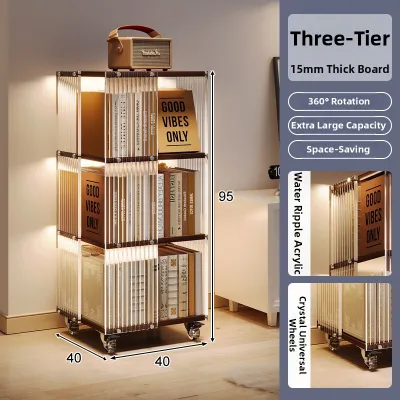



![[SG Seller]360Degrees Rotating Bookshelf Rotating Book Shelf Rotate Floor Standing Books Storage Rack](https://img.lazcdn.com/g/p/bb46c1ac353d25f9026879c97f254c6c.jpg_400x400q80.jpg_.webp)


Prices are valid at publication and may change. Please refer to the product page for the latest price.
Calculating the required floor clearance is a critical first step. A rotating bookshelf requires more physical space than its static footprint suggests because the corners of the shelves extend outward as the unit spins. To find the minimum clearance zone, measure the diagonal distance across the top panel of the bookshelf (from one corner to the opposite corner). This diagonal measurement represents the maximum rotating diameter. Add a safety buffer of at least 5 to 10 centimeters to this number to ensure the corners of the shelves do not scrape against walls, curtains, power outlets, or adjacent furniture during use.
Once your workspace is ready, unbox the components and group them logically. Separate the horizontal shelves, vertical dividers, base plates, and backing panels. Inspect the rotating bearing mechanism—often a metal lazy Susan turntable—for any signs of transit damage, such as bent plates or loose ball bearings. Count and organize all screws, wooden dowels, cam locks, and specialized hardware into small trays or bowls. Having everything visible and accounted for prevents interruptions mid-assembly.
Gather the recommended hand tools before you begin. You will typically need a Phillips-head screwdriver, a flathead screwdriver, and a rubber mallet for gently tapping wooden dowels into place. Avoid using power drills or electric screwdrivers unless the manufacturer’s manual explicitly instructs you to do so. The high torque of power tools can easily strip the pre-drilled holes in particle board or medium-density fiberboard (MDF), permanently weakening the structural connections.
Step-by-Step Assembly of the Base and Rotating Mechanism
The foundation of your rotating bookshelf determines how smoothly it spins and how long the mechanism lasts. Begin by assembling the bottom stationary base plate according to the manufacturer’s instructions. This base plate sits directly on your floor and remains completely still while the rest of the unit rotates. Ensure this plate is perfectly flat; if you are assembling the unit on an uneven surface, such as textured tile or a sloped floor, the uneven pressure can warp the rotating bearing over time.

Next, position the rotating bearing or turntable mechanism onto the base plate. Carefully examine the hardware to identify the designated top and bottom sides, as installing the bearing upside down can restrict movement or cause grinding. Align the screw holes on the metal plate precisely with the pre-drilled pilot holes on the wooden base. If the holes do not align perfectly, rotate the metal plate slightly until the pattern matches.
When securing the rotating mechanism to the base, insert all screws loosely by hand first. Once all screws are in place, tighten them gradually using a star or cross pattern—tightening opposite screws progressively rather than working in a continuous circle. This technique distributes the clamping pressure evenly across the metal plate, preventing the bearing housing from warping. Tighten the screws until they are snug, but avoid over-tightening, which can compress the internal ball bearings and bind the rotation.
Before moving on to the vertical structure, perform a preliminary spin test on the empty base. Place your hand flat on the top plate of the rotating mechanism and spin it 360 degrees in both directions. It should glide smoothly and quietly. If you feel any catching, uneven resistance, or hear a scraping sound, loosen the mounting screws slightly, check for any trapped wood shavings or debris in the bearing track, re-align the plate, and tighten the screws evenly again.
Building the Vertical Shelves and Attaching Them to the Base
With the rotating base successfully prepared, you can begin constructing the vertical shelving tower. Most rotating bookshelves utilize a modular, multi-tier design where each level is built sequentially from the bottom up. Begin by inserting the wooden dowels and cam lock pins into the pre-drilled holes of the first tier’s vertical panels. Use a rubber mallet to tap the wooden dowels gently until they are fully seated, ensuring you do not split the wood.
Connect the vertical side panels and central dividers to the first horizontal shelf. If your bookshelf includes back panels or cross-braces, install them during this stage. These backing elements are not merely cosmetic; they provide essential shear strength that prevents the tall tower from twisting or leaning under the weight of books. Once the panels are aligned, insert the cam lock nuts into their designated holes and turn them clockwise with a screwdriver until they lock firmly onto the pins.
Carefully lift the assembled first tier and align it over the top plate of the rotating base mechanism. Depending on the design, you may need to secure the mounting screws through access holes in the bottom shelf or from underneath the base plate. Ensure the shelving tower is centered precisely over the pivot point of the bearing. An off-center installation will cause the bookshelf to wobble uneven to one side when rotated, putting excessive lateral stress on the hardware.
As you build subsequent tiers upward, use a spirit level to check for squareness and plumb at every level. If the frame begins to twist or lean, gently loosen the cam locks on that tier, adjust the panels until they are perfectly square, and re-tighten the hardware. Ensure all connecting joints are completely flush and tight. Any small gaps between panels will allow the unit to flex when spun, leading to annoying rattles and eventual structural instability.
Final Adjustments, Safety Checks, and Loading Guidelines
Once the entire shelving tower is fully assembled and all hardware is tightened, conduct a comprehensive final inspection before placing any books on the shelves. Spin the empty bookshelf slowly through several full rotations. Listen carefully for any grinding noises, clicking, or squeaking. Watch the gap between the rotating shelves and the stationary base to ensure it remains consistent all the way around; a shifting gap indicates that the tower is not perfectly vertical or the base is uneven.
When you are satisfied that the mechanism is operating correctly, you can begin loading your books. Symmetrical weight distribution is the most important factor in keeping a rotating bookshelf stable and safe. Always load the heaviest items—such as large hardcovers, encyclopedias, or heavy binders—on the lowest shelves first. Keeping the center of gravity as low as possible significantly reduces the risk of the unit tipping over during rotation.
As you fill the upper tiers, distribute the weight evenly across all sides of each level. For example, if you place several heavy books on one side of a shelf, balance them by placing items of similar weight on the opposite side. Avoid packing one side completely while leaving the other side empty, as this uneven load puts one-sided pressure on the rotating bearing, which can cause the mechanism to wear out prematurely or make the unit difficult to spin.
Always refer to the manufacturer’s instructions regarding the maximum load capacity per shelf and the total weight limit for the entire unit. Do not exceed these limits, as excessive weight can compress the metal bearings, causing the rotation to become stiff or locked. Finally, establish a routine to check the stability of your bookshelf. If you ever notice persistent wobbling, a visible lean, or sudden stiffness when turning the unit, stop using it immediately, unload the books, and inspect the hardware for loose connections or structural damage.
Frequently Asked Questions (FAQ)
What should I do if the bookshelf wobbles or leans to one side?
First, check if the floor surface is completely level. If you are placing the bookshelf on an uneven floor, such as tiled grout lines or slightly sloped flooring, slide thin, non-slip furniture shims under the stationary base plate to stabilize the footprint. Next, verify that all cam locks, wooden dowels, and base screws are fully tightened. If the vertical tower is not centered precisely on the turntable mechanism, you may need to empty the shelves, loosen the mounting screws, re-center the tower, and tighten the hardware securely.
Can I add extra shelves or modify the flat-pack design?
Modifying the flat-pack design by adding extra tiers or altering the height is highly discouraged. Rotating bookshelves are engineered with specific height-to-width ratios to ensure stability while in motion. Adding unapproved shelves or increasing the height shifts the center of gravity upward, which significantly increases the risk of the unit tipping over and puts excessive stress on the rotating bearing. Always stick strictly to the manufacturer’s predefined configuration.
How do I fix a squeaking or stiff rotating mechanism?
Start by inspecting the turntable track for any trapped dust, debris, or small objects that might have fallen under the bottom shelf, and clear them out using a vacuum or a thin brush. If the mechanism remains stiff or squeaks, consult your assembly manual for approved lubricants. A dry PTFE spray is generally recommended because it lubricates the metal bearings without attracting dust. Avoid using heavy household oils, cooking oils, or standard WD-40 unless specified, as these substances can attract dirt and hair over time, eventually making the rotation stiffer.

Community discussion
Share your experience or ask a question. Comments are reviewed before publication.