
When comparing Newstar office chairs to other popular brands for a home office setup in Singapore, the decision comes down to balancing your daily sitting hours, budget constraints, and specific space limitations. Newstar furniture options generally target the mid-range market, offering essential ergonomic adjustments at a competitive price point in S$, whereas premium alternatives provide specialized certifications and extended warranties, and basic flat-pack models prioritize low-cost flexibility. To find the right fit, you must verify the physical specifications, material breathability for the local tropical climate, and delivery logistics against your home’s layout.
Defining Your Home Office Chair Requirements
Before comparing specific brands, you must establish a clear profile of your daily usage patterns and physical constraints. A chair that is perfectly comfortable for a two-hour evening session of administrative tasks may cause significant discomfort during an eight-hour workday. If you work from home full-time, prioritizing adjustable lumbar support is essential to maintain proper spinal alignment and reduce fatigue. You should evaluate whether you prefer a dynamic lumbar support system that moves with you or a manual adjustment mechanism that locks into a single, supportive position.
Physical space within Singaporean homes, such as HDB flats or condominiums, often dictates the maximum footprint of your office setup. You must measure the available floor space around your desk, ensuring there is enough room to push the chair back and exit comfortably. Desk height compatibility is another critical factor; standard desks typically sit at 75 centimeters, but you must verify that the chair’s armrests can slide underneath the desk surface when not in use to save space. Additionally, consider the height of the seat relative to your own leg length to ensure your feet can rest flat on the floor.
Products mentioned in this guide
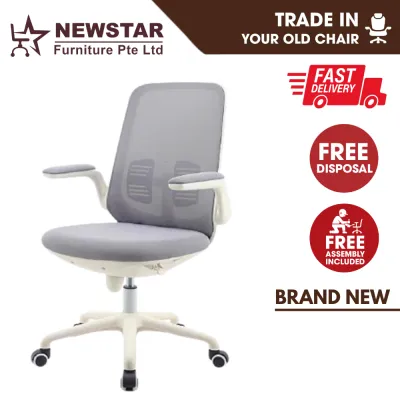
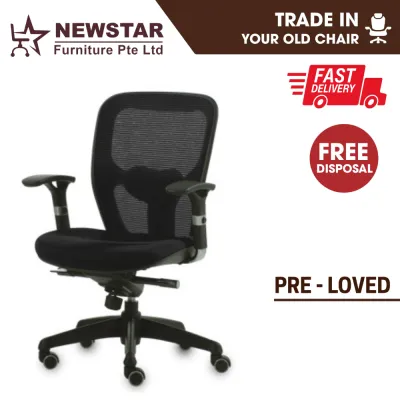
![[Pre-Loved] Steelcase Series 1 Sustainable Ergonomic Office Chair 6 Months Warranty - Newstar Furniture](https://img.lazcdn.com/g/p/ecceaab13c81bbb50612b84be270b3a1.png_400x400q80.png_.webp)
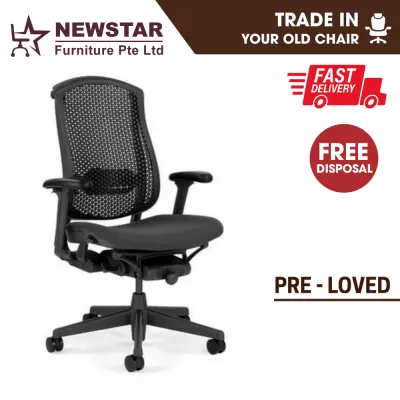
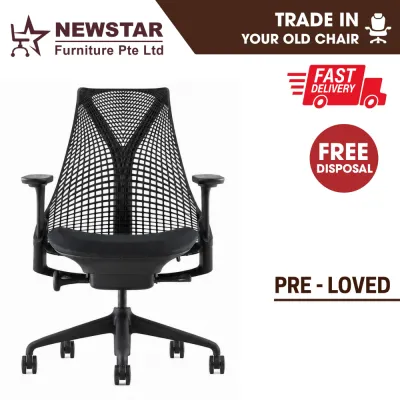
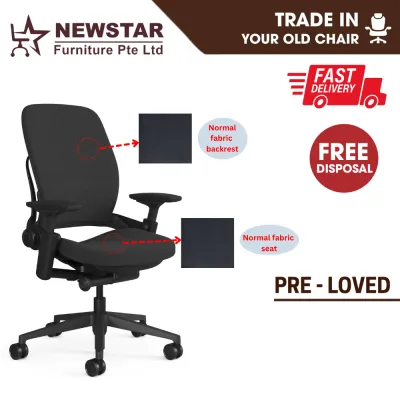
Prices are valid at publication and may change. Please refer to the product page for the latest price.
Your budget allocation should reflect the expected lifespan of the chair and its resistance to daily wear. While a lower initial investment is appealing, a chair constructed with lower-grade materials may require replacement within a year or two, ultimately costing more over time. Investing in a mid-range or premium model often yields better long-term value through durable components, superior foam density, and more robust adjustment mechanisms. Balancing your immediate financial limits against the long-term cost per year of use will help you determine the most sensible spending category.
Key Dimensions for Comparing Newstar and Competing Brands
To objectively compare Newstar furniture with other popular brands, you should utilize a standardized checklist of physical specifications. The first dimension to evaluate is the adjustability range, which directly impacts how well the chair can be tailored to your body. Look closely at the seat height range to ensure it accommodates your desk setup. Armrest adjustability is equally important; look for multi-directional adjustments (often labeled as 2D, 3D, or 4D) that allow you to position the armrests to support your elbows without straining your shoulders. Recline tension and headrest positioning should also be adjustable to support different working postures throughout the day.

Material composition plays a vital role in comfort, particularly in Singapore’s warm and humid tropical climate. Mesh backrests are highly favored locally because they allow air to circulate freely, keeping you cool even during long working sessions without air conditioning. When comparing mesh options, check the tension and elasticity of the weave, as lower-quality mesh can sag over time. Fabric seats offer a softer feel but can trap heat and moisture, requiring regular cleaning. Leather or synthetic leather options provide a premium aesthetic but may feel sticky or hot in non-air-conditioned rooms, making them better suited for dedicated, climate-controlled spaces.
Base stability and caster design are critical for safety and smooth movement. A high-quality office chair should feature a heavy-duty base, typically constructed from reinforced nylon or polished aluminum, to prevent tipping when reclining. You must verify the manufacturer’s stated weight capacity limits to ensure the chair can safely support your body weight over extended periods. Furthermore, the type of casters provided can affect both your mobility and your flooring. Standard hard nylon casters are designed for carpeted floors, whereas soft polyurethane or rubber casters are necessary to prevent scratching on hard surfaces like vinyl, laminate, or parquet.
Evaluating Value, Assembly, and Warranty Conditions
Assessing the true cost of ownership requires looking beyond the initial price tag in S$ to evaluate what is included in the purchase. Some brands advertise a low base price but charge extra for essential ergonomic features like adjustable armrests, lumbar support, or headrests. When comparing Newstar to other brands, calculate the total cost of a fully configured chair that meets your ergonomic needs. Additionally, factor in delivery fees, as bulky furniture items often incur significant shipping surcharges that can alter the overall value proposition.
Warranty terms serve as a strong indicator of a manufacturer’s confidence in their product’s durability. When reviewing warranty policies, do not rely solely on the headline number of years; instead, read the detailed terms to see which components are covered. It is common for manufacturers to offer a long warranty on the structural frame but a much shorter coverage period for wear-and-tear components like the gas lift, mesh fabric, seat foam, and casters. A brand that offers a comprehensive, multi-year warranty on all moving parts generally represents a safer long-term investment than one with restrictive clauses.
Assembly requirements can also influence your purchasing decision and overall satisfaction. Many budget and mid-range chairs are delivered flat-packed, requiring you to assemble them using basic tools and instructions. While this can save on initial costs, it requires time, effort, and careful attention to detail to ensure the chair is structurally sound. If you prefer to avoid the hassle of assembly, check whether the brand offers professional installation services, either included in the price or as an optional add-on, and verify if they deliver the chair fully assembled to your doorstep.
Decision Framework: When to Choose Newstar vs. Alternatives
A structured decision framework can help you match your specific needs to the right brand category. You should consider Newstar furniture if your primary goal is to find a reliable, mid-range office chair that offers essential ergonomic adjustments without a premium price tag. This option is highly suitable for users who have verified that the chair’s physical dimensions and weight capacity align with their body metrics, and who want a functional setup for moderate daily use. It represents a practical balance of features and affordability for typical home office environments.
Conversely, you should look toward premium alternative brands if your daily routine demands intensive, long-duration sitting and you require specialized ergonomic certifications, such as those from BIFMA or GREENGUARD. These high-end options are ideal if you suffer from chronic back pain and need highly precise, micro-adjustable support systems, or if you want the peace of mind that comes with an extended, comprehensive multi-year warranty. While the upfront cost in S$ is significantly higher, the long-term durability and specialized support justify the investment for professional, full-time home workers.
On the other hand, budget flat-pack options from online marketplaces are best reserved for temporary setups, guest rooms, or very light usage where space flexibility and low cost are the absolute priorities. These chairs often lack robust lumbar support and have limited adjustability, making them unsuitable for long working hours. Before making any final purchase, always verify the chair’s maximum weight capacity and physical dimensions against your exact body measurements and the layout of your room to avoid compatibility issues.
Pre-Purchase Checks for Singapore Homes
Before finalizing your order, you must perform several practical checks to ensure the chair can be successfully delivered and integrated into your Singapore home. Start by measuring the dimensions of your building’s elevator, stairwell widths, and apartment door clearances. Bulky, pre-assembled chairs or large flat-pack boxes can be difficult to maneuver through tight corridors or older HDB lift landings, so verifying these clearances beforehand prevents delivery day complications.
Next, examine your home’s flooring to determine if you need to take protective measures. If your study or workspace features delicate flooring like natural parquet, engineered wood, or luxury vinyl tiles, standard hard plastic casters can cause visible scratches or scuffs over time. To protect your floors, check if the manufacturer offers soft caster upgrades, or plan to purchase a dedicated chair mat or protective floor runner to distribute the weight and prevent direct friction.
Finally, carefully review the retailer’s return policies and restocking fees before clicking the buy button. Because comfort is highly subjective, you may find that a chair that looked perfect online does not suit your body shape after a few hours of use. Understanding the return window, whether you are responsible for return shipping costs of a bulky item, and if there are restocking fees for opened packaging will protect you from unexpected expenses if you need to make an exchange.
Frequently Asked Questions (FAQ)
How can I test the ergonomic fit of an office chair before committing to a long-term purchase?
To verify if a chair suits your body, visit a physical showroom if available to test the adjustments in person. Sit in the chair for at least fifteen minutes, adjusting the seat height, lumbar support, and armrests to match your natural working posture. If shopping online, look for brands that offer a risk-free home trial period or a flexible return window, allowing you to test the chair at your actual desk before making a permanent commitment.
What maintenance routines help extend the lifespan of mesh and fabric office chairs?
Regular maintenance is key to preserving the structural integrity and cleanliness of your home office chair. Use a vacuum cleaner with a soft brush attachment once a month to remove dust, skin cells, and debris from the mesh pores and fabric fibers. Periodically inspect the underside of the chair to clear hair and lint from the caster wheels, and use an Allen key to tighten any visible screws or bolts that may have loosened from daily movement.

Community discussion
Share your experience or ask a question. Comments are reviewed before publication.