
A slim shoe rack with a depth of 17cm to 25cm typically holds between 6 and 18 pairs of shoes, but the actual capacity depends heavily on your footwear sizes and the rack’s internal design. While manufacturers often advertise maximum capacities based on small, flat shoes, bulky sneakers, high heels, and larger sizes can easily cut that estimate in half. To avoid a cluttered entryway, you must look beyond the advertised numbers and evaluate how your specific collection fits into these space-saving designs. Understanding how different configurations handle various shoe profiles is the key to choosing a unit that keeps your home organized without taking up valuable floor space.
Understanding the "Slim" Depth Limitation
Standard shoe cabinets usually feature a depth of 30cm to 35cm, allowing most shoes to sit flat and straight on the shelves. In contrast, slim-profile shoe racks compress this depth to between 17cm and 25cm to save precious floor space in narrow corridors and entryways. This reduction in depth means that average adult shoes, which often exceed 26cm in length, cannot sit flat without hanging over the edge of the shelf.
When shoes overhang, they can compromise the stability of the rack or prevent cabinet doors from closing properly. If you force a larger shoe into a shallow space, the heel or toe may press against the front panel, causing scuffs or structural strain over time. This is particularly problematic in closed-door cabinets where any protrusion prevents the latch from securing.
Products mentioned in this guide
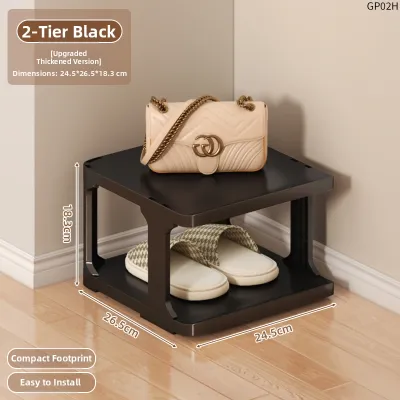
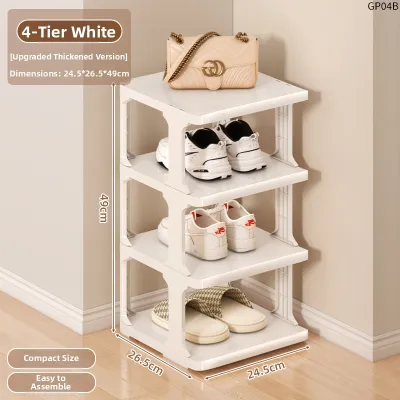
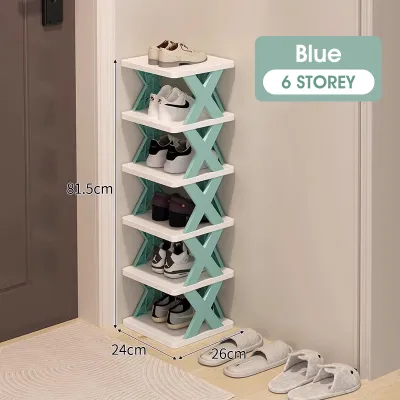
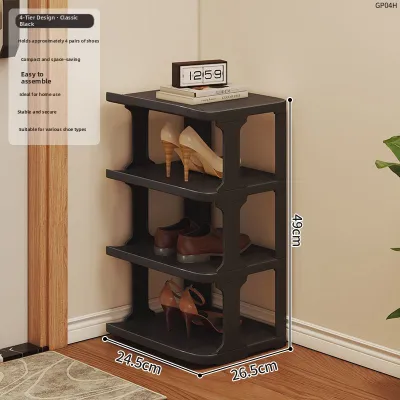

Prices are valid at publication and may change. Please refer to the product page for the latest price.
To prevent these issues, always check the manufacturer’s specifications for the actual usable shelf depth rather than relying solely on the overall frame depth. The overall depth often includes external handles, decorative molding, or back panels, which can shave off valuable centimeters of actual storage space. Measuring your longest pair of shoes from heel to toe will give you a reliable baseline to compare against these internal dimensions.
How Shoe Types Change Actual Capacity
Your household’s footwear mix is the single most important factor in determining how many pairs will fit onto a slim rack. Flat shoes, sandals, and children’s shoes take up minimal vertical and horizontal space, allowing you to maximize the manufacturer’s stated capacity. These low-profile items can often be doubled up or nested together to save even more room.

On the other hand, bulky running shoes, basketball sneakers, and boots require significantly more volume. A single pair of high-top sneakers can occupy the physical space of two or three pairs of flat slip-ons, drastically reducing the overall capacity of a tiered system. The wide soles of modern athletic shoes also mean you might fit fewer pairs side-by-side on a single shelf than expected.
High heels and platform shoes present a different challenge, as their height requires greater vertical clearance between shelves. If your slim rack features fixed, non-adjustable tiers, you may find that taller shoes can only fit on the very top shelf, leaving the lower compartments underutilized. This can lead to wasted vertical space if the remaining shelves are too short for your daily footwear.
Instead of assuming a uniform capacity, audit your household’s footwear collection before purchasing. Plan for a realistic mix of daily-wear shoes, formal footwear, and casual flats, keeping in mind that a diverse collection will always hold fewer pairs than a uniform set of low-profile shoes.
Design Variations and Their Capacity Trade-offs
To overcome the depth limitation, manufacturers utilize several clever design variations, each with its own set of capacity trade-offs. Tilted or slanted shelves are a popular choice, angling the shoes downward so they require less horizontal depth while still accommodating longer soles. This design works exceptionally well for flats, loafers, and low-profile sneakers, but it can struggle with high heels or heavy boots that may slide forward or fail to clear the upper shelf.
Staggered tier designs and multi-level open wire racks maximize vertical space without expanding the unit’s footprint. These open designs allow for better ventilation—a crucial factor in humid climates to prevent mold and odor buildup—but they leave your shoes fully visible, which may not suit those preferring a minimalist, hidden storage look. Open racks also require careful placement to ensure dirt from the soles of upper shoes does not fall onto the pairs below.
For narrow entryways that require high-capacity storage, rotating shoe towers and pull-out slim cabinets offer innovative alternatives. Rotating towers allow you to access multiple sides of a vertical column, while pull-out cabinets slide forward like a drawer to reveal staggered shelves. While these designs can hold more pairs per square meter of floor space, you must verify that you have enough physical clearance in front of the unit to fully rotate or pull out the compartments without blocking walkways.
Calculating Your Required Capacity and Space
Finding the right slim shoe rack requires a balance between your storage needs and the physical constraints of your home. Begin by counting the number of shoes your household actually wears on a daily basis, and add a buffer of two or three pairs to accommodate guests or future purchases. It is often more practical to store seasonal or rarely worn footwear in bedroom closets, reserving the entryway rack strictly for active pairs.
Next, measure your entryway with precision, paying close attention to the width, height, and available depth. In typical apartment layouts, such as compact flats or condominiums, entryways are often narrow corridors where every centimeter counts. Ensure that the rack’s placement leaves at least 90cm of clear walkway space to allow residents to move comfortably and carry groceries or bags past the unit.
Do not forget to account for door swing paths, light switches, and electrical outlets. A shoe cabinet that blocks a main door from opening fully or covers a light switch will quickly become a daily frustration, regardless of how many shoes it can hold. If your entryway has a narrow recess, measure the exact width at both the floor level and the top height of the planned cabinet, as walls are rarely perfectly plumb.
Common Sizing and Placement Mistakes to Avoid
One of the most frequent mistakes when installing a slim shoe rack is ignoring the baseboard or skirting board along the bottom of the wall. If the rack does not have a cutout or recess at the back to accommodate the skirting, it will sit several centimeters away from the wall, creating an unstable gap and reducing the effective clearance in your entryway. This gap also makes the unit more prone to wobbling.
Another common error is assuming that every tier within a cabinet has identical dimensions. Many slim designs feature a shallower top drawer or a bottom compartment with reduced clearance due to the unit’s structural frame or tipping mechanisms. Always verify the individual height and depth measurements of each tier before assuming your entire collection will fit.
Finally, never overlook the assembly conditions and structural stability of a fully loaded rack. Because slim shoe racks have a very narrow footprint, they naturally have a higher center of gravity, making them prone to tipping when packed with heavy footwear. Always check if the unit requires wall anchoring and ensure your walls are suitable for mounting before finalizing your purchase.
Frequently Asked Questions (FAQ)
Can I fit large sneakers on a slim tilted shoe rack?
Fitting large sneakers on a slim tilted shoe rack is challenging because the tilt angle reduces both the usable depth and the vertical clearance of the compartment. Bulky soles and high-top designs often catch on the upper shelf or prevent the tilting drawer from closing completely. Before purchasing, measure the maximum length and height of your largest sneakers and compare them against the manufacturer’s internal compartment specifications to ensure a proper fit.
Are slim shoe racks stable when fully loaded?
Slim shoe racks can become highly unstable and top-heavy when fully loaded, especially if heavier shoes are placed on the upper shelves. Because of their narrow depth, these units have a high risk of tipping forward when drawers are opened or if someone accidentally bumps into them. To ensure safety, look for units that include dedicated anti-tip wall anchoring hardware, and always place your heaviest footwear on the bottom tiers to keep the center of gravity as low as possible.

Community discussion
Share your experience or ask a question. Comments are reviewed before publication.