
Determining the ideal shoe shelf capacity for your home requires a careful balance between your household’s daily footwear habits and the physical limits of your entryway. For a typical Singapore household of three to four people, a shoe shelf that holds 12 to 24 pairs generally accommodates daily rotations and immediate essentials. Finding the perfect fit for your space involves auditing your current collection, taking precise spatial measurements, and selecting a configuration that keeps your entrance organized and safe.
By matching your storage capacity to your actual lifestyle, you can prevent entryway clutter and ensure your footwear remains in excellent condition. A well-chosen shelf not only streamlines your morning routine but also preserves the open, welcoming feel of your home’s entrance.
Assessing Your Current and Future Shoe Collection
The foundation of choosing the right shoe shelf capacity is a thorough audit of your household’s footwear. Start by gathering every pair of shoes currently in use across all family members. It is helpful to categorize them into daily essentials, sports or activity-specific footwear, and occasional or formal wear.
Products mentioned in this guide
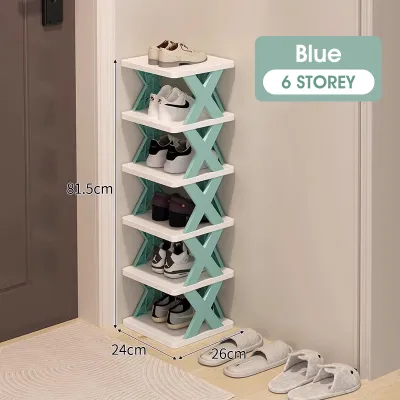
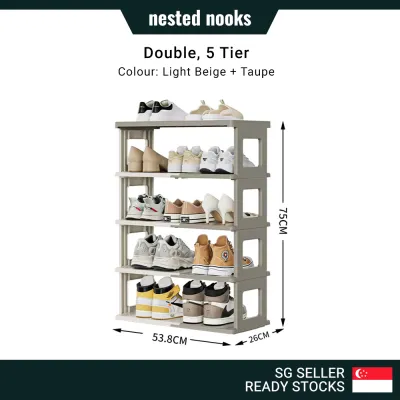
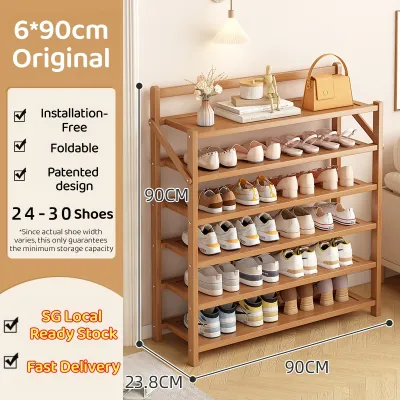
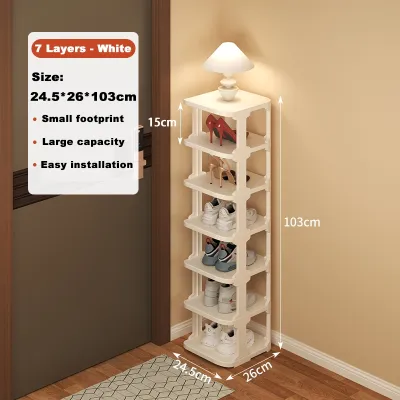
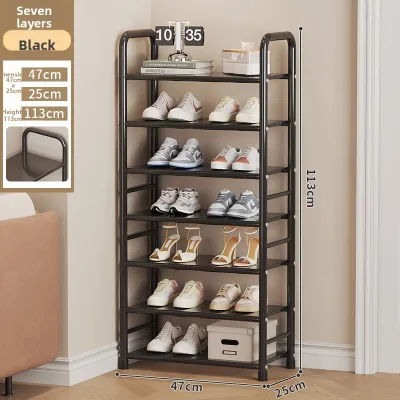
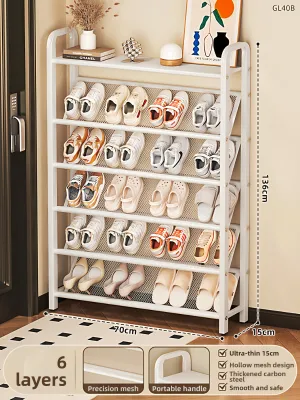
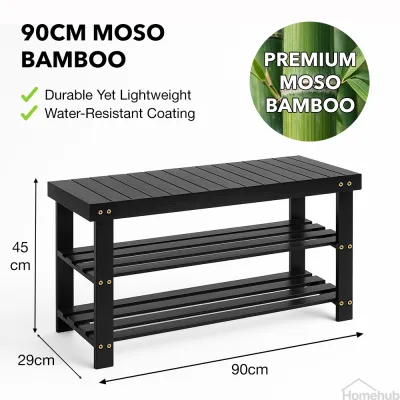
Prices are valid at publication and may change. Please refer to the product page for the latest price.
Daily essentials, such as school shoes, work flats, and casual sandals, require immediate accessibility near the front door. Occasional footwear, like formal heels, dress shoes, or seasonal boots, do not need to occupy prime entryway real estate. These can be stored in bedroom wardrobes or dedicated storage boxes to keep your main shelf organized.
To calculate your baseline capacity, consider the size of your household. On average, an individual might keep three to four pairs of shoes in active rotation. For a household of four, this translates to a minimum capacity of 12 to 16 pairs just for daily use.
Do not forget to plan for future growth. If you have young children, their shoe sizes will increase, meaning their footwear will occupy more physical volume over time. Additionally, leaving a buffer of two to four extra slots accommodates guests’ footwear when hosting gatherings, preventing shoes from piling up in the common corridor.
Measuring Your Entryway, Hallway, or Closet Space
Before purchasing any shoe shelf, accurate physical measurements of your designated space are essential. Entryways in Singapore homes, particularly HDB flats and modern apartments, are often compact or feature narrow corridors. Use a metal measuring tape to record the maximum width, depth, and height of the area where the shelf will stand.

Walkway clearance is a critical safety and comfort factor. A standard hallway should maintain an unobstructed width of at least 90 to 100 centimeters to allow residents to walk freely and carry groceries or bags. Ensure that the depth of the shoe shelf does not encroach on this vital pathway.
Pay close attention to the swing radius of your front door, gate, or adjacent closet doors. A shoe shelf that blocks a door from opening fully to 90 degrees will quickly become a daily frustration. Open all nearby doors completely and measure the remaining clearance before finalizing your furniture dimensions.
Structural details can also impact how a shoe shelf fits. Check for baseboards along the floor, which can push the top of a flat-backed shelf away from the wall, creating an unstable gap. Note the locations of electrical outlets, light switches, and distribution board (DB) boxes, ensuring they remain fully accessible.
Finally, consider the logistics of delivery and assembly. If you are purchasing a pre-assembled shoe cabinet, verify the dimensions of your building’s lift, corridors, and front doorway. Ensuring the unit can physically pass through these entry points prevents delivery day complications.
Matching Shelf Capacity to Your Space and Needs
Once you know your required capacity and spatial limits, you can evaluate different shoe shelf configurations. The height of the individual tiers is just as important as the overall width of the unit. Standard flat shelves are highly efficient for low-profile footwear like flats, sandals, and low-top sneakers.
For households with a diverse collection of footwear, adjustable shelves are highly recommended. These allow you to customize the vertical clearance of each tier, making it easy to accommodate high heels, ankle boots, or bulky athletic shoes without wasting vertical space. Check the product specifications to confirm if the shelves can be repositioned easily.
The choice between a vertical rack and a horizontal console depends heavily on your floor plan. Tall, narrow vertical racks maximize storage capacity while occupying minimal floor space, making them ideal for tight entryways. However, tall units must be stable; check if the manufacturer recommends anchoring the unit to the wall to prevent accidental tipping.
Conversely, a wide, low-profile shoe console offers a stable top surface that can double as a decorative entryway table or a convenient bench for sitting while putting on your shoes. While these units hold fewer pairs per square meter of floor space, they offer excellent stability and a clean, open look.
Modular or stackable shoe shelves provide a flexible solution for growing households. These systems allow you to start with a compact two-tier or three-tier setup and add matching units on top as your storage needs expand. Always follow the manufacturer’s guidelines regarding maximum stacking heights to maintain structural integrity.
Common Sizing and Placement Mistakes to Avoid
One of the most common mistakes is underestimating the depth required for larger footwear. Many standard shoe shelves are designed with a depth of 30 centimeters, which may be too shallow for larger shoe sizes, such as men’s US size 11 and above. Shoes that overhang the edge can prevent cabinet doors from closing or create a tripping hazard in narrow hallways.
Another frequent oversight is ignoring the natural ventilation needs of your footwear. Singapore’s humid climate can trap moisture inside closed shoe cabinets, leading to mold growth and unpleasant odors. To prevent this, look for shoe shelves with open slatted designs, mesh tiers, or built-in ventilation grilles that promote consistent airflow.
Avoid placing shoe shelves in positions that block essential home utilities or emergency exit routes. Never obstruct access to your home’s main electrical distribution board, fiber interface points, or water meters. Keeping these areas clear ensures you can access them quickly during maintenance or emergencies.
Frequently Asked Questions (FAQ)
How much depth does a standard shoe shelf need?
A standard shoe shelf typically requires a depth of 30 to 35 centimeters to accommodate average shoe sizes comfortably. To ensure a proper fit, check the manufacturer’s product specifications and measure your largest pair of shoes from the back of the heel to the tip of the toe. If you have larger footwear or shoes with prominent heels, look for shelves with a depth of 38 centimeters or opt for slanted shelves, which store shoes at an angle to save horizontal depth.
Should I leave extra space between shelves for boots?
Yes, standard flat tiers usually offer about 15 to 20 centimeters of vertical clearance, which is insufficient for ankle boots, mid-calf boots, or high-top sneakers. Before purchasing a fixed-tier rack, measure the shaft height of your tallest boots. To avoid crushing or bending the materials, select a shoe shelf that features adjustable shelves or has a dedicated bottom tier with greater vertical clearance to accommodate taller footwear safely.

Community discussion
Share your experience or ask a question. Comments are reviewed before publication.