
Finding the right outdoor shoe rack size requires balancing your household’s daily footwear habits with the physical limitations of your outdoor space. In Singapore’s tropical climate, placing a shoe rack outdoor is a highly practical way to keep dirt, mud, and rain-soaked footwear out of your living areas. However, choosing a rack that is too small leads to messy, disorganized piles, while an oversized rack can block critical pathways, violate local fire safety regulations, or disrupt your home’s entrance aesthetic.
To find the perfect fit, you must calculate your actual storage needs, translate those needs into physical dimensions, and match them against the specific constraints of your housing type—whether it is an HDB flat, a condominium, or a landed home. Taking the time to measure your space and audit your shoe collection ensures you select a durable, compliant, and highly functional storage solution.
Assessing Your Household's Shoe Storage Needs
To avoid purchasing a rack that quickly overflows, start by establishing a realistic baseline of how many shoes actually need to live outdoors. A common mistake is planning only for the number of people in the house, assuming each person keeps only one or two pairs outside. In reality, most active individuals cycle through several pairs of footwear regularly, including daily commute shoes, running sneakers, school shoes, and casual sandals.
Products mentioned in this guide
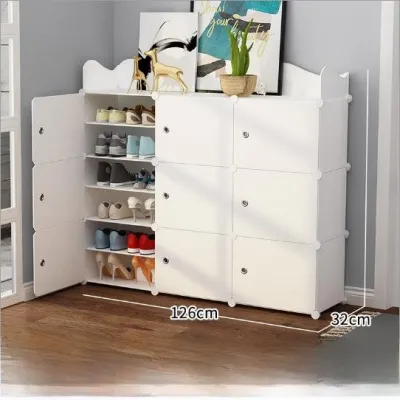
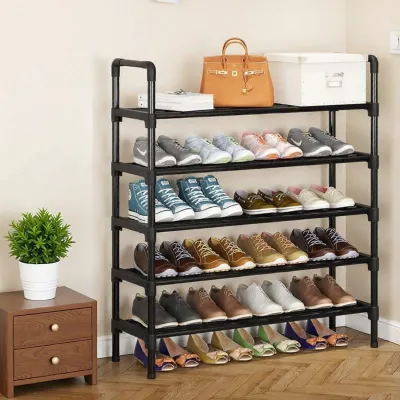
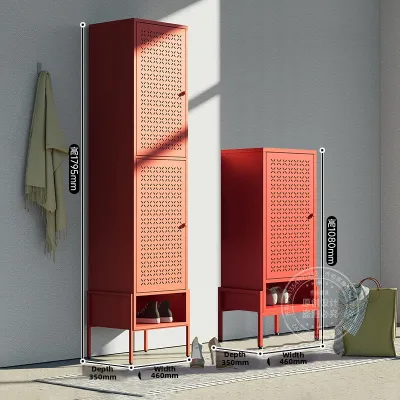
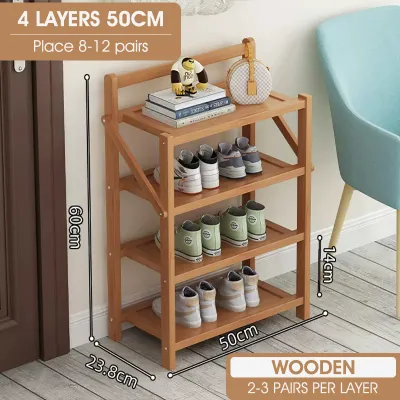
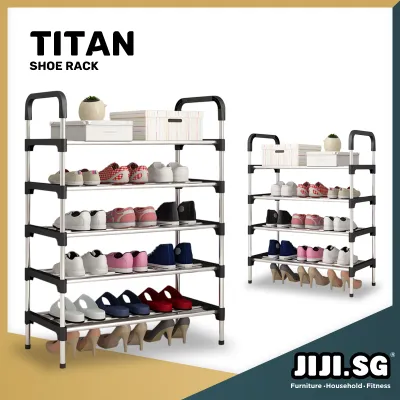
Prices are valid at publication and may change. Please refer to the product page for the latest price.
Conduct a quick inventory of your household’s active footwear. For a single working adult or student, the baseline is usually three to four pairs of frequently worn shoes. Multiply this baseline by the number of family members to find your starting capacity. If you have a family of four, you will easily require space for 12 to 16 pairs of shoes just for daily use.
Next, factor in future household changes and lifestyle shifts. Children grow rapidly, and their shoes not only get larger but also increase in number as they join sports teams or school activities. If you plan to expand your family or host a helper, it is wise to add a buffer to your initial calculation.
A dedicated guest allowance is also essential for maintaining an orderly entrance. When hosting friends or relatives, an overcrowded doorway quickly becomes a tripping hazard. Adding a 10% to 20% capacity buffer—equivalent to two to four extra slots on your rack—ensures that visitors have a designated spot to place their shoes, keeping your common corridor or entryway clear.
Finally, strictly categorize which shoes belong outdoors. The outdoor shoe rack should be reserved exclusively for daily-use footwear that is subjected to outdoor dirt, road grime, and sweat. Formal leather shoes, expensive heels, seasonal boots, and indoor slippers should remain in an indoor cabinet where temperature and humidity are easier to control. This separation keeps your outdoor rack size manageable and protects your delicate footwear from tropical humidity.
Matching Your Shoe Rack Outdoor Capacity to Your Space
Once you have an estimate of the number of pairs you need to store, you must reconcile this number with your physical outdoor environment. In Singapore, different housing layouts present unique spatial challenges, regulatory constraints, and environmental exposures that directly dictate the maximum size and type of shoe rack you can install.

HDB Corridors and Common Areas
For public housing residents, safety and regulatory compliance are the absolute first priorities. Before purchasing any shoe rack outdoor, you must check the latest guidelines from the Housing & Development Board (HDB) and the Singapore Civil Defence Force (SCDF) regarding corridor obstructions. SCDF regulations strictly mandate a minimum clear escape passage of 1.2 meters along common corridors. If your corridor is narrow, placing a standard shoe rack outside may violate fire safety laws, which can lead to warnings or fines from your local Town Council.
Measure the exact usable width of your corridor from the wall to the edge of the walkway. If your corridor allows for storage, select a slim, high-capacity vertical shoe rack that utilizes height rather than depth. These vertical designs keep the footprint minimal while providing multiple tiers of storage. However, ensure that the height of the rack does not block common utility meters, dry risers, or your neighbors’ line of sight.
Condo Balconies and Patios
In private condominiums, the challenge shifts from public safety regulations to estate management by-laws and lifestyle balance. Many Management Corporation Strata Title (MCST) rules strictly govern the appearance of balconies and patios to maintain a uniform building facade. Some condos prohibit any visible storage units above balcony railing height, while others restrict the color or material of outdoor furniture. Always consult your condo’s resident handbook or management office before committing to a large cabinet.
Beyond compliance, you must balance shoe storage capacity with the practical use of your balcony. If you use your balcony for dining, plants, or relaxation, a bulky shoe cabinet will make the space feel cramped. Choose a low-profile, multi-functional shoe bench that can double as seating, or a sleek, enclosed cabinet that blends seamlessly with your outdoor decor. Because balconies are highly exposed to driving rain and intense afternoon sun, check the manufacturer’s care instructions and look for weatherproof treatments like powder-coated aluminum, heavy-duty plastics, or treated teak to prevent warping, rust, and water ingress.
Landed Property Porches and Carports
Landed homes offer the greatest flexibility in terms of space, but they also expose your shoe storage to the harshest environmental elements. With a spacious porch or carport, you can easily accommodate larger family collections, including bulky items like heavy hiking boots, golf shoes, or mud-covered gardening clogs.
However, because these areas are semi-outdoor or fully outdoor, your main concern is durability and structural stability. Heavy rain, high humidity, and direct sunlight can rapidly degrade low-quality materials. When choosing a large-capacity rack for a landed porch, check the product specifications for UV-resistant coatings, rust-proof hardware, and solid construction. Ensure the rack has a sturdy, wide base or can be securely anchored to prevent it from tipping over during strong winds or heavy monsoon downpours.
Converting Pair Count into Physical Dimensions
To ensure your chosen shoe rack fits both your shoes and your designated outdoor area, you must translate your pair count into precise physical dimensions: depth, height, and width.
Shelf depth: The necessary depth of your shoe rack is determined by the largest pair of shoes in your household. Standard adult shoes typically require a shelf depth of 30 to 35 centimeters. If someone in your household wears large athletic sneakers, work boots, or high heels, measure the physical length of those specific shoes from heel to toe. A US size 12 shoe, for example, measures approximately 30 centimeters; a rack with a depth of less than 32 centimeters will cause these shoes to overhang, preventing cabinet doors from closing or causing shoes to slip off open shelves.
Shelf height: The vertical clearance between tiers dictates what types of footwear you can store. Standard flat sandals, flip-flops, and low-profile sneakers require a clearance of only 10 to 15 centimeters. However, mid-top sneakers, ankle boots, and high heels need at least 20 to 25 centimeters of vertical space. To maximize capacity without wasting vertical space, look for shoe racks with adjustable shelves. This allows you to customize the clearance—setting tight gaps for flat sandals and wider gaps for bulkier boots.
Width calculation: To calculate the required width per tier, allocate approximately 20 to 25 centimeters of horizontal space for each pair of adult shoes. Men’s wide-sole sneakers or running shoes may require up to 28 centimeters per pair, while children’s shoes or slim sandals might only need 15 centimeters. Multiply your average shoe width by the number of pairs you want to store on a single level. For example, to fit three pairs of standard adult shoes side-by-side on one shelf, you will need a minimum rack width of 60 to 75 centimeters.
Total footprint: Once you have your width, depth, and tier height calculations, multiply them to find the total footprint of the rack. A five-tier rack that is 80 centimeters wide and 32 centimeters deep can comfortably hold about 15 pairs of adult shoes. Compare these final physical dimensions against your measured outdoor zone. Ensure that placing a rack of this size leaves ample clearance for walking, cleaning, and accessing nearby utilities.
Common Sizing and Placement Mistakes to Avoid
Avoiding common purchasing and placement mistakes will save you from frustration, safety hazards, and premature wear on your furniture.
Ignoring door swings: One of the most frequent errors is failing to account for the clearance needed for doors and gates to open fully. In many Singaporean homes, the main door opens inward, but the external metal grille gate swings outward into the corridor or porch. Measure the exact path of your gate’s swing. A shoe rack placed too close to the doorway can block the gate from opening completely, creating a daily annoyance and a dangerous obstruction during an emergency evacuation.
Underestimating shoe volume: Many buyers look at a manufacturer’s stated capacity (e.g., “holds 20 pairs”) and assume it applies to their collection. These generic capacity ratings are almost always calculated using small, low-profile shoes like women’s flats or children’s sneakers. If your household mostly wears chunky running shoes, high-top basketball sneakers, or wide work boots, the actual capacity of the rack will be significantly lower. Always size up or calculate your dimensions based on actual shoe measurements rather than relying solely on the manufacturer’s advertised pair capacity.
Neglecting ventilation: Placing a solid-backed shoe cabinet flush against an outdoor wall is a recipe for mold and mildew, especially in Singapore’s humid tropical climate. Damp shoes placed in an unventilated, enclosed space will quickly develop foul odors and fungal growth. Choose racks with slatted shelves, open backs, or mesh doors to promote continuous airflow. If you prefer an enclosed cabinet to keep shoes out of sight, ensure it has built-in ventilation louvers or grills, and leave a gap of at least 5 centimeters between the cabinet and the wall.
Overlooking structural limits: Every shoe rack has a maximum load capacity, which is particularly critical for wall-mounted, lightweight plastic, or tall vertical tiered racks. Overloading a flimsy rack can cause the shelves to sag, joints to snap, or the entire structure to collapse. Always check the manufacturer’s weight limits before purchasing. If you are using a tall, narrow rack in an area with high foot traffic or wind exposure, ensure it has a heavy, stable base or use wall-anchoring brackets to eliminate tip-over risks.
Frequently Asked Questions (FAQ)
Is it legal to place a shoe rack outside my HDB flat door?
Whether you can legally place a shoe rack outside your HDB door depends entirely on your specific corridor layout and the rules enforced by your local Town Council. SCDF fire safety guidelines require a minimum clear escape path of 1.2 meters along the corridor. If your corridor is a dead-end or is narrower than the required width, placing any furniture there is strictly prohibited. Always consult your local Town Council or check the latest official HDB and SCDF guidelines before buying a rack to ensure compliance and avoid forced removal.
How can I maximize shoe capacity in a narrow outdoor space?
To maximize capacity when horizontal space is limited, evaluate vertical storage solutions such as tall, narrow tiered racks or staggered, angled shelves. Angled shelves reduce the required depth of the rack, making them excellent for narrow corridors. When utilizing vertical space, it is vital to verify the rack’s base stability and weight limits. Look for sturdy materials and consider securing the top of the rack to the wall with appropriate mounting hardware to prevent tip-over risks, particularly in windy areas or high-traffic pathways.

Community discussion
Share your experience or ask a question. Comments are reviewed before publication.