
Finding the right metal shoe rack capacity for your Singapore home is a balancing act between your household’s daily footwear habits and the physical limits of your entryway. Whether you live in a cozy HDB flat or a modern condominium, shoes can quickly accumulate near the front door, creating visual clutter and potential safety hazards. Selecting the ideal capacity ensures that every pair has a dedicated spot while keeping your foyer clear, welcoming, and easy to navigate. By evaluating your household’s collection, measuring your available floor space, and understanding how different shoe styles affect rack dimensions, you can make an informed decision that serves your home for years to come.
Calculate Your Household's Total Shoe Storage Needs
To determine the ideal capacity of your metal shoe rack, start by auditing your household’s current footwear collection. A practical baseline for an active adult in Singapore is typically four to six pairs of frequently used shoes, which generally includes work shoes, casual sneakers, sandals or slippers for quick errands, and exercise footwear. Formal shoes, high heels, or specialized sports gear like football boots or hiking shoes can easily double this number per person. If you have growing children, their shoe sizes will change rapidly, and their active lifestyle often means keeping multiple pairs of school shoes and play sneakers on hand simultaneously.
Do not design your storage system solely around your current inventory. It is wise to factor in a buffer of at least 15% to 20% for future purchases, seasonal rotations, or guests. If you frequently host gatherings with family and friends, having a designated lower tier or an open bottom clearance on your metal shoe rack can accommodate visitor footwear without cluttering the main walkway. For a typical four-person household, a rack that holds 24 to 30 pairs is often the sweet spot, allowing for daily variety and a small margin for growth.
Products mentioned in this guide
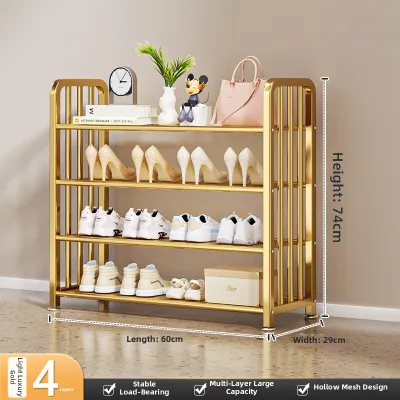
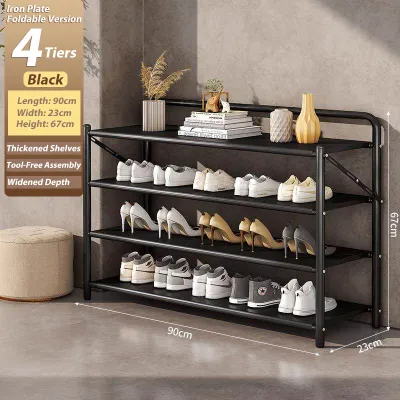
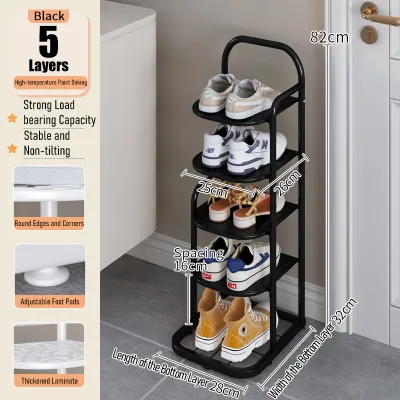
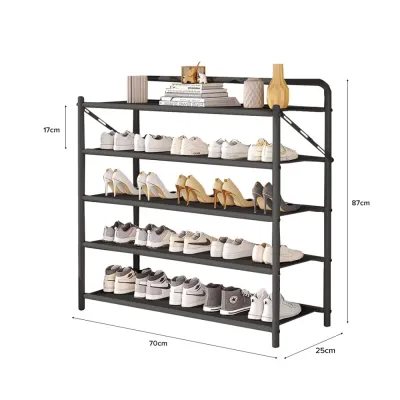
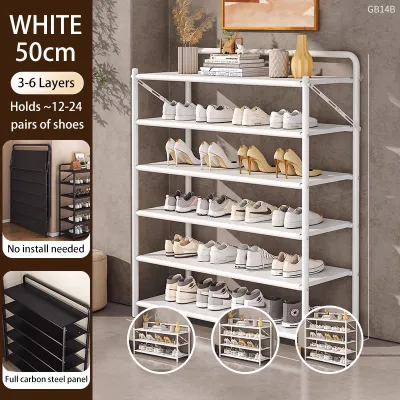
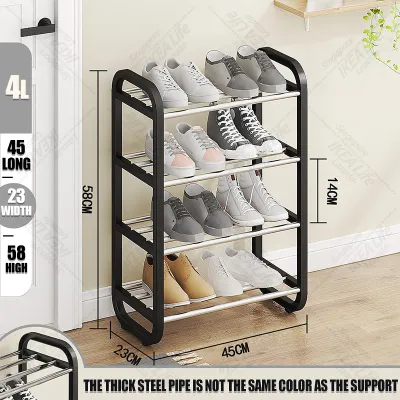
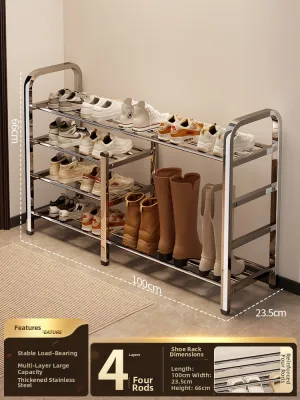
Prices are valid at publication and may change. Please refer to the product page for the latest price.
Measure Your Entryway and Clearance Space
Before purchasing any furniture, you must carefully measure the physical footprint of your intended installation area. In Singapore, HDB foyers and condominium entryways often have strict space constraints, and keeping corridors clear is essential for safety and compliance with local fire regulations. Measure the maximum width, depth, and height available along your entryway wall. A standard metal shoe rack typically requires a depth of at least 30 to 35 centimeters to accommodate adult shoes horizontally without them overhanging the edges, though slim-profile tipping bucket designs can reduce this depth if space is exceptionally tight.

Pay close attention to door swing clearances and walkway traffic. Ensure that when your main entrance door, gate, or nearby closet doors are fully opened, they do not strike the shoe rack. Leave a minimum walkway width of at least 1 to 1.2 meters in front of the rack to allow family members to pass comfortably, put on shoes, or carry groceries inside without feeling cramped. Additionally, leave a small gap of 1 to 2 centimeters between the rack and the wall to promote air circulation, which is crucial in Singapore’s humid climate to prevent mold growth on both the wall and your footwear.
Finally, consider the logistics of getting the shoe rack into your home. If you are purchasing a pre-assembled, heavy-duty metal unit, verify the dimensions of your building’s lift, doorways, and any tight corners in your hallway. Flat-packed metal shoe racks that require home assembly are generally easier to transport through narrow spaces, but you should still confirm that you have a clear, flat area in your home to assemble the frame safely.
Match Pair Count to Rack Dimensions and Tier Spacing
Once you know your target capacity and available space, you can translate these numbers into specific rack configurations. The physical width of the rack directly dictates how many pairs can sit side-by-side on a single tier. On average, a pair of adult shoes requires about 20 to 25 centimeters of horizontal space. Therefore, a metal shoe rack with a width of 80 centimeters can comfortably hold three to four pairs per shelf, while a 100-centimeter wide rack can accommodate four to five pairs.
Vertical spacing between tiers is equally important and depends heavily on the types of shoes you own. Standard flats, sandals, and low-profile sneakers require a tier height of approximately 15 to 18 centimeters. High-top sneakers, ankle boots, and heels generally need 20 to 25 centimeters of clearance, while tall boots require significantly more. To maximize vertical space without increasing the rack’s footprint, look for multi-tier or stackable metal designs. Stackable units allow you to start with a two-tier or three-tier setup and add additional levels upward as your collection grows, provided your ceiling height and stability permit.
For households with a highly diverse footwear collection, adjustable shelves or modular configurations are highly beneficial. Some metal shoe racks feature removable wire grids or adjustable brackets, allowing you to customize the height of individual tiers. This flexibility ensures you do not waste valuable vertical space on low-profile sandals while struggling to squeeze taller shoes into tight gaps.
Verify Stability and Weight Limits for Fully Loaded Racks
A metal shoe rack filled to capacity can become surprisingly heavy, making structural integrity and stability paramount. Before finalizing your purchase, check the manufacturer’s specifications for the maximum weight limit per tier and for the overall unit. High-capacity racks, especially those with five or more tiers, must be constructed from robust materials like steel or heavy-duty iron with secure joints to prevent sagging or bowing over time.
Tall, narrow, or lightweight metal racks present a potential tip-over hazard, particularly if they are loaded unevenly with heavier shoes on the top shelves. To mitigate this risk, look for units that feature a wider, weighted base or those that include wall-anchoring hardware. Securing a tall metal shoe rack to the wall is highly recommended if you have young children or pets in the home. Always place heavier footwear, such as work boots or heavy sneakers, on the bottom tiers to keep the center of gravity low and improve overall stability.
The design of the rack’s feet also plays a crucial role in protecting your flooring and maintaining balance. Look for metal shoe racks equipped with adjustable leveling feet, which allow you to stabilize the unit on slightly uneven tiled or vinyl floors. Ensure the feet have non-slip rubber or plastic protective pads to prevent scratching your entryway floor tiles or tearing vinyl planks when the rack is moved or loaded.
Common Capacity and Sizing Mistakes to Avoid
One of the most frequent mistakes homeowners make is overestimating the available depth in their entryway, resulting in a shoe rack that protrudes into the main walking path. This not only creates a tripping hazard but can also block the smooth movement of furniture or appliances during delivery. Always double-check your measurements and opt for a slightly narrower or slimmer rack if your entryway is tight.
Another common error is failing to account for the height of specialized footwear. Buying a fixed-tier metal rack with uniform 15-centimeter spacing often leads to frustration when high-top sneakers, heels, or boots end up crushed, bent, or forced to lie sideways, which can damage the shoe’s structure over time. Always measure your tallest everyday shoes before choosing a rack’s tier spacing.
Lastly, avoid buying a rack that matches your current shoe count exactly with no room for flexibility. Footwear collections naturally fluctuate, and a completely full rack leaves no space for guests’ shoes or new purchases. Opting for a modular, expandable, or slightly larger metal shoe rack from the start prevents the need to purchase an entirely new storage unit down the road.
Frequently Asked Questions (FAQ)
Can I combine two smaller metal shoe racks instead of buying one large unit?
Yes, combining two smaller metal shoe racks is an excellent way to customize your storage to fit your entryway’s layout. Placing two low-profile, two-tier racks side-by-side can create a long, seamless storage bench that offers a convenient place to sit while putting on shoes, which is often more stable and visually unobtrusive than a single tall unit. However, if you choose to stack two smaller units vertically, ensure they are explicitly designed for modular stacking and include secure interlocking connectors. Stacking non-compatible racks can lead to severe instability and tip-over risks.
How do I store tall boots on a standard metal shoe rack?
Storing tall boots on a standard metal shoe rack with fixed tiers requires a bit of creativity if the shelf spacing is too narrow. One effective solution is to remove one of the middle metal shelves entirely, effectively doubling the height of the tier below it to accommodate tall boots or high-top shoes. Alternatively, you can store boots on the very top shelf of the rack where there are no height restrictions, or use boot shapers to help them stand upright and prevent creasing. If you are still in the buying phase, prioritizing a metal shoe rack with adjustable or removable shelves is the best way to handle a diverse shoe collection.

Community discussion
Share your experience or ask a question. Comments are reviewed before publication.