
F31 shoe racks and cabinets typically hold 6 to 30 pairs of shoes, depending on the model’s dimensions, shelf layout, and your footwear collection. While product listings provide standard capacity estimates, your actual storage experience will vary based on whether you store slim sandals, bulky sneakers, or high-heeled boots. Finding a suitable fit for your home requires looking beyond headline numbers and analyzing the physical specifications of the furniture.
In space-conscious homes, such as typical apartments and condominiums in Singapore, maximizing entryway efficiency is essential. A cluttered doorway disrupts the flow of your home and can create safety hazards. Selecting the right F31 furniture piece ensures that every pair of shoes has a dedicated spot, keeping your living space clean, organized, and welcoming from the moment you step through the door.
Understanding F31 Shoe Rack Capacity Specifications
When browsing F31 furniture options, capacity ratings are usually based on standard, low-profile adult shoes like flat dress shoes or slim sneakers. The stated maximum capacity represents what the rack can hold under ideal conditions, whereas your practical daily capacity might be slightly lower once you account for varied shoe shapes and ease of access.
Products mentioned in this guide
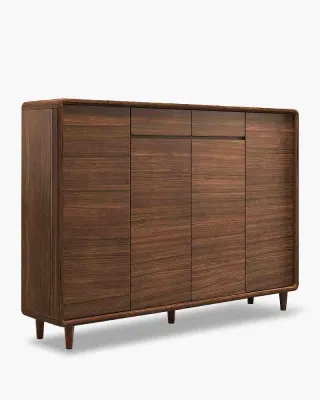
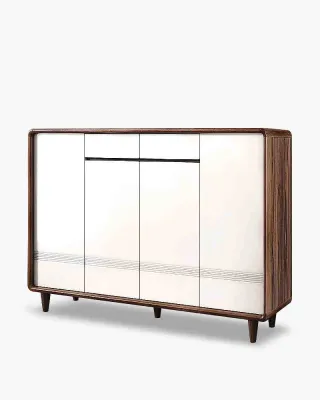
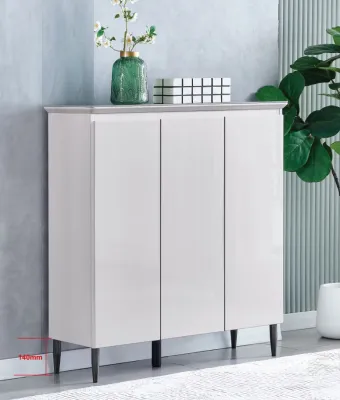
Prices are valid at publication and may change. Please refer to the product page for the latest price.
To get an accurate picture of what a specific model can hold, examine the product specification sheet for the tier count, overall width, and shelf depth. A standard pair of adult shoes requires approximately 20 to 25 centimetres of lateral shelf space. By dividing the total width of a single shelf by this average, you can estimate how many pairs will fit comfortably side-by-side on one tier.
Shelf depth is another critical dimension that determines usability. Most standard shoe racks offer a depth of 30 to 35 centimetres, which easily accommodates average shoe sizes. However, if anyone in your household wears larger sizes, verify that the cabinet doors can close fully without the tips of the shoes pressing against them. For tight spaces, some F31 models utilize slanted shelves or tipping drawer mechanisms to reduce the depth profile while maintaining a high storage capacity.
Do not overlook the weight limits specified for each shelf. While shoes are generally light, a shelf fully loaded with heavy leather boots or thick-soled sneakers can carry significant weight. Checking the manufacturer’s load capacity guidelines ensures that the shelves will not sag or warp over time, maintaining structural stability.
Factors That Change Your Actual Storage Capacity
Your personal footwear profile is the single most influential factor in determining how many pairs will actually fit onto your new rack. Chunky athletic sneakers, basketball shoes, and platform heels take up significantly more physical volume than flat sandals or canvas slip-ons. If your collection consists primarily of wide or heavily cushioned shoes, expect to fit fewer pairs per shelf than the standard estimate suggests.

The height of your shoes also plays a major role in space utilization. Standard shoe racks have fixed shelf heights, often spaced about 15 to 20 centimetres apart. While this works well for flats and low-top sneakers, it poses a challenge for high heels and boots. Storing taller footwear on a standard shelf often requires laying them on their sides, which immediately doubles or triples the horizontal space they consume.
To combat this, look for F31 models that feature adjustable or removable shelves. Having the flexibility to change the height of individual tiers allows you to customize the interior layout to match your collection. You can set up tight, low-clearance shelves for flat sandals and slippers, while leaving a taller clearance zone at the bottom for boots, maximizing overall efficiency.
The structural design of the rack also dictates its practical capacity. Open-frame metal or wooden racks allow for a tiny bit of overhang at the front and back, which can be helpful if you have larger shoes. Enclosed cabinets, on the other hand, have strict physical boundaries defined by their doors and back panels. While enclosed cabinets offer a cleaner visual appearance and protect your shoes from dust, they require precise alignment of your footwear to ensure the doors close smoothly.
How to Calculate the Right F31 Model for Your Collection
Before making a purchase, conduct a quick inventory of your household’s footwear. Gather all the shoes currently in use and categorize them by user, size, and style. Count the number of daily-wear shoes, formal shoes, and bulky athletic pairs. This exercise gives you a realistic baseline of your current storage needs and prevents you from buying a unit that is immediately too small.
Once you have your total shoe count, apply a simple pairs-per-tier calculation. Measure the width of a typical pair of your shoes placed side-by-side. For a household with mixed shoe sizes, you can use an average width of 22 centimetres per pair. If you are considering an F31 model with a shelf width of 80 centimetres, dividing 80 by 22 gives you approximately 3.6. This means you can comfortably fit three pairs of adult shoes per tier, with a small amount of leftover space. Multiplying this by the number of tiers gives you the practical capacity of the unit.
It is always wise to plan for a buffer space when choosing your shoe rack capacity. A good rule of thumb is to select a model that offers 15% to 20% more storage space than your current inventory requires. This extra capacity accommodates future footwear purchases, seasonal changes, and shoes worn by guests. If you currently own 15 pairs of shoes, aiming for a cabinet with a practical capacity of 18 to 20 pairs ensures you will not run out of space.
Additionally, consider how you plan to store house slippers. In many Singaporean households, indoor slippers are kept near the entrance. Choosing an F31 model with an open bottom clearance space allows you to slide daily-wear slippers underneath the main cabinet. This keeps the entryway tidy without taking up valuable shelf space inside the cabinet itself, effectively boosting your overall storage capacity.
Space and Installation Checks Before You Buy
Before finalizing your choice of an F31 shoe rack, measure the physical space where the unit will stand. Use a measuring tape to check the available width, depth, and height of your designated entryway or hallway. Be sure to account for baseboards and skirting boards. A cabinet that is flush against the wall might be obstructed by a thick skirting board at the bottom, which can push the top of the unit forward and affect its stability.
Walkway clearance is another critical factor, especially in narrow corridors or near main doors. Ensure that there is ample room for people to walk past the shoe rack comfortably. If you are choosing an enclosed cabinet with swing doors, measure the door swing radius to confirm they can open fully without hitting walls, adjacent furniture, or the main entrance door. For exceptionally tight hallways, sliding door models or open shoe racks are often the most practical choice.
Safety and stability should always be a priority when installing storage furniture. Tall, narrow shoe cabinets can become top-heavy when fully loaded, presenting a tipping hazard. Check if the F31 model you select includes wall-anchoring hardware, and verify if your walls are suitable for drilling and mounting. Securing the unit to the wall is highly recommended, particularly in households with active pets or young children.
Finally, consider the assembly process and the environment. Many F31 furniture pieces are delivered flat-packed and require self-assembly. Ensure you have the necessary tools, such as a screwdriver and a rubber mallet, and sufficient floor space to assemble the unit safely. If you are placing the shoe rack in a humid area, check that the material finish is resistant to moisture and easy to wipe clean, ensuring your furniture remains in excellent condition.
Frequently Asked Questions (FAQ)
Can I fit children's shoes and adult shoes on the same F31 shelf?
Yes, mixing children’s and adult shoes on the same shelf is an excellent way to maximize horizontal space. Because children’s shoes are significantly narrower, you can often slide a small pair into the gaps left between larger adult shoes. Additionally, because children’s shoes are shorter, you can sometimes place them heel-to-toe or stack them slightly if the shelf height allows. When doing this, check the shelf surface; if the rack has wide wire gaps or slatted wooden shelves, ensure the smaller soles of children’s shoes do not slip through or sit unevenly.
Do enclosed F31 shoe cabinets hold fewer pairs than open racks?
Enclosed F31 shoe cabinets generally hold slightly fewer pairs than open racks of the exact same external dimensions. This minor reduction in capacity is due to the physical space occupied by internal hinges, door panels, and the backboard, which slightly reduce the usable internal width and depth. Open racks also allow shoes to overhang slightly at the front or back, whereas enclosed cabinets require shoes to fit entirely within the closed doors. However, many homeowners find this small trade-off worthwhile for the clean, dust-free, and organized aesthetic that an enclosed cabinet provides.

Community discussion
Share your experience or ask a question. Comments are reviewed before publication.