
To determine the optimal number of layers for a multi-layer shoe rack, you must balance your household’s total shoe count with the physical constraints of your entryway. A single person or a couple with a minimalist collection might only require a compact 3-tier or 4-tier rack. In contrast, a larger family of four or five with diverse footwear needs can easily require an 8-tier to 10-tier unit. Finding the right balance prevents cluttered entryways, ensures your footwear remains organized, and protects your shoes from being crushed or damaged. Selecting a suitable rack involves more than just counting your current pairs; you must also account for future purchases, the specific dimensions of your entryway, and the varying heights of different shoe styles.
Calculate Your Household Shoe Volume
The first step in choosing the right number of tiers is conducting a thorough audit of your household’s current footwear. Gather every pair of shoes owned by each family member, including those stored in closets, under beds, or near the front door. Group them by user and frequency of use, separating daily wear from seasonal, formal, or specialized athletic footwear. This exercise provides an accurate baseline of your storage needs and prevents you from underestimating the required capacity.
Once you have a baseline, factor in future growth to ensure your new furniture remains useful over time. If you have young children, their shoe sizes will increase, and their footwear will eventually occupy the same physical footprint as adult shoes. Additionally, consider your household’s lifestyle and hobbies. Active runners, hikers, or sports enthusiasts often accumulate multiple pairs of specialized shoes, which can quickly overwhelm a rack that was sized only for basic daily wear.
Products mentioned in this guide
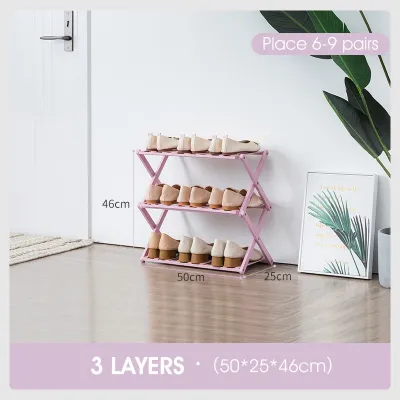
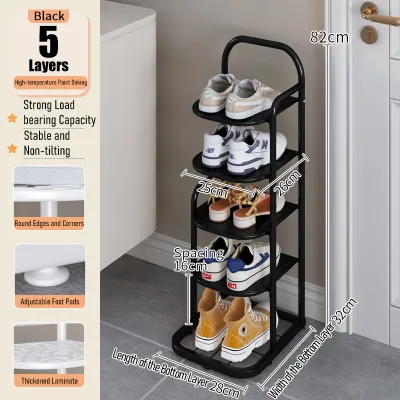
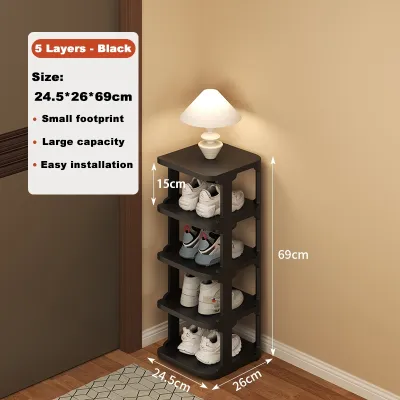
![[SG STOCK] Plastic Shoes Racks Multi Layer Storage Cabinet Space Saving DIY Foldable Shoe Rack DIY Multi Tiers Rack](https://img.lazcdn.com/g/p/b5f979fbbecaaf50063a6f3825d8f026.jpg_400x400q80.jpg_.webp)
![[SG Stock]Multi-Layer Narrow Shoe Rack Shoe Rack Furniture Narrow Shoes Storage Dustproof rack](https://img.lazcdn.com/g/p/7f6ebc2080789a013992e13d4533d3c3.jpg_400x400q80.jpg_.webp)
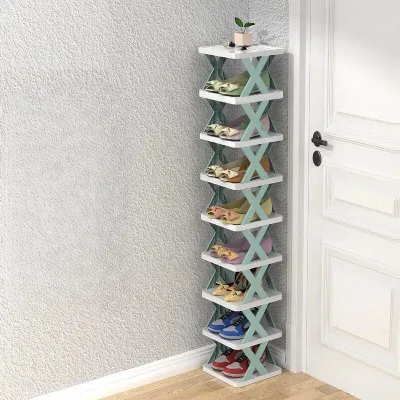
Prices are valid at publication and may change. Please refer to the product page for the latest price.
Finally, identify any oversized or non-standard items within your collection. High heels, high-top sneakers, work boots, and ankle boots require significantly more vertical clearance than flat sandals, loafers, or slippers. Count these taller pairs separately, as they will directly influence whether you need a rack with standard fixed shelves or one with adjustable tier heights.
Measure Your Entryway and Available Space
Before purchasing a multi-layer shoe rack, you must carefully measure the physical space where it will stand. Use a reliable measuring tape to record the maximum allowable width, depth, and height of the designated area. In many modern apartments and HDB flats in Singapore, entryway space is highly premium, making precise measurements essential to avoid blocking pathways or creating safety hazards.

When measuring, do not rely solely on open floor space; you must account for architectural details and functional clearances. Measure the height of your baseboards, as they can prevent a flat-backed shoe rack from sitting flush against the wall, pushing the unit forward by a few centimeters. Ensure that the front door, nearby closet doors, or room entryways can swing fully open without striking the rack. Additionally, leave at least 90 centimeters of clear walkway space in front of the rack so household members can pass comfortably.
Environmental factors also play a crucial role in placement and material selection. Avoid placing your shoe rack directly next to heat sources or in areas that receive intense, direct sunlight, as prolonged heat can dry out leather and degrade shoe adhesives. In humid climates, proper ventilation is critical to prevent mold and mildew growth on your footwear. While a closed cabinet offers a sleek look, an open multi-layer shoe rack allows for continuous airflow, which helps dry out damp shoes after a sudden downpour.
Lastly, evaluate the spatial trade-offs between different rack configurations. If your entryway has a limited footprint, a tall, narrow rack that utilizes vertical space is often the most efficient choice. However, if you have ample wall space but want to keep the visual profile of your entryway low, a shorter, wider unit may be more appropriate. Some low-profile racks can even double as an entryway bench, providing a convenient place to sit while putting on your shoes.
Match Shoe Volume to Rack Tiers and Dimensions
With your shoe count and space measurements in hand, you can now translate these figures into a specific tier count and rack configuration. To estimate how many pairs of shoes will fit on a single tier, you need to know the rack’s internal width. On average, a pair of adult shoes requires about 20 to 25 centimeters of horizontal space. Therefore, a shelf with an internal width of 80 centimeters can comfortably accommodate three to four pairs of adult shoes.
To calculate the total number of tiers required, divide your total shoe count by the number of pairs that can fit on a single shelf. For example, if your household owns 24 pairs of shoes and you choose a rack that holds 3 pairs per shelf, you will need an 8-tier rack to store everything. If the resulting tier count is too high for your ceiling height or aesthetic preferences, you may need to look for a wider rack with fewer tiers, or consider storing seasonal footwear in another location.
As you look at taller multi-layer racks, stability becomes a primary safety concern. Any rack with six or more tiers has a higher center of gravity and is more susceptible to tipping, especially when loaded unevenly. Check the manufacturer’s specifications to ensure the unit includes anti-tip wall anchors, which secure the rack firmly to the wall. Additionally, look for models with adjustable leveling feet to compensate for uneven flooring, ensuring the rack remains stable and wobble-free.
You must also decide between fixed-tier and adjustable-tier designs. Fixed-tier racks offer excellent structural stability and are often easier to assemble, but they limit you to a uniform shelf height—typically between 15 and 18 centimeters. If your footwear collection consists mostly of flat shoes, sneakers, and sandals, a fixed-tier design is highly efficient. However, if your collection includes a mix of boots, heels, and flats, an adjustable-tier design allows you to customize the height of each shelf to maximize space utilization.
Adjust for Special Footwear and Storage Habits
To ensure your multi-layer shoe rack remains highly functional, you must refine your tier selection to accommodate your specific storage habits and unique footwear styles. If you own tall boots, high-top sneakers, or bulky work boots, standard shelf heights will not suffice. For these items, look for racks that feature removable shelves or adjustable pegs, allowing you to create double-height compartments without compromising the overall stability of the unit.
Your preference for storing shoes in their original boxes also significantly impacts the required tier dimensions. Storing shoes in boxes is an excellent way to protect them from dust and light, but boxes require much more physical space than loose shoes. A standard shoe box can measure up to 35 centimeters in depth and 15 centimeters in height. If you plan to store boxed shoes, you will need a rack with deeper shelves and greater vertical clearance between tiers, which may reduce the total number of layers you can fit in a given height.
Additionally, consider allocating specific tiers for non-footwear items and daily essentials. The top shelf of an open multi-layer rack is an ideal spot for a small tray to hold keys, mail, and sunglasses, or for storing shoe care accessories like brushes, polishes, and shoe horns. The very bottom tier, being closest to the floor, can be reserved for wet umbrellas or muddy shoes, keeping dirt and moisture away from your clean footwear and protecting the rack’s upper shelves from water damage.
Common Sizing Mistakes to Avoid
One of the most common mistakes when purchasing a multi-layer shoe rack is relying solely on generic household size recommendations. A “four-person shoe rack” is a subjective label; a family of four active runners or shoe collectors will have vastly different storage requirements than a minimalist family of four. Always base your purchase on your actual, audited shoe count rather than a generalized estimate.
Another frequent error is measuring only the length of your shoes while ignoring the rack’s external frame depth and potential shoe overhang. Bulky athletic shoes or large men’s formal shoes often extend beyond the front edge of shallow shelves. If your rack is placed in a narrow hallway or behind a door, this overhang can block walkways or prevent doors from opening fully. Always compare the maximum length of your largest shoes to the internal depth of the rack’s shelves.
Finally, do not overlook the operational space required to comfortably use the shoe rack daily. You must have enough room to bend down, reach the lowest shelves, and pull shoes out without hitting adjacent walls or furniture. If you choose a rack with doors, ensure there is ample clearance for the doors to swing open fully. Taking these physical clearances into account ensures your multi-layer shoe rack remains a convenient, practical addition to your home rather than an awkward obstacle.

Community discussion
Share your experience or ask a question. Comments are reviewed before publication.