
When shopping for a queen size mattress in Singapore, you will quickly notice that a “medium” feel from one brand can feel entirely different from another. Because there is no universal industry standard for mattress firmness, brands use their own scales, materials, and marketing terms to describe their products. This guide breaks down how different mattress categories interpret firmness, how construction affects the actual sleep experience, and how to match these variations to your personal comfort needs so you can make a confident, informed choice.
In Singapore’s unique climate and housing landscape, selecting the right queen size mattress involves more than just picking a number on a scale. With standard queen dimensions typically measuring 152 cm by 190 cm, this size is the most popular choice for couples balancing comfort with limited bedroom space in HDB flats and condominiums. Understanding how different brands engineer their firmness levels will help you avoid the hassle of returns and ensure long-term sleep satisfaction.
Understanding Brand-Specific Firmness Scales
The most common tool used by mattress manufacturers is the 1-to-10 firmness scale, where 1 represents an incredibly soft, cloud-like surface and 10 represents a surface as rigid as a wooden floor. However, because this scale is entirely subjective, a level 6 “medium-firm” mattress from a brand specializing in memory foam may feel significantly softer than a level 6 mattress from a traditional pocketed spring manufacturer. Each brand calibrates its scale based on its own product lineup rather than an objective external benchmark.
Products mentioned in this guide
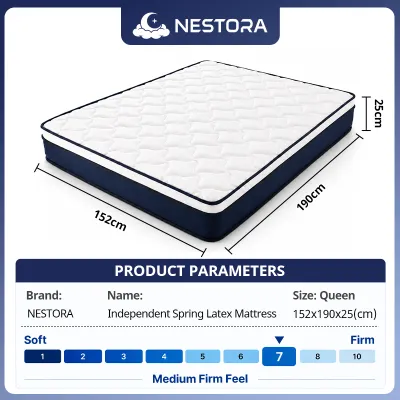
![[SG] NEXT DAY DELIVERY + FREE PILLOWS. Pocket Spring FIRM Mattress Luxury Memory Foam Single Super Single Queen King High Quality. Euro Design and High Quality. Comes in King Size Queen Super Single and Single Size Mattress. Free & Fast Delivery](https://img.lazcdn.com/g/p/258c3c41f5f9f95db42d53fe6dd511a5.jpg_400x400q80.jpg_.webp)
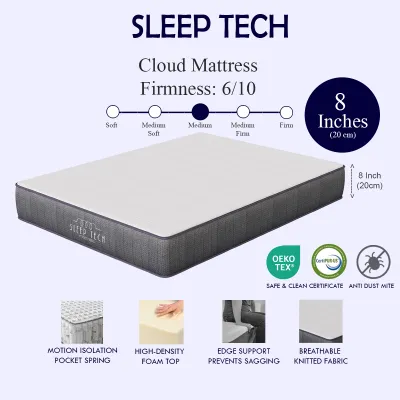
![[SG] [CLEARANCE] Pocketed Spring Spring Mattress from SLEEP TECH Cloud Mattress Single Super Single Queen and King Size](https://img.lazcdn.com/g/p/d9fd4bb40448ada26abd1a44619b237a.jpg_400x400q80.jpg_.webp)
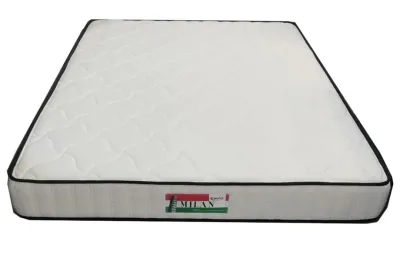
![[1-2 day delivery ] Single size and Queen Size Foam Mattress](https://img.lazcdn.com/g/ff/kf/S53f34f438945453bac9eb7ad88f413a5N.jpg_400x400q80.jpg_.webp)
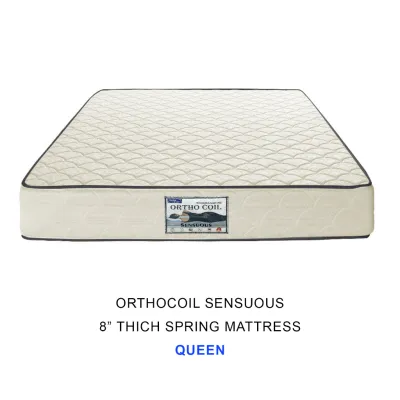
![[Bulky] DREAMAX Equinox Rest 8 Inch Comfort Pocket Spring Mattress / 20cm / Bed (SG) / sd](https://img.lazcdn.com/g/p/c25e074503162de8fade85f5c4b33c8d.jpg_400x400q80.jpg_.webp)
Prices are valid at publication and may change. Please refer to the product page for the latest price.
To make an accurate comparison, you must distinguish between surface feel and deep support. The surface feel, often referred to as the comfort layer, is what you experience during the first few seconds of lying down. This layer is designed to cushion pressure points like your shoulders and hips. Deep support, on the other hand, comes from the core layer of the mattress, which keeps your spine aligned. A mattress can have a very soft, plush surface feel but still offer excellent deep support, or conversely, it can feel hard on the surface while failing to support your lower back.
Because showroom tags and marketing labels like “luxury plush” or “orthopaedic firm” are highly subjective, relying on them can lead to a mismatched purchase. A more reliable approach is to examine the manufacturer’s technical specifications. Look closely at the thickness of the individual layers, the density of the materials used, and the structural design of the support core. Comparing these physical specifications across brands provides a much clearer picture of how a mattress will actually perform in your home than relying on a simplified number rating.
How Mattress Construction Influences Perceived Firmness
The internal engineering of a queen size mattress directly dictates how firm or soft it feels to the sleeper. In traditional innerspring and pocketed coil mattresses, firmness is largely determined by the coil gauge, which refers to the thickness of the steel wire. Lower gauge numbers indicate thicker, stiffer wire, resulting in a firmer feel, while higher gauge numbers indicate thinner wire and a softer, more contouring sensation. Many modern brands also utilize zoned support systems, placing thicker coils in the middle third of the mattress to prevent the hips from sinking too deeply, thereby creating localized zones of higher firmness.

For foam-centric mattresses, firmness is governed by foam density and Indentation Load Deflection (ILD) ratings. ILD measures the number of pounds of pressure required to compress a sample of foam by 25 percent; a higher ILD rating signifies a firmer foam. Additionally, high-density foams respond differently to body heat and weight compared to low-density alternatives. In Singapore’s warm, humid climate, temperature-sensitive memory foams can soften significantly as they absorb body heat, meaning a mattress that feels firm in a highly air-conditioned showroom may feel noticeably softer in a naturally ventilated bedroom.
Natural latex mattresses offer a distinct type of responsive firmness. Latex is inherently bouncy and quick to respond to movement, preventing the “sinking” feeling associated with memory foam. The firmness of a latex layer is determined by its density and the pattern of its pin-core holes. These holes are molded into the latex during manufacturing to allow for airflow; larger or more closely spaced holes create a softer feel, while smaller, sparser holes preserve the natural firmness of the rubber sap.
The overall design of the mattress top also plays a major role in your initial perception of firmness. A tight-top mattress has the upholstery fabric stretched tightly across the comfort layers, offering a direct, firmer feel of the underlying support. In contrast, pillow-top and euro-top designs feature an extra layer of padding stitched directly to the top of the mattress. This creates a plush, cushioning barrier that softens the initial contact point, even if the support core underneath is exceptionally firm.
Comparing Firmness Approaches by Brand Category
Different segments of the mattress market approach firmness engineering through distinct design philosophies. Heritage and traditional spring brands typically focus on robust edge support and highly structured, zoned pocketed coil systems. These brands often cater to sleepers who prefer a traditional, resilient feel with minimal sinkage. Because they use heavy-duty steel coils and structured perimeter foam encasements, their mattresses tend to maintain a consistent, predictable firmness across the entire surface, making them highly reliable for those who prioritize edge stability and ease of movement.
In contrast, bed-in-a-box and foam-centric brands generally target a universal “medium-firm” sweet spot, usually rated between 5 and 7 on the firmness scale. To appeal to the widest possible audience, these brands stack multiple layers of varying foam densities. The top layers are engineered for pressure relief and contouring, while the denser base layers provide the necessary support. While highly comfortable for pressure point relief, these foam layers can feel softer over time, particularly in tropical environments where humidity can affect the cell structure of polyurethane foams.
Specialty latex brands offer a third approach, focusing on natural materials and customizable firmness configurations. Because latex is highly durable and resistant to sagging, these brands often design mattresses with modular, interchangeable layers. This allows you to unzip the mattress cover and rearrange the internal latex slabs—such as placing a firm layer on top of a medium layer, or vice versa—to adjust the feel at home. Some specialty brands even offer dual-firmness configurations for queen size mattresses, allowing couples to have a soft feel on one side and a firm feel on the other.
Matching Firmness to Your Sleep Position and Body Type
To find the ideal firmness level, you must evaluate your primary sleeping position and how it affects your spinal alignment. Side sleepers require a softer to medium mattress (typically a 4 to 6 on the scale) to allow the shoulders and hips to sink in sufficiently, keeping the spine straight and preventing pressure sores. Back sleepers generally benefit from a medium-firm surface (a 6 to 7) that supports the natural curve of the lower back while cushioning the shoulders and glutes. Stomach sleepers need a firm mattress (a 7 to 8) to keep their hips from sinking, which can arch the lower spine and lead to chronic lower back pain.
Your body weight and mass distribution also heavily influence how firm a mattress feels. A lighter sleeper weighing under 60 kg will not compress the comfort layers very deeply, meaning a mattress rated as “medium” may feel quite firm to them. Conversely, a heavier sleeper weighing over 90 kg will sink much deeper into the comfort layers, potentially bottoming out against the support core. Heavier individuals generally require a firmer mattress with thicker comfort layers or a robust coil system to achieve the same level of comfort and alignment that a lighter sleeper experiences on a softer model.
For couples sharing a queen size mattress, conflicting firmness preferences can present a major challenge. If one partner is a side sleeper who prefers a plush feel and the other is a stomach sleeper who needs maximum firmness, a standard compromise mattress may leave both unsatisfied. In these scenarios, look for brands that offer dual-firmness customization within a single queen cover. Additionally, prioritize mattresses with excellent motion isolation—such as pocketed coils or dense memory foam—to ensure that one partner’s movements do not disturb the other during the night.
Decision Framework: Choosing and Verifying Your Mattress
When navigating the diverse mattress market in Singapore, matching your specific sleep priorities to the right brand category will streamline your decision-making process:
- Choose a heritage spring brand if you prioritize strong edge support, zoned firmness, traditional bounce, and a cooler sleep surface that does not trap body heat.
- Choose a bed-in-a-box brand if you prefer consistent foam contouring, deep pressure relief, excellent motion isolation, and the convenience of a home sleep trial.
- Choose a specialty latex brand if you want a highly durable, eco-friendly mattress with customizable firmness layers that can be adjusted over time.
Before finalizing your purchase, it is crucial to verify the delivery logistics and the retailer’s sleep trial policies. In Singapore, many residential buildings have tight corridors, low ceilings, or small passenger lifts. Ensure you measure your doorways, hallways, and lift dimensions to confirm that a standard queen size mattress can be safely transported to your bedroom. If access is exceptionally tight, a compressed bed-in-a-box model may be the most practical option.
Furthermore, read the fine print of any sleep trial offered by the retailer. A true home sleep trial is essential for foam and latex mattresses, as your body requires at least three to four weeks to adjust to a new sleep surface. Verify whether the trial includes a mandatory break-in period before a return can be initiated, whether you are responsible for return transportation fees, and if the refund is issued in cash or store credit. If the delivered mattress feels drastically different from the showroom model, or if the trial terms are ambiguous, stop and consult the retailer’s customer service team before opening or using the product.
Frequently Asked Questions (FAQ)
Does a firm mattress always provide better back support?
No, a firm mattress does not automatically guarantee better back support. Proper support is about maintaining natural spinal alignment, which requires a balance of contouring and resistance. If a mattress is too firm, it will not conform to the natural curves of your body, leaving gaps under your lower back and placing excessive pressure on your shoulders and hips. For most sleepers, a medium-firm mattress provides the optimal combination of surface pressure relief and deep structural support to prevent back pain.
Can I change the firmness of my queen size mattress after buying it?
Yes, you can adjust the surface feel of your mattress, though you cannot alter its deep structural support. If your mattress is too firm, adding a plush mattress topper made of memory foam, latex, or down can soften the initial feel and improve pressure relief. If your mattress is too soft, a firm topper can provide a slightly more stable surface, though it will not fix a sagging support core. Always check your mattress warranty before adding third-party accessories, as some manufacturers have specific guidelines regarding compatible bases and toppers.

Community discussion
Share your experience or ask a question. Comments are reviewed before publication.