
Finding the right mattress brand in Singapore comes down to matching your personal sleep posture with a manufacturer’s structural design and material transparency. Because firmness ratings are not standardized across the bedding industry, a “medium-firm” label from one brand may feel like an “extra-firm” or “plush” from another. To secure a mattress that supports your spine and relieves pressure points, you must look past marketing labels and evaluate the physical components, showroom availability, and trial policies of local retailers. By focusing on verifiable material specifications and testing mattresses systematically, you can identify the brands that offer the precise support your body requires.
Decoding Mattress Firmness for Your Sleep Position
Mattress firmness is typically represented on a conceptual scale from 1 to 10, where 1 is extremely soft and 10 is highly rigid. However, this scale is subjective and varies between manufacturers. A brand specializing in natural latex might rate a model as a 7, while an innerspring brand might rate a structurally similar mattress as a 5. This discrepancy makes it essential to understand how materials interact with your body rather than relying solely on numerical ratings.
Spinal alignment is the primary health objective of any mattress. When you lie down, your spine should maintain its natural curve, similar to your posture when standing upright. If a mattress is too soft, your heaviest parts—typically the hips and pelvis—will sink too deeply, causing the spine to curve downward and straining the lower back. Conversely, if a mattress is too firm, it will not contour to the narrower parts of your body, such as the waist and neck, leaving those areas unsupported while putting excessive pressure on your shoulders and hips.
Products mentioned in this guide
![[1-2 day delivery] Foldable Foam Mattress 3-Fold Mattress](https://img.lazcdn.com/g/ff/kf/Se38f308a460b4ba3aef73a3da6703c621.jpg_400x400q80.jpg_.webp)
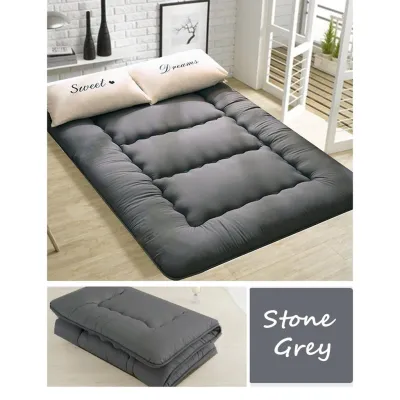
![[1-2 day delivery ] Single size and Queen Size Foam Mattress](https://img.lazcdn.com/g/ff/kf/S53f34f438945453bac9eb7ad88f413a5N.jpg_400x400q80.jpg_.webp)
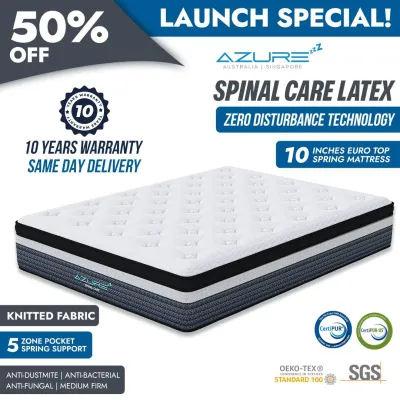
![[Bulky] DREAMAX Equinox Rest 8 Inch Comfort Pocket Spring Mattress / 20cm / Bed (SG) / sd](https://img.lazcdn.com/g/p/c25e074503162de8fade85f5c4b33c8d.jpg_400x400q80.jpg_.webp)
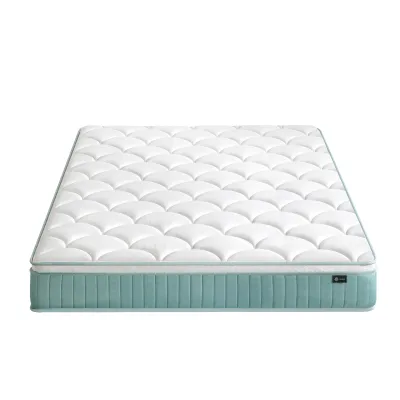
Prices are valid at publication and may change. Please refer to the product page for the latest price.
Your primary sleep position dictates where you need support and where you need pressure relief. Side sleepers require a surface that allows the shoulders and hips to sink sufficiently to keep the spine straight. Back sleepers need a balanced surface that supports the lumbar curve while cradling the buttocks. Stomach sleepers require a highly supportive, firmer surface to prevent the hips from sinking, which can arch the lower back painfully.
Body weight is the final variable that dictates how firm a mattress actually feels. A sleeper weighing under 60 kilograms will not exert enough force to compress the deeper support layers of a mattress, meaning a medium mattress may feel quite firm to them. A sleeper weighing over 90 kilograms will sink much deeper into the same mattress, potentially bottoming out through the comfort layers and resting directly on the stiff support core, making the mattress feel both uncomfortably hard and unsupportive.
Evaluating Brand Transparency and Showroom Availability
When researching mattress brands in Singapore, the level of technical detail a company provides is a strong indicator of product quality and longevity. Reputable brands openly disclose the specifications of their materials rather than hiding behind proprietary marketing terms. For foam mattresses, look for disclosures regarding foam density, which is measured in kilograms per cubic meter. High-density foams generally offer better contouring and resist sagging far longer than low-density alternatives.

For hybrid and innerspring mattresses, pay close attention to the coil gauge and coil count. Coil gauge refers to the thickness of the steel wire used to make the springs; a lower gauge number indicates a thicker, stiffer wire that provides firmer support. Pocketed spring systems, where each coil is wrapped in its own fabric sleeve, allow for localized contouring and minimize motion transfer across the bed. If a brand refuses to share these specifications, it becomes difficult to verify whether the mattress will maintain its firmness over years of nightly use.
Physical showrooms play a critical role in the purchasing process, especially in Singapore where space and delivery logistics require careful planning. Testing a mattress in person allows you to feel the immediate transition between comfort layers and the support core. It also gives you an opportunity to interact with the brand’s customer service team and assess their knowledge of the product line. Brands with dedicated showrooms or authorized retail partners in accessible locations allow for a more reliable evaluation than online-only retailers.
Sleep trials have become a common offering, but their terms and conditions vary widely between brands. A true sleep trial should allow you to test the mattress in your own home for a set period, typically ranging from 30 to 100 nights, as it takes several weeks for your body to adjust to a new sleeping surface. When evaluating these policies, check for hidden fees such as return transportation charges, restocking fees, or requirements to purchase a specific mattress protector. Some brands only offer store credit or exchanges rather than a full refund, which is a critical distinction if the mattress does not suit your needs.
Matching Firmness Profiles to Specific Sleep Needs
To find the right mattress, you must understand how different materials create specific firmness profiles. The transition between soft, medium, and firm is determined by the relationship between the top comfort layers and the underlying support core. While the comfort layers provide initial pressure relief, the support core keeps your body aligned. Perceived firmness is a dynamic experience that depends on how these layers compress under your specific body weight.
Extra Firm for Back and Stomach Sleepers
For individuals who sleep primarily on their backs or stomachs, an extra-firm mattress is often necessary to prevent the midsection of the body from sinking. To achieve this level of support, look for mattresses constructed with high-density support cores, such as dense polyfoam, or heavy-gauge pocketed coils. These materials resist compression and keep the pelvis aligned with the shoulders, reducing tension in the lower back.
However, a mattress that is too hard can be just as detrimental as one that is too soft. If there is no comfort layer to cushion the body, an extra-firm mattress will create intense pressure points at the shoulder blades, sacrum, and heels. This can lead to frequent tossing and turning and restricted blood circulation. The ideal extra-firm mattress should have a thin, high-density comfort layer that offers just enough surface give to contour to your body’s natural curves without allowing deep sinkage.
When visiting showrooms in Singapore, ask the sales staff specific questions about edge support and surface deflection. A firm mattress should have reinforced edges, either through thicker coils around the perimeter or a dense foam encasement. This prevents the rolling-off sensation when sleeping near the edge and provides a stable surface when sitting up. Ask how the mattress responds to concentrated pressure to ensure the support is uniform across the entire surface.
Medium-Firm for Combination Sleepers
Combination sleepers, who rotate between back, side, and stomach positions throughout the night, require a medium-firm mattress that balances support with contouring. This balance is typically achieved through a specific ratio of comfort layer thickness to support core firmness. A common configuration involves two to three inches of responsive comfort material, such as natural latex or open-cell memory foam, layered over a sturdy pocketed spring system.
The responsiveness of the materials is crucial for combination sleepers. Responsive materials bounce back quickly when pressure is removed, making it easier to change positions without feeling “stuck” in the mattress. Natural latex and pocketed coils are highly responsive, allowing for seamless movement. If the comfort layers are too slow-moving, as is the case with some traditional memory foams, you may find yourself waking up or exerting extra effort just to turn over.
Plush and Soft for Side Sleepers
Side sleepers require a plush or soft mattress to accommodate the wider areas of the body, specifically the shoulders and hips. When sleeping on your side, these areas bear the majority of your body weight. A soft mattress with thicker, lower-resistance comfort layers allows these joints to sink deeply enough to keep the spine in a straight, horizontal line.
While plushness is necessary for pressure relief, side sleepers must still check for adequate underlying support to prevent a “hammock effect.” If the support core beneath the soft comfort layers is weak, your entire torso will sag, leading to chronic spinal misalignment. Look for zoned support systems, which feature firmer coils or denser foam in the middle third of the mattress to support the hips while allowing the shoulders to sink into softer zones.
Thick foam comfort layers can sometimes trap body heat, which is a significant consideration in Singapore’s warm, humid climate. To mitigate this, check the mattress specifications for cooling features. Look for open-cell foam structures, gel infusions, or breathable cover materials like Tencel, bamboo, or organic cotton. These materials promote airflow and help dissipate heat, ensuring that a plush mattress remains comfortable throughout the night.
Building a Condition-Based Mattress Shortlist
Creating a shortlist of potential mattress brands requires a systematic approach that filters options based on your physical needs and local logistical constraints. By establishing clear criteria before you begin shopping, you can avoid being overwhelmed by the sheer volume of choices in the Singapore market.
- Step 1: Filter brands by their published firmness options and material transparency. Begin by visiting the websites of various mattress brands available in Singapore. Eliminate brands that do not provide detailed information about their mattress construction, material densities, or coil systems. Look for brands that offer a clear range of firmness levels or customizable options. If a brand only offers a single "one-size-fits-all" mattress, verify whether its single firmness level aligns with your specific sleep position and body weight.
- Step 2: Cross-reference showroom locations in Singapore with your ability to test in person. Identify which of the filtered brands have physical showrooms or retail partners where you can test the mattresses. Note their locations and opening hours. If you have a busy schedule, prioritize brands that have showrooms clustered in major shopping districts or furniture hubs, allowing you to test multiple options in a single trip. Testing a mattress in person is an irreplaceable step in verifying how the materials respond to your body.
- Step 3: Create a comparison matrix using trial lengths, warranty terms, and delivery conditions. For the remaining brands on your list, compile their logistical policies into a simple comparison table. Note the exact length of their sleep trials, any associated return or exchange fees, and the duration and coverage of their warranties. Additionally, check their delivery terms, including whether they offer free delivery, old mattress disposal services, and assembly. This matrix will help you identify which brand offers the best combination of product suitability and consumer protection.
Navigating Showroom Tests and Sleep Trial Policies
Once you have narrowed down your shortlist, the final step is to conduct thorough showroom tests and carefully review the fine print of sleep trial policies. When testing a mattress in a showroom, do not feel rushed. Spend at least 15 to 20 minutes resting on each candidate mattress in your primary sleep position. Bring your own pillow if possible, or ask for a showroom pillow that matches the loft and firmness of the one you use at home, as this directly affects your spinal alignment.
During the showroom test, pay close attention to how your body feels after several minutes of stillness. Check if you feel any pressure build-up in your shoulders, hips, or lower back. Practice changing positions to evaluate how much effort is required to turn over. If you sleep with a partner, test the mattress together to assess motion isolation; one person should move and turn while the other notes how much movement is felt on their side of the bed.
Before making a purchase, clarify the exact terms of the brand’s sleep trial policy. Many brands enforce a mandatory break-in period, typically 14 to 30 nights, before you can initiate a return. This is because it takes time for your body to adjust to a new support system and for the mattress materials to soften slightly. Ensure you understand who covers the cost of return shipping, whether the mattress must be returned in its original packaging, and how the refund is processed.
Finally, measure your home environment to ensure a smooth delivery process. Check the dimensions of your bed frame, including the depth of the recessed platform if applicable, to ensure the new mattress will fit securely. Measure the clearance of your doorways, hallways, stairwells, and elevator cabins. Many high-quality mattresses, especially those with thick coil systems or heavy latex layers, are extremely heavy and rigid, requiring sufficient space for delivery teams to maneuver them safely into your bedroom.
Frequently Asked Questions (FAQ)
Can I change the firmness of my mattress after buying it?
Yes, you can alter the surface feel of your mattress by adding a mattress topper. A plush topper made of memory foam, latex, or micro-coils can add cushioning to a mattress that feels too firm. However, a topper cannot fix a mattress that is fundamentally unsupportive or sagging. If the support core of the mattress has failed, a topper will simply sink into the sag, failing to resolve the underlying alignment issues.
Do mattress brands in Singapore offer split-firmness options for couples?
Several mattress brands in Singapore offer split-firmness options, which are particularly useful for couples with different sleep positions or body weights. These options typically involve a King-sized bed frame holding two individual Single or Super Single mattresses of different firmness levels side-by-side. Some specialized brands also offer customizable mattresses where the left and right sides of a single internal core can be configured with different foam densities or coil tensions.
Community discussion
Share your experience or ask a question. Comments are reviewed before publication.