
Selecting the right ergonomic chair for your home office is a highly individualized decision that directly impacts your physical well-being and daily productivity. While the Hinomi H2 Pro has gained significant attention for its distinct aesthetic and highly adjustable components, determining whether it represents the ideal choice for your workspace requires a systematic comparison against other premium ergonomic chairs. Rather than relying on generalized rankings or marketing claims, you must evaluate how a chair’s specific mechanical features, physical dimensions, and material properties align with your unique body metrics and the constraints of your home environment. This guide establishes a practical framework to help you analyze key ergonomic specifications, assess build quality, and measure your workspace so you can make an informed, long-term investment.
Core Ergonomic Adjustments to Evaluate
To understand how the Hinomi H2 Pro compares to other premium options, you must first identify which adjustable mechanisms directly influence your posture and comfort during extended sitting sessions. The primary interface between your back and the chair is the lumbar support system, which typically falls into two categories: fixed or dynamic. Fixed lumbar support relies on manual height or depth adjustments to target a specific area of your lower spine, whereas dynamic lumbar support automatically pivots or shifts tension as you change positions. When evaluating any premium chair, check whether the lumbar mechanism allows you to control both the height and the depth of the support, as an overly aggressive or poorly positioned lumbar pad can cause discomfort rather than relief.
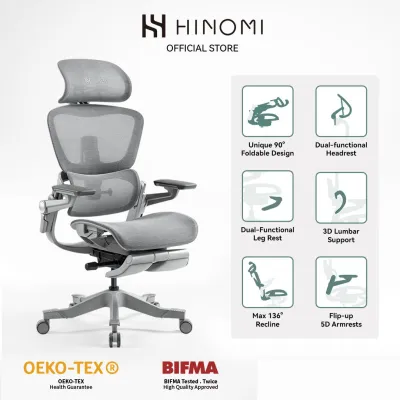
Armrest adjustability is another critical factor that directly affects shoulder, neck, and wrist tension. Standard office chairs often feature basic height adjustments, but premium models typically offer three-dimensional (3D) or four-dimensional (4D) armrests that adjust for height, depth, angle, and width. Some specialized models even introduce a fifth dimension, allowing the armrests to tilt upward or fold away entirely. When testing these adjustments, verify that the armrests can be positioned so your elbows rest at a comfortable 90-degree angle while keeping your shoulders completely relaxed. If the armrests are too wide or cannot slide close enough to your desk, you may find yourself leaning forward, which negates the benefits of the backrest.
Products mentioned in this guide
Prices are valid at publication and may change. Please refer to the product page for the latest price.
Finally, the recline mechanism and tension control dictate how smoothly you can transition between active tasking and relaxed viewing. A high-quality ergonomic chair should feature a multi-position tilt lock or a synchro-tilt mechanism, where the backrest and seat pan recline at a synchronized ratio to keep your feet flat on the floor. Tension controls must be easily adjustable to match your body weight; if the tension is too loose, you will feel unsupported when leaning back, but if it is too tight, reclining will require excessive physical effort. Evaluating these core adjustments allows you to look past brand names and focus on the mechanical capabilities that support your daily movement patterns.
Checking the Hinomi H2 Pro Specifications
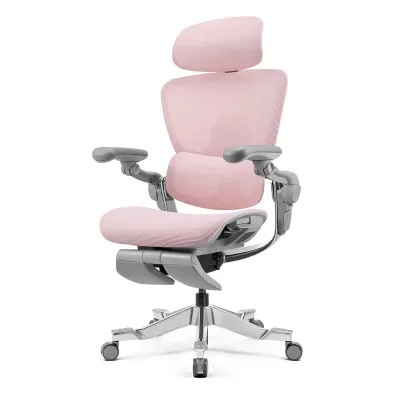
The Hinomi H2 Pro is characterized by several specific design choices that you should carefully verify against your physical requirements before making a purchase. One of the most prominent features of this model is its multi-panel backrest and full-mesh construction. While a full-mesh design offers excellent breathability—which is highly beneficial in warm environments—it distributes body weight differently than a traditional foam seat cushion. When evaluating the H2 Pro, check the tension of the mesh seat pan; some users prefer the firm, suspended feel of mesh, while others require the deeper pressure relief provided by high-density molded foam. Ensure the front edge of the seat pan features a waterfall design with adequate padding to prevent the frame from pressing against the back of your knees.

It is equally important to verify the manufacturer-stated weight and height limits of the H2 Pro to ensure structural safety and long-term durability. Ergonomic chairs are engineered to perform optimally within specific user profiles, and exceeding these limits can compromise the gas lift cylinder, the recline tension, and the overall stability of the frame. Review the official product specifications to confirm that your height and weight fall comfortably within the recommended ranges. Additionally, pay close attention to the minimum and maximum seat height measurements to ensure your feet can rest flat on the floor while your thighs remain parallel to the ground.
The base and caster configuration of the H2 Pro also requires close inspection based on your home flooring. The chair typically features a heavy-duty nylon or aluminum alloy base paired with standard casters. If your home office has hardwood, vinyl, or laminate flooring, you must verify whether the included casters are made of soft polyurethane to prevent scratching, or if you will need to purchase specialized floor mats or aftermarket caster wheels. For carpeted spaces, firmer nylon casters are generally more suitable to ensure smooth mobility. Checking these physical specifications beforehand prevents unexpected compatibility issues once the chair is assembled in your home.
Evaluating Premium Alternatives in the Market
When comparing the Hinomi H2 Pro to other premium ergonomic chairs in the market, establishing a standardized set of evaluation criteria is essential for an objective comparison. Begin by examining the build quality indicators, focusing on the frame materials and joint construction. Premium alternatives often utilize die-cast aluminum or glass-fiber reinforced plastics in high-stress areas, such as the backrest spine and the tilt mechanism housing. Inspect the joints and connection points for any signs of play or wobbling; a high-quality chair should feel solid and silent when you shift your weight or recline.
Warranty terms and local service availability serve as excellent proxies for a manufacturer’s confidence in their product’s lifespan. When analyzing alternatives, look closely at what the warranty actually covers. Some brands offer long-term warranties of up to 10 or 12 years, but these may only cover the structural frame, while moving parts like the gas lift, armrests, and mesh fabric may have much shorter coverage periods. Additionally, verify whether the brand has a dedicated local service center or distributor in Singapore. Having access to local customer support and replacement parts is incredibly valuable if a component requires maintenance or replacement down the line.
Finally, weigh the retail price in S$ against the expected lifespan and assembly complexity of each option. While some premium chairs arrive fully assembled in a large box, others—including the H2 Pro—often require user assembly. Consider whether you are comfortable following detailed assembly instructions and handling heavy components, or if you prefer to pay a premium for pre-assembled delivery. By calculating the total cost of ownership over a five-to-ten-year period, you can determine whether a higher upfront investment in a premium alternative offers better long-term value than a more budget-friendly option.
Fitting the Chair Into Your Home Office Space
An ergonomic chair does not exist in isolation; it must integrate seamlessly with your existing desk and the physical dimensions of your home office. Before finalizing any purchase, measure your desk clearance, focusing on the under-desk height and the distance between the desk legs. You must ensure that the chair’s armrests can slide completely under the desk when not in use, which helps save valuable floor space in smaller rooms. Additionally, measure the width of your doorways, hallways, and lift access to guarantee that the delivery box or the fully assembled chair can be easily transported into your designated workspace without damaging walls or door frames.
You must also account for the chair’s maximum footprint and clearance requirements when fully reclined. Some ergonomic chairs require significant rear clearance to tilt backward, which can be problematic if your desk is positioned close to a wall or other furniture. Check the manufacturer’s dimensions for the base diameter and the maximum depth of the chair at full recline. Ensure there is a clear path behind the chair so you can transition into a relaxed posture without bumping into walls, bookshelves, or delicate home decor.
In Singapore’s tropical climate, material durability and maintenance are critical considerations for any home office furniture. High humidity and ambient temperatures can accelerate the wear of certain materials, particularly synthetic leathers which may peel or crack over time. Full-mesh chairs like the H2 Pro are highly advantageous for airflow, but the mesh weave can accumulate dust, lint, and sweat over months of use. Verify the cleaning instructions for the mesh and frame; look for materials that can be easily vacuumed or wiped down with a damp cloth. Choosing materials that resist moisture and are easy to maintain ensures your chair remains hygienic and visually appealing for years to come.
Decision Framework: Which Chair Should You Choose?
To finalize your decision between the Hinomi H2 Pro and other premium ergonomic chairs, apply a conditional decision matrix based on your specific physical needs, space constraints, and budget.
You should choose the Hinomi H2 Pro if you prioritize a highly adjustable, multi-panel backrest design and require a chair that can fold into a more compact footprint when not in use. This model is particularly suitable if you want extensive armrest adjustability and prefer the breathable, suspended feel of a full-mesh seat pan. Ensure that your height and weight align closely with the manufacturer’s specified limits, and that you are comfortable with the assembly process if professional installation is not selected.
Conversely, you should opt for premium alternatives if your priorities lean toward heavy-duty frame materials, extended warranty coverage for all moving parts, or if you prefer the deep pressure relief of a high-density molded foam seat cushion. Premium alternatives are also ideal if you require specialized orthopedic support features, such as a highly customizable independent lumbar dial, or if you prefer a brand with a long-standing reputation and established local service centers for hassle-free maintenance.
Before making any financial commitment, always verify your physical space constraints and determine if your budget allows for a premium investment. If your home office space is highly restricted, prioritize a chair with a smaller base diameter and armrests that fold or lower completely. If your budget is limited, focus on securing a chair that excels in core ergonomic mechanisms—such as seat height, seat depth, and basic lumbar adjustment—rather than paying extra for secondary features that you may not utilize daily.
Frequently Asked Questions (FAQ)
How do I verify if an ergonomic chair fits my body proportions?
To verify the fit, start by measuring your inseam and comparing it to the chair’s seat depth. When sitting fully back against the backrest, there should be a gap of about two to three fingers between the front edge of the seat pan and the back of your knees to ensure proper circulation. Next, check that your elbows rest naturally on the armrests at a 90-degree angle without forcing your shoulders upward or causing you to slouch. Finally, observe the position of the lumbar support; the curved pad should align precisely with the natural inward curve of your lower spine to provide effective support.
Is a headrest necessary for standard home office work?
A headrest is generally not necessary for active, upright desk work such as typing, writing, or data entry, as your head should remain naturally balanced over your spine. However, a headrest becomes highly beneficial if you spend significant portions of your day in a reclined position, such as during virtual meetings, reading documents, or taking short breaks. If you choose a chair with a headrest, ensure it is highly adjustable in both height and angle so it supports the base of your skull rather than pushing your neck forward into an unnatural, strained position.

Community discussion
Share your experience or ask a question. Comments are reviewed before publication.