
Selecting the best high-capacity shoe storage for a compact Singapore apartment requires prioritizing vertical height over floor footprint. In space-constrained homes such as Housing & Development Board (HDB) flats and modern condominiums, entryways are often narrow corridors or open directly into living spaces without a formal foyer. To store a large collection of footwear without causing physical or visual clutter, the most effective solution is a tall, slim-profile unit that utilizes unused wall space. By shifting the storage axis from horizontal to vertical, you can accommodate dozens of pairs of shoes while keeping walkways completely clear.
Maximizing storage capacity in a small space involves a careful balance of physical dimensions, ventilation, and structural safety. Because Singapore’s tropical climate is highly humid, enclosed storage units must be selected with moisture management in mind to prevent mold growth on leather and canvas footwear. Furthermore, as furniture climbs higher, stability becomes a critical safety concern, requiring secure anchoring to prevent tipping. Understanding how to measure your entryway, evaluate storage mechanisms, and place units strategically will help you create an organized, functional, and safe home entrance.
Key Criteria for Choosing Shoe Storage in Small Entryways
When floor space is at a premium, the physical footprint of your furniture dictates the flow of your entire home. A standard shoe rack that sits low to the ground typically requires a depth of 30 to 35 centimeters to accommodate adult shoes placed flat. In a narrow HDB entryway, this depth can severely restrict movement, making it difficult to carry groceries or move furniture. Choosing a tall, narrow profile—often with a depth of 15 to 24 centimeters—allows you to reclaim valuable floor space while utilizing the vertical wall area up to the ceiling.
Products mentioned in this guide
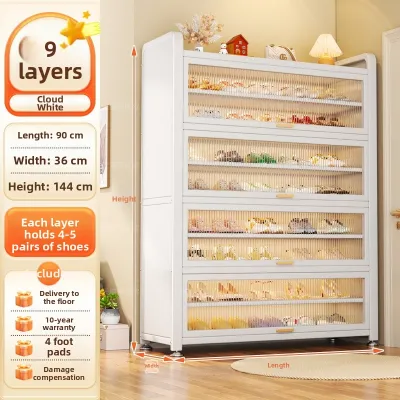
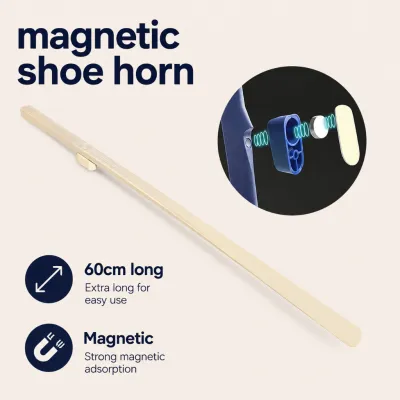
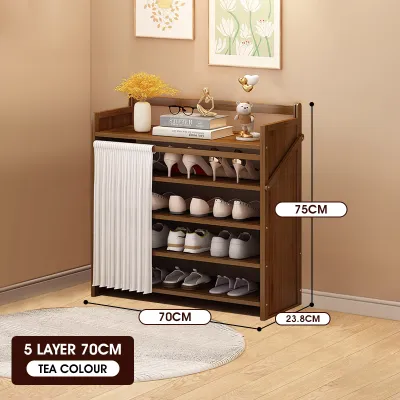
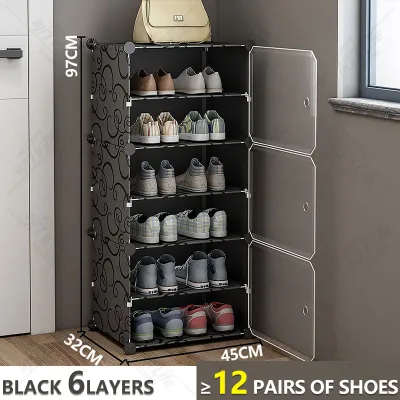
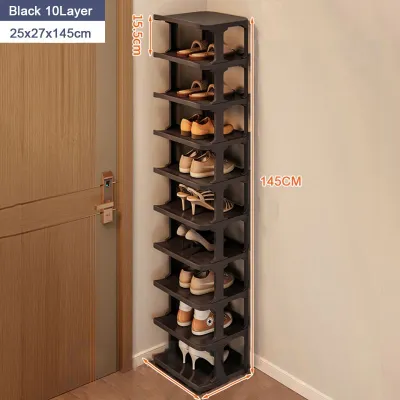
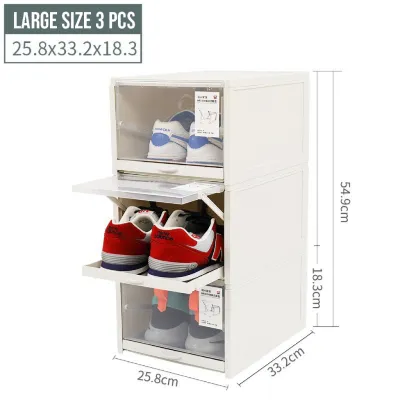
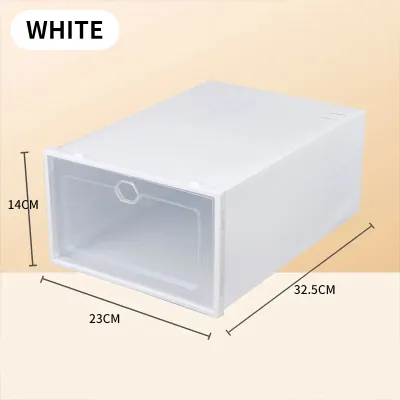
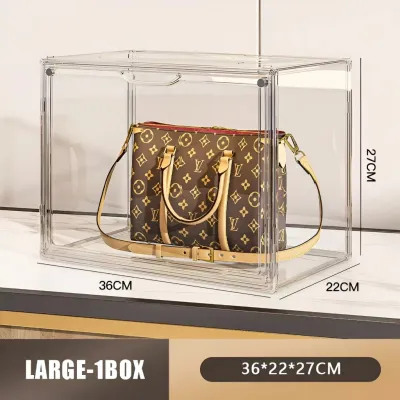
Prices are valid at publication and may change. Please refer to the product page for the latest price.
Singapore’s high relative humidity, which frequently exceeds 80 percent, presents a unique challenge for shoe preservation. Enclosed cabinets without proper airflow trap moisture from damp feet, rain, or humid air, creating an ideal environment for mold, mildew, and bacteria to thrive. This not only damages expensive footwear but also leads to persistent, unpleasant odors in your entryway. When selecting an enclosed storage unit, prioritizing ventilation features such as louvered doors, open back panels, or built-in ventilation slats is essential for maintaining a fresh and hygienic environment.
As the height of a storage unit increases, its center of gravity rises, making it inherently less stable. A tall shoe cabinet fully loaded with heavy sneakers, boots, and heels can weigh upwards of 40 kilograms. If a family member pulls on a drawer or bumps into the unit, there is a serious risk of the cabinet tipping over. Therefore, structural stability and secure wall anchoring are non-negotiable criteria for any vertical storage solution. You must ensure the unit is designed to be anchored directly to the wall and that you use the correct hardware for your specific wall type.
Finally, you must account for daily operational clearances. An entryway is a high-traffic zone where family members constantly enter, exit, and transition. You must measure the swing clearance of cabinet doors, the extension of tilt-down drawers, and the remaining walkway width when the storage unit is fully open. If a cabinet door blocks the main entrance or scrapes against an adjacent wall when opened, it will quickly become a daily frustration. Ensuring that walkways remain unobstructed during use is key to a successful entryway design.
Best Shoe Storage Types for Maximizing Vertical Space
Tall and Slim Shoe Cabinets
Tall, slim shoe cabinets are highly favored by homeowners who prefer a clean, minimalist aesthetic that conceals footwear from view. These units typically feature tilt-down or pull-out compartments rather than traditional horizontal shelves. In a tilt-down cabinet, shoes sit vertically or at an angle inside the door pocket. When the door is closed, the shoes stand upright, allowing the cabinet to maintain an ultra-slim depth of just 15 to 20 centimeters. This specialized mechanism is highly efficient for maximizing capacity in tight corridors.

To accommodate a diverse footwear collection, look for slim cabinets that offer adjustable or removable internal dividers. While flat sandals and loafers fit easily into shallow compartments, bulky running shoes, high heels, and ankle boots require more vertical clearance. Adjustable dividers allow you to customize the height of each pocket, ensuring that larger shoes do not get crushed or prevent the compartment from closing fully. If you have exceptionally large shoe sizes, verify the internal diagonal measurements of the cabinet before purchasing.
Because of their shallow depth and high vertical profile, slim cabinets must be secured with anti-tip wall anchors. This safety measure is particularly critical in households with young children, pets, or elderly residents. When installing these units, do not rely solely on the adhesive strips or flimsy plastic brackets that may come in the box. Instead, use heavy-duty metal L-brackets and appropriate wall plugs. For concrete walls common in Singapore apartments, masonry drills and expansion plugs are required to achieve a secure, permanent hold.
While enclosed cabinets offer a tidy appearance, they do have physical limitations. The tilted design means that very high heels, long boots, or high-top sneakers may not fit without removing dividers, which ultimately reduces the unit’s overall capacity. Additionally, because the shoes are enclosed, you must check the quality of the cabinet’s interior finish. Look for moisture-resistant laminates or sealed surfaces that can be easily wiped clean, as dirt and dampness from shoe soles will inevitably transfer to the cabinet interior over time.
Modular and Stackable Shoe Racks
Modular and stackable shoe racks offer an open, highly customizable alternative to enclosed cabinets. These systems consist of individual tiers or lightweight frames made of metal, plastic, or wood-plastic composites that can be connected vertically or horizontally. This flexibility allows you to design a storage configuration that perfectly fits your available space, whether you need to build a tall, narrow tower in a tight corner or create a stepped layout beneath a low window or staircase.
One of the primary benefits of open modular racks is superior ventilation. Because there are no doors or side panels to restrict airflow, damp shoes dry quickly, and odor-causing moisture evaporates naturally. This open design is highly effective at preventing mold growth in Singapore’s humid climate. However, the trade-off is constant exposure to household dust and potential sunlight. If your entryway receives direct sunlight from a nearby window, prolonged exposure can cause the colors of your shoes to fade and materials like rubber or synthetic leather to degrade over time.
When assembling a tall, stacked modular rack, verifying the stability of the interlocking joints is paramount. Flimsy plastic connectors or loose metal poles can cause the entire structure to wobble or lean when fully loaded with shoes. Inspect the quality of the connection points during assembly to ensure they fit tightly without play. To maintain stability, place heavier footwear, such as boots and thick-soled sneakers, on the bottom tiers to lower the center of gravity, and reserve the upper tiers for lightweight sandals and slippers.
Over-the-Door and Hanging Organizers
Over-the-Door and hanging organizers represent a zero-footprint storage solution that is ideal for extremely tight entryways, rental properties, or secondary storage needs. These organizers typically hang from the top of standard room doors using flat metal hooks, utilizing the vertical surface of the door itself. This method requires absolutely no floor space, making it an excellent option for studio apartments or highly congested entryways where a floor-standing unit is simply not feasible.
While highly convenient, hanging organizers have strict weight limits that must be respected to prevent damage to your home. Standard interior doors and their hinges are engineered to support the weight of the door panel, not a heavy payload of footwear. Overloading a hanging organizer with heavy leather shoes or boots can put excessive strain on the door hinges, leading to door sagging, misalignment, or damage to the door frame. To prevent these issues, restrict hanging organizers to lightweight footwear such as house slippers, flip-flops, canvas plimsolls, and children’s shoes.
Visual clutter is another consideration when using open hanging organizers in prominent areas. Organizers with clear plastic pockets make it easy to identify shoes at a glance, but they can look chaotic and untidy in a main entryway. To maintain a clean, organized aesthetic, opt for hanging organizers made of heavy-duty, opaque fabrics like canvas, Oxford cloth, or woven polyester in neutral tones. These materials hide the visual clutter of mismatched shoes while still providing easy, slide-in access for daily-wear footwear.
Smart Placement Strategies for HDBs and Condos
Maximizing shoe storage in typical Singapore apartment layouts requires identifying and utilizing “dead spaces” that are often overlooked. These include the narrow wall space directly adjacent to the main entrance, the recessed area beside a household shelter door, or the space beneath a wall-mounted distribution board (DB) box. If your apartment has high ceilings, you can also consider installing high-profile display shelves above the main door frame to store seasonal, boxed, or rarely worn footwear, keeping your daily-use area clear.
When planning your shoe storage placement, you must strictly adhere to local housing and fire safety regulations. In Singapore, common corridors and lift lobbies are designated escape routes. The Singapore Civil Defence Force (SCDF) maintains strict guidelines regarding corridor obstructions to ensure safe evacuation during emergencies. Placing large, bulky shoe cabinets in public corridors is a safety hazard and can lead to disputes with neighbors or fines. Always prioritize keeping your high-capacity shoe storage within the physical boundaries of your apartment, or ensure that any external rack leaves a clear, unobstructed escape path of at least 1.2 meters.
If your main door opens inward against an adjacent wall, the space behind the door is often wasted. An ultra-slim shoe cabinet measuring under 17 centimeters in depth can frequently be installed in this narrow gap. This placement keeps the cabinet completely hidden from view when the main door is open, maintaining a clean and spacious look in your foyer. Before choosing this strategy, measure the exact distance between the open door panel and the wall, and install a magnetic door stop to prevent the door handle from slamming into the cabinet.
Another highly effective strategy is incorporating a low-profile, high-capacity storage bench in your entryway. While a bench does not offer the vertical height of a tall cabinet, it serves a dual purpose by combining a comfortable seat for putting on shoes with hidden storage compartments below. Look for benches featuring pull-out drawers or drop-down compartments, which utilize space more efficiently than standard open shelves. Ensure the bench has a rated load capacity suitable for supporting adult weights and is equipped with non-slip foot pads to protect your flooring.
Essential Pre-Purchase Checks for Online Orders
Purchasing high-capacity shoe storage online offers convenience and a wide variety of designs, but it also requires careful verification to avoid costly returns or assembly failures. Before placing an order, perform the following essential checks:
- Verify Vertical Clearances: Measure the exact distance from your floor to the ceiling at the installation site. Take into account any potential obstructions such as ceiling fans, light fixtures, wall-mounted air conditioning units, structural beams, or decorative bulkheads that might block a tall cabinet from standing upright or prevent its top doors from opening.
- Account for Skirting Boards: Most Singapore apartments feature skirting boards along the base of the walls. These boards typically protrude by 1.5 to 2 centimeters, which prevents flat-backed furniture from sitting flush against the wall. If a tall, slim cabinet cannot sit flush, its stability is compromised, and anchoring it securely becomes difficult. Look for cabinets that feature a pre-cut skirting recess at the back, or prepare to use wall spacers during installation.
- Check Internal Shelf Depth vs. Shoe Size: Many compact shoe cabinets sold online are manufactured based on international standards that may not accommodate larger shoe sizes. Check the manufacturer's specified internal shelf depth. If members of your household wear shoe sizes larger than EU 43 (UK 9), they may not fit straight inside a standard slim cabinet. In such cases, shoes must be placed at an angle or sideways, which significantly reduces the cabinet's advertised capacity.
- Assess Assembly Requirements and Delivery Access: High-capacity vertical cabinets are heavy and usually arrive flat-packed. Review the assembly instructions to ensure you have the necessary tools, such as a rubber mallet, a spirit level, and a power drill for wall anchoring. Additionally, check the dimensions of the shipping boxes to confirm they can easily fit inside your building's lift and through your apartment's main doorway upon delivery.
Frequently Asked Questions (FAQ)
How many pairs of shoes can a tall slim cabinet typically hold?
A standard tall, slim shoe cabinet measuring approximately 180 centimeters in height and 80 centimeters in width can typically accommodate between 18 to 36 pairs of adult shoes. The exact capacity varies depending on the internal configuration of the cabinet, such as whether it utilizes single, double, or triple-tier tilt-down drawers. It also depends heavily on the type of footwear being stored; slim flats, sandals, and slippers take up far less space than bulky running sneakers, high-top shoes, or boots. Always check the manufacturer’s specified shelf count and weight limits to ensure it meets your household’s needs.
Are open shoe racks better for ventilation in humid climates?
Yes, open shoe racks are highly effective for ventilation in humid climates like Singapore’s. Because they lack solid doors and side panels, they allow maximum airflow around your footwear, which helps damp shoes dry quickly and prevents the buildup of moisture, mold, and odors. However, enclosed cabinets can also perform well if they are designed with active ventilation features, such as louvered doors, mesh backings, or ventilation cutouts. To prevent mold in any enclosed storage unit, always ensure that your shoes are completely dry before placing them inside.

Community discussion
Share your experience or ask a question. Comments are reviewed before publication.