
Investing in a high-end ergonomic chair is a significant decision, especially when setting up a productive home office in Singapore where space is premium and the climate demands breathable materials. The Herman Miller Embody is often highlighted for its distinctive pixelated support system and dynamic backrest, making it highly suitable for individuals who spend long hours sitting and prefer a chair that moves with their body. However, it may not be the ideal choice for everyone, particularly if you prefer plush cushioning, require an adjustable headrest, or are working within a strict budget.
When evaluating the Embody against other leading ergonomic brands, your decision should hinge on specific physical requirements, your home office layout, and how you interact with your workspace. Before committing to a premium purchase, you must verify how the chair’s physical dimensions align with your desk height and ensure that your local delivery path—including lift doors and narrow entryways—can accommodate a fully assembled unit.
Core Comparison Dimensions for Home Office Chairs
To make an objective comparison between the Embody and other top-tier ergonomic chairs, you need to establish clear evaluation criteria based on physical adjustability, material performance, and spatial compatibility.
Products mentioned in this guide
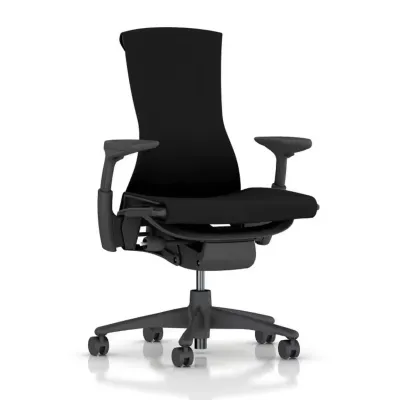
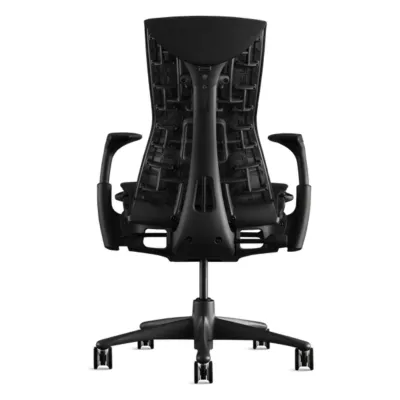
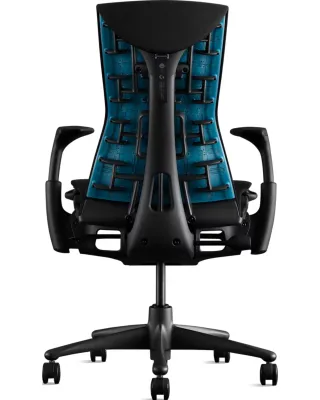
Prices are valid at publication and may change. Please refer to the product page for the latest price.
Adjustability forms the foundation of ergonomic support. You should examine how each chair handles lumbar support, armrest articulation, and seat depth adjustment. Some premium chairs utilize active, manually adjustable lumbar pads, while others rely on passive, flexible frames that contour to your spine automatically. Armrests should ideally adjust in multiple directions—height, width, depth, and angle—to support your forearms without forcing your shoulders upward or colliding with your desk edge.
Material selection directly impacts daily comfort and long-term durability, especially in Singapore’s warm and humid environment. You will encounter three primary seating surfaces: suspended mesh, upholstered foam, and specialized matrix fabrics like the Embody’s multi-layered textile. Suspended mesh offers maximum airflow, which helps keep you cool without relying constantly on air conditioning. Upholstered foam provides a more traditional, cushioned feel but can retain heat and moisture over time. When comparing materials, always check the manufacturer’s care labels for cleaning instructions and verify if the fabric is rated for high-abrasion resistance.
Spatial requirements are equally critical when integrating a professional chair into a residential setting. High-end ergonomic chairs are often heavier and bulkier than standard office furniture, featuring wide five-star bases for stability. You must measure your available floor space, ensuring there is enough clearance to roll the chair back comfortably. Additionally, check the chair’s maximum weight capacity and overall footprint against your desk’s under-carriage clearance to avoid buying a chair that cannot slide fully under your workspace when not in use.
Herman Miller Embody: Features and Ideal User Profile
The Herman Miller Embody stands out due to its unique engineering, which focuses on pressure distribution and natural alignment. According to manufacturer descriptions, the chair features a “pixelated support” system in both the seat and backrest. This matrix of individual nodes is designed to conform to your body’s micro-movements, distributing your weight evenly to reduce pressure points and encourage blood flow.

Another defining feature is the Backfit adjustment. Unlike standard chairs that only allow you to adjust the angle of the backrest, the Embody lets you tune the curve of the backrest to match the natural shape of your spine. This adjustment, paired with an integrated passive sacral support, aims to maintain a balanced posture without requiring a separate, aggressive lumbar pad. The seat depth is also adjustable using a unique rolling front edge, allowing you to extend or shorten the seat pan to support your thighs without pressing against the back of your knees.
The ideal user for the Embody is someone who values dynamic movement and spends uninterrupted hours at their desk. If you tend to shift positions frequently, lean forward to type, or recline during phone calls, the flexible backrest is designed to follow your movement continuously. However, if you prefer a highly structured, rigid upright posture, or if you require a built-in headrest for neck support during long recline sessions, the Embody’s low-back design and lack of official headrest accessories might not align with your preferences.
How Leading Alternatives Compare in Key Areas
When comparing the Embody to other leading ergonomic brands, you will notice distinct differences in design philosophy, particularly regarding lumbar support and recline mechanics.
While the Embody uses a flexible, pixelated matrix to provide continuous, passive lumbar support, other premium brands often favor highly adjustable, active lumbar systems. These alternative designs frequently feature dedicated lumbar pads that can be adjusted vertically to target the lumbar curve precisely, or depth-adjusted to increase or decrease the level of support. If you suffer from specific lower back discomfort and know exactly where you need firm, localized pressure, a chair with an adjustable lumbar slider may feel more supportive than the Embody’s distributed approach.
Recline and tension mechanisms also vary significantly across top brands. The Embody utilizes a balanced tilt mechanism that keeps your eyes level and your feet on the floor as you recline, maintaining a consistent relationship between your body and your desk. In contrast, some competing brands employ weight-activated recline systems that automatically adjust the tension based on your body weight, requiring no manual knobs. Other brands use a synchro-tilt mechanism where the backrest reclines at a different ratio than the seat pan, which some users find more comfortable for deep relaxation.
Aesthetic and material choices represent another major point of divergence. The Embody has a distinct, futuristic look with its exposed “spine” and matrix structure, which makes a bold statement in a home office. If you prefer a more minimalist or traditional home aesthetic, other leading brands offer sleek, fully mesh designs or classic leather finishes that blend more seamlessly into a residential living space. Furthermore, if you prefer the breezy, open feel of a single-layer mesh seat, you might find the Embody’s multi-layered fabric seat warmer by comparison.
Evaluating Value, Warranty, and Long-Term Use
A premium ergonomic chair represents a substantial financial commitment, often exceeding S$1,500 or even S$2,000. To evaluate whether this investment makes sense for your home office, you must look beyond the initial price tag and consider the total cost of ownership over the chair’s expected lifespan.
A key factor in this evaluation is the manufacturer’s warranty. High-end brands typically offer extensive warranties, often lasting up to 12 years, which cover 24-hour daily use. When comparing warranties, read the fine print carefully to distinguish between different components. For instance, some brands cover the structural frame and tilt mechanisms for the full duration but limit the warranty on gas cylinders, armrest pads, and fabric upholstery to three or five years. A comprehensive warranty that covers both mechanical parts and labor provides significant peace of mind and ensures your investment is protected for over a decade.
In Singapore, it is crucial to verify the policies of local authorized dealers before making a purchase. Check whether they offer home trial periods, as sitting in a showroom for fifteen minutes cannot fully replicate the experience of a full workday. Additionally, confirm their return and exchange policies, including any restocking fees or transport charges. Understanding the local maintenance and repair support is also vital; verify if the dealer sends technicians to your home for warranty claims or if you are responsible for transporting the heavy chair back to their service center.
Decision Framework: Which Chair Should You Choose?
To help you navigate your final decision, use this condition-based framework to match your specific needs with the right ergonomic chair category.
Choose the Embody if:
- You prefer a flexible backrest that dynamically adapts to your micro-movements and shifting postures throughout the day.
- You want a highly customizable back curve adjustment (Backfit) to match the exact shape of your spine.
- You prefer a seat that distributes weight across a pixelated matrix rather than relying on traditional foam or suspended mesh.
- You have the budget to invest in a premium, long-term seating solution with a comprehensive 12-year warranty.
Choose an alternative brand if:
- You require a dedicated, height-adjustable lumbar support pad for firm, localized lower back pressure.
- You prefer the maximum breathability of a fully suspended mesh seat and backrest to stay cool in a non-air-conditioned room.
- You want an integrated headrest for neck support during recline, which is not natively offered on the Embody.
- You prefer a more traditional, cushioned foam seat or a minimalist aesthetic that blends quietly into your home decor.
Verify first if:
- The chair's fully assembled dimensions can clear your home's doorways, hallways, and lift access.
- The armrests can adjust low enough to slide under your specific desk height to maintain proper typing ergonomics.
- The local Singapore distributor provides on-site warranty service and clear return policies for home trials.
Frequently Asked Questions (FAQ)
How do I verify if an ergonomic chair fits my body type before buying?
To verify the physical fit, sit fully back in the chair with your feet flat on the floor. There should be a gap of about two to three fingers between the front edge of the seat pan and the back of your knees to prevent circulation issues. Your knees should be bent at a 90-degree angle, and your hips should be slightly higher than or level with your knees. Adjust the armrests so your shoulders remain relaxed and your elbows rest at a 90-degree angle, level with your desk surface. Finally, ensure the lumbar support rests comfortably in the natural curve of your lower spine without forcing you to slouch or arch excessively.
What should I look for in a home office chair warranty?
When reviewing a warranty, check the exact duration and coverage details for different parts of the chair. A premium warranty should ideally cover the frame, tilt mechanism, and structural components for 10 to 12 years. Pay close attention to exclusions; gas cylinders, casters, armrest pads, and fabric upholstery often have shorter coverage periods. Additionally, verify if the warranty is tied to the original purchaser or if it is transferable, and confirm that the local Singapore distributor is authorized to service the warranty directly without requiring you to ship components overseas.
Are expensive ergonomic chairs worth the investment for part-time remote work?
If you work from home only one or two days a week, a top-tier chair costing over S$1,500 may not be strictly necessary, and a well-built mid-tier ergonomic chair can offer sufficient support. However, if you experience existing back discomfort or spend more than four hours a day sitting, the long-term health benefits of proper spinal alignment remain highly relevant. Consider your daily sitting hours and the chair’s expected lifespan; a premium chair with a 12-year warranty averages out to a very low cost per year, making it a highly durable investment even for hybrid work schedules.

Community discussion
Share your experience or ask a question. Comments are reviewed before publication.