
Investing in a high-end office chair is a significant decision for your home workspace. While the Herman Miller Aeron dominates discussions around premium ergonomic seating, it is not universally perfect for every body type or working style. Choosing the right chair requires looking past brand prestige to evaluate how a chair’s specific engineering aligns with your physical proportions, daily habits, and home environment.
Rather than searching for a single “best” chair, establish a personalized evaluation framework. By comparing adjustability mechanisms, material performance, spatial requirements, and long-term warranty terms, you can make an informed decision. This guide breaks down these critical factors to help you determine whether the Aeron or a premium alternative genuinely aligns with your daily work habits and spatial constraints.
Comparing Comfort and Adjustability Mechanisms
To find a chair that truly supports your body, look closely at how its adjustability mechanisms function. The lumbar support system is a primary point of differentiation among premium chairs. Some models utilize a tensioned mesh backrest with targeted support zones or an adjustable pad designed to stabilize the sacrum. Other high-end chairs rely on a flexible backrest that automatically adjusts to your movements, or a height-adjustable lumbar pad that you manually position. When evaluating these systems, consider whether your body responds better to firm, localized pressure or a more distributed, dynamic support system that shifts as you change postures.
Products mentioned in this guide
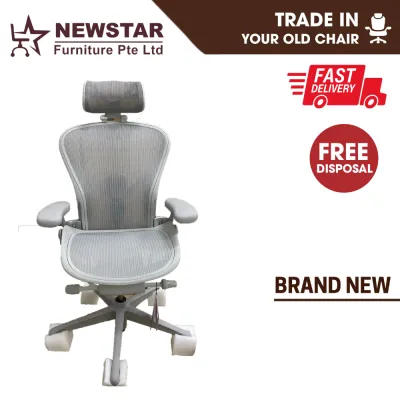
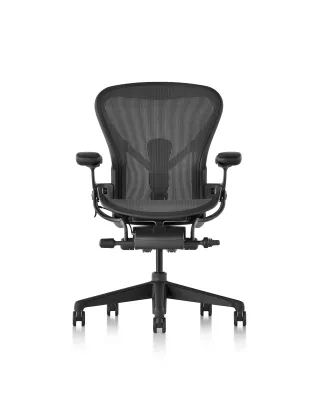
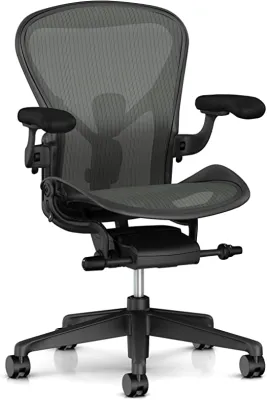
![[Ready Local Stock] Brand NEW Herman Miller Remastered Aeron Ergonomic Chair Fully Loaded Version](https://img.lazcdn.com/g/p/07c468feefed17d6c1072619e704f56d.jpg_400x400q80.jpg_.webp)
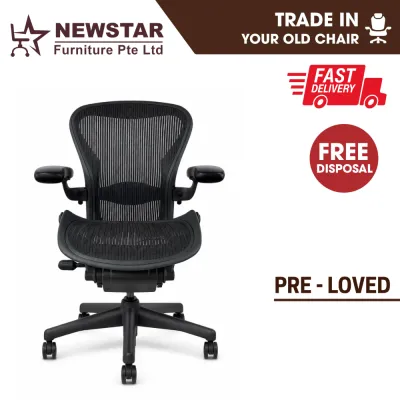
![[Local Stock] Refurbished Herman Miller Aeron Classic Chair [Size B]](https://img.lazcdn.com/g/p/ccb9a931e1fe37facb3d5d9e1d50610f.jpg_400x400q80.jpg_.webp)
Prices are valid at publication and may change. Please refer to the product page for the latest price.
Seat depth and armrest adjustability are equally critical for maintaining proper circulation and joint alignment. A proper seat pan should support your thighs without pressing against the back of your knees. While many premium chairs feature a seat depth slider to adjust the seat pan forward or backward, the Aeron uses fixed seat depths across three distinct frame sizes (A, B, and C). You must verify your physical measurements against the manufacturer’s sizing guidelines before purchasing. Additionally, look for highly adjustable armrests—often referred to as 4D armrests—which adjust for height, depth, width, and angle to support your elbows directly beneath your shoulders, reducing strain on your neck and upper back.
The recline and tilt mechanisms dictate how a chair behaves during different tasks. Some chairs feature a synchro-tilt mechanism, where the backrest and seat tilt at a coordinated ratio, keeping your feet flat on the floor as you lean back. Others offer a forward-tilt option, which angles the seat slightly downward to support active, task-oriented postures like typing. When comparing chairs, check the tilt tension control and the availability of multi-position tilt locks. If you prefer to remain upright and locked in place while working, a robust tilt lock is essential; if you prefer to move freely, look for a mechanism with a smooth, responsive tension adjustment that balances your body weight effortlessly.
Assessing Materials and Home Office Space Fit
The materials used in a premium chair affect both physical comfort and how well the chair integrates into your home environment. High-performance mesh suspensions, such as the elastomeric material found on the Aeron, offer exceptional breathability by allowing air to circulate freely. This is particularly advantageous in warm, humid climates or home offices without continuous air conditioning, as it prevents heat and moisture buildup. However, mesh can feel firm and highly structured, which may not appeal to those who prefer a softer seating surface. In contrast, high-density foam cushions upholstered in fabric or leather provide a more traditional, enveloping feel. When choosing between mesh and foam, consider your typical home office temperature, your clothing preferences, and the level of maintenance required, as fabric cushions can trap dust and require occasional deep cleaning.

Physical dimensions and spatial constraints are often overlooked when selecting a home office chair. Before making a purchase, create a detailed checklist of your workspace dimensions. Measure the base diameter of the chair to ensure it fits comfortably between your desk legs without striking the walls or nearby furniture. You should also verify the maximum height of the chair, including the armrests, to confirm it can slide fully under your desk when not in use. Furthermore, check the rear clearance required for a full recline; some premium chairs slide forward as they recline to minimize their footprint, while others require significant space behind the base to tilt backward comfortably.
The type of casters attached to the chair’s base is another crucial factor for home use. Standard hard casters are designed for carpeted floors and can scratch or gouge hardwood, laminate, or vinyl flooring. If your home office has hard flooring, look for chairs equipped with soft, rubberized casters designed to roll quietly and protect delicate surfaces. Alternatively, you may need to budget for a protective chair mat or purchase compatible aftermarket wheels. Verifying these material and spatial specifications beforehand prevents unexpected damage to your home and ensures a seamless fit within your workspace.
Evaluating Long-Term Value and Warranty Coverage
A premium ergonomic chair represents a substantial financial commitment, making it essential to evaluate the long-term value and protection offered by the manufacturer. The warranty is often the clearest indicator of a chair’s build quality and expected lifespan. Leading brands in the premium seating market typically offer extensive warranties, often spanning up to 12 years. When reviewing a warranty, read the fine print to verify which components are covered. Some warranties cover the entire chair, including the pneumatic gas cylinder, tilt mechanism, mesh, and arm pads, while others may have shorter coverage periods for moving parts or upholstery. Additionally, ensure the warranty explicitly covers residential or home office use, as some commercial-grade warranties contain clauses that limit coverage outside of traditional corporate environments.
To guarantee your warranty is valid, pay close attention to where you purchase the chair. Buying directly from the manufacturer’s official website or an authorized local dealer is the safest way to ensure you receive an authentic product with full warranty backing. While third-party online marketplaces or unauthorized liquidators may offer lower upfront prices, these units are often refurbished, modified, or sold without the manufacturer’s official warranty. If you are considering a refurbished chair, verify the seller’s specific return policy and check if they provide an independent warranty to cover potential component failures.
Finally, consider the ease of ongoing maintenance and the availability of replacement parts. Over years of daily use, components like arm pads, casters, and lumbar supports will naturally experience wear and tear. Check the manufacturer’s guidelines to see if these parts can be easily ordered and replaced independently, or if the chair must be shipped to a service center for repairs. A chair designed with modular, easily replaceable components offers significantly better long-term value, as it allows you to extend the life of your investment without needing to replace the entire unit when a single part wears out.
Decision Framework: Choosing the Right Chair
To finalize your decision, map your physical needs, working habits, and spatial constraints against the distinct characteristics of the Herman Miller Aeron and its premium competitors.
Choose the Herman Miller Aeron if:
- You prioritize maximum breathability: The advanced mesh suspension is ideal if you work in a warm environment or prefer a cool, highly ventilated seating surface.
- You want a highly tailored, size-specific fit: The availability of three distinct sizes (A, B, and C) allows you to select a frame that matches your exact height and weight distribution.
- Your work involves active, forward-leaning tasks: The dedicated forward-tilt mechanism supports your spine effectively when you lean forward to type or write.
Choose an alternative premium chair if:
- You prefer a traditional, cushioned feel: If you find mesh suspensions too firm, an alternative chair featuring a high-density foam seat cushion provides a more forgiving, contoured surface.
- You share the chair with other household members: A single-size chair with an adjustable seat depth slider and wide-ranging armrests is much easier to share among multiple users than a size-specific model.
- You have a strict upper limit on your S$ budget: Many premium alternatives offer comparable ergonomic adjustments and long-term warranties at a lower price point, allowing you to maximize value without compromising support.
Verify first if:
- You are unsure of your size classification: If your height and weight fall on the boundary between two sizes, test the chair in person at an authorized showroom before purchasing.
- Your home office has tight spatial limits: Always measure your desk height, under-desk clearance, and surrounding floor space to ensure the chair's base and recline path do not obstruct the room.
- You require specialized medical or orthopedic support: Standard ergonomic chairs are designed for general postural health; if you have chronic back pain, consult a healthcare professional to determine if specialized therapeutic seating is required.
Frequently Asked Questions (FAQ)
Is the Herman Miller Aeron worth the investment for a home office?
Evaluating whether a premium chair is worth the investment requires calculating its cost-per-year over its expected lifespan. While the initial S$ cost of a high-end chair can be significant, a model backed by a 12-year warranty costs very little per year of guaranteed use. Consider your daily sitting duration; if you spend several hours a day at your desk, the long-term benefits to your posture and comfort can easily justify the upfront expense. Compare this to the cost and inconvenience of replacing cheaper, less durable chairs every few years, which often lack the structural integrity and ergonomic support of a premium model.
How do I determine the correct size for the Aeron or similar chairs?
To find the correct size, start by measuring your height, weight, and lower leg length. For size-specific models like the Aeron, cross-reference these measurements with the manufacturer’s official sizing chart, which typically uses a matrix to recommend size A, B, or C. For single-size premium chairs, verify that the adjustable seat depth range can accommodate your thigh length, leaving a two-to-three-finger gap between the edge of the seat and the back of your knees. If purchasing online, always review the retailer’s return and exchange policies to ensure you can swap the chair if the physical fit is not ideal.

Community discussion
Share your experience or ask a question. Comments are reviewed before publication.