
Selecting the right headboard size for a Singapore HDB bedroom is a balancing act between personal comfort and spatial reality. Because HDB bedrooms—especially in newer Build-To-Order (BTO) flats—are designed with compact footprints, a headboard that is too wide, tall, or thick can quickly make the entire room feel cramped and restrict your daily movement. To find the perfect fit, you must look beyond standard mattress sizes and evaluate the actual dimensions of your bed frame, the clearance required for walkways and wardrobes, and the visual weight of different headboard styles.
Assessing Your HDB Room Layout and Bed Proportions
To establish a functional layout, start by measuring the exact width of your bed frame rather than relying on standard mattress dimensions. While a standard Queen mattress in Singapore is 152 cm wide and a King is 183 cm wide, the actual bed frame can be significantly wider due to decorative side rails, thick upholstery, or extended wooden borders. Measuring the outermost edges of the frame ensures you do not purchase a headboard that juts out unexpectedly into your walking paths.
Once you have the exact frame measurements, consider how you want the headboard width to align with the bed. A flush alignment, where the headboard matches the exact width of the bed frame, is the most space-efficient option. It keeps the footprint compact and allows you to push the bed closer to corners or adjacent furniture. Alternatively, an extended headboard that projects a few centimeters beyond each side of the frame can create a cohesive, high-end look, but this requires a completely clear wall. Avoid oversized or hotel-style headboards that extend behind bedside tables unless you are furnishing a spacious master bedroom, as they will crowd the limited wall space in a standard HDB layout.
Products mentioned in this guide
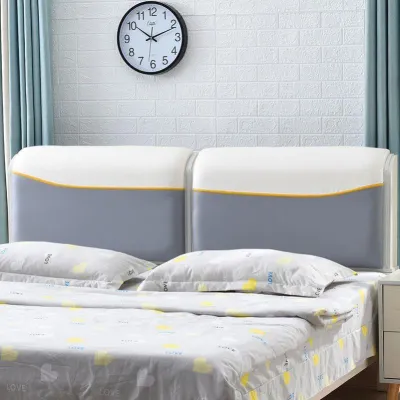
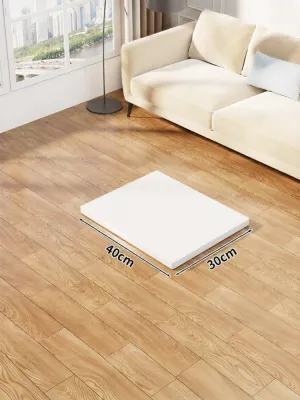
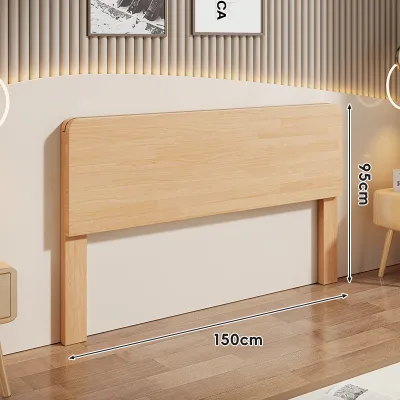
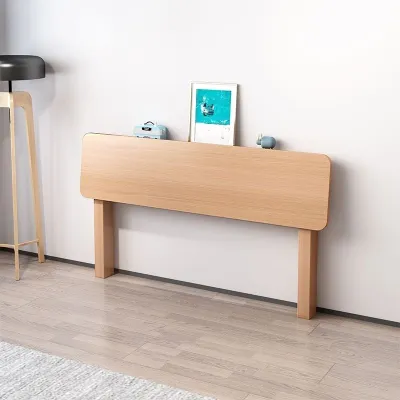
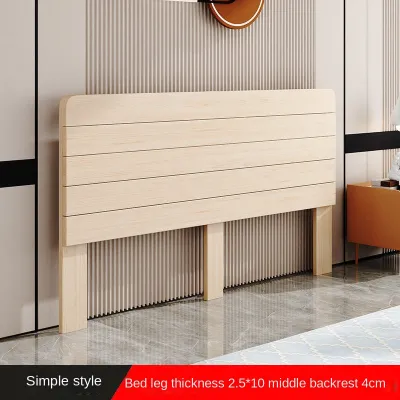
![[PRE-ORDER] Getha V6 Headboard](https://img.lazcdn.com/g/p/73a7b43ed7069e4572e7c5324027179e.jpg_400x400q80.jpg_.webp)
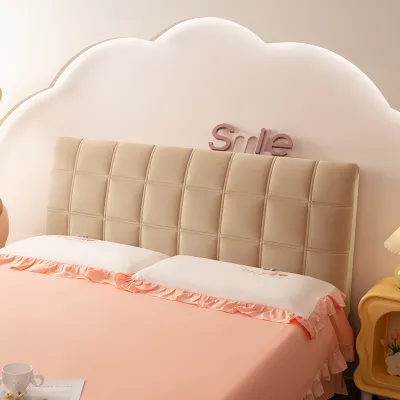
![[PRE-ORDER] Getha Diamond Square V-Wing Headboard](https://img.lazcdn.com/g/p/86a465229de94136591a26b57ebc9c15.jpg_400x400q80.jpg_.webp)
Prices are valid at publication and may change. Please refer to the product page for the latest price.
The room category also dictates the appropriate scale. In a typical HDB common room, which often measures around 9 square meters, a flush, minimalist headboard is almost always necessary to preserve floor space. In a master bedroom, you have slightly more flexibility to choose a wider profile, but you must still account for the placement of built-in wardrobes and the swing path of the bedroom door.
Balancing Headboard Height and Thickness for Small Rooms
While width is a primary concern, the height and thickness of your headboard play an equally critical role in how spacious your bedroom feels. The thickness of the headboard directly impacts the length of the bed setup, pushing the entire frame away from the wall. In a compact HDB room, a headboard that is 15 cm thick can easily reduce the walkway at the foot of the bed to an uncomfortable squeeze. To maintain a comfortable flow, aim for a slim headboard profile with a depth of 5 cm to 10 cm, or opt for wall-mounted panels that take up virtually no floor space.

Vertical proportions are just as important for maintaining visual balance. Standard HDB ceiling heights typically hover around 2.6 meters. A headboard that is excessively tall—such as those exceeding 120 cm from the floor—can make the ceiling feel lower and create a heavy, oppressive atmosphere. A lower-profile headboard, ranging from 90 cm to 110 cm in total height, keeps the upper portion of the wall open, making the room feel airier and more spacious.
Additionally, you must factor in the placement of overhead fixtures. Many HDB bedrooms feature wall-mounted air conditioning units. Installing a tall headboard directly beneath an aircon unit can restrict access for regular servicing, block the downward airflow, or look visually cluttered. Measure the distance from the floor to the bottom of your aircon unit to ensure your headboard leaves a comfortable gap of at least 30 cm for proper ventilation and maintenance.
Essential Clearance and Utility Checks Before You Buy
Before finalizing your purchase, conducting physical clearance and utility checks is essential to avoid costly layout mistakes. The most critical check is the walkway clearance around the bed. For comfortable daily movement, you should maintain a minimum of 60 cm—ideally 75 cm—of clear space along the sides and the foot of the bed. If a thick headboard reduces this clearance, you may find yourself shuffling sideways or constantly bumping into the corners of the bed frame.
Next, inspect the wall where the headboard will rest. HDB flats are equipped with wall-mounted power sockets, light switches, and fiber network ports, which are often positioned near the bed area. A headboard that covers these outlets can render them useless or force you to pull the bed even further away from the wall to plug in your devices. Measure the height and placement of your sockets to ensure the headboard either sits below them, fits between them, or features built-in cutouts that allow easy access to switches and plugs.
Finally, verify the installation method and how it interacts with your room’s structure. Wall-mounted headboards offer a sleek look but require drilling into the wall, which may not be ideal for rental properties or lightweight partition walls. Furthermore, standard HDB rooms feature floor skirting boards that protrude about 1 to 1.5 cm from the wall. If you choose a floor-standing headboard, ensure it has a skirting cutout at the bottom so it can sit completely flush against the wall without leaving an awkward, unstable gap at the top.
Space-Saving Headboard Styles for Tight HDB Layouts
If a traditional headboard feels too bulky for your HDB bedroom, several space-saving styles and creative design alternatives can provide comfort and style without sacrificing precious floor depth. One of the most effective solutions is the ultra-thin, wall-mounted upholstered panel. These panels are typically only 2 to 3 cm thick and mount directly to the wall using heavy-duty adhesive strips or slim brackets. They provide a soft, comfortable backrest for sitting up in bed while keeping the bed frame pushed as close to the wall as possible.
Another practical option is a headboard with integrated slim storage or shelving. Instead of using separate, bulky bedside tables that crowd the sides of your bed, a headboard with built-in niches or a narrow top shelf allows you to store essentials like phones, glasses, and books directly above or behind your pillows. This setup frees up valuable floor space on either side of the bed, making it easier to navigate tight layouts or accommodate sliding wardrobe doors.
For those who want to eliminate physical depth entirely, non-furniture alternatives offer a highly stylish, modern solution. You can define the sleeping zone and create a focal point using visual design elements rather than physical structures. A painted arch on the wall behind the bed, a textured wallpaper accent panel, or flat wooden wall paneling can mimic the look of a headboard without taking up a single millimeter of physical space. This approach keeps the room feeling incredibly open and light while still giving the bed a grounded, finished appearance.
Frequently Asked Questions (FAQ)
Can I use a freestanding headboard in a small HDB room?
Yes, you can use a freestanding headboard, but you must take extra precautions regarding stability and placement. In a compact HDB bedroom, a freestanding headboard is typically held in place by the pressure of the bed frame pushed against the wall. However, if you frequently move the bed to change sheets or clean, an unanchored headboard can wobble, slide, or scratch the wall paint. To prevent this, look for freestanding models that include brackets to secure them directly to your bed frame, or use heavy-duty wall anchors to keep the unit stable and safe.
Does a heavily padded headboard make a small room feel more cramped?
Yes, heavily padded, deeply tufted, or Chesterfield-style headboards add significant visual and physical bulk to a small room. The deep folds and thick cushioning project further into the room, reducing valuable walkway space. Visually, these complex textures absorb light and create a heavy focal point that can make a compact bedroom feel enclosed. For a more spacious and airy feel, opt for flat-panel upholstered headboards in light, neutral fabrics like linen or cotton, or choose a sleek wooden slat design that allows light and air to pass through.

Community discussion
Share your experience or ask a question. Comments are reviewed before publication.