
Finding the right ergonomic office chair for a home office in Singapore requires balancing physical comfort, spatial constraints, and material suitability for a tropical climate. When comparing the Hbada X7 to other ergonomic chairs on the market, the decision comes down to how well its adjustable features align with your body measurements and your specific workspace layout. Rather than relying on universal recommendations, a successful purchase depends on verifying key specifications—such as lumbar support adjustability, seat depth, and mesh breathability—against your daily usage patterns. By evaluating these factors systematically, you can determine whether the Hbada X7 fits your home setup or if an alternative model would better serve your ergonomic needs.
Core Dimensions for Comparing Ergonomic Office Chairs
Evaluating ergonomic office chairs requires a clear understanding of the mechanical features that directly impact posture and long-term comfort. The primary point of comparison is the lumbar support system, which should ideally adapt to the natural inward curve of your lower spine. Some chairs feature passive lumbar support that relies on the tension of the backrest mesh, while others utilize active, height-adjustable, or depth-adjustable lumbar pads. When comparing models, verify whether the lumbar mechanism can be locked into a specific position or if it moves dynamically with your body weight to maintain continuous support.
Adjustability extends beyond the lower back to include the armrests, headrest, and seat pan depth. Armrests are typically categorized by their degrees of freedom, ranging from basic 1D (height only) to advanced 4D adjustments (height, depth, angle, and width). Properly adjusted armrests relieve strain on the shoulders and neck by allowing your elbows to rest at a 90-degree angle level with your desk. Similarly, a height- and angle-adjustable headrest supports the cervical spine during recline, while seat depth adjustment ensures that users of different heights can sit fully back without experiencing restricted blood circulation behind the knees.
Products mentioned in this guide
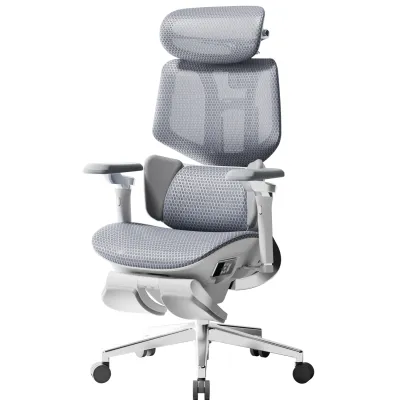
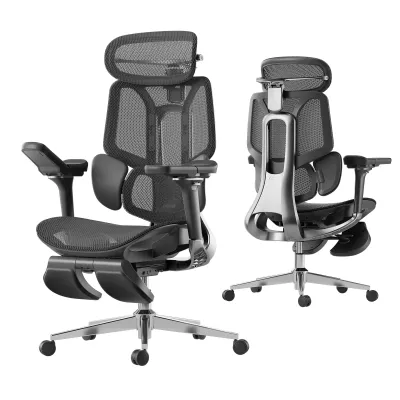
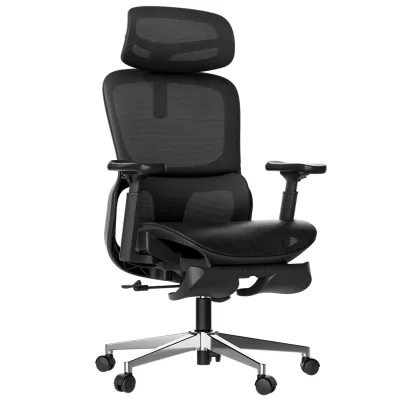
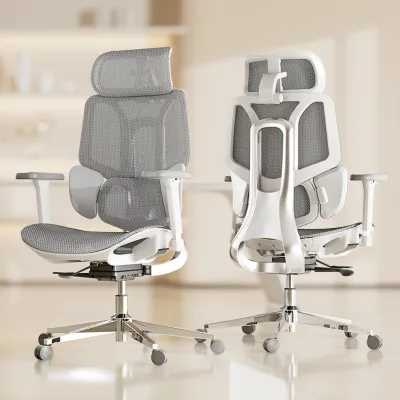
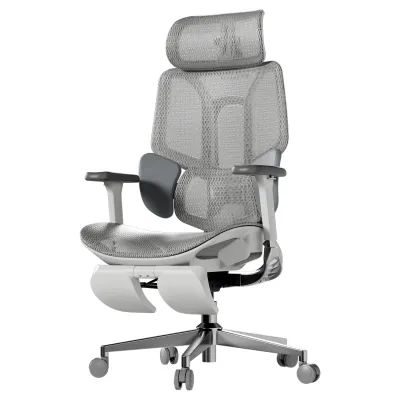
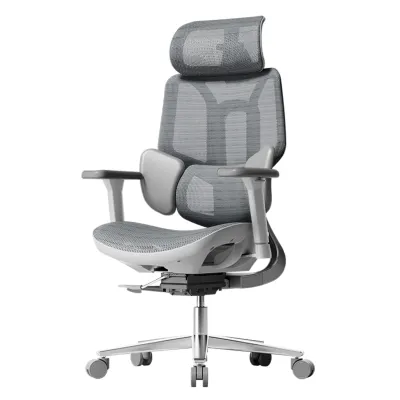
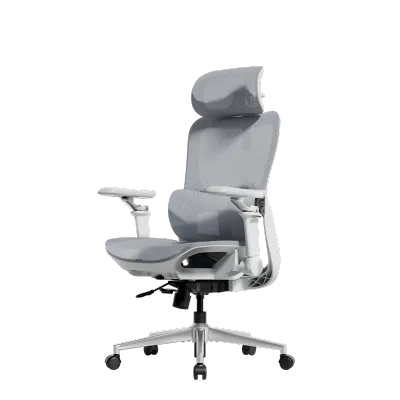
Prices are valid at publication and may change. Please refer to the product page for the latest price.
Material composition and structural integrity form the final pillar of ergonomic evaluation. High-quality mesh backrests offer superior ventilation compared to fully padded leather or thick foam, which is a critical consideration for maintaining comfort during long working hours. However, the density and elasticity of the mesh must be robust enough to prevent sagging over time. Additionally, the structural frame and base must support your body weight safely, which requires checking the manufacturer’s certified weight capacity and the class rating of the gas lift cylinder.
Evaluating the Hbada X7: Specifications to Verify
When considering the Hbada X7 for your home office, it is essential to verify its mechanical specifications directly from the manufacturer’s official documentation or product labels. Begin by examining the recline and tilt tension mechanisms to understand how the chair handles movement. Some versions of the Hbada X7 may feature a synchronized tilt mechanism where the backrest and seat recline at a fixed ratio, while others might offer a simple tilt lock that secures the chair in only a few upright positions. Confirming the exact number of locking angles and the presence of a tension control knob will help you determine if the chair can accommodate both active working postures and relaxed reclining states.

The durability of the mesh and the construction of the frame are equally important factors to verify before purchasing. Look for specifications detailing the material of the backrest frame, which is commonly made of reinforced nylon or molded plastic. A high-density polyester or nylon mesh is preferable, as it retains its tension longer than lower-grade synthetic blends. You should also check user manuals or official product listings to confirm if the seat cushion uses high-density molded foam or a full mesh design, as this significantly affects both pressure distribution and heat dissipation over years of daily use.
Finally, match the physical dimensions of the Hbada X7 with your own body measurements to ensure a proper ergonomic fit. Pay close attention to the recommended user height range and the maximum weight capacity, which is typically determined by the gas lift cylinder’s classification. A Class 3 or Class 4 gas lift is standard for reliable height adjustment and weight support in residential office chairs. Verifying the minimum and maximum seat height from the floor will prevent situations where the chair cannot be adjusted low enough for your feet to rest flat on the ground, or high enough to align with your desk surface.
Adapting Chair Features to Your Home Workspace
Integrating an ergonomic chair into a Singapore home workspace requires careful consideration of spatial limitations and environmental conditions. Many residential layouts, such as those in HDB flats or compact apartments, feature dedicated study corners or multi-purpose rooms with limited floor area. Before purchasing the Hbada X7 or any alternative, measure the outer diameter of the chair’s five-star base to ensure it can rotate freely without colliding with nearby wardrobes, walls, or desk legs. Additionally, check the height of the armrests at their lowest setting to confirm they can slide completely under your desk when the chair is not in use, saving valuable floor space.
The choice of materials is highly dependent on your home’s climate control setup. In warm, humid environments without continuous air conditioning, a full-mesh chair is often the most practical choice to prevent heat buildup and perspiration. If you prefer a cushioned seat, look for breathable fabric covers and open-cell foam structures that promote airflow. The type of flooring in your study also dictates the choice of wheel casters; standard hard nylon casters are suitable for low-pile carpets but can scratch delicate wood parquet or vinyl flooring. If your home has hard flooring, verify if the chair comes with soft polyurethane (PU) casters or plan to purchase a protective floor mat.
Practical logistics such as assembly, delivery, and doorway clearance should not be overlooked. Ergonomic chairs are frequently delivered as flat-packed items requiring self-assembly, which means you must verify that all necessary tools and clear instructions are included in the package. If you opt for a pre-assembled model, measure your home’s doorway widths and elevator entry dimensions to ensure the fully built chair can be transported into your study without obstruction. Understanding these physical constraints beforehand prevents assembly frustration and ensures the chair integrates seamlessly into your daily routine.
Decision Framework: Choosing the Hbada X7 or Alternatives
To make an informed decision between the Hbada X7 and alternative ergonomic chairs, establish a clear decision framework based on your personal comfort priorities and budget. The Hbada X7 may be the ideal choice if you require a space-saving design with practical, baseline adjustability—such as flip-up armrests that allow the chair to be tucked flush against a shallow desk. This model is highly suitable for users who prioritize a clean aesthetic and standard ergonomic support for moderate daily use, provided that the verified height and weight limits align with their physical profile.
Conversely, you should consider specialized alternative chairs if your daily routine involves sitting for extended periods exceeding eight hours, or if you have pre-existing back discomfort. Alternatives featuring independent, dynamic lumbar tracking systems that auto-adjust to your lateral movements offer superior support for active sitters. Furthermore, if you require precise armrest positioning to prevent wrist strain during intensive typing or gaming, look for alternative models equipped with fully adjustable 3D or 4D armrests. Heavy-duty users should also prioritize chairs with reinforced steel wheelbases and certified Class 4 gas lifts to ensure long-term structural stability.
Ultimately, the best chair is one that fits both your body and your specific room layout. Before finalizing your purchase on any online marketplace or local furniture store, double-check the return policy and warranty terms, particularly for moving parts like the gas lift, tilt mechanism, and casters. If possible, visit a local showroom to test different tension settings and seat depths in person. Taking the time to verify these physical details ensures that your investment in a home office chair delivers genuine ergonomic benefits and lasting durability.
Frequently Asked Questions (FAQ)
How do I measure my home office space for an ergonomic chair?
To ensure a proper fit, start by measuring the clear floor space behind your desk, allowing at least 1 meter of depth for pushing the chair back and reclining comfortably. Next, measure the distance between the inside edges of your desk legs to confirm that the chair’s wheelbase, which typically ranges from 60 to 70 centimeters in diameter, can fit underneath. Finally, measure the height from the floor to the underside of your desk drawer or tabletop; this height must be greater than the maximum height of the chair’s armrests if you plan to slide the chair fully under the desk when it is not in use.
What should I check on the manufacturer label before assembling a new chair?
Before beginning assembly, locate the manufacturer’s specification label, which is usually affixed to the underside of the seat pan or printed on the outer packaging. Verify that the maximum weight capacity matches your requirements and check the gas lift cylinder for a stamped certification mark indicating its safety class (Class 3 or Class 4 is recommended). Additionally, review the included warranty documentation to confirm the coverage period for critical components, such as the mesh fabric, structural frame, and hydraulic lift, as warranty terms can vary significantly between different retail models.

Community discussion
Share your experience or ask a question. Comments are reviewed before publication.