
Finding the right ergonomic chair for a home office in Singapore involves balancing comfort, spatial limits, and budget. Hbada has emerged as a prominent brand in the budget-to-mid-range segment, known for offering modern aesthetics and a high density of adjustable features at accessible price points. However, determining whether an Hbada chair is the right fit for your workspace requires comparing its build quality, adjustability, and long-term support against established market tiers. The ideal choice ultimately depends on your specific physical requirements, how many hours you spend at your desk, and your need for localized warranty support.
Key Evaluation Criteria for Home Office Chairs
Before comparing specific brands, it is essential to establish a baseline of metrics that define a high-performing ergonomic chair. The primary consideration is ergonomic adjustability, which directly impacts how well a chair supports your body over long working sessions. Look closely at the lumbar support mechanism, checking whether it is height-adjustable or depth-adjustable to match the natural curve of your spine. Armrests should ideally offer multi-directional adjustments—such as height, angle, and depth—to prevent shoulder strain, while seat depth adjustment ensures your thighs are fully supported without pressing against the back of your knees. Recline tension control is another critical feature, allowing you to adjust the resistance of the backrest to match your body weight.
Build materials and durability indicators form the second pillar of evaluation. In Singapore’s warm and humid climate, the choice of upholstery material significantly affects daily comfort. High-density mesh is often preferred for its breathability and ability to distribute weight evenly, but you must verify the tension and elasticity of the mesh to ensure it will not sag over time. For cushioned seats, high-density molded foam offers better shape retention and support than standard cut foam. Additionally, examine the structural components, such as the base material (nylon versus aluminum alloy) and the gas lift cylinder, looking for industry-standard safety certifications like SGS or BIFMA labels.
Products mentioned in this guide
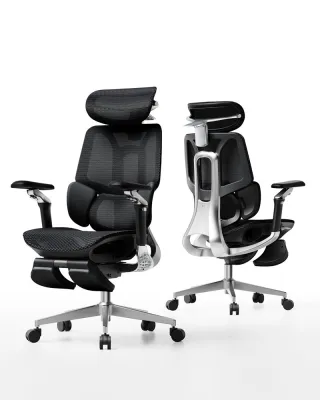
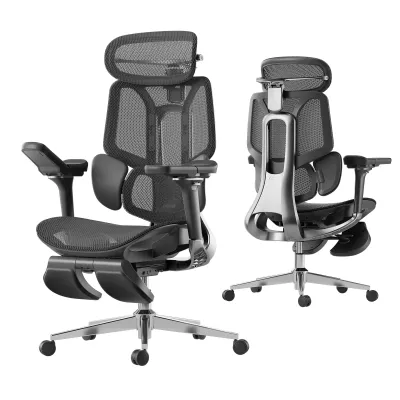
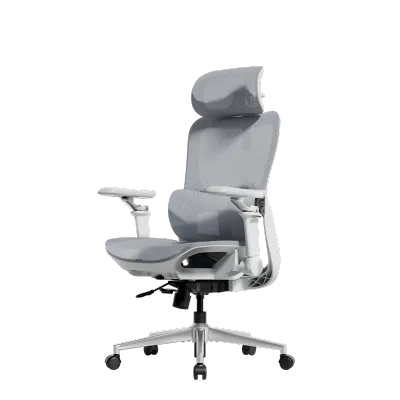
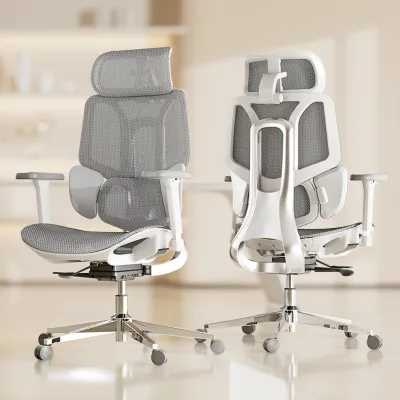
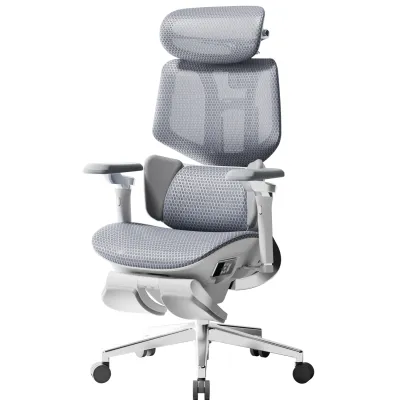
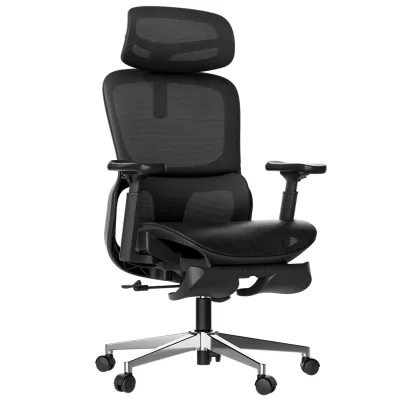
Prices are valid at publication and may change. Please refer to the product page for the latest price.
Finally, spatial and physical constraints must be factored into your decision. Home offices in Singapore, particularly those in HDB flats or compact apartments, often have limited floor space. You must measure the overall footprint of the chair, including the span of the five-star base, to ensure it fits comfortably under your desk when not in use. Furthermore, consider the physical dimensions of your doorways and lift access to avoid delivery complications, especially if the chair arrives fully assembled. Weight capacity limits should also be verified against the manufacturer’s specifications to ensure long-term structural safety.
Assessing Hbada Ergonomic Chairs: Features and Build
Hbada chairs are widely recognized for their sleek, minimalist designs that blend easily into modern home interiors. A typical feature set on many Hbada models includes space-saving elements such as flip-up armrests, which allow the chair to be pushed completely under a desk to free up floor space in tight study corners. Many models also feature integrated or adjustable headrests and basic lumbar pads designed to support the lower back. When evaluating these features, it is important to physically test or carefully review the sturdiness of the moving parts, ensuring that the adjustment mechanisms lock securely into place without excessive wobbling.

Material verification is crucial when assessing the build quality of an Hbada chair. Rather than relying solely on marketing descriptions, look for specific technical details on product tags or official specification sheets. Pay close attention to the mesh quality; a tighter, double-woven mesh generally provides better long-term support and breathability than a loose, single-layer mesh. If the model features a fabric cushion, check the density rating of the foam. High-density foam (typically rated above 40kg/m³) is less likely to bottom out during extended sitting sessions, preserving both comfort and proper pelvic alignment.
Assembly and maintenance are also key aspects of the ownership experience. Most Hbada chairs are shipped flat-packed, requiring self-assembly upon delivery. It is vital to follow the manufacturer’s manual step-by-step, ensuring that all bolts are tightened correctly and aligned to prevent uneven wear on the frame. Regular maintenance, such as checking and tightening the screws every few months and keeping the casters free of dust and hair, will help maintain the chair’s stability and extend its operational lifespan.
Comparing Hbada Against Market Tiers
To make an informed decision, it is helpful to place Hbada within the broader landscape of office chair tiers. When compared to entry-level budget brands, Hbada often stands out by offering a wider range of adjustable features, such as tilt-lock mechanisms and adjustable headrests, which are frequently absent in basic utility chairs. The materials used in Hbada chairs, such as reinforced nylon bases and certified gas lifts, generally offer a more reliable baseline of safety and stability than generic, unbranded options found on online marketplaces.
However, when compared to mid-range and premium ergonomic brands, the differences in engineering and material longevity become more apparent. Premium chairs often utilize advanced synchro-tilt mechanisms, where the seat and backrest recline at a synchronized ratio to keep your feet flat on the floor and maintain optimal posture throughout the recline range. In contrast, budget-to-mid-range models may use simpler tilt mechanisms that lift the front of the seat cushion as you recline, potentially putting pressure on your thighs. Premium brands also tend to offer more robust, heavy-duty materials, such as polished aluminum frames and highly customizable lumbar support systems that adapt dynamically to your movements.
The primary trade-off when choosing an Hbada chair lies between upfront feature density and long-term structural support. While an Hbada chair provides many of the adjustability options found on high-end models at a fraction of the cost, the overall lifespan of the components—such as the mesh tension and plastic joints—may be shorter than those of premium alternatives. Additionally, premium brands typically offer much longer warranty periods and more comprehensive local after-sales service, which can offset the higher initial investment over several years of daily use.
Evaluating Pricing, Warranties, and Local Value
When calculating the true cost of ownership in Singapore, you must look beyond the initial S$ price tag. Compare the retail price of the chair against the specific features included, and factor in any additional costs such as delivery fees and professional assembly services. Some retailers include free delivery and assembly in their base price, while others charge extra, which can significantly alter the final value proposition. Weighing these factors helps you determine whether a self-assembled budget chair is truly more cost-effective than a slightly higher-priced model that arrives fully built.
Warranty terms are a critical indicator of a manufacturer’s confidence in their product’s durability. When purchasing an ergonomic chair, verify the exact coverage details rather than accepting a generic warranty claim. Check how many years of coverage are provided for key structural components, particularly the gas lift cylinder, the tilt mechanism, and the frame, as these are the parts most prone to wear. It is also important to confirm the presence of a local service center or an authorized distributor in Singapore; having a local point of contact makes it much easier to claim replacement parts or seek repairs without facing long shipping delays.
Finally, investigate the return policies and trial periods offered by the seller. Because ergonomic comfort is highly subjective, a chair that looks excellent on paper may not suit your unique body shape in practice. Some official brand stores or local retailers offer a trial period, allowing you to test the chair in your home office environment for a set number of days. Understanding the terms of these return policies—including whether you must retain the original packaging or pay a restocking fee—provides an important safety net for your investment.
Final Decision Framework: Choosing Your Home Office Chair
To finalize your purchase, align your choice with your specific workspace needs, physical requirements, and budget. An Hbada chair is highly suitable if you are looking for a cost-effective solution that offers a rich set of adjustable features without a premium price tag. It is an excellent choice for compact home offices where space-saving designs, such as flip-up armrests, allow you to maximize your available floor area. This option works well for users who are comfortable performing basic self-assembly and regular maintenance.
On the other hand, investing in an established mid-range or premium brand is advisable if your daily routine involves sitting for eight or more hours and you require highly specialized ergonomic support. These brands are better suited for users who want a long-term investment backed by extended local warranties and robust customer service. Premium models are also preferable if you require advanced mechanical adjustments, such as seat depth sliding or dynamic lumbar tracking, to manage specific physical discomforts.
Before making any final purchase, always verify your personal physical limits and spatial constraints. Measure your desk height and compare it to the chair’s armrest and seat height ranges to ensure a proper ergonomic fit. If you have pre-existing back or neck conditions, consider consulting a healthcare professional or testing chairs in person to identify the exact support mechanisms your body requires. Taking the time to verify these details ensures your home office chair will support both your health and your productivity for years to come.
Frequently Asked Questions (FAQ)
Are Hbada chairs suitable for long hours of desk work?
To determine if an Hbada chair is suitable for extended desk work, you should carefully inspect the seat cushion density and the adjustability of the lumbar support on the product’s specification sheet. Look for high-density molded foam cushions that resist flattening, as well as adjustable lumbar pads that can be positioned to support your lower back. While a well-adjusted ergonomic chair helps maintain proper posture, it is highly recommended to take regular standing or stretching breaks every hour to promote healthy blood circulation, regardless of the chair’s ergonomic features.
How do I verify the safety and weight capacity of an Hbada chair?
You can verify the safety and weight capacity of an Hbada chair by checking the manufacturer’s official specification label, which is often located on the underside of the seat or in the user manual. Look specifically for the gas lift cylinder’s classification; a Class 3 or Class 4 gas lift indicates a higher standard of durability and safety. Additionally, check the stated maximum weight capacity and ensure the base is constructed from robust materials, such as reinforced nylon or heavy-duty metal, to guarantee stable support during daily use.

Community discussion
Share your experience or ask a question. Comments are reviewed before publication.