
Quick Answer: Who Should Choose the Hbada E3 Air?
The hbada e3 air has gained significant traction in Singapore’s home office landscape as an adjustable, full-mesh ergonomic chair designed for long hours of sitting. Positioned primarily as a value-driven alternative to ultra-premium ergonomic models, it targets remote professionals, gamers, and students who require dynamic lumbar support and high breathability without a high-end price tag. If you are seeking a chair that balances customizable back support, multi-dimensional armrests, and cooling mesh at a moderate price point, this model presents a compelling option.
However, buyers who prioritize premium materials like die-cast aluminum frames, globally recognized commercial certifications, or extensive 10-to-12-year warranties may find that premium market leaders better suit their long-term expectations. This guide breaks down the essential performance, build, and spatial dimensions to help you verify whether this chair aligns with your specific body type, work habits, and home environment.
What to Look For: Ergonomics, Build Quality, and Value
Selecting the right home office chair requires looking beyond aesthetic appeal and marketing buzzwords. To make an informed decision, you must evaluate three core pillars: ergonomics, build quality, and overall value relative to the Singapore market.
Products mentioned in this guide
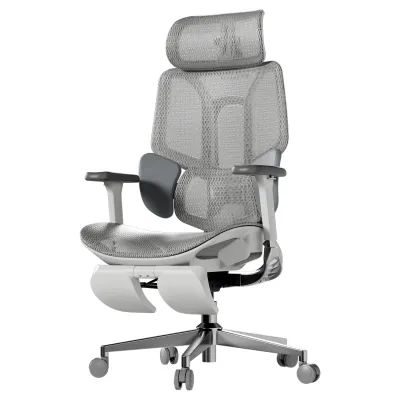
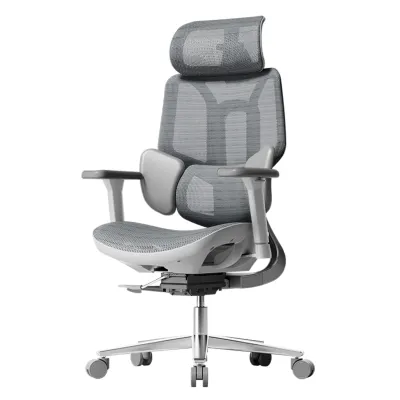
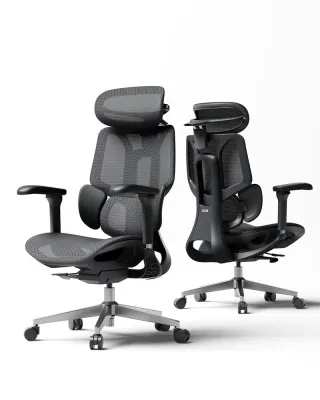
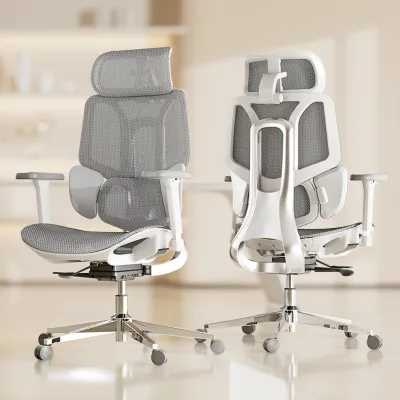
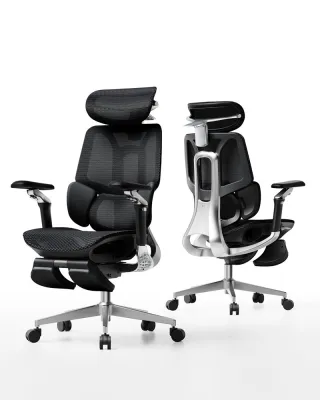
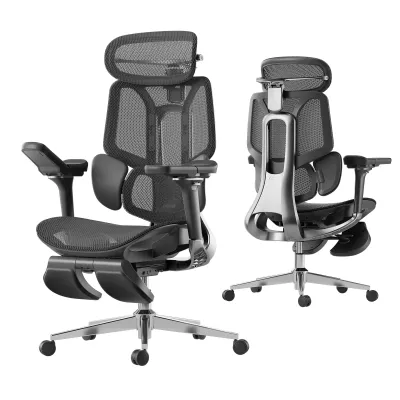
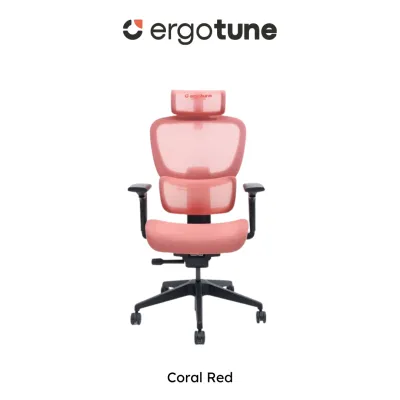
Prices are valid at publication and may change. Please refer to the product page for the latest price.

Ergonomics: True ergonomic support is defined by how well a chair adapts to your body’s natural posture and movements. Key features to evaluate include dynamic lumbar support—which actively adjusts as you shift positions—adjustable seat depth to ensure your thighs are supported without cutting off circulation behind the knees, and multi-dimensional armrests (often categorized from 1D to 4D) that prevent shoulder strain. Additionally, a responsive recline tension mechanism allows you to lean back smoothly while maintaining balance and spinal alignment.
Build Quality: Assessing durability involves inspecting the physical components of the chair. Rather than relying solely on brand reputation, check the base material—heavy-duty nylon offers decent durability, while polished aluminum bases provide superior structural integrity and weight capacity. Look for the gas lift certification, where a Class 4 gas cylinder represents the industry standard for safety and longevity. Finally, examine the mesh tension; high-quality elastomer mesh should feel firm and resilient, resisting sagging even after consecutive hours of daily use.
Value: In Singapore, value is not merely about finding the lowest price tag on an online marketplace. Instead, it is the ratio of customizable features, material durability, and local warranty coverage to the final cost in SGD. A mid-range chair costing S$300 to S$500 that offers robust lumbar adjustments and a reliable local warranty can represent far better value than a cheap S$100 chair that requires replacement within a year due to flat foam or a failing gas lift.
Hbada E3 Air Breakdown: Adjustability and Daily Comfort
To understand how the hbada e3 air performs in a daily home office setup, it is necessary to analyze its specific design characteristics, mechanical adjustments, and physical limitations.
Mesh and Breathability: The chair features a full-mesh design across both the backrest and the seat pan. Mesh is highly effective at promoting continuous airflow, which prevents heat and moisture from becoming trapped against your body. When evaluating this chair, inspect the mesh weave. It should feel taut and supportive rather than soft or overly stretchy, as adequate tension is required to distribute your body weight evenly and prevent pressure points on your tailbone.
Lumbar and Back Support: A defining feature of the hbada e3 air is its split-backrest design, which incorporates an adaptive lumbar support module. This mechanism is engineered to pivot and shift dynamically as you lean, twist, or change your sitting angle. It is designed to fill the natural curve of your lower spine continuously. To ensure this system works for you, verify whether the height of the backrest can be adjusted independently. If the backrest cannot align with your torso length, the lumbar support may press against the wrong part of your spine, leading to discomfort.
Adjustability Checklist: Before making a purchase, cross-reference the manufacturer’s technical specifications to confirm the following adjustment ranges:
- Seat Height Range: Ensure the lowest setting allows your feet to rest flat on the floor, and the highest setting aligns with your desk height.
- Armrest Adjustability: Check if the armrests offer 3D or 4D adjustments (height, depth, angle, and width) to support your elbows while typing.
- Recline and Tension: Verify the maximum recline angle and check if the tension can be adjusted to match your body weight.
- Seat Depth Adjustment: Confirm if the seat pan can slide forward or backward to accommodate different thigh lengths.
Weight and Height Limits: Every ergonomic chair has structural boundaries. You must check the manufacturer’s official maximum weight capacity and recommended user height range. While a chair may be rated for up to 135 kg, its optimal ergonomic comfort range might be narrower. If your height or weight sits at the extreme end of the specifications, the frame width, headrest height, or seat depth may feel restrictive during long working sessions.
Comparing the Hbada E3 Air to Popular Market Alternatives
To determine where the hbada e3 air sits in the broader landscape, it is helpful to compare it against two distinct categories of office chairs available to Singapore consumers: premium ergonomic brands and other mid-range mesh chairs.
Versus Premium Ergonomic Brands
When comparing the hbada e3 air to high-end, globally recognized ergonomic brands, the differences lie primarily in engineering refinement, material selection, and warranty security. Premium chairs are typically constructed with aerospace-grade aluminum frames, proprietary high-performance elastomer meshes, and advanced harmonic tilt mechanisms that mimic the body’s natural pivot points seamlessly. Furthermore, premium brands almost always back their products with comprehensive 10-to-12-year warranties that cover both parts and onsite labor.
The hbada e3 air competes by offering a comparable array of functional adjustments—such as dynamic lumbar support, adjustable armrests, and a reclining backrest—at a fraction of the cost. While a premium chair can easily exceed S$1,500 to S$2,500 in Singapore, the E3 Air sits comfortably in the mid-range price tier. The trade-off for this lower price point is a heavier reliance on structural plastics rather than cast metals, a slightly less refined tactile feel in the adjustment levers, and a shorter, more limited warranty period. For users who want ergonomic benefits without a massive financial investment, the E3 Air serves as an accessible entry point, though it may not match the decades-long lifespan of a premium commercial-grade chair.
Versus Other Mid-Range Mesh Chairs
In the highly competitive mid-range market, which includes popular options like Ergotune, Sihoo, and Hinomi, the hbada e3 air must be evaluated on its specific mechanical execution. Many chairs in this S$300 to S$600 price bracket offer full-mesh construction, but their lumbar support designs vary significantly. For instance, some competitors utilize a manual dial to adjust lumbar depth, while others rely on a simple height-adjustable pad. The E3 Air’s adaptive split-back design offers a more active, self-adjusting feel, which may appeal to those who move frequently while working, though users who prefer a rigid, locked-in lower back support might find it too yielding.
Another critical point of comparison is local after-sales support in Singapore. When buying a mid-range chair, always verify the seller’s local presence. Some brands maintain dedicated local warehouses, showrooms, and customer service teams in Singapore, making it easy to claim warranty parts, request repairs, or pay for professional assembly services. Other brands operate primarily through overseas cross-border shipping on online marketplaces, which can make resolving a broken gas lift or a torn mesh panel significantly more challenging and time-consuming.
Adapting to Singapore Homes: Climate and Space Checks
Buying an ergonomic chair in Singapore requires careful consideration of local environmental factors and typical residential layouts, such as those found in HDB flats and condominiums.
Climate Considerations: Singapore’s tropical climate brings high temperatures and relative humidity levels that frequently exceed 80%. In non-air-conditioned study rooms, traditional leather or thick foam-cushioned chairs can trap body heat and sweat, leading to discomfort, skin irritation, and eventual material degradation. A full-mesh chair like the hbada e3 air is highly advantageous here, as the open weave allows body heat to dissipate quickly. However, high humidity can also accelerate the degradation of low-quality synthetic mesh fibers, causing them to sag prematurely. When choosing a mesh chair, look for high-tensile polyester or elastomer blends that are specifically rated to maintain their tension in humid environments, and keep the chair away from direct sunlight to prevent UV damage to the fibers.
Space Constraints: Space is often at a premium in Singaporean homes, where study areas are frequently carved out of compact bedroom corners or small common rooms. Before purchasing, you must perform precise spatial measurements:
- Star Base Diameter: The footprint of the chair's caster base typically ranges from 65 cm to 70 cm. Measure your floor area to ensure the base has enough clearance to roll back smoothly without hitting wardrobes, beds, or walls.
- Doorway and Lift Access: Ensure the packaged box or fully assembled chair can fit through your main door, hallway, and lift.
- Armrest and Desk Clearance: To save floor space when the chair is not in use, you should be able to tuck it completely under your desk. Measure the height from the floor to the underside of your desk frame. Then, verify the chair's minimum armrest height. If the armrests cannot lower sufficiently, or if they do not flip up, the chair will stick out into your room, obstructing walkways in tight HDB layouts.
Final Decision Framework: Which Chair Fits Your Setup?
To help you finalize your decision, use this conditional framework to match your budget, physical needs, and workspace constraints with the right category of ergonomic seating.
Choose the Hbada E3 Air if:
- You want a full-mesh, highly breathable chair to combat Singapore's heat.
- Your budget is moderate (typically under S$500), and you want active, adaptive lumbar support rather than a static backrest.
- You are comfortable verifying warranty terms online and performing the physical assembly yourself, or are willing to pay a small premium for local assembly services.
- Your physical dimensions fall comfortably within the manufacturer's recommended height and weight guidelines.
Choose a Premium Alternative if:
- You are willing to invest over S$1,500 for long-term health, durability, and a 10-to-12-year warranty.
- You have pre-existing, chronic back or neck issues that require highly precise, medical-grade ergonomic adjustments.
- You prefer premium materials like polished aluminum frames and patented elastomer meshes that offer exceptional tactile refinement.
Choose a Different Mid-Range Chair if:
- You prefer the plush feel of a high-density foam seat cushion over the firm suspension of a full-mesh seat.
- You find a direct competitor that offers a more robust, established local customer service center and showroom in Singapore for easy testing and troubleshooting.
- Your desk clearance requires a chair with fully flip-up armrests or a highly compact star base footprint.
Verify First: Before finalizing any purchase on an ecommerce platform, always check recent user reviews specifically filtering for long-term durability. Look for feedback regarding mesh sagging after six to twelve months of use, and verify the responsiveness of the seller’s local customer service team in Singapore.
Frequently Asked Questions (FAQ)
How can I check if the chair's armrests fit under my desk?
To check this, use a tape measure to find the exact distance from your floor to the lowest point of your desk’s underside (be sure to account for any drawer units or support beams). Next, locate the chair’s technical specifications sheet and find the minimum armrest height from the floor. If the chair’s minimum armrest height is lower than your desk’s clearance, you will be able to slide the chair fully underneath when it is not in use, saving valuable floor space.
What maintenance does a mesh office chair require in humid climates?
In Singapore’s humid climate, dust, skin oils, and sweat can accumulate in the mesh pores, attracting dust mites and causing minor odors. To maintain your chair, perform a gentle vacuuming of the mesh back and seat once a month using a brush attachment. For deeper cleaning, wipe the mesh gently with a microfiber cloth slightly dampened with warm water and a drop of mild dish soap, then allow it to air dry completely in a well-ventilated room. Avoid harsh chemical solvents or vigorous scrubbing, which can fray or weaken the synthetic fibers.

Community discussion
Share your experience or ask a question. Comments are reviewed before publication.