
Selecting the ideal premium office chair for your home office is not about finding a single, universally perfect model. Instead, the right choice depends on your unique body dimensions, daily work habits, and the physical constraints of your residential workspace. While Haworth is widely recognized for its research-driven task seating and highly adjustable lumbar systems, other premium ergonomic brands offer distinct design philosophies, tilt mechanisms, and material compositions. By evaluating these options through a structured comparison framework, you can identify which chair aligns best with your physical needs and home environment.
Defining the Premium Chair Contenders
To evaluate Haworth against other high-end ergonomic brands, it is essential to establish what defines a premium task chair. In the commercial and residential furniture sectors, premium chairs are characterized by multi-dimensional adjustability, high-grade structural materials, and extensive manufacturer warranties. Haworth’s design philosophy often centers on user-centered adaptability, featuring advanced engineering like asymmetrical lumbar controls that allow independent adjustment for each side of the lower back. Other premium manufacturers may prioritize passive ergonomics, where the chair automatically self-adjusts to the user’s weight and movement without manual levers.
When comparing these brands for a home office rather than a corporate headquarters, the criteria shift significantly. Corporate procurement focuses on bulk durability, standardized aesthetics, and universal fit for a rotating workforce. For your home office, however, the focus narrows to personalized comfort, aesthetic integration with residential decor, and a footprint that fits within typical domestic room layouts. Understanding these differences helps prevent overpaying for features designed for commercial scale while ensuring you invest in mechanisms that directly support your daily posture.
Products mentioned in this guide
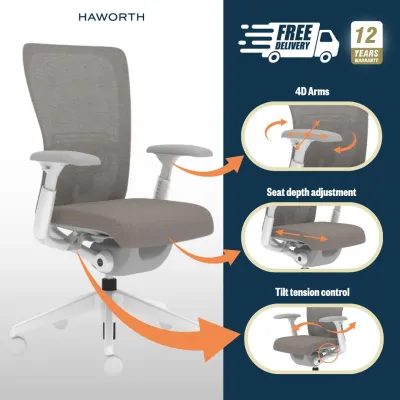
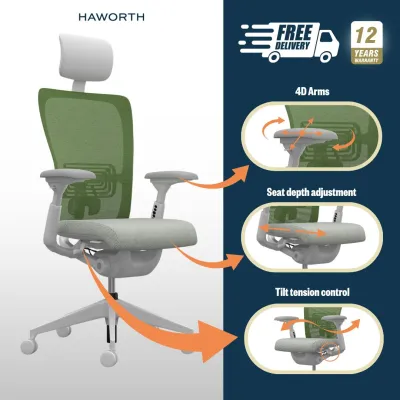
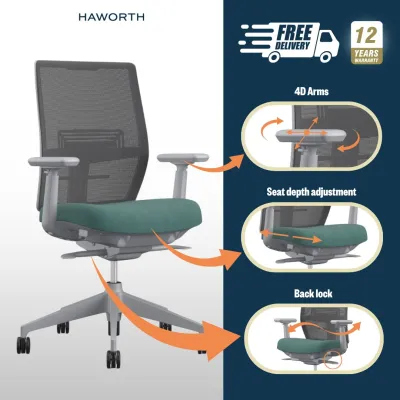
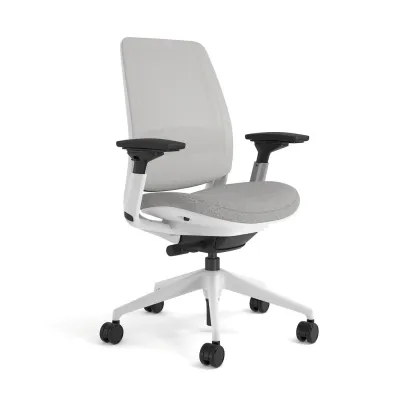
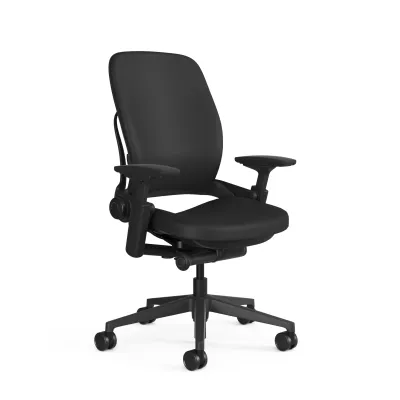
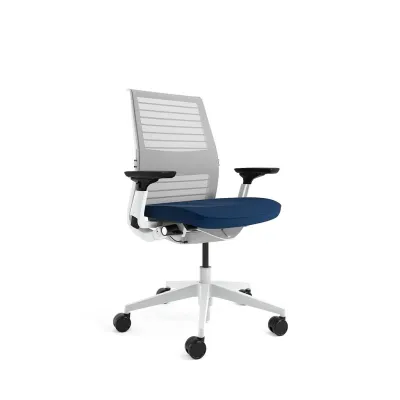
Prices are valid at publication and may change. Please refer to the product page for the latest price.
Key Ergonomic Features to Compare
The core value of any premium office chair lies in its ergonomic adjustability, which allows you to customize the support to your skeletal structure. The lumbar support system is often the most critical point of comparison. Haworth chairs frequently utilize an active, height- and depth-adjustable lumbar pad, sometimes featuring asymmetrical tension controls to address localized lower back discomfort. In contrast, other premium brands might employ a flexible, pixelated backrest that distributes pressure across the entire spine, or a passive sacral support system that stabilizes the pelvis. When evaluating these systems, verify whether you prefer a pronounced, localized support pocket or a more subtle, distributed pressure relief.

Armrest adjustability is another vital feature that directly impacts shoulder and neck strain. Premium chairs typically offer 4D armrests, which adjust for height, width, depth, and pivot angle. You should check these ranges against your desk setup; for instance, if you use a keyboard tray or a shallow desk, you need armrests that can slide backward sufficiently to let you sit close to your work surface. Ensure the armrest pads are constructed from high-density, durable polyurethane that cushions the elbows without collapsing over time.
Seat depth and tilt synchronization govern how the chair supports your lower body during movement. A premium chair should feature a seat pan that slides forward and backward to accommodate different thigh lengths, leaving a two-to-three-finger gap behind the knees to prevent circulation restriction. Furthermore, look for a synchronized tilt mechanism where the backrest and seat recline at a supportive ratio (typically 2:1). This keeps your feet flat on the floor and your eyes level while you recline, maintaining a healthy spinal angle throughout the day.
Material, Build, and Daily Comfort in a Tropical Climate
In a warm and humid tropical climate like Singapore’s, material selection directly influences daily comfort and the longevity of your chair. The choice between a full mesh chair and a cushioned seat is particularly significant. High-quality elastomeric mesh offers exceptional breathability, allowing body heat to dissipate quickly, which is highly beneficial if you work without continuous air conditioning. However, you must check the mesh tension; premium mesh should feel supportive without creating high-pressure zones at the front edge of the seat pan. Cushioned seats, often upholstered in fabric or leather, provide a more traditional, plush feel but require high-resiliency molded foam to prevent bottoming out over long hours.
The structural integrity of the frame and base determines the chair’s stability and weight capacity. Premium chairs generally feature glass-reinforced nylon or polished aluminum bases, which offer robust support and resist warping. When reviewing product specifications, verify the maximum weight capacity labels and ensure the casters are appropriate for your flooring. Hard casters are designed for carpets, whereas soft, polyurethane-coated casters are essential for protecting hard surfaces like parquet, vinyl, or ceramic tiles from scratches and wear.
Maintaining these materials in a humid environment requires adherence to specific manufacturer care instructions. Mesh can accumulate dust and skin oils over time, requiring periodic vacuuming with a soft brush attachment and gentle spot cleaning with mild, pH-neutral detergents. Upholstered cushions may benefit from fabric protectors, but you should always check the product manual to ensure cleaning agents do not degrade the fire-retardant properties or the structural integrity of the textiles.
Space, Aesthetics, and Home Office Integration
Integrating a commercial-grade ergonomic chair into a residential space requires careful measurement and aesthetic consideration. The physical footprint of premium chairs can be surprisingly large, with base diameters often exceeding 65 to 70 centimeters. Before purchasing, measure your designated workspace and the clearance between your desk legs to ensure the chair can glide freely and tuck completely under the desk when not in use. Consider the overall height of the chair as well, especially if your home office features low shelving or is situated in a compact bedroom corner.
Floor protection is a critical practical detail that is easily overlooked. Even with soft casters, repetitive movement over delicate flooring can cause micro-scratches or discoloration. Planning for a low-profile, transparent chair mat or a dense, low-pile rug can safeguard your flooring while maintaining a clean visual aesthetic. Ensure any protective barrier does not impede the smooth rolling of the casters, as excessive resistance can lead to awkward posture adjustments.
Aesthetic customization allows you to harmonize the chair with your home decor, moving away from the standard corporate “all-black” look. Many premium brands offer lighter frame finishes, such as mineral, white, or grey, alongside a wide array of textile colors. However, be aware that highly customized colorways and premium finishes often carry longer lead times, as they may be built to order and shipped from international warehouses. If you require a chair immediately, opting for standard, stocked configurations is usually necessary.
Evaluating Value, Warranty, and Purchasing Channels
Investing in a premium office chair involves a significant upfront cost, making the warranty and after-sales support crucial components of the overall value proposition. Most top-tier manufacturers offer extensive warranties, often spanning up to 12 years. However, you must read the warranty terms carefully; coverage is frequently tiered, with the structural frame and tilt mechanism covered for the full duration, while moving parts, gas cylinders, arm pads, and fabrics may have shorter coverage periods. Always verify these details directly from official brand documentation rather than relying on third-party summaries.
To secure a valid warranty and ensure authentic product quality, always purchase through authorized local dealers or official brand stores in Singapore. Parallel imports or unauthorized online sellers may offer lower initial prices, but they often lack official warranty backing, leaving you without recourse if a component fails. Authorized channels also provide access to trained technicians and genuine replacement parts, which is vital for maintaining the chair over its lifespan.
The total cost of ownership should factor in the availability and cost of replacement parts. Over a decade of use, components like armrest pads, casters, and gas cylinders naturally wear out. Brands with established local distribution networks make sourcing these individual parts straightforward, allowing you to repair rather than replace the entire chair. This long-term serviceability justifies the initial premium price compared to budget chairs that must be discarded entirely when a single part breaks.
Decision Framework: Matching the Chair to Your Work Style
To make your final decision, match the specific engineering philosophies of Haworth and its competitors to your daily work habits and physical needs. Consider a Haworth chair if you highly value precise, manual control over your lumbar support and prefer a structured, task-focused seating position. Their designs are particularly suited for users who sit for extended, focused periods and want to adjust the tension on either side of their lower back independently to accommodate asymmetrical posture habits.
Conversely, look toward other premium brands if you prefer a more dynamic, intuitive seating experience where the chair automatically adapts to your movements without constant manual adjustment. These alternatives are often ideal if your work involves frequent shifting between active typing, phone calls, and relaxed reclining. Additionally, if you have a strong preference for specific material aesthetics, such as a fully elastomeric frame-free backrest or a highly minimalist silhouette, other design-forward brands may better complement your home office decor.
Before finalizing any purchase, always verify the exact dimensional specifications against your body measurements. If possible, visit an authorized local showroom in Singapore to test the chairs in person. Sit in each model for at least fifteen minutes, adjusting the controls to your desk height, to ensure the seat pan, lumbar curve, and armrests align comfortably with your natural posture.
Frequently Asked Questions (FAQ)
Is a premium office chair worth the investment for part-time home office use?
Yes, investing in a premium ergonomic chair is highly beneficial even for part-time use, particularly if you spend more than two to three hours a day at your desk. Budget chairs often lack the structural support and adjustability needed to maintain proper spinal alignment, which can lead to discomfort over time. Furthermore, the durability of premium materials and the security of a long-term warranty mean a high-end chair can outlast multiple cheap alternatives, offering better long-term value and consistent physical support.
How can I test a premium chair's fit before buying online?
If you cannot visit a showroom, you can verify the fit by comparing your personal measurements with the manufacturer’s detailed dimensional specifications. Measure your current comfortable seating height, the length of your thighs (from the back of your pelvis to the back of your knee), and your shoulder width. Compare these to the chair’s seat height range, seat depth adjustment limits, and armrest width ranges. Additionally, review the return policies and trial periods of authorized online retailers to ensure you can exchange or return the chair if it does not fit your body comfortably.

Community discussion
Share your experience or ask a question. Comments are reviewed before publication.