
Selecting a premium office chair for your home office involves balancing commercial-grade durability with residential aesthetics and space constraints. Haworth is widely recognized alongside other top-tier ergonomic brands for its engineering-led approach to seating. When comparing Haworth to other premium options, the decision often comes down to how their distinct adjustment mechanisms, lumbar support designs, and physical footprints align with your specific body dimensions and home workspace. Rather than looking for a single universal winner, finding the right chair requires evaluating how each brand’s design philosophy matches your daily sitting habits and your home’s environment.
Core Comparison Dimensions for Premium Home Office Chairs
Evaluating high-end seating requires looking beyond basic aesthetics to understand the engineering that supports long-term spinal health. Premium office chairs are designed to distribute body weight evenly, reduce pressure points, and encourage dynamic movement throughout the workday. The primary pillars of any premium chair comparison are mechanism longevity, material durability, and the overall range of ergonomic adjustability. While budget chairs often rely on simple upright locking mechanisms, premium models feature complex linkages that mimic the body’s natural pivot points.
There is a significant difference between corporate-grade durability and home-office spatial constraints. In a commercial office, chairs are often standardized to fit a wide demographic and are built to withstand continuous, multi-shift use. In a home office, however, the chair must integrate into a residential environment. In Singapore’s typical high-rise apartments, such as HDB flats or condominiums, space is often at a premium. A chair with an excessively wide base or a bulky frame can restrict movement in tight study corners or collide with compact desks.
Products mentioned in this guide
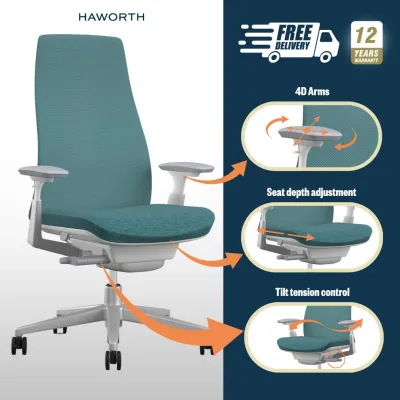
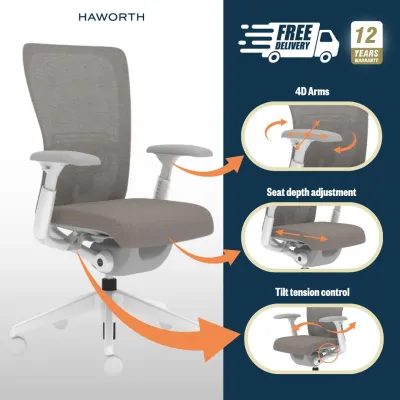
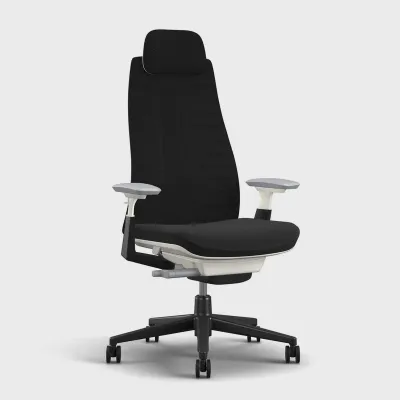
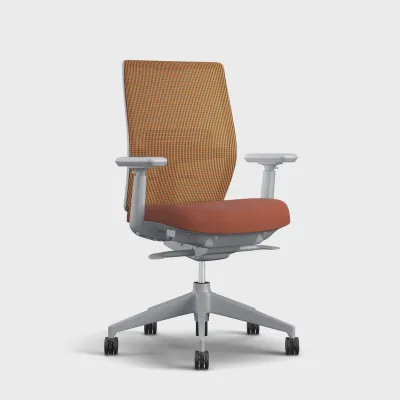
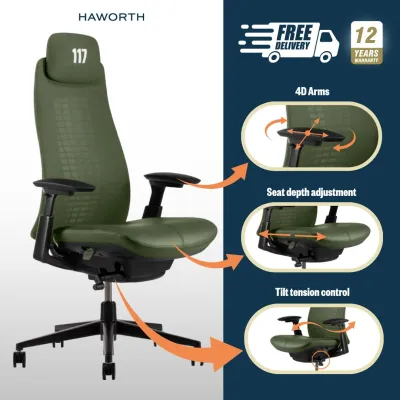
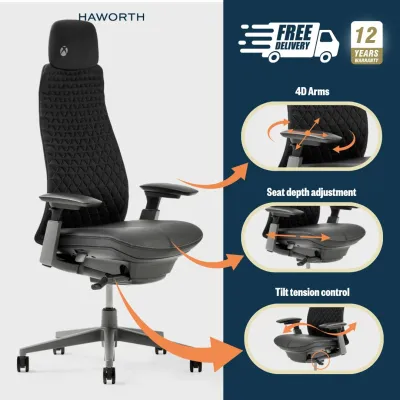
Prices are valid at publication and may change. Please refer to the product page for the latest price.
To identify which specifications most directly impact your daily comfort, focus on the adjustability of the seat depth, the responsiveness of the backrest, and the adaptability of the armrests. A chair that fits perfectly in a showroom may cause discomfort after six hours of continuous use if it lacks the micro-adjustments needed to shift your posture. By focusing on these core dimensions, you can systematically compare Haworth against other premium brands to find the configuration that best supports your daily routine.
Evaluating Build Quality and Ergonomic Adjustability
When comparing premium chairs, the lumbar support system is often the most critical differentiator. Some brands utilize a fixed, tension-based lumbar system integrated directly into the backrest mesh, while others offer active, height-adjustable lumbar pads. Haworth is notable for offering asymmetric lumbar support options on certain models, allowing users to adjust the support independently on the left and right sides of the lower back. When testing these systems, verify whether the lumbar support can be positioned precisely in the curve of your lower spine and whether the pressure feels supportive rather than intrusive.

Armrest configurations play a vital role in preventing shoulder and neck strain. Look for 4D armrests, which adjust for height, width, depth, and horizontal angle. This level of adjustability ensures that your elbows are supported close to your body while typing, regardless of your shoulder width. Additionally, inspect the armrest pad materials; they should be firm enough to maintain structural integrity over years of use, yet soft enough to cushion your elbows. Ensure the armrests can lower sufficiently to clear the underside of your home desk when you slide the chair in at the end of the day.
The tilt mechanism is the mechanical heart of a premium chair. High-end models typically employ a synchro-tilt mechanism, where the backrest reclines at a greater ratio than the seat pan (often 2:1 or 3:1). This keeps your feet flat on the floor and maintains a consistent angle at your hips, promoting healthy blood circulation. When evaluating different brands, check the tension control responsiveness. The tension should be easily adjustable so that reclining feels effortless, yet supportive enough that you do not feel like you are falling backward. Multi-position tilt locks or tilt limiters are also valuable features if you prefer to restrict the recline range during focused tasks.
Upholstery and mesh quality directly affect both comfort and durability. In Singapore’s warm and humid climate, highly breathable mesh is often preferred over solid foam and fabric. However, not all mesh is created equal. Inspect the weave density and the edge frame design; some mesh chairs feature hard plastic borders that can press uncomfortably against the back of your thighs, restricting circulation. Check the manufacturer’s care labels and specifications to verify the mesh’s sag resistance, ensuring the material will maintain its supportive tension over years of continuous use.
Home Office Suitability: Aesthetics, Space, and Daily Use
Integrating a commercial-grade task chair into a residential space requires careful consideration of its visual footprint. Many premium chairs feature industrial designs with exposed plastic and aluminum frames that may clash with cozy home decor. Compare the base diameters and backrest heights of different models. A chair with a wide, polished aluminum base offers excellent stability but may struggle to fit between the legs of a compact home writing desk. Look for brands that offer customizable frame colors, such as warm whites, greys, or earth tones, which tend to blend more naturally into home environments than standard corporate black.
Floor compatibility is another practical consideration for residential settings. Standard hard nylon casters are designed for commercial carpets and can easily scratch hardwood, laminate, or vinyl flooring in a home. When purchasing a premium chair, verify if the retailer offers soft-tread polyurethane casters, which glide quietly and safely on hard surfaces. If your home office is carpeted, ensure you select the appropriate hard caster option to prevent premature wear on both the carpet fibers and the chair’s rolling mechanism.
In a quiet home environment, especially during late-night work sessions or shared living arrangements, the acoustic profile of your chair becomes highly noticeable. Squeaking joints, rattling armrests, or noisy casters can be highly distracting. Premium chairs generally feature tighter manufacturing tolerances and higher-quality bushings, resulting in virtually silent operation. During your evaluation, sit in the chair and perform common movements—such as reclining, swiveling, and adjusting the armrests—to check for any unwanted mechanical noise.
Specification Checklist and Value Verification
Before committing to a premium seating investment, it is essential to verify the exact specifications and post-purchase support terms. A high price tag should correlate with robust warranty coverage and reliable local support. Use the following checklist to guide your verification process:
- Warranty Terms: Compare the length and scope of the warranty. While many premium manufacturers, including Haworth, offer extensive warranties of up to 12 years, these terms often differ between the structural frame and moving parts like gas cylinders, armrest pads, and fabric. Always request the detailed warranty document from the local authorized distributor to understand what is covered under residential use.
- Dimensional Clearances: Measure your home workspace and compare it against the chair's official specification sheet. Verify the minimum and maximum seat height, seat depth, and armrest height. Ensure the chair's maximum weight capacity comfortably accommodates your needs, and check that the fully assembled chair can clear your doorways and lift access during delivery.
- Retailer Policies: In Singapore, final retail prices for premium chairs can vary significantly based on configurations, shipping, and local taxes. Ensure the quoted price in S$ includes delivery and full assembly services. Check the retailer's return window and whether they offer a home trial period, which is the most reliable way to verify if a chair suits your body over several days of actual use.
Decision Framework: Choosing the Right Premium Chair
To finalize your selection, align your choice with your specific physical requirements, aesthetic preferences, and daily usage patterns. If you appreciate a highly responsive, flexible backrest design that mimics the movement of your spine, and you require precise, independent lumbar adjustments, Haworth’s design philosophy may be the ideal fit. Their signature models often feature a softer, more organic aesthetic that integrates seamlessly into modern residential interiors without sacrificing ergonomic performance.
Alternatively, you may want to look at other premium brands if you prefer a more structured, rigid back support or if you require highly specific proprietary features, such as a fully passive, weight-activated tilt mechanism that requires zero manual adjustment. Other high-end manufacturers may also offer a wider range of distinct frame sizes if your body type falls outside the standard average range, ensuring a more tailored fit for exceptionally petite or tall users.
If your daily usage is relatively low—such as under three hours a day—or if severe spatial constraints prevent you from placing a full-sized premium task chair in your home, considering a high-quality mid-range alternative may be a practical decision. These options often provide essential ergonomic adjustments and a smaller physical footprint at a lower price point, allowing you to allocate your budget to other workspace essentials like adjustable desks or lighting.
Regardless of the brand you lean toward, always prioritize testing the chair in person at a local showroom before making a final purchase. Sit in the chair for at least fifteen minutes, adjusting all the controls to match your body dimensions. Pay close attention to how the seat pan edge feels against the back of your knees, whether your feet rest flat on the floor, and whether the lumbar support aligns naturally with your spine. This hands-on verification is the only way to guarantee a successful long-term investment in your home office health.
Frequently Asked Questions (FAQ)
Are premium office chairs worth the investment for a home office?
Yes, premium office chairs are generally worth the investment if you spend long hours working from home. High-end chairs are engineered with superior materials, such as high-tensile mesh and robust tilt mechanisms, which maintain their supportive properties far longer than budget alternatives. This long-term durability, combined with advanced ergonomic adjustability that reduces physical strain, justifies the initial cost over years of daily use. However, if your daily sitting time is minimal, a well-designed mid-range chair may offer sufficient support without the premium price tag.
How do I verify if a specific chair model fits my body type?
To verify the fit, you must measure your physical dimensions against the chair’s specifications or test it in person. When seated, there should be a gap of about two to three fingers between the front edge of the seat pan and the back of your knees to prevent circulation issues. Your feet should rest flat on the floor with your knees bent at a 90-degree angle, and the lumbar support should nestle comfortably into the curve of your lower back. Utilizing a retailer’s home trial period is the most effective way to ensure the chair remains comfortable during actual working conditions.

Community discussion
Share your experience or ask a question. Comments are reviewed before publication.