
Selecting the right ergonomic chair for a home office is a critical decision that directly impacts your daily comfort, posture, and long-term physical well-being. The Haworth Soji has emerged as a popular contender in the premium seating market, positioned as an accessible entry point to high-end ergonomics. Unlike entry-level office chairs, premium models like the Soji are engineered to support prolonged sitting through advanced mechanical adjustments and high-quality materials. However, determining whether this specific model is the right fit for your home workspace requires a detailed comparison against other top-tier brands.
To make an informed decision, you must look beyond brand reputation and evaluate how the chair’s physical specifications align with your body type, work habits, and home environment. This comparison focuses on objective verification methods, mechanical features, material performance, and spatial compatibility. By analyzing these factors, you can determine whether the Soji offers the right balance of features and value for your specific setup, or if another premium alternative would better serve your needs.
Baseline Adjustability: How the Soji Measures Up
When evaluating any premium ergonomic chair, the lumbar support system is the foundation of lower back comfort. For the Haworth Soji, you should check the manufacturer specifications to determine the exact type of lumbar mechanism provided. Some configurations feature an adjustable lumbar pad that can be moved vertically to target the curve of your lower spine, while others rely on the natural contour of the backrest frame. Compare this to other premium brands, some of which offer independent depth adjustment or dynamic, auto-tuning lumbar support that responds to your body’s micro-movements. If you experience lower back sensitivity, verifying whether the lumbar support can be adjusted both in height and depth is a crucial first step.
Products mentioned in this guide
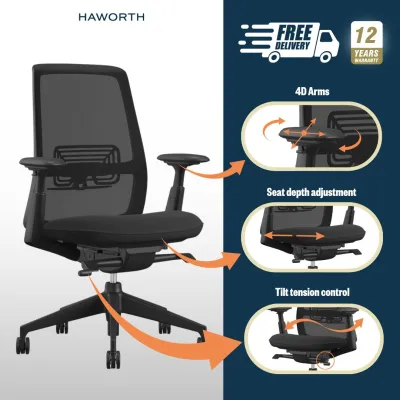
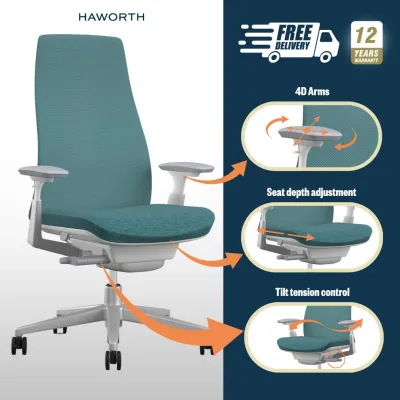
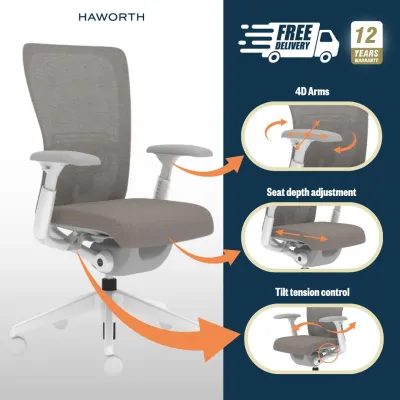
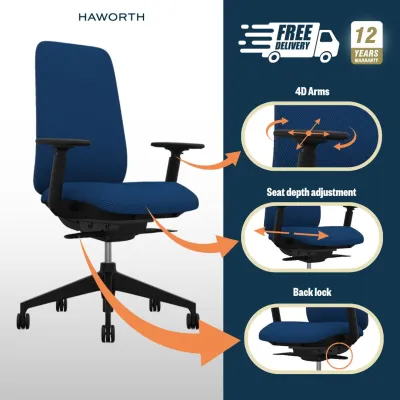
Prices are valid at publication and may change. Please refer to the product page for the latest price.
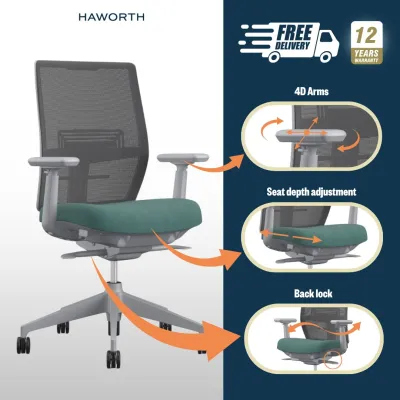
Armrest adjustability is another critical factor that directly influences neck and shoulder strain. You should verify the armrest dimensions and their range of movement, specifically checking if they offer height, width, depth, and pivot adjustments—commonly referred to as 4D armrests. Measure your typical typing posture and compare it to the armrest adjustment ranges. If the armrests cannot slide inward close enough to support your elbows while typing, or if they cannot lower sufficiently to clear your desk surface, you may find yourself slouching or tensing your shoulders. Compare these ranges to other high-end chairs, which may offer wider ranges of lateral movement or different padding materials.
The tilt mechanism determines how the chair moves with you as you shift positions throughout the day. Review the tilt mechanism type on the Soji, noting whether it utilizes a synchro-tilt system or a weight-activated tension control. A synchro-tilt mechanism allows the backrest to recline at a faster rate than the seat pan, keeping your feet flat on the floor and maintaining proper ergonomic angles at your hips and knees. Check the placement and ease of access of the tension control knobs and tilt limiters. Some premium competitors feature highly customizable tilt tension that allows you to fine-tune the resistance, while others use simplified, stepped tension controls.
Proper leg support is essential for maintaining healthy circulation and reducing pressure on your thighs. Confirm the availability and range of the seat depth adjustment on the Soji. A seat slider allows you to adjust the distance between the front edge of the seat cushion and the backrest. To check for a proper fit, you should be able to sit fully back against the lumbar support while maintaining a gap of approximately two to three fingers between the back of your knees and the front edge of the seat. If a chair lacks sufficient seat depth adjustment, taller users may experience inadequate thigh support, while shorter users may feel pressure behind their knees.
Material and Comfort Expectations in the Premium Tier
The choice of materials significantly impacts both the immediate comfort and the long-term maintenance of your office chair. When considering the Soji, compare the standard fabric upholstery options against the optional mesh backrest configurations. In Singapore’s warm and tropical climate, a highly breathable mesh backrest is highly advantageous, as it allows air to circulate freely and prevents heat buildup during long working hours. Conversely, a fully upholstered fabric backrest offers a more traditional, cushioned feel and a softer visual profile, but it may require more frequent cleaning to manage dust and perspiration.

Beyond the backrest, the design of the seat pan and the density of the cushion are pivotal for long-term comfort. Check the seat pan edge design; a waterfall or sloping front edge is ideal because it reduces pressure on the underside of your thighs and promotes healthy blood flow. You should also verify the cushion density. Premium chairs typically use high-density, molded polyurethane foam that retains its shape and supportive properties over years of daily use. Lower-quality foam cushions can flatten quickly, leading to discomfort and poor posture. Compare the Soji’s cushion specifications with those of other premium brands to ensure you are getting a seat that offers lasting support.
To ensure safety and structural integrity, always verify the stated weight capacity and seat width limits directly from the manufacturer’s official product label or specification sheet. Premium ergonomic chairs are engineered to accommodate a wide range of body types, but verifying these limits ensures a proper physical fit. If your body measurements are close to the upper limits of a chair’s specifications, the structural components, gas cylinder, and seat width may not provide the optimal level of comfort or stability.
Maintaining the appearance and performance of your chair requires adhering to specific care guidelines. Rather than assuming general material properties, rely strictly on the manufacturer’s care instructions for cleaning and maintenance routines. For instance, mesh backrests may require gentle vacuuming with a soft brush attachment, while fabric seats might need specialized upholstery cleaners. Using incorrect cleaning agents can degrade the fibers, weaken the mesh tension, or void the manufacturer’s warranty entirely.
Fitting the Chair into Your Home Office Layout
A premium chair must integrate seamlessly into your physical workspace. Before purchasing, measure your desk height and the under-desk clearance, comparing these figures against the chair’s maximum armrest height and overall base dimensions. If your home office features a desk with a drawer unit or a low keyboard tray, ensure the chair’s armrests can lower sufficiently to slide underneath. This allows you to sit close enough to your desk to maintain a healthy typing posture without leaning forward, and it helps save valuable floor space when the chair is not in use.
The type of flooring in your home office dictates the selection of appropriate casters. Standard hard casters are designed for carpeted floors, providing the necessary grip to prevent the chair from rolling too freely. However, if your workspace has hard flooring such as vinyl, laminate, engineered wood, or parquet, you must select soft casters. Soft casters are typically coated with polyurethane or rubber, which prevents surface scratches, scuffs, and excessive noise when moving. Using the wrong caster type can damage your flooring over time and compromise the chair’s stability.
Consider the visual footprint and backrest height of the chair relative to your room’s spatial constraints and aesthetic preferences. In many Singapore homes, study rooms or work corners are integrated into bedrooms or living areas. A massive, high-back executive chair can overwhelm a small room visually. The Haworth Soji features a relatively streamlined, mid-to-high back profile that offers a more balanced visual presence, making it easier to integrate into multi-purpose residential spaces without disrupting the home’s decor.
Finally, verify the total assembled dimensions of the chair to ensure it can navigate through standard doorways, narrow hallways, and lift doors during delivery. Many premium chairs are delivered fully assembled in large boxes. Checking these clearances beforehand prevents frustrating delivery-day issues, especially if you live in a high-rise apartment building with specific lift size limitations.
Evaluating Long-Term Value and Warranty Coverage
One of the primary justifications for investing in a premium ergonomic chair is the long-term warranty coverage. When comparing the Soji to other high-end brands, review the specific warranty terms for different components. It is common for manufacturers to offer split warranties: the structural frame and base may be covered for up to twelve years, while the gas cylinder, tilt mechanisms, armrests, and upholstery fabrics may have shorter coverage periods (such as three to five years). Understanding these distinctions helps you evaluate the true total cost of ownership.
To ensure your warranty is valid and that you have access to reliable after-sales support, always confirm that the seller is an authorized dealer in Singapore. Purchasing from unauthorized parallel importers or third-party online marketplaces might offer a lower upfront price, but it often voids the manufacturer’s warranty. Authorized dealers ensure that any replacement parts are genuine and that repairs are carried out by trained technicians, protecting your investment over the long run.
Compare the total cost of the chair in S$, ensuring you factor in all additional fees such as delivery charges, professional assembly fees, or costs for optional upgrades like specialized casters or adjustable lumbar support. Some retailers include delivery and assembly in the base price, while others charge these as separate line items. Comparing the fully loaded cost against the typical premium market bracket allows you to assess whether the Soji fits your budget while delivering the necessary ergonomic features.
Additionally, check for any specific exclusions in the warranty documentation. Some manufacturers differentiate between commercial and residential use, or have clauses that limit coverage if the chair is subjected to continuous multi-shift use. Reading the fine print ensures you understand the conditions under which the manufacturer will repair or replace components, preventing unexpected out-of-pocket expenses later.
Final Decision Matrix: Soji vs. Other High-End Options
To finalize your decision, use a conditional framework based on your specific work habits and physical requirements. Choose the Haworth Soji if its specific adjustment range, streamlined aesthetic profile, and material options align with your daily posture needs and home office decor. It is an excellent choice for users who want a high-quality, durable chair from a reputable brand without the complexity or higher price tag of ultra-premium models.
On the other hand, you should explore other premium alternatives if you require highly specialized features that are not standard on the Soji. For example, if you require an integrated, highly adjustable headrest for neck support during long video calls, or if you need advanced forward-tilt capabilities for active tasking, other high-end models may be more suitable. Additionally, if you require specific environmental or ergonomic certifications for corporate compliance, verify these details before purchasing.
Always stop and consult the manufacturer or a qualified ergonomic specialist if your body measurements, weight, or specific physical conditions fall outside the chair’s stated operational limits. Attempting to use a chair that does not physically accommodate your body can lead to discomfort, poor posture, or premature wear on the chair’s components.
Lastly, verify first if your primary work tasks require specialized seating features. If your daily routine involves a mix of computer work, sketching, and active collaboration, you may need a chair with highly dynamic movement options. By carefully matching your daily routine, physical dimensions, and workspace constraints to the chair’s specifications, you can confidently select the seating solution that offers the best long-term value for your home office.

Community discussion
Share your experience or ask a question. Comments are reviewed before publication.