
Quick Answer: Who Should Choose the Haworth Fern?
The fern haworth is an exceptional choice for home office workers who prioritize dynamic, organic back support that moves with their body rather than forcing them into a rigid posture. It is highly suited for individuals who prefer a softer, upholstered seat over a firm, highly suspended mesh surface. However, if your primary concern is maximizing airflow in Singapore’s humid tropical climate without air conditioning, or if you require a highly structured, lockable lumbar bracket that strictly enforces a single upright posture, other premium ergonomic chairs may serve you better. Ultimately, selecting the ideal chair requires matching your daily sitting habits, physical proportions, and home environment to the specific mechanical properties of the seat and backrest.
Back Support: How the Fern Haworth Compares to Traditional Mesh
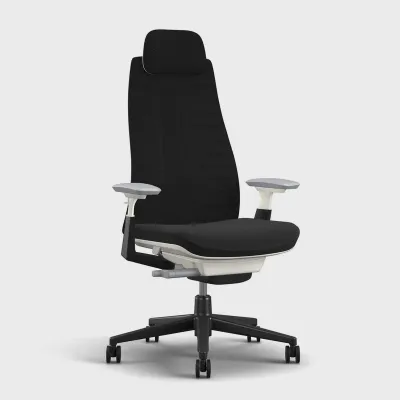
The backrest design of the fern haworth represents a significant departure from traditional ergonomic office seating. At the core of its design is a flexible “stem and frond” structure modeled after the leaf of a fern. The central plastic stem acts as a supportive spine, while the flexible fronds radiate outward to support the backrest membrane. This multi-layered construction allows the backrest to twist, bend, and react to your micro-movements as you shift from typing to reclining, providing continuous support without requiring manual adjustments. It mimics the natural movement of the human spine, offering a high degree of torsional flexibility that is rare in commercial seating.

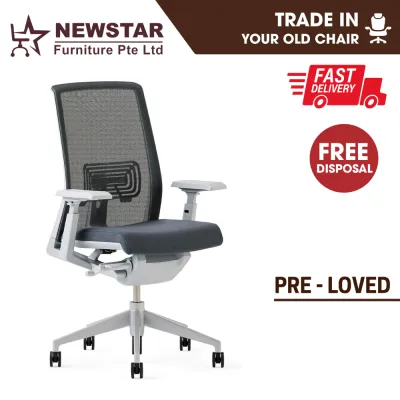
In contrast, legacy premium ergonomic chairs utilize a taut mesh backrest suspended within a rigid frame. Taut mesh relies on tension zones to cradle the body, offering a firmer, more uniform support profile. While this design is highly effective at keeping the spine in a disciplined, upright posture, it can feel restrictive to users who prefer to stretch, lean sideways, or shift their weight frequently throughout the day. Other premium models use a flexible plastic back shell that moves with the user but lacks the localized, multi-layered suspension of the Fern’s frond design. The choice between these two philosophies depends on whether you prefer a chair that moves with you or one that holds you in place.
Products mentioned in this guide
Prices are valid at publication and may change. Please refer to the product page for the latest price.
Evaluating your personal sitting habits is crucial when choosing between these styles. If you are an active sitter who shifts positions frequently, the responsive flexibility of the Fern’s backrest offers clear advantages. However, if you are a static sitter who requires a highly disciplined lumbar anchor to prevent slouching, you may prefer the firm, unyielding support of a traditional mesh backrest.
Before finalizing a purchase, it is highly recommended to verify the lumbar adjustment mechanism of the chair. The Fern offers an optional height-adjustable lumbar support pad that sits behind the mesh membrane. Because everyone’s spinal curve is unique, you should test how this lumbar pad aligns with your lower back; some users find it provides the perfect level of targeted support, while others find its pronounced shape too aggressive or prefer the standard backrest without the optional pad.
Adjustability and Fit: Matching Your Desk and Posture
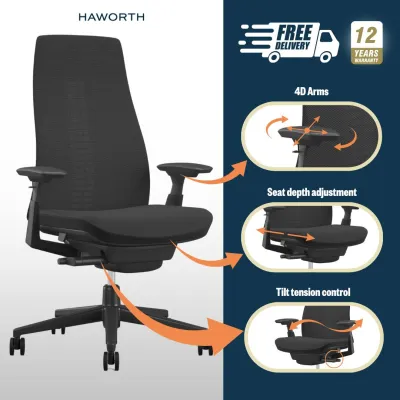
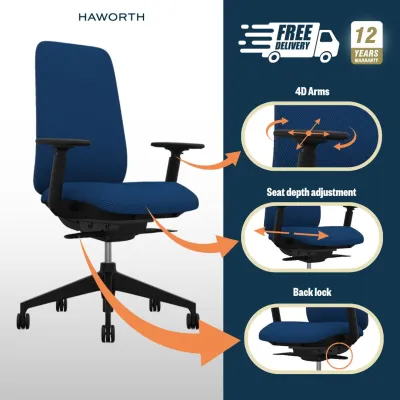
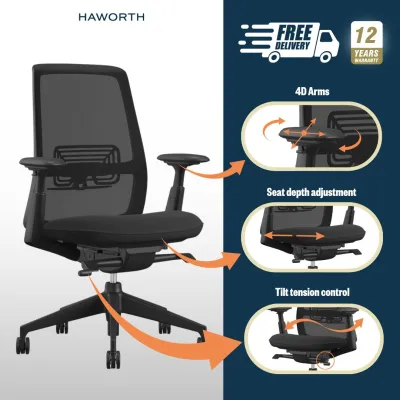
Premium ergonomic chairs are defined by their highly customizable contact points, which allow the chair to be tailored to your specific body proportions. The Fern features comprehensive adjustability options, including 4D armrests that adjust in height, width, depth, and angle, as well as seat depth adjustment and a multi-position tilt limiter. These features are designed to reduce strain on your shoulders, neck, and lower back by supporting natural, relaxed postures. The tilt tension control allows you to adjust the resistance of the backrest recline, ensuring that you can lean back smoothly without feeling like you are falling backward or having to push too hard against the frame.
In compact Singaporean home offices, such as those set up in HDB study corners or condominium bedrooms, spatial constraints are a major consideration. Before buying, measure your desk’s height and the thickness of the tabletop, including any under-desk drawers or support beams. You must verify that the chair’s armrests can be lowered sufficiently to slide underneath the desk when not in use, saving valuable floor space and allowing you to sit close enough to your keyboard without reaching forward. Additionally, consider the overall footprint of the base; the five-star base of premium chairs is often wider than budget office chairs to ensure stability, which can be a tight fit in narrow desk alcoves.
Seat depth adjustment is another critical feature that directly impacts lower body circulation. Proper seat depth ensures your thighs are fully supported without putting pressure on the back of your knees. When sitting with your lower back fully flush against the backrest, check that there is a gap of approximately two to three fingers (about 3 to 5 cm) between the edge of the seat pan and the back of your knees. This gap prevents the seat from compressing the popliteal veins, maintaining healthy blood circulation during long working sessions.
Always consult the manufacturer’s official specification sheets to verify the minimum and maximum seat heights. If you are exceptionally tall or short, standard gas cylinders may not allow your feet to rest flat on the floor while maintaining a 90-degree angle at the knees. In such cases, you may need to request a low-range or high-range cylinder variant from the distributor to ensure a proper ergonomic fit.
Materials, Durability, and Home Office Aesthetics
The aesthetic design of your workspace plays a significant role in mental focus and home integration. Unlike the stark, industrial look of traditional corporate chairs dominated by exposed plastics and heavy metal frames, the Fern offers a softer, more organic silhouette. Its fabric-wrapped backrest and upholstered seat cushion tend to blend more naturally with modern home decor, residential textiles, and warm wood finishes. The backrest is available in either a standard mesh or a premium digital knit material, which offers a thicker, more textured feel that closely resembles high-end residential upholstery.
However, this aesthetic choice introduces practical trade-offs, particularly in Singapore’s hot and humid climate. Upholstered foam seats provide immediate plush comfort and pressure distribution, but they naturally retain more body heat and moisture than open-mesh designs. If you work in a non-air-conditioned room, a fully mesh chair will offer superior passive cooling. If you run your air conditioner regularly, the Fern’s fabric and foam construction will feel cozy and comfortable without causing excessive perspiration.
Durability and safety require verifying the chair’s structural limits before purchase. Check the product label or the manufacturer’s official documentation to confirm the maximum weight capacity and recommended user height range. High-end chairs are engineered for stability, but exceeding these limits can accelerate wear on the gas cylinder and compromise the structural integrity of the base.
Additionally, pay close attention to the caster specifications. Standard hard nylon casters are designed for low-pile carpets and can scratch or gouge delicate home flooring such as vinyl, laminate, or parquet. For Singaporean homes with hard flooring, ensure the chair is configured with soft polyurethane (PU) casters, which provide smooth, quiet movement without damaging the surface finish.
Decision Framework: Fern vs. Other Premium Chairs
To guide your final choice, consider the following structured decision framework based on your physical preferences, home workspace environment, and daily usage patterns.
Choose the Haworth Fern if:
- Dynamic Movement: You prefer a highly flexible, responsive backrest that twists and bends with your upper body during micro-movements rather than locking you in a rigid posture.
- Cushioned Seating: You prefer a seat cushion with traditional foam padding and fabric upholstery rather than suspended mesh.
- Residential Look: You want an organic, softer aesthetic that integrates seamlessly with your home interior design and residential furniture.
Choose Alternatives if:
- Maximum Airflow: You work primarily in a naturally ventilated, hot room and require the absolute maximum airflow provided by a full-mesh seat and backrest.
- Rigid Lumbar Support: You require rigid, highly disciplined posture enforcement with a locking lumbar mechanism to manage specific orthopedic conditions.
- Higher Load Capacity: Your body weight or physical proportions exceed the standard limits specified in the Fern's user manual, requiring a heavy-duty bariatric or specialized tall chair.
Verify first if:
- Spatial Clearances: Your home office desk has low clearance or under-desk drawers that might block the 4D armrests from sliding underneath.
- Shared Workspace: The chair will be shared among family members of vastly different heights; in this scenario, check how easily the seat depth, lumbar height, and tension controls can be adjusted and reset.
- Delivery Path: Your doorway, hallway, or lift access can accommodate the shipping box, as premium chairs often ship fully or mostly assembled in large, heavy packaging.
Assessing Value, Warranties, and Long-Term Use
Investing in a premium ergonomic chair involves a significant upfront financial commitment, often exceeding S$1,000. To assess the true value of this purchase, look beyond the initial price tag and evaluate the long-term cost-of-ownership, which is heavily dictated by the manufacturer’s warranty coverage. Commercial-grade chairs from established manufacturers are built to withstand 24/7 multi-shift usage, meaning their durability in a home office environment is exceptionally high compared to budget alternatives.
When reviewing the warranty terms, read the fine print carefully. Premium manufacturers often advertise a 12-year warranty, but this coverage may be tiered. While the structural frame and metal base might be covered for the full duration, moving parts like the gas cylinder, armrest mechanisms, and fabric upholstery may have shorter warranty windows (such as 3 to 5 years). Understanding these distinctions prevents unexpected out-of-pocket expenses later.
To ensure your warranty is fully enforceable, purchase exclusively from authorized distributors in Singapore. Buying parallel imports or sourcing from unauthorized online marketplaces may void your warranty and leave you without recourse if a component fails. Authorized local dealers also provide the assurance of local servicing, meaning technicians can visit your home to replace parts or repair mechanisms without requiring you to ship a heavy chair overseas.
Furthermore, local showrooms allow you to test the chair in person. Because ergonomic comfort is highly subjective and depends on individual spinal curvature and thigh length, a physical trial is the single most reliable way to confirm if the Fern’s unique backrest and seat dimensions are a true match for your body.
Frequently Asked Questions (FAQ)
Does the Haworth Fern require assembly, and is it difficult?
The assembly requirements for the Fern depend on how it is purchased. When ordered through authorized local distributors in Singapore, the chair is typically delivered fully assembled and ready for immediate use. If you receive a model that requires partial assembly, it usually involves inserting the gas cylinder into the five-star base and securing the seat and backrest assembly. Because the seat mechanism and base are constructed from heavy-duty metals, the components can be heavy. It is highly recommended to have a second person assist you with lifting and aligning the parts to prevent personal injury or accidental damage to the gas cylinder and floor. Always check the box dimensions and weight before delivery to ensure it can clear your apartment lift, front door, and narrow hallways.
How do I clean and maintain the Fern's fabric seat and back?
Maintaining the cleanliness of your upholstered chair is essential for preserving both its appearance and longevity. For routine maintenance, vacuum the fabric seat and backrest weekly using a soft upholstery brush attachment to remove dust and debris. If a spill occurs, blot the area immediately with a clean, dry cloth; do not rub, as this can push the liquid deeper into the foam fibers. For spot cleaning, use a mild, water-based upholstery cleaner. Always perform a patch test on a small, hidden area on the underside of the seat first to verify that the cleaner does not cause discoloration or fabric degradation. Avoid using bleach, harsh chemical solvents, steam cleaners, or excessive water, as saturating the foam can lead to mold growth and compromise the structural integrity of the cushioning. Always refer to the manufacturer’s care label attached to the underside of the seat for specific cleaning codes. If instructions conflict, or if the material is unidentified, stop and consult the manufacturer or a qualified professional.

Community discussion
Share your experience or ask a question. Comments are reviewed before publication.