
Selecting a premium office chair for a home office in Singapore involves balancing ergonomic philosophy, spatial constraints, and long-term value. While traditional premium office chairs focus on supporting the body in a recommended, relatively static posture, HAG chairs center on the concept of active sitting, encouraging continuous, micro-movements throughout the workday. This fundamental difference in design philosophy dictates how a chair feels, how much space it occupies in a typical HDB or condominium study, and how it performs over years of daily use. Understanding these distinctions allows you to make an informed investment that aligns with your physical needs and home environment.
Setting the Baseline: HAG vs. Premium Ergonomic Standards
Premium ergonomic seating generally falls into two distinct design camps: dynamic movement and static support. Traditional premium brands typically design chairs that act as highly adjustable cradles, using complex tension systems, adjustable lumbar pads, and locked tilt angles to keep your spine in a recommended alignment. The goal is to minimize pressure points while you remain relatively still. In contrast, HAG’s design philosophy assumes that the human body is not meant to sit still for hours. Their chairs utilize mechanisms that encourage your feet to move, which in turn prompts subtle, continuous adjustments in your pelvis and spine, keeping your core active and improving circulation.
When evaluating these chairs for a residential setting, several practical factors come into play that differ from a commercial office. The spatial footprint of the chair is critical, especially in compact apartments where a dedicated study room might double as a guest bedroom or a living room corner. A massive, high-backed executive chair can visually overwhelm a small room and physically restrict movement. Additionally, the noise generated by the chair’s mechanisms and casters during movement must be minimal to avoid disturbing other household members, particularly during late-night work sessions.
Products mentioned in this guide
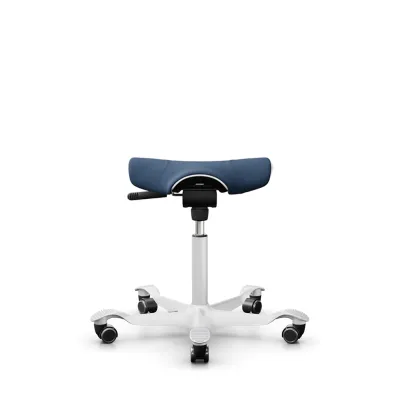
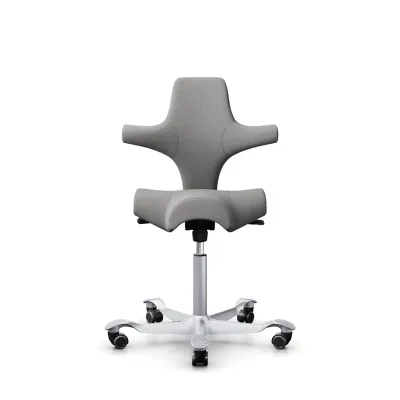
Prices are valid at publication and may change. Please refer to the product page for the latest price.
The floor compatibility of the chair’s base is another essential consideration. Home flooring materials like vinyl wrap, engineered timber, parquet, or polished porcelain tiles require specific caster types to prevent scratching or excessive slipping. Most premium manufacturers offer options for hard or soft floors, which you must verify before purchase.
Investing in this category typically requires a budget starting from S$1,000 and can easily exceed S$2,500 depending on the model and customization. At this price tier, buyers should expect exceptional build quality, including heavy-duty cast aluminum bases, high-density molded foams, and sophisticated tension mechanisms that operate smoothly without squeaking. The complexity of these mechanisms means you are paying for engineering that supports your body weight dynamically, rather than simple manual levers found on entry-level task chairs.
Comparing Ergonomics: Active Movement vs. Static Support
The core differentiator between HAG and traditional premium alternatives lies in the tilt mechanism. HAG chairs frequently employ a balanced movement mechanism, which places the pivot point directly under your feet rather than further back under the seat. This design allows you to tilt forward or backward naturally by simply shifting your body weight, encouraging your ankles to move and stimulating lower leg circulation. Traditional premium chairs, on the other hand, often use synchro-tilt or multi-lock systems where the backrest reclines at a faster rate than the seat pan, allowing you to stretch back while keeping your feet flat, but generally encouraging a more static reclined posture once you find a comfortable angle.

To determine which system suits your working style, you must verify several key adjustments on the product specification sheet. Look for adjustable seat depth, which ensures your thighs are fully supported without the front edge of the seat pressing into the back of your knees. Armrests with four-dimensional (4D) adjustability—allowing you to change the height, width, angle, and depth—are crucial for supporting your elbows and reducing strain on your shoulders and neck, especially when switching between typing and reading.
Tension control is another vital feature to check. A premium chair should allow you to adjust the resistance of the recline mechanism to match your body weight precisely. If the tension is too loose, you will feel like you are falling backward; if it is too tight, you will struggle to recline at all. When testing a chair, pay close attention to how much effort is required to maintain an upright posture while typing, as well as how securely the chair supports your lower back when you lean back to take a call.
It is important to note that ergonomic comfort is highly subjective and cannot be guaranteed by material names or marketing claims alone. A chair that features advanced polymer components or proprietary mesh zones may still feel uncomfortable if its frame shape does not align with your spinal curvature. Therefore, physically testing the chair’s adjustment ranges and mechanism responsiveness is highly recommended before committing to a purchase.
Materials, Aesthetics, and Home Office Compatibility
The choice of upholstery material directly impacts both the comfort and the maintenance requirements of your chair, particularly in Singapore’s warm and humid climate. Mesh upholstery is highly popular for its breathability, allowing air to circulate and keeping you cool without relying constantly on air conditioning. However, high-quality fabrics and premium leathers offer a more cushioned, traditional feel that some users prefer. When selecting fabric or leather, you must check the manufacturer’s care instructions to ensure the material can withstand humidity and sweat without degrading, staining, or developing odors over time.
The visual footprint of the chair is heavily influenced by its design language. HAG chairs often feature minimalist, Scandinavian aesthetics with slim profiles and unique shapes, such as saddle-inspired seats, which can blend seamlessly into modern home decors without looking like clinical office furniture. Traditional premium chairs often have a more industrial or corporate appearance, featuring large mesh backs and prominent external frames that can dominate a residential space visually.
You must also assess the base design and caster compatibility with your home flooring. Standard nylon casters designed for carpets can scratch hardwood or vinyl flooring over time. Ensure the chair you select is configured with soft polyurethane casters if you have hard flooring. Additionally, verify the finished dimensions of the chair’s base; a wider base provides excellent stability but may struggle to fit between the legs of a compact home desk.
Before finalizing your choice, verify the maximum weight capacity and structural limits directly from the official manufacturer specifications. Do not rely on generic retail descriptions, as weight limits can vary based on the specific cylinder height or base material chosen. Furthermore, check the assembly requirements; some premium chairs are delivered fully assembled in large boxes, which requires clear doorway and lift access, while others require partial assembly that may necessitate specific tools or professional assistance.
Evaluating True Value: Warranties and Long-Term Ownership
When spending over S$1,000 on a home office chair, evaluating the warranty terms is essential to understanding the true cost of ownership. A long warranty period is a strong indicator of structural durability, but you must read the fine print to understand what is actually covered. Premium brands often offer warranties ranging from 5 to 10 years, or even longer, but these terms are frequently tiered. For example, the structural frame and mechanical components might be covered for a decade, while the gas cylinder, armrest pads, and upholstery fabrics may only be covered for three to five years.
It is crucial to check the policies of the authorized local dealer in Singapore. Purchasing from an authorized dealer ensures that you have access to local after-sales support, which is vital if a component fails. Verify whether the dealer provides on-site repair services or if you are required to transport the heavy chair to a service center yourself. Additionally, inquire about the availability of replacement parts; premium chairs are designed to last, and being able to purchase a replacement seat cushion or new casters years down the road can significantly extend the lifespan of your investment.
Be sure to check for any clauses regarding commercial versus residential use in the warranty document. Some manufacturers reduce the warranty period if the chair is used in a commercial setting, while others have specific requirements for home use. Understanding these terms prevents unexpected out-of-pocket expenses if you need to make a claim.
While the upfront cost of a premium chair is high, the long-term durability often results in a lower cost per year compared to budget office chairs that require replacement every two to three years. A well-constructed chair with a robust warranty provides peace of mind and consistent ergonomic support, making it a highly cost-effective choice for those who work from home permanently.
Decision Framework: Choosing the Right Premium Chair
To help you decide between HAG and other premium office chair brands, consider the following decision framework based on your physical needs, working habits, and home environment.
Choose a HAG chair if you prefer dynamic, active sitting and find yourself getting stiff or restless when sitting still for long periods. These chairs are ideal if you want to encourage continuous movement, frequently change your posture throughout the day, or enjoy sitting in non-traditional positions, such as sideways or backward. Their compact, minimalist design also makes them highly suitable for smaller home offices where a bulky chair would be impractical.
Choose traditional premium alternatives if you require strict, locked-in lumbar support and highly customizable static ergonomics. If you have specific spinal conditions that require your back to be supported at a precise, unchanging angle, or if you prefer a traditional, highly cushioned recline mechanism that lets you lock the chair into a specific tilted position for long hours of focused desk work, traditional premium brands are likely a better fit.
Before making any purchase, verify first if your home office desk has sufficient clearance for the chair’s armrests and base. Measure your doorway and lift dimensions to ensure the delivery of fully assembled models is possible. Additionally, check your flooring type to ensure you select the correct casters, and confirm whether the retailer provides professional assembly services upon delivery.
Neither option may fit if your budget does not align with the premium tier, as these chairs represent a significant financial investment. If you only use your home desk occasionally for short periods, or if your primary tasks involve hands-on, non-desk work where a specialized task stool or drafting chair is required, a premium ergonomic office chair may not provide sufficient value to justify the cost.
Frequently Asked Questions (FAQ)
Are HAG chairs suitable for small home office spaces?
Yes, many HAG models are well-suited for compact home offices due to their slim profiles and smaller base diameters compared to traditional, bulky executive chairs. However, you must measure your available desk clearance and check the chair’s maximum base diameter before purchasing. Because active sitting mechanisms encourage movement, ensure you have sufficient physical space behind and beside your desk to prevent the chair from colliding with walls, bookshelves, or other furniture when you tilt or rotate.
How do I verify the authenticity and warranty of a premium chair?
To ensure your chair is genuine and covered by a valid manufacturer warranty, purchase exclusively from authorized local dealers or official brand stores in Singapore. Upon delivery, inspect the underside of the seat pan for the manufacturer’s label, which should display the model number, production date, and a unique serial number. Register this serial number on the official manufacturer or local distributor website immediately to activate your warranty and secure access to future after-sales support and replacement parts.

Community discussion
Share your experience or ask a question. Comments are reviewed before publication.