
When deciding how to organize your wardrobe, display your daily outfits, or dry your laundry, choosing between a freestanding clothes rack stand and a wall-mounted alternative is a pivotal decision. The ideal choice for your home depends on a combination of your available floor space, the structural composition of your walls, your daily usage habits, and your home ownership status.
If you are renting your home, need the flexibility to move your storage around, or live in a space with walls that cannot be drilled (such as partition walls or strict tenancy agreements), a freestanding clothes rack stand is the ideal solution. It offers immediate utility with zero permanent modifications to the property.
Conversely, if you own your home, have highly constrained floor areas, or want to keep your floors completely clear to make cleaning easier, a wall-mounted rack is the superior choice. This configuration leverages vertical wall space but requires secure anchoring into solid masonry or structural studs to ensure safety and stability.
Products mentioned in this guide



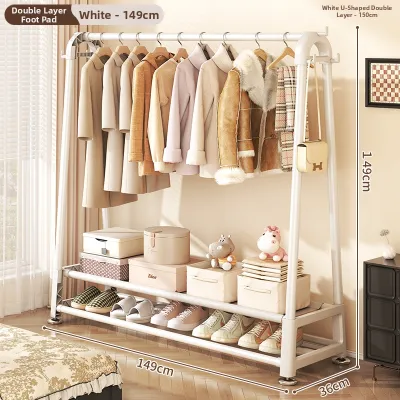



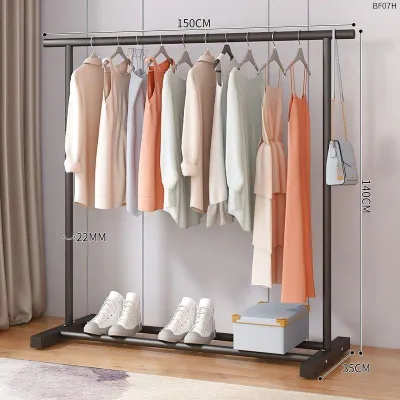
Prices are valid at publication and may change. Please refer to the product page for the latest price.
Space and Layout: Floor Footprint vs Wall Clearance
To optimize your room layout, you must evaluate how each rack type consumes physical space and affects the flow of daily movement. A freestanding clothes rack stand requires dedicated floor area, which directly impacts the usable square footage of a room. When planning for a freestanding unit, you must measure not just the base dimensions of the frame, but also the clearance needed for the hanging garments themselves. Clothes on standard hangers typically protrude about 50 to 60 centimetres in width, meaning a rack placed in a narrow corridor or bedroom walkway can quickly block pathways if you do not account for this extra depth.
However, this floor-bound nature can be utilized strategically in larger or open-concept rooms. In studio apartments or spacious bedrooms, a well-placed freestanding rack can serve as a functional room divider. It can separate a sleeping area from a study nook or entryway while keeping your daily wardrobe accessible from both sides. This dual-purpose utility makes the freestanding option highly versatile for dynamic spaces where layouts are not fixed.
Wall-mounted racks, on the other hand, bypass the floor entirely, making them excellent space-saving options for compact living areas. By utilizing vertical “dead space,” these racks can be installed above low furniture like desks, behind doors, or along narrow hallways where floor space is non-existent. This keeps the ground area completely open, which visually expands the room and makes daily floor cleaning, vacuuming, or running a robotic vacuum entirely hassle-free.
The trade-off with wall-mounted options is the requirement for permanent wall clearance. You must ensure that the selected wall space is entirely unobstructed by light switches, wall sockets, artwork, or adjacent door swings. Additionally, you need to consider the vertical drop; long dresses, coats, or trousers require sufficient height from the floor or any furniture situated directly beneath the rack. Before making a purchase, take a measuring tape and map out both your floor and wall zones. Mark the potential footprint of a freestanding unit on your floor using masking tape, or hold a hanger against your wall to visualize how far a wall-mounted option will extend into your living space.
Installation and Housing Rules: Drilling vs Plug-and-Play
Your choice of clothes rack is often dictated by your housing type, structural constraints, and tenancy agreements. For renters, drilling holes into walls to mount heavy-duty fixtures is frequently prohibited or requires written landlord approval. In these scenarios, a freestanding clothes rack stand is the default choice. These units offer a “plug-and-play” experience, requiring only basic assembly with hex keys or simple snap-together joints. Once assembled, they can be placed immediately in any room without affecting the property’s structural integrity, ensuring you can take the investment with you when you eventually move.

Wall-mounted racks demand a much more intensive installation process. Securing a rack safely requires a power drill, a spirit level, wall plugs (anchors), and screws that are appropriate for your specific wall material. In Singapore, housing types like Housing & Development Board (HDB) flats and private condominiums present unique structural challenges. Most HDB flats feature solid concrete walls or precast panels, which are highly durable but require a masonry drill bit and heavy-duty wall plugs to penetrate.
Conversely, some modern apartments use drywall or plasterboard partition walls for internal room divisions. Attempting to mount a heavy clothes rack onto drywall without locating the wooden or metal studs behind it can lead to catastrophic wall damage and structural failure. If you must mount onto drywall, you must use specialized hollow-wall anchors or toggle bolts, which distribute the weight across a wider surface area behind the board.
Additionally, you must exercise extreme caution to avoid drilling into hidden utility lines. Always consult your home’s layout plans or use a stud finder with live-wire and pipe detection before drilling into any wall surface to prevent electrical hazards or water pipe punctures. If you live in a rented property, review your tenancy agreement carefully. Even minor wall repairs and patching holes upon moving out can incur deductions from your security deposit, making the non-invasive freestanding rack the safer financial option.
Weight Capacity and Stability: Checking the Limits
Evaluating how much weight your rack can safely support is crucial to preventing accidents and protecting your garments. The structural stability of a freestanding clothes rack stand relies entirely on its physical design and base engineering. When choosing a freestanding model, look closely at the base configuration. Racks with a wide, low-slung footprint, double-bar bases, or integrated bottom shelves generally offer superior stability against tipping over when loaded with heavy garments.
Be cautious of tall, narrow single-pole stands, such as traditional coat trees, as they can easily become top-heavy and unstable if weight is distributed unevenly. Always check the manufacturer’s product label for the maximum weight limit and distribute your items symmetrically across the hanging rail. If you have pets or young children, a freestanding rack must be chosen with extra care; ensure the base is heavy enough to resist accidental bumps, or opt for a model that can be positioned flush against a wall.
For wall-mounted racks, the ultimate weight capacity is not just determined by the metal frame itself, but primarily by the strength of your wall and the quality of the mounting anchors. A rack rated for a heavy load by the manufacturer can easily pull out of the wall if installed incorrectly or mounted on weak partition board. When a wall-mounted rack is loaded, gravity pulls the top of the bracket away from the wall, creating a pulling force (tension) on the upper screws.
To ensure safety, match your mounting hardware to the wall type. Solid concrete walls paired with expansion anchors offer the highest weight capacity, whereas drywall installations require specialized toggle bolts or anchor screws that spread the load behind the plasterboard. Always factor in the weight of your specific wardrobe. Wet laundry, heavy denim, and structured jackets weigh significantly more than light summer shirts, so calculate your daily usage needs conservatively and stay well within the recommended safety limits of both the product and your wall.
Flexibility and Daily Use: Mobility and Adjustability
The daily user experience of managing your clothes depends heavily on how adaptable your rack is to your changing lifestyle. A freestanding clothes rack stand offers unmatched mobility, allowing you to reposition your wardrobe layout whenever you please. Many freestanding models feature heavy-duty caster wheels, enabling you to roll the entire unit from your bedroom to a sunny balcony or service yard for drying clothes, and back inside when rain threatens. This mobility is highly practical for managing laundry in humid tropical climates where weather conditions can change rapidly.
Furthermore, freestanding designs often incorporate adjustable features. You can find models with telescopic hanging rails that expand horizontally to accommodate a growing wardrobe, or vertical poles that adjust in height to accommodate long dresses, trench coats, or shorter children’s clothing. Some designs also feature foldable frames, allowing you to collapse the entire rack flat and store it under a bed or in a closet when it is not in use.
Wall-mounted racks are permanent fixtures once installed, meaning you cannot easily reconfigure your room layout on a whim. Moving the rack requires unmounting, patching unsightly drill holes, repainting, and drilling new holes in a different location. This static nature means you must be entirely certain of your room’s layout before committing to an installation spot.
To compensate for this lack of mobility, many wall-mounted racks feature innovative space-saving mechanisms. Look for designs with foldable arms, pull-down laundry rails, or retractable hooks that lie flat against the wall when empty, keeping your walkways clear. These features are particularly useful in tight entryways, narrow laundry alcoves, or small balconies where a permanent projection would block movement when the rack is empty.
Freestanding vs Wall-Mounted: Feature Comparison
| Feature | Freestanding Clothes Rack Stand | Wall-Mounted Rack |
|---|---|---|
| Floor Space Required | Significant floor footprint; requires base clearance | None; leaves the floor completely clear |
| Wall Space Required | Minimal; can stand away from walls or in open space | High; requires a clear, flat wall surface |
| Installation Effort | Low; simple assembly with no drilling required | High; requires drilling, wall anchors, and tools |
| Mobility | High; can be moved between rooms or rolled on casters | None; fixed permanently to one location |
| Weight Capacity | Dependent on base width and frame material | Dependent on wall material and anchor quality |
| Ideal User Profile | Renters, families needing mobile drying, flexible spaces | Homeowners, small-space dwellers, permanent setups |
Final Verdict: Choosing the Right Setup for Your Home
To make your final decision, systematically evaluate your current living situation, your DIY capabilities, and your long-term housing plans.
Choose a freestanding clothes rack stand if:
- You rent your apartment: It avoids potential disputes with landlords over wall damage and ensures you can take the rack with you when you relocate.
- You need mobility: You want to roll your clothes to different rooms, move them closer to windows for drying, or rearrange your room layout frequently.
- You prefer a zero-drill setup: You lack the tools, time, or confidence to drill into solid concrete or locate studs in drywall.
- You have flexible space: You want to use the rack as a temporary room divider or seasonal storage solution that can be folded away.
Choose a wall-mounted rack if:
- You own your home: You can make permanent modifications without worrying about tenancy agreements or lease reinstatement clauses.
- Floor space is extremely limited: You need to keep high-traffic walkways clear, or you live in a compact apartment where every square centimetre of floor counts.
- You want a minimalist aesthetic: You prefer clean lines, elevated storage, and keeping your floors completely clear for easy cleaning and maintenance.
- You have solid walls: Your home features sturdy concrete or brick walls that can easily support heavy loads when paired with the correct masonry anchors.
Before purchasing any unit, always verify your wall material, consult your landlord’s alteration policies if renting, and estimate the total weight of the items you intend to hang. If you are uncertain about drilling safety, structural integrity, or identifying hidden utility lines, consult a professional handyman or your building’s property management office to ensure a safe and secure installation.
Frequently Asked Questions (FAQ)
Can I use a freestanding clothes rack for wet laundry?
Yes, you can use a freestanding clothes rack stand for wet laundry, but you must carefully check the manufacturer’s material specifications first. To prevent rust and corrosion in humid indoor environments, look for racks constructed from powder-coated steel, high-grade stainless steel, or treated aluminum. Avoid untreated metals or raw wood, which can warp, split, or stain your clothes when exposed to moisture. Additionally, ensure the rack’s base is highly stable to handle the extra weight of wet, water-heavy fabrics, and place a waterproof drip tray or floor mat underneath to protect your flooring from moisture damage.
Do adhesive wall-mounted clothes racks work on all walls?
No, adhesive or suction-based wall-mounted racks do not work reliably on all wall surfaces and have severe weight limitations. These drill-free alternatives are generally designed only for very light items, such as single hand towels or empty plastic hangers, rather than full wardrobes. Adhesive backings can fail unexpectedly on textured, painted, dusty, or porous surfaces like concrete, plaster, or wallpaper, leading to falling racks and potential damage. Furthermore, removing strong adhesives can tear away paint or plaster, so drilling with proper wall plugs remains the only secure method for hanging heavier garments.

Community discussion
Share your experience or ask a question. Comments are reviewed before publication.