
Deciding between a folding and a fixed-frame 5-tier storage drawer for your HDB flat comes down to balancing space flexibility against structural rigidity. Singapore homes often require highly efficient layouts, where every square meter must be utilized effectively. While folding models offer excellent adaptability for multi-purpose rooms and temporary setups, fixed-frame units provide the robust stability needed for heavy, long-term storage. By evaluating your specific storage needs, room layouts, and future relocation plans, you can select the unit that best optimizes your living space.
Structural Design and Space Flexibility in HDB Flats
The physical construction of your storage unit directly influences how well it integrates into your HDB flat’s layout. Fixed-frame 5-tier storage drawers are built with a permanent, rigid skeleton. Once assembled, this frame maintains a constant footprint, meaning it will occupy the exact same volume of space in your bedroom, study, or household shelter regardless of whether it is fully packed or completely empty. This permanent footprint is ideal for dedicated storage zones where the room layout is unlikely to change, such as a master bedroom wardrobe alcove or a designated utility corner.
In contrast, folding 5-tier storage drawers are designed with collapsible hinges and pivoting joints that allow the entire frame to fold flat when not in use. This collapsible nature is highly advantageous for managing space in multi-purpose HDB rooms. For instance, if a spare bedroom serves as a home office during the week and a guest room over the weekend, a folding drawer unit can be quickly collapsed and tucked away under a bed or behind a door to reclaim floor space. This flexibility is also beneficial in service yards or bomb shelters, where storage needs can fluctuate seasonally.
Products mentioned in this guide
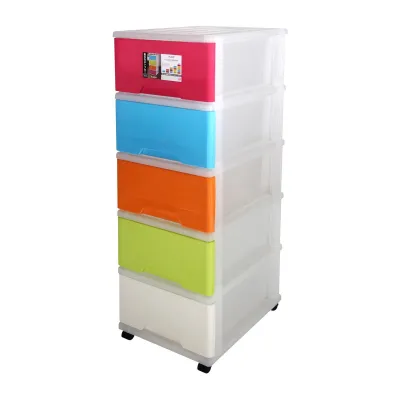
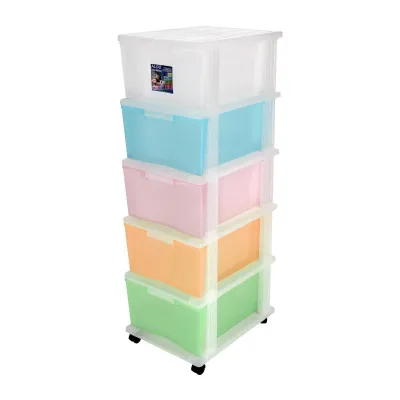
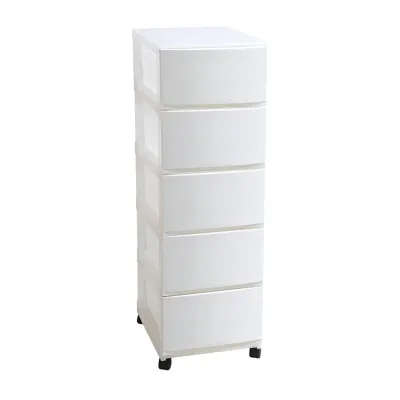
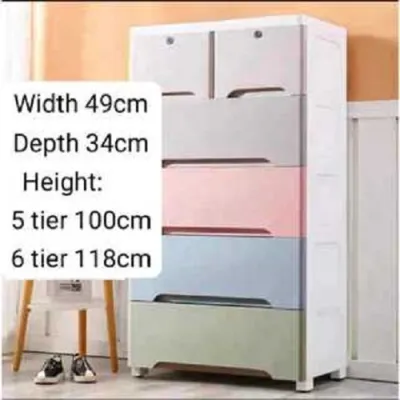
![[4/5 Tier] UNI-WARE White & Colorful Drawer Cabinet / home organizer stocker container storage boxes / Made in Thailand](https://img.lazcdn.com/g/p/5d6001d63a56c3eb16fdc1206bc4c4a7.jpg_400x400q80.jpg_.webp)
Prices are valid at publication and may change. Please refer to the product page for the latest price.
However, the mechanism that enables folding can introduce design trade-offs regarding internal storage volume. The hinges, side braces, and folding joints of collapsible models often protrude slightly into the interior space of the frame. This can reduce the usable internal width, depth, or vertical clearance of each tier compared to a fixed-frame unit with identical external dimensions. When planning to store specific items, such as standard-sized plastic organizers or specific document files, it is essential to check the internal drawer dimensions rather than relying solely on the external frame measurements.
Load Capacity and Stability Verification
Ensuring your 5-tier storage drawer can safely support your belongings requires a careful look at manufacturer specifications and physical build quality. Because a 5-tier unit is relatively tall, verifying load capacity is crucial to prevent structural failure or tipping hazards. Before purchasing, locate and read the maximum load capacity labels provided by the manufacturer. These specifications should detail both the overall weight limit for the entire unit and the individual weight capacity for each tier.

To verify the physical stability of a storage drawer, inspect the joint connections, cross-bracing, and base feet. Fixed-frame models typically rely on solid joints secured by screws, dowels, or heavy-duty interlocking panels. Look for units that feature diagonal cross-bracing or solid back panels, as these design elements significantly reduce lateral sway. The base feet should be wide and robust to distribute weight evenly across your flooring, whether you have vinyl, tiles, or parquet.
Folding models require a different inspection approach because their stability depends on the integrity of their moving parts. Examine the hinge mechanisms and locking pins to ensure they are made of durable materials and lock tightly into place when the unit is fully extended. Overloading a folding unit carries the risk of warping or buckling the folding joints, which can cause the entire frame to collapse.
Regardless of the design you choose, a tall 5-tier drawer has a high center of gravity. To maintain stability, always place the heaviest items in the bottom drawers and lighter items in the upper tiers. If you have young children or pets, or if you are placing the unit on a slightly uneven surface, check if the manufacturer provides wall-anchoring hardware. Anchoring the unit to your HDB wall is the most reliable way to eliminate tip-over risks.
Assembly, Maintenance, and Relocation Effort
The practical effort required to set up, maintain, and move your storage unit can vary significantly between folding and fixed-frame designs. Folding 5-tier drawers are highly favored for their tool-free or minimal-tool setup. Most folding models arrive pre-assembled in a collapsed state; you simply unfold the main frame, lock the side panels or hinges into place, and slide the drawers into their tracks. This straightforward process can typically be completed in a few minutes without any technical expertise.
Fixed-frame drawers, on the other hand, usually require a multi-step assembly process. These units are delivered flat-packed, requiring you to follow detailed instruction manuals to connect the base, side panels, top board, and individual drawer runners. Assembly often requires basic household tools like screwdrivers or hex keys. While this process takes more time and patience, the resulting tight, screwed connections contribute directly to the unit’s long-term structural rigidity.
Routine maintenance is necessary for both types to ensure safe operation over time. For fixed-frame units, periodic checks should include tightening any screws or bolts that may have loosened due to the repetitive physical force of pulling the drawers open and shutting them. For folding models, maintenance involves inspecting the hinges, pivot points, and locking mechanisms for signs of wear, alignment issues, or accumulated dust and debris that could hinder smooth folding.
When it comes to relocation or room renovation, the differences become even more pronounced. Moving a fully assembled fixed-frame unit through tight HDB corridors, doorways, or passenger lifts can be awkward and may risk scratching your walls or the furniture itself. Disassembling a fixed frame for a move is possible, but repeated disassembly and reassembly cycles can strip screw holes and weaken the joints. Folding models excel in this scenario; they can be collapsed back down to a flat profile in minutes, making them incredibly easy to transport in a standard car boot or passenger lift without compromising their structural integrity.
Decision Framework: Choosing the Right 5-Tier Drawer
To finalize your decision, evaluate your living situation and storage requirements against this practical framework:
- Choose a folding 5-tier drawer if: You reside in a rented HDB flat, anticipate moving homes in the near future, or need highly adaptable storage for a multi-purpose room. This option is ideal if you prefer a quick, tool-free setup and want the ability to collapse the unit and reclaim floor space whenever your storage needs decrease.
- Choose a fixed 5-tier drawer if: You plan to store heavy items such as books, tools, or kitchen appliances, and intend to keep the unit in a permanent location. This option is best if you prioritize maximum structural rigidity, long-term durability, and want to maximize the internal drawer volume without the space constraints of folding mechanisms.
Before making any purchase, verify that your intended space can comfortably accommodate the unit. Measure the available floor width, depth, and height clearance in your flat. Additionally, check the dimensions of your HDB lift, front door, and internal room doorways to ensure that the packaged or assembled unit can be delivered and positioned safely without obstruction.
Frequently Asked Questions (FAQ)
Do folding 5-tier drawers wobble more than fixed ones?
A folding mechanism does not automatically make a drawer unit unstable. Wobbling is typically caused by loose joint connections, uneven floor surfaces, or a lack of proper locking mechanisms. To ensure a stable setup with a folding model, check that all locking pins are fully engaged and look for units equipped with adjustable leveling feet to compensate for any unevenness in your flooring.
Can I add wheels to a fixed 5-tier storage drawer?
Altering the base of a fixed-frame drawer by adding aftermarket wheels can compromise its stability, shift its center of gravity, and potentially void the manufacturer’s warranty. If mobility is a priority, it is safer to purchase a model that natively includes lockable casters designed to handle the unit’s weight, or place the assembled drawer on a separate, heavy-duty flat furniture dolly designed for safe transport.

Community discussion
Share your experience or ask a question. Comments are reviewed before publication.