
Deciding between a foldable and a fixed Toyogo rack for your HDB flat comes down to how you prioritize floor flexibility against permanent storage capacity. In Singapore’s compact residential layouts, every square meter of floor space must be carefully managed to balance daily living, family activities, and storage needs. There is no single option that suits every home; instead, the right choice depends on whether your storage area must serve multiple purposes throughout the day or remain a dedicated, stationary zone.
A foldable rack offers the distinct advantage of adaptability, allowing you to reclaim floor space whenever the rack is not in active use. This makes it highly suitable for shared living rooms, multi-functional study areas, or temporary play zones where activities change from morning to night. On the other hand, a fixed rack provides a robust, stationary structure designed for long-term storage in dedicated spaces, such as a child’s bedroom, a household shelter, or a utility closet where items remain permanently organized.
To make an informed decision, you must evaluate how each rack type fits into your specific HDB floor plan, how often you expect to move or store the unit, and the physical safety requirements of your household. By analyzing these factors alongside the physical characteristics of both designs, you can select a storage solution that enhances your home’s organization without obstructing your daily foot traffic.
Products mentioned in this guide
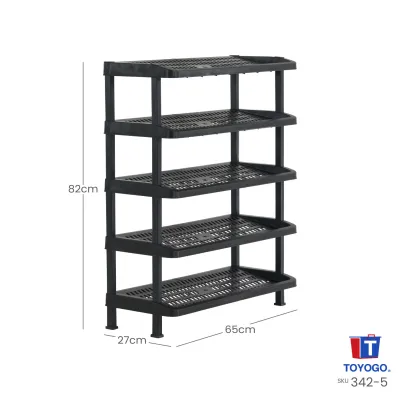
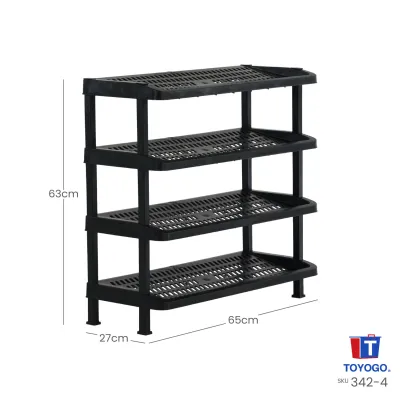
Prices are valid at publication and may change. Please refer to the product page for the latest price.
Evaluating Space Flexibility and Daily Footprint
When planning your HDB layout, understanding the physical footprint of your storage furniture is essential for maintaining comfortable walkways. A fixed plastic utility rack occupies a constant, unchanging amount of floor space from the moment it is assembled. This permanent footprint means you must have a dedicated area where the rack can sit indefinitely without blocking access to doors, built-in wardrobes, or electrical outlets. In smaller HDB flats, such as 2-room Flexi or 3-room units, dedicating a permanent slice of floor space to a fixed rack can significantly restrict your movement and limit your layout options.
In contrast, a foldable rack introduces a dynamic footprint that can be adjusted based on your immediate needs. When fully deployed, it provides multiple tiers of storage, but when collapsed, its depth is reduced to a fraction of its original size. This collapsible design allows you to slide the rack into narrow gaps, such as the space between a wardrobe and the wall, or store it flat inside a household shelter when it is not needed. This flexibility is particularly valuable if your living room doubles as a play area during the day and a hosting space or home workout zone in the evening.
Maintaining adequate walkway clearance is a critical safety consideration in any HDB flat. Standard residential corridors and pathways within rooms should ideally remain unobstructed to prevent tripping hazards, especially in households with young children or elderly family members. If you place a fixed rack in a high-traffic hallway or a narrow bedroom walkway, you may find yourself constantly squeezing past it. A foldable model allows you to clear these pathways instantly before guests arrive or during deep cleaning sessions, ensuring your home remains spacious and easy to navigate.
You should also consider how often you actually need to clear the floor. If your household routine involves daily activities that require open floor space, such as yoga, child’s play, or folding laundry, the effort of collapsing and storing a foldable rack is highly justified. However, if your storage needs are static—such as housing a permanent collection of toys, books, or household supplies that are accessed daily—a fixed rack is often more practical. It eliminates the daily chore of packing away items just to fold the frame, saving you time and effort in your busy schedule.
Verifying Stability, Load Limits, and Safety
Ensuring the structural safety of your storage furniture is paramount, particularly when storing heavy toys, books, or household utilities. Because plastic racks vary in their structural designs, you must always verify the maximum load capacity by checking the manufacturer’s product labels and official manuals. Never assume that a rack can support heavy items based solely on its visual size or material thickness. Both foldable and fixed models have distinct weight limits that must be respected to prevent structural failure or bowing over time.

When evaluating a fixed rack, pay close attention to its center of gravity and base width. Taller fixed units with multiple tiers can become top-heavy if weight is not distributed correctly. To maintain stability, always place the heaviest items on the bottom shelves and lighter items on the upper levels. If you plan to use a tall fixed rack in a child’s bedroom or play area, inspect the unit for wall-anchoring compatibility. Securing the top of the rack to the wall using appropriate anchoring kits is a highly recommended safety measure to prevent accidental tip-overs if a child attempts to climb the shelves.
Foldable racks require a different safety inspection, focusing primarily on the moving parts and locking mechanisms. Before placing any items on a foldable model, carefully inspect the hinges, joints, and locking clips to ensure they are fully engaged and secure. A partially locked hinge can cause the rack to collapse unexpectedly under load, potentially damaging your belongings or causing injury. You should also identify potential pinch points along the folding frame and instruct household members on how to safely collapse and expand the unit without catching their fingers.
The distribution of weight is equally critical for foldable designs. Because these racks rely on pivoting joints to collapse, unevenly distributed loads can put excessive stress on specific hinges, leading to premature wear or misalignment. When loading a foldable rack, distribute items evenly across the entire surface of each shelf rather than stacking everything on one side. Regularly inspect the joints for signs of stress, such as plastic whitening, hairline cracks, or loose pins, and discontinue use if you observe any structural compromises.
Comparing Assembly, Relocation, and Maintenance
The effort required to assemble, move, and maintain your storage rack over its lifespan can vary significantly between fixed and foldable designs. Fixed plastic utility racks typically require a one-time assembly process where columns and shelves are slotted or snapped together. While this process is generally straightforward, it often requires a firm hand or a rubber mallet to ensure all joints are fully seated and locked. Once these joints are snapped into place, disassembling them can be difficult and may risk cracking the plastic connectors if too much force is applied.
Foldable racks, by comparison, usually arrive pre-assembled or require minimal initial setup. The primary appeal of their design is the tool-free deployment, allowing you to unfold the frame and lock the shelves into position within minutes. This ease of setup makes foldable models highly convenient for residents who move frequently or prefer furniture that does not require complex assembly instructions. However, the presence of multiple moving parts means there are more components that require regular inspection to ensure smooth operation over time.
When it comes to routine household maintenance, such as vacuuming, mopping, or dusting, the ease of relocating your furniture plays a major role. A fixed rack filled with items can be heavy and awkward to move, often requiring you to unload all the shelves before you can safely slide or lift the unit to clean behind it. If you attempt to drag a fully loaded fixed rack across your vinyl or tile flooring, you risk scratching the floor surface or damaging the rack’s base joints.
A foldable rack simplifies this cleaning routine. Because it can be quickly unloaded, collapsed, and set aside, you can easily access the floor and wall spaces behind it for deep cleaning. To evaluate the long-term durability of either rack type, rely on visual inspections and the manufacturer’s care instructions. For fixed racks, check that the static joints remain tight and unwarped. For foldable models, ensure that the hinges remain free of dust and debris, and avoid forcing the mechanism if it feels stiff; instead, check for obstructions or misaligned tracks along the folding path.
Matching the Rack to Your Specific HDB Layout
To choose the most effective storage solution, you must align the rack’s design with the specific layout and functional zones of your HDB flat. Dedicated spaces, such as a child’s bedroom or a designated playroom corner, are ideal environments for a fixed plastic rack. In these areas, the storage needs are permanent and continuous, meaning the rack does not need to be moved or hidden away. A fixed unit provides a reliable, stationary station where children can easily access their toys and learn to put them back in their designated spots, fostering a consistent organizational routine.
Conversely, multi-purpose spaces within your HDB flat demand a more flexible approach. If your living room, dining area, or study must adapt to different activities throughout the week, a foldable rack is the more appropriate choice. For example, you can deploy the foldable rack during school holidays or weekends to keep toys organized, and then collapse and store it away during the school term or when hosting family gatherings. This adaptability helps you maintain a clutter-free, visually spacious home environment without sacrificing storage capacity when it is needed most.
Before making a final purchase, it is crucial to plan for the delivery and placement of your new furniture. Take precise measurements of your HDB flat’s entryways, including the main door, corridor widths, and lift dimensions. While foldable racks are highly compact when packaged, large fixed racks may arrive in bulky boxes or as pre-assembled frames that can be challenging to maneuver through tight corners or standard lift doors. Ensuring that your chosen rack can easily clear these architectural boundaries will prevent delivery complications and ensure a smooth setup process.
Decision Framework: Which Toyogo Rack Should You Choose?
To finalize your decision, evaluate your household needs against these clear, conditional guidelines:
- Choose Foldable if: Your storage needs fluctuate throughout the week, you require floor space for daily activities like exercise or play, you live in a compact HDB flat with limited permanent floor space, or you prefer a portable unit that can be collapsed and stored out of sight when not in use.
- Choose Fixed if: You have a dedicated, permanent storage zone such as a playroom corner or utility closet, you need to store heavier items that require maximum structural stability, you prefer a set-and-forget storage setup with no moving parts, or you plan to secure the unit to the wall for enhanced safety.
- Verify First if: You have measured the exact floor footprint and vertical clearance of your target space, checked the manufacturer's official load capacity guidelines for your specific model, and confirmed that your delivery path—including lift access and doorways—can accommodate the dimensions of the rack.
Frequently Asked Questions (FAQ)
Can I add wheels to a fixed Toyogo rack for easier movement?
Before making any modifications to your storage rack, always consult the manufacturer’s guidelines and warranty terms. Adding aftermarket wheels or casters to a fixed plastic rack that was not designed for them can seriously compromise its structural integrity. Wheels raise the unit’s height, which shifts its center of gravity upward and increases the risk of tipping, especially when the rack is fully loaded. Additionally, drilling holes or attaching hardware to the plastic base can weaken the material, leading to cracks or sudden structural failure under load.
How do I measure my HDB space accurately for a toy rack?
To ensure a perfect fit, start by measuring the width, depth, and height of the floor area where you plan to place the rack. Use a metal measuring tape for accuracy, and remember to account for architectural obstructions such as skirting boards, wall molding, power outlets, light switches, and window sills that might prevent the rack from sitting flush against the wall. If you are choosing a foldable model, you must also measure the swing radius and clearance required to fully extend and lock the shelves, ensuring that the deployment process does not block nearby doors or walkways.

Community discussion
Share your experience or ask a question. Comments are reviewed before publication.