
Quick Answer: Evaluating Foldable Office Chair Brands
When comparing foldable office chair brands, the ideal choice depends on balancing daily sitting duration against your storage constraints. Premium ergonomic folding brands focus on adjustable lumbar support, thick molded foam cushions, and robust multi-point hinges, making them suitable for extended work sessions. Conversely, budget-friendly utility brands prioritize ultra-flat folding profiles and lightweight frames, which are excellent for quick tasks but lack the structural support needed for full-day comfort.
The primary trade-off in this category is between portability and physical adjustability. As a rule, the flatter a chair folds, the fewer ergonomic adjustments it offers. To find the right balance, you must evaluate the hinge design, frame materials, and cushion density against your specific daily workflow and storage space.
Core Comparison Dimensions for Foldable Chairs
To make an informed decision, buyers should evaluate foldable chairs across three primary performance areas: ergonomic support, mechanical durability, and physical space compatibility.
Products mentioned in this guide
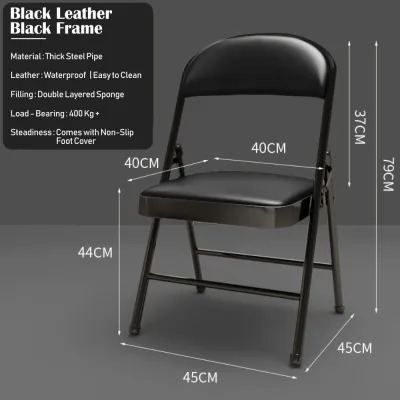
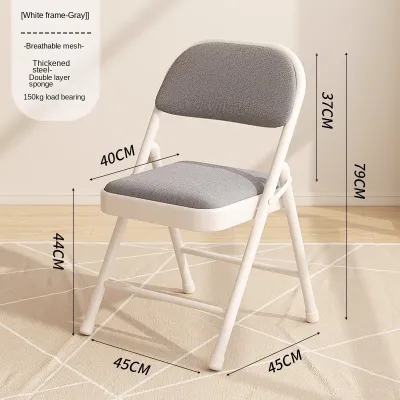
![[NEW]Foldable Chair With Cushion Office Meeting Conference Chair Study Folding Chair Fancy Chair kerusi lipat Folding chair](https://img.lazcdn.com/g/p/915096b5caa7f36fdd2650cee839b2a9.jpg_webp_400x400q80.jpg_.webp)
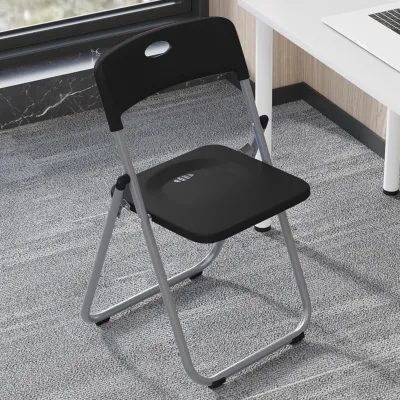
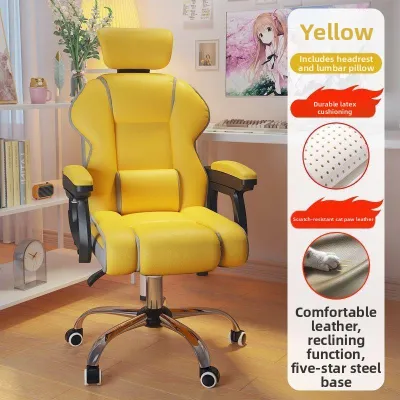
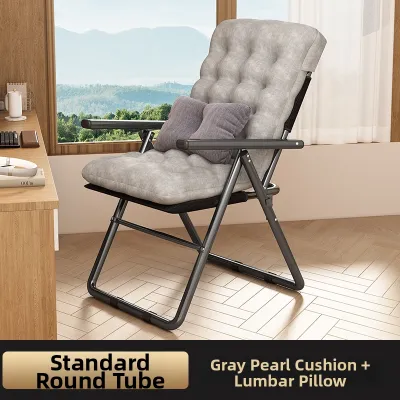
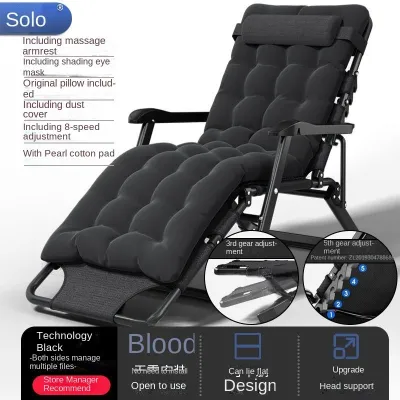
Prices are valid at publication and may change. Please refer to the product page for the latest price.

Comfort and Ergonomic Support
Unlike standard task chairs, an office foldable chair must integrate its support features into a collapsible frame, which often limits the range of motion and adjustability.
Lumbar Support Adjustability Many entry-level folding chairs feature a fixed plastic or taut mesh backrest with a pre-molded curve. While this provides basic support, it cannot accommodate different torso lengths or sitting postures. High-quality ergonomic folding brands resolve this by incorporating height-adjustable lumbar bands or flexible, tension-mapped mesh backrests that adapt to the user’s spine. When evaluating a brand, check whether the lumbar support can be shifted vertically to align with your lower back.
Seat Pan Depth and Cushion Density To allow the frame to fold as flat as possible, manufacturers often reduce the thickness of the seat cushion or shorten the seat pan depth. Low-density cut foam cushions tend to bottom out within an hour of continuous use, placing pressure on your tailbone. Look for brands that specify high-density molded foam, which retains its shape and elasticity over long periods. Additionally, ensure the seat pan depth is sufficient to support your thighs without pressing against the back of your knees.
Armrest Integration Fixed armrests often prevent a folding chair from collapsing into a slim profile, and they can block the chair from sliding under low desks. Advanced folding designs feature flip-up, telescoping, or fully removable armrests. These adjustable options allow you to tuck the chair close to your desk when in use and fold it flat when storing it away. However, ensure the armrest joints lock securely to prevent wobbling during use.
Folding Mechanisms and Durability
The folding mechanism is the most common failure point on a collapsible chair, making mechanical design a critical factor for long-term value.
Hinge Designs and Weight Distribution Simple folding chairs typically rely on a single-axis pivot hinge. While cost-effective, this design concentrates the user’s weight on a single point, increasing the risk of metal fatigue or bending over time. Heavy-duty brands utilize multi-point linkage systems or sliding track mechanisms. These designs distribute the load across multiple frame sections, providing greater stability and a smoother folding action.
Locking Mechanisms and Pinch-Point Safety A reliable folding chair must feature a secure locking mechanism to prevent accidental collapse during movement. Look for automatic gravity locks, spring-loaded pins, or manual locking bars that click firmly into place when the chair is fully opened. Additionally, inspect the frame for exposed scissor joints or sliding tracks that could pinch fingers or snag clothing during setup and takedown.
Weight Limits and Cycle-Test Specifications Because independent testing data is rarely public, you should verify the manufacturer’s official certifications on the product label. Look for compliance with BIFMA (Business and Institutional Furniture Manufacturers Association) standards, specifically those testing structural strength and hinge cycle life. A high-quality chair should support a minimum weight capacity of 110 kg to 136 kg and have undergone thousands of folding cycles without mechanical failure.
Build Quality and Material Verification
The longevity of a foldable office chair depends heavily on the quality of its raw materials and the precision of its construction.
Frame Materials and Joint Reinforcements Steel frames offer excellent structural rigidity and weight capacity, but they can be heavy and difficult to transport. Aluminum frames are significantly lighter and highly resistant to rust, making them ideal for humid environments, though they must feature reinforced joints—such as gussets or double-welds—to prevent bending under load. Avoid chairs constructed with thin-walled hollow tubes or low-grade plastic joints, as these materials degrade rapidly under daily stress.
Upholstery Breathability and Wear Resistance In warm, humid climates like Singapore, upholstery material directly impacts daily comfort. Mesh backrests and seats are highly recommended because they promote continuous airflow and prevent heat buildup. If you prefer fabric or synthetic leather, check the manufacturer’s specifications for wear resistance, often measured in double-rubs (using the Martindale or Wyzenbeek method). For daily office use, look for upholstery rated for at least 30,000 double-rubs to ensure the material does not fray or crack prematurely.
Warranty Terms for Moving Parts A comprehensive warranty is a strong indicator of a brand’s confidence in its build quality. When reviewing warranty terms, pay close attention to the coverage details. Many brands offer a long warranty on the metal frame but limit coverage on moving parts, hinges, pneumatic cylinders, and upholstery to just one year. Prioritize brands that offer at least a two-to-three-year warranty specifically covering the folding mechanisms and structural joints.
Space Planning and Usage Constraints
Before purchasing, you must ensure the chair fits seamlessly into your physical workspace and daily routine without causing operational friction.
Measuring Folded Dimensions and Storage Gaps The primary reason to buy a folding chair is to save space, but “foldable” does not automatically mean “compact.” Measure the exact dimensions of your intended storage area—whether it is a narrow gap beside a wardrobe, the space under a low bed, or a dedicated utility closet. Compare these measurements against the chair’s folded depth and height. Some ergonomic folding models still measure 25 cm to 30 cm deep when folded, which may be too bulky for tight storage niches.
Unfolded Footprint and Clearance A chair must also fit comfortably when fully opened. Measure your desk height and the available floor space behind your workstation. You need at least 75 cm of clear space behind the desk to push the chair back and stand up comfortably. If your workspace is in a high-traffic hallway or a multi-purpose living room, ensure the chair’s legs do not extend too far outward, creating a tripping hazard.
Physical Effort for Daily Setup Consider the physical effort required to transition the chair between its folded and unfolded states. If you must store the chair after every workday, a heavy model weighing over 12 kg can quickly become a chore to lift and carry. Look for lightweight designs (under 8 kg) that feature integrated carrying handles or smooth-rolling casters that function even when the chair is folded.
Decision Framework: Choosing the Right Brand Profile
To select the best foldable office chair for your home, match your usage patterns to the appropriate brand profile.
Heavy-Duty Ergonomic Brands Choose these brands if you plan to use the chair as your primary seat for full-time work (6 to 8+ hours per day). These models feature robust frames, adjustable lumbar support, and thick cushions. While they are heavier, more expensive, and fold less flat, they provide the necessary physical support to prevent fatigue and discomfort during long working hours.
Lightweight Portable Brands Select these brands if your primary goal is space-saving, hot-desking, or hosting occasional meetings. These chairs fold exceptionally flat (often under 10 cm) and are easy to carry and store. They are ideal for short-term sitting (1 to 2 hours) but are not recommended for full-time daily office work due to their minimal padding and fixed backrests.
Surface Compatibility and Casters Before finalizing your choice, evaluate the flooring in your workspace. If you have hardwood, laminate, or vinyl flooring, choose a brand that offers soft polyurethane (PU) casters or protective felt glides to prevent scratches. For carpeted floors, hard nylon casters provide smoother mobility but should be checked to ensure they do not snag the carpet fibers.
Frequently Asked Questions (FAQ)
Can a foldable office chair provide the same support as a standard task chair?
While high-end foldable office chairs offer impressive ergonomic features, they generally cannot match the full support and adjustability of a premium, non-folding task chair. To allow for a collapsible design, manufacturers must use lighter frames and limit complex adjustment mechanisms like seat slide, backrest tilt tension, and independent seat angle adjustments. A foldable chair is an excellent space-saving solution for hybrid work or part-time use, but a standard ergonomic task chair remains the preferred choice for continuous, full-time daily office work.
How do I maintain the folding hinges to prevent squeaking or stiffness?
To keep the folding mechanisms operating smoothly, perform basic maintenance every few months. Start by wiping down the hinges and sliding tracks with a dry microfiber cloth to remove dust, pet hair, and debris. If the joints begin to squeak or feel stiff, consult the manufacturer’s care instructions before applying any lubricants. Avoid using standard penetrating oils, as they can attract dust and degrade plastic bushings or nylon washers. Instead, use a dry silicone or Teflon-based lubricant if recommended by the user manual, applying it sparingly only to the metal pivot points.

Community discussion
Share your experience or ask a question. Comments are reviewed before publication.