
Selecting the right mini storage cabinet for a Singapore Housing & Development Board (HDB) flat requires balancing compact dimensions with functional flexibility. The most effective designs for tight layouts are those that maximize vertical space, fold away when not in use, or serve multiple purposes, such as a cabinet that transforms into a temporary desk. Because HDB flats have strict spatial constraints and unique architectural features, the ideal choice depends on precise measurements, secure installation, and mechanisms that align with your daily routines.
Rather than relying on bulky, static furniture that permanently consumes floor space, multi-functional mini cabinets adapt to your changing needs. They can serve as a simple storage unit by day and expand into an active workspace or dining surface when required. This adaptability is particularly valuable in multi-use rooms, entryways, and service yards where every square meter must be utilized efficiently.
However, finding the right cabinet involves more than just picking an appealing style online. You must evaluate how the furniture interacts with your physical environment, including door swings, walkways, and wall types. This guide provides a practical framework to help you assess your space, understand different folding mechanisms, verify safety standards, and build a reliable product shortlist.
Products mentioned in this guide
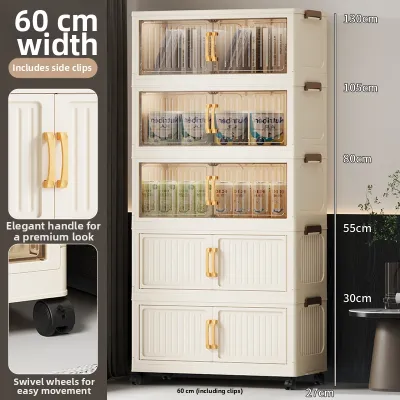
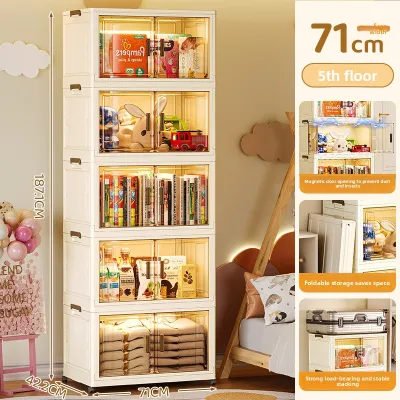
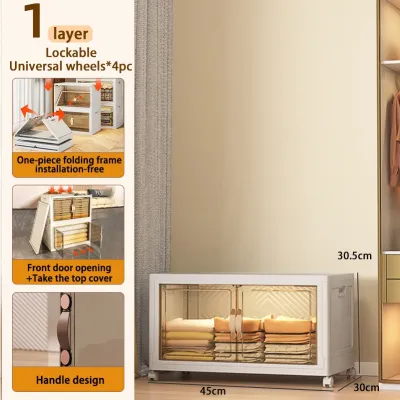
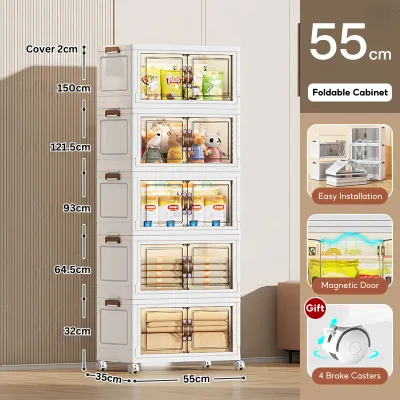
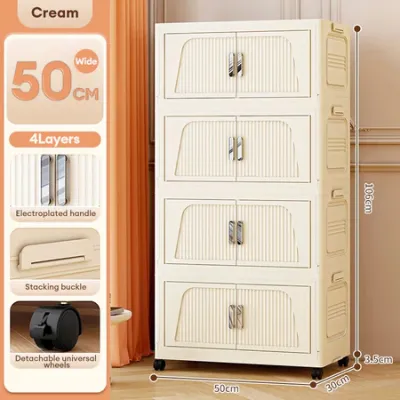
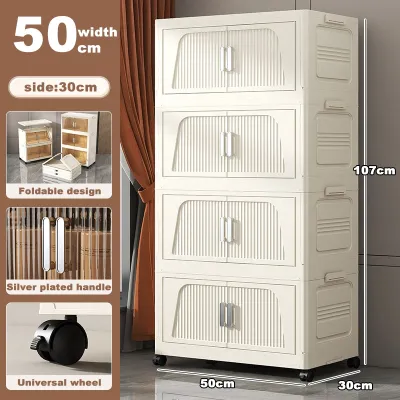
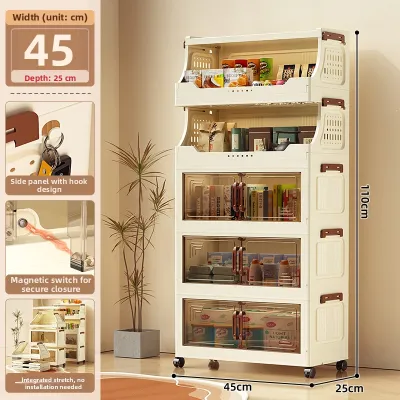
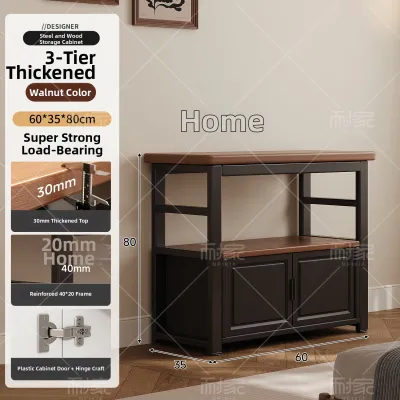
Prices are valid at publication and may change. Please refer to the product page for the latest price.
Assessing Your HDB Space and Storage Needs
Before browsing online marketplaces or visiting local furniture showrooms, you must establish a clear baseline of your physical space and storage requirements. Start by taking precise measurements of the designated area using a reliable metal measuring tape. Do not rely on digital floor plans alone, as actual wall-to-wall dimensions can vary slightly after plastering, tiling, or the installation of skirting boards. Measure the width, depth, and vertical clearance of the exact spot where the cabinet will stand.
Equally important is measuring the clearance required for the cabinet to function. If the cabinet features swing-out doors, pull-out drawers, or a fold-down desk surface, you must map out the active footprint of the furniture. Ensure that when these components are fully extended, they do not block major walkways, strike adjacent walls, or interfere with other furniture pieces like sofa arms or bed frames. In tight HDB corridors or entryways, even a few centimeters of protrusion can create a constant physical obstruction.
Next, consider the delivery path from the ground floor to your flat. Measure the height and width of your HDB block’s elevator doors, the corridor width, and your main entrance door frame. Many multi-functional cabinets are delivered pre-assembled to ensure structural integrity, and a delivery failure due to tight corners or narrow doorways can result in costly return fees.
You should also categorize the items you plan to store. High-frequency items, such as keys, daily footwear, or frequently used household tools, require quick and easy access. These are best suited for cabinets with open shelving, smooth-sliding drawers, or magnetic-latch doors. Conversely, low-frequency items, like seasonal decorations, spare linens, or document folders, can be placed in deeper, less accessible compartments or higher modular units.
Finally, identify any dual-purpose needs. In a compact living room, a mini cabinet can double as a stylish side table next to your armchair. In a bedroom, a wall-mounted unit with a fold-down panel can serve as a vanity or a compact laptop desk. Defining these secondary functions early in the process helps you narrow down the specific design mechanisms that will bring the most value to your household.
Exploring Foldable and Multi-Functional Cabinet Designs
Multi-functional mini cabinets come in several distinct design categories, each offering unique advantages depending on how you use your space. Understanding these mechanisms allows you to choose a system that integrates seamlessly into your daily routine.

Collapsible and mobile units are highly favored for their adaptability. Foldable utility carts and rolling mini cabinets can be easily moved around the flat as your needs change. For instance, a mobile kitchen cart can provide extra prep space during meal preparation and then be folded flat and tucked away in the service yard when not in use. Wall-mounted drop-leaf cabinets are another excellent option; they remain flush against the wall, taking up virtually zero floor space until you lift the panel to create a temporary desk or dining nook.
Transformable designs are engineered to serve multiple distinct purposes within a single footprint. A popular variation is the secretary-style mini cabinet, which features a front panel that hinges downward to reveal a desk surface and internal storage compartments. Other designs include cabinets with integrated, fold-out ironing boards or hidden vanity mirrors that slide out from the side. These units are particularly useful in HDB bedrooms or study rooms where dedicated floor space for specialized tasks is limited.
Modular and stackable systems offer a scalable approach to storage. Instead of committing to a single, heavy piece of furniture, you can purchase individual mini storage cubes or cabinets that stack securely on top of one another. This modularity allows you to build upward, taking advantage of vertical space without overwhelming the room visually. As your storage needs grow or your room layout changes, you can easily reconfigure the stack, split the units across different rooms, or add new modules.
When exploring these designs, consider the physical effort required to operate the folding or transforming mechanisms. A mechanism that is stiff, heavy, or overly complex may discourage you from using the cabinet’s multi-functional features altogether. Look for designs that utilize smooth hinges, gas struts, or counterbalanced systems that make transition effortless.
Critical Dimensions and Safety Checks Before Purchase
When purchasing space-saving furniture, safety and physical compatibility must be your top priorities. Because foldable and multi-functional cabinets often feature moving parts and shifting centers of gravity, they require rigorous verification before installation.
Always verify both the assembled and packaged dimensions of the cabinet. The packaged dimensions are crucial for ensuring the item can be safely transported through your HDB lift and main door. Once assembled, the cabinet must fit perfectly within your measured space without blocking electrical outlets, light switches, or DB box (distribution board) doors.
Load capacity and stability are critical safety factors, particularly for mini cabinets with a small footprint. Check the manufacturer’s specifications for the maximum weight limit of each individual shelf and the overall unit. Shifting weight distributions—such as pulling out a heavy drawer or leaning on a folded-down desk panel—can drastically alter the cabinet’s center of gravity. To mitigate the risk of tipping, tall or narrow units must be anchored securely to the wall.
Do not rely solely on material names like “solid wood” or “metal” as a guarantee of durability or performance. Instead, check the product labels for specific surface treatments and hardware quality. In Singapore’s humid climate, moisture resistance is essential to prevent warping, mold, and swelling. Look for engineered wood cabinets with high-quality melamine or laminate finishes and robust PVC edge banding that seals the core material from moisture. For metal cabinets, ensure they have a rust-resistant powder-coated finish.
Examine the hardware specifications closely. Multi-functional furniture relies heavily on its moving parts. Look for heavy-duty steel hinges, soft-close drawer runners, and sturdy locking pins that secure foldable panels in place. Low-quality hardware can wear out quickly under daily use, leading to misaligned doors or sagging panels.
Finally, evaluate the assembly and installation conditions. Determine whether the cabinet arrives flat-packed or fully assembled. Flat-pack furniture requires basic tools, patience, and a level floor surface for proper assembly. If the cabinet requires wall mounting, check if your walls are made of concrete or drywall, as this dictates the type of wall plugs and screws needed. If you are uncomfortable with drilling or assembly, consider hiring a professional installation service to ensure the unit is structurally sound.
Building Your Conditional Product Shortlist
With a clear understanding of your space, design preferences, and safety requirements, you can begin building a conditional shortlist of candidate products. This structured approach prevents impulse buying and ensures that your final selection is highly functional and durable.
Start by setting hard filtering parameters based on your initial assessments. Define your absolute maximum width, depth, and height. Any cabinet that exceeds these dimensions, even by a few millimeters, should be immediately eliminated. Establish a minimum load capacity requirement based on the items you plan to store, and specify the mandatory folding or multi-functional features your space demands.
Next, compare the opening and folding mechanisms of the remaining candidates. For tight spaces, sliding doors, tambour doors, or roll-up shutters are often superior to traditional swing doors because they require zero clearance to open. If you are choosing a wall-mounted drop-leaf cabinet, compare the support brackets; triangular folding brackets generally offer greater stability than simple hinge supports.
Investigate the warranty terms offered by the manufacturer or retailer. A comprehensive warranty that covers the structural frame and the moving hardware (such as hinges, tracks, and gas struts) provides peace of mind and indicates the manufacturer’s confidence in the product’s longevity.
Read customer reviews and feedback carefully, focusing on real-world usability. Look for comments regarding how easy the cabinet is to fold and unfold, whether the hinges remain tight over time, and if the surfaces are easy to clean and maintain. Pay attention to any mentions of stability issues or assembly difficulties.
Finally, construct a simple decision matrix to weigh your options. Compare the upfront cost in S$ against the cabinet’s multi-functional utility, material durability, and estimated lifespan. While a cheaper, basic cabinet might seem appealing initially, a slightly more expensive unit with robust hardware and superior moisture resistance will often provide better value and safety over years of daily use in your HDB flat.
Frequently Asked Questions (FAQ)
Do I need HDB approval to drill holes for wall-mounted foldable cabinets?
Generally, drilling minor holes to mount shelves, cabinets, or wall-anchored furniture on non-structural walls does not require a formal permit or approval from HDB. However, you must avoid drilling into structural walls, columns, beams, or the household shelter (bomb shelter) walls, which are made of reinforced concrete and must not be compromised. Always refer to your flat’s official floor plan to identify structural walls (typically indicated by thick, solid black lines) and consult a professional contractor if you are unsure about the wall type.
How can I prevent a tall, narrow mini cabinet from tipping over?
To prevent a tall, narrow cabinet from tipping, you should always secure it to the wall using the manufacturer-provided anti-tip brackets, safety straps, or L-brackets. Ensure that you use the correct wall plugs and screws suitable for your specific wall material (such as concrete anchors for solid walls). Additionally, practice proper weight distribution by placing your heaviest items on the lowest shelves and lighter items near the top. Avoid placing heavy objects on top of the cabinet, and never allow children or pets to climb on the shelves or drawers.

Community discussion
Share your experience or ask a question. Comments are reviewed before publication.