
A small rotating shoe rack is an excellent space-saving solution for compact Singapore apartments, such as HDB flats or condominiums, but its actual footprint is dynamic rather than static. To determine if a rotating rack fits your home, you must measure not just the base diameter, but the full rotational sweep when loaded with your largest shoes. Balancing this physical clearance with your household’s daily shoe capacity ensures the organizer remains functional without obstructing walkways or entryways.
In tight entryways, every centimeter counts. A rack that seems perfectly sized on paper can easily block a front door, scrape against a household shelter door, or collide with nearby foyer furniture once it begins to spin. By systematically planning your floor space, assessing your storage needs, and verifying assembly conditions, you can select a rotating organizer that maximizes vertical space without compromising the flow of your home.
Measuring Your Available Floor Space and Rotation Clearance
When planning for a rotating shoe rack, the most critical step is distinguishing between the static footprint and the dynamic rotation sweep. The manufacturer’s listed diameter typically represents the physical width of the empty shelves or the base plate. However, once you place shoes on the rack, the heels or toes of larger footwear will likely overhang the edges, expanding the actual space required for a full rotation. To calculate this dynamic footprint, measure your longest pair of shoes, determine how far they protrude past the shelf edge, and add this measurement to both sides of the rack’s nominal diameter.
Products mentioned in this guide
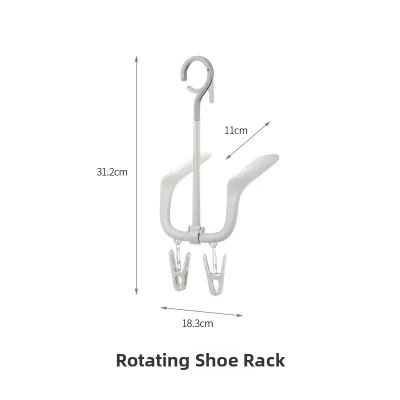
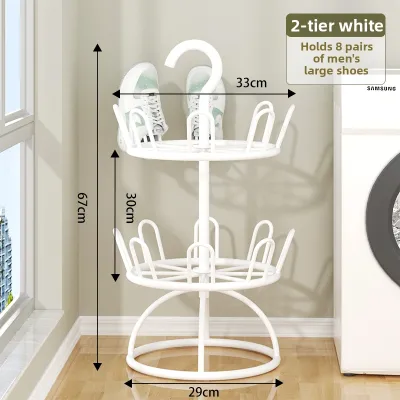
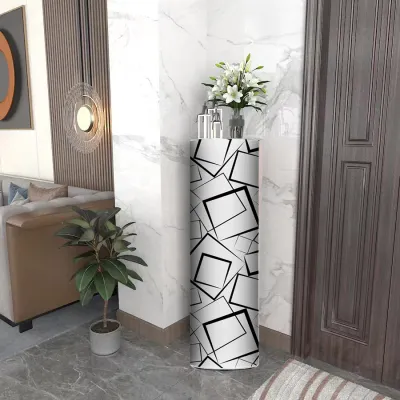
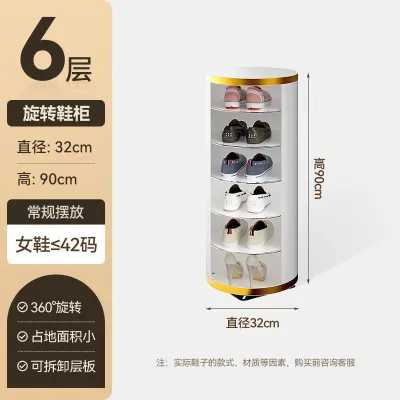
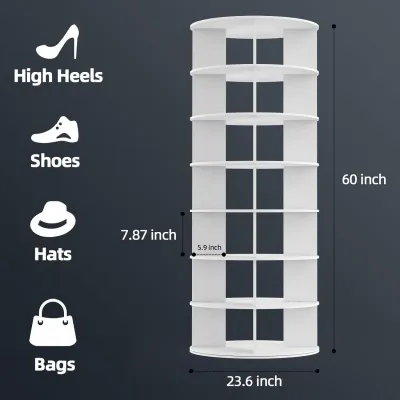
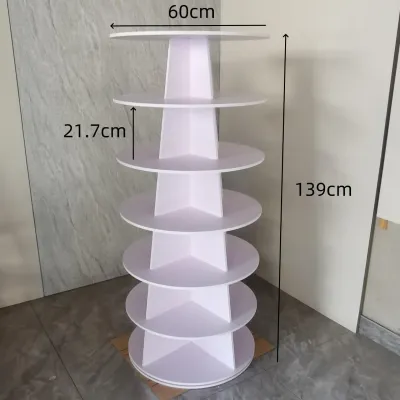
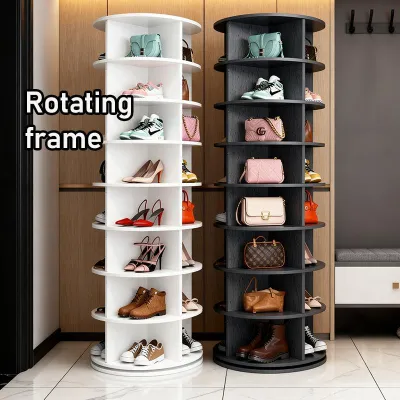
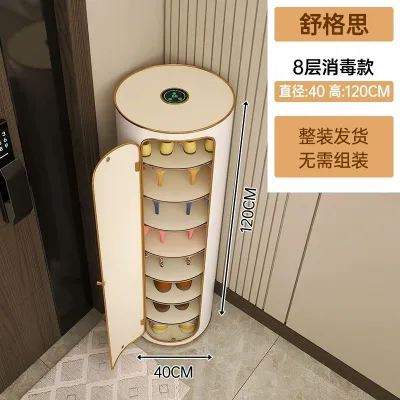
Prices are valid at publication and may change. Please refer to the product page for the latest price.
Next, map out the surrounding clearance in your entryway or hallway. In compact apartment layouts, entryways often serve as primary thoroughfares, meaning a poorly placed rack can create a constant bottleneck. Ensure there is a buffer zone of at least five to ten centimeters beyond the maximum rotation circle so the rack does not brush against walls, baseboards, or adjacent furniture. You must also account for the swing arcs of nearby doors, including the main entrance door, security gates, and closet doors, to guarantee they can open fully without colliding with the rotating shelves.
Vertical space is another crucial dimension that is easily overlooked. Measure the height from the floor to any overhead obstructions, such as wall-mounted distribution boards, low window sills, or custom entryway cabinets. If you plan to place the rack under a floating console or inside a niche, verify that the total assembled height of the rack, including its rotating mechanism and top cap, leaves enough room for comfortable access to the top tier. Checking these vertical limits beforehand prevents you from purchasing a unit that is too tall to fit under existing fixtures.
Evaluating Shoe Capacity Against Household Needs
Before choosing a rotating shoe rack, take a detailed inventory of your household’s footwear collection. Categorize your shoes into daily-wear items that require immediate access and seasonal or occasional footwear that can be stored elsewhere, such as in high wardrobe shelves or under-bed boxes. A small rotating shoe rack is best utilized for your active rotation, keeping the entryway tidy while storing less-frequently worn pairs in deeper storage. This approach prevents the rack from becoming overcrowded and ensures the rotating mechanism operates smoothly.

Compact rotating racks feature varying shelf heights and weight capacities, which directly impact their usability. Check the manufacturer’s specifications for the distance between tiers to ensure your footwear will fit. Standard flat tiers are ideal for flats, sandals, and low-profile sneakers, but they may not accommodate high heels, ankle boots, or high-top trainers. Look for models with adjustable shelves or dedicated taller tiers if your collection includes diverse shoe styles. Furthermore, verify the maximum weight capacity per tier to ensure the rotating mechanism can spin smoothly under the weight of heavier leather shoes or boots.
The circular design of rotating racks means shelves taper toward the center pole, creating wedge-shaped storage slots. This wedge shape limits how many wide or bulky shoes can sit side-by-side on a single tier. If members of your household wear larger shoe sizes, you may find that fewer pairs fit per level than the manufacturer’s maximum estimate. Check the inner dimensions of the wedge segments to confirm your shoes will fit securely without slipping off or jamming against the central support during rotation.
Verifying Delivery, Assembly, and Stability Conditions
Before finalizing your purchase, consider how the product will reach your entryway. Many rotating shoe racks are delivered flat-packed, but some premium models arrive fully assembled. Verify the packaged dimensions against the clearance of your building’s passenger lift, stairwells, and your unit’s front door. Ensuring the box can easily navigate these tight spaces prevents delivery delays and potential damage to common areas.
Once inside, the rack must be assembled on a flat, level surface to function correctly. A slight tilt in the floor can cause a tall, narrow rotating rack to spin unevenly or drift to one side. Review the manufacturer’s assembly instructions to see if the unit requires a weighted base or floor-leveling feet. For taller models, check if the manufacturer recommends or includes anti-tip anchoring hardware, which is crucial for maintaining stability when the rack is fully loaded and spun.
The rotating mechanism relies on a smooth pivot point, which exerts concentrated pressure on your flooring. Check your floor material—whether it is vinyl, laminate, engineered wood, or homogeneous tiles—to ensure it can withstand the weight and movement. Look for bases equipped with protective pads or smooth glides that prevent scratching, slipping, or excessive friction when the rack is turned.
Common Space and Capacity Matching Mistakes
The most frequent error is measuring only the static base plate or the central pole’s position. When a shoe rack is fully loaded, the heels or toes of larger shoes inevitably extend beyond the shelf perimeter. If you plan your space down to the millimeter based only on the product’s listed diameter, you will likely find that the rack hits the wall or blocks a doorway the moment you try to spin it.
Another common mistake is placing heavy boots or thick-soled sneakers on the upper tiers while leaving lighter sandals at the bottom. This distribution shifts the center of gravity upward, making the entire structure unstable and increasing the risk of tipping during rotation. Always place your heaviest footwear on the lowest tiers to anchor the base and ensure a smooth, safe spin.
Many homeowners measure the floor space from wall to wall but forget to account for the thickness of baseboards or skirting boards. These small protrusions can prevent the rack’s base from sitting flush against the wall, pushing the entire unit forward into your walking path or door swing zone. Always measure from the face of the baseboard rather than the bare wall.
Frequently Asked Questions (FAQ)
Can a small rotating shoe rack fit inside a standard built-in wardrobe?
Yes, a small rotating shoe rack can fit inside a standard built-in wardrobe, provided you account for the necessary clearance. Standard wardrobes typically have an internal depth of 60 centimeters. You must ensure the rack’s full rotation diameter—including the overhang of your largest shoes—is comfortably less than this depth. Additionally, leave a buffer of at least 2 to 3 centimeters on all sides to prevent the rack from scraping against the wardrobe doors or back panel. Proper ventilation is also essential; enclosed wardrobes can trap moisture and odors, so consider using charcoal dehumidifier bags or choosing a wardrobe with slatted doors to maintain air circulation.
How do I prevent a rotating shoe rack from scratching hard floors?
To protect your apartment’s flooring from scratches and scuffs, start by checking the manufacturer’s specifications regarding the base design. High-quality rotating racks often feature felt pads, rubber feet, or a smooth, non-abrasive bottom plate. If the rack does not come with built-in protection, you can apply heavy-duty adhesive felt pads to the contact points of the base. For extra security, especially on delicate vinyl or laminate flooring, place a thin, low-profile protective mat or a circular rug directly beneath the rack. This not only prevents scratches from the rotating motion but also catches any dirt or debris that falls from the shoes.

Community discussion
Share your experience or ask a question. Comments are reviewed before publication.