
Quick Answer: Which Armrest Type is Right for You?
Choosing the right chair with armrest for your home office depends on your daily work habits, desk height, and available space. If you work in a compact study corner and need to tuck your chair fully under the desk when not in use, fixed armrests or highly adjustable armrests that drop low are essential.
For those who share a workspace with family members of different heights, adjustable armrests offer the necessary flexibility to support various forearm positions. Meanwhile, if your work involves long periods of reading, drafting, or taking calls where you lean back, padded armrests provide the soft surface tension needed to prevent elbow discomfort.
Ultimately, the optimal choice balances your physical desk clearance, typing posture, and how long you spend at your computer each day rather than relying on a single universal standard.
Products mentioned in this guide
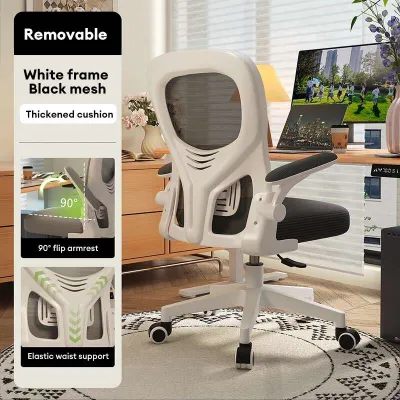
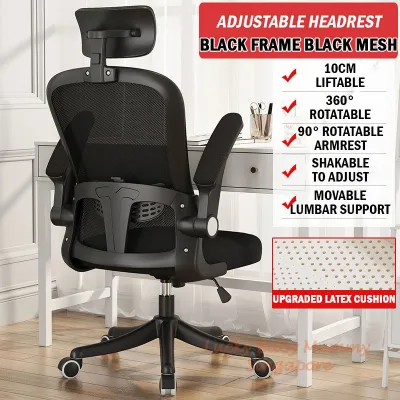
Prices are valid at publication and may change. Please refer to the product page for the latest price.
Understanding the Three Main Armrest Types
To make an informed decision, it is helpful to understand how these three categories differ in construction, movement, and material composition.

Fixed Armrests
Fixed armrests are structurally integrated into the chair’s frame, often connecting the seat pan directly to the backrest. Because they lack moving parts, they offer high structural rigidity and stability, with fewer joints that might loosen over time.
However, this static design means they cannot be adjusted to match your specific elbow height or desk level. They rely entirely on standard desk heights and a highly consistent user posture, making them best suited for single-user setups where the chair’s default dimensions happen to align perfectly with the user’s body.
Key characteristics of fixed designs:
- Rigid connection: Often molded from heavy-duty plastic or metal loop frames.
- Zero adjustability: Cannot slide, pivot, raise, or lower.
- Space footprint: May prevent the chair from sliding under low-clearance desks.
Adjustable Armrests
Adjustable armrests are engineered to adapt to different body proportions and working styles. They range from basic height-adjustable models to highly customizable multi-directional designs, often referred to as 2D, 3D, or 4D armrests.
These mechanisms allow you to raise or lower the armrest, slide the pads forward or backward, adjust the width outward, or pivot the angles inward to support your forearms while typing. This adaptability is crucial for maintaining a relaxed shoulder posture and keeping your elbows at a comfortable ninety-degree angle.
Common adjustment dimensions to look for:
- Height adjustment (1D): Moves vertically to align with your desk surface.
- Depth and width (2D/3D): Slides forward, backward, or sideways to accommodate different torso widths.
- Pivot (4D): Angles inward to support your arms when using compact keyboards or mobile devices.
Padded Armrests
Padded armrests focus on surface comfort and pressure distribution rather than mechanical movement alone. These armrests feature a cushioned top layer, typically made of dense foam, gel, or fabric-wrapped padding, which sits on top of either a fixed or adjustable support arm.
The primary benefit of a padded surface is the reduction of localized pressure on the sensitive ulnar nerve in your elbow. However, because they use softer materials, they require more careful maintenance and are more susceptible to surface wear, cracking, or staining over time compared to hard polyurethane or plastic caps.
Material considerations for padded surfaces:
- Foam and fabric: Highly breathable but can absorb sweat and spills, requiring regular upholstery cleaning.
- Polyurethane (PU) gel: Offers a balance of soft cushioning and a wipe-clean surface, though it can degrade in humid environments.
- Vinyl or leather wrap: Provides a premium feel but requires checking for seam split risks and material peeling.
How to Evaluate Armrests for Your Home Office Setup
Selecting a chair with armrest requires looking beyond the showroom floor to evaluate how the chair interacts with your specific home environment and daily routine.
Ergonomics and Posture Alignment
Proper ergonomic alignment requires your shoulders to remain relaxed while your forearms rest parallel to the floor. If your armrests are too high, they force your shoulders to shrug, leading to neck tension; if they are too low, you may lean to one side, misaligning your spine.
Fixed armrests can cause posture issues if they do not match your desk height, forcing you to reach upward or bend your wrists awkwardly to type. Adjustable armrests solve this by letting you bring the support directly to your natural elbow height, ensuring your wrists remain in a neutral, straight position.
Postural alignment checks:
- Shoulder relaxation: Ensure your shoulders do not feel pushed upward when resting your elbows.
- Wrist position: Your wrists should not bend upward or downward when reaching for your keyboard.
- Forearm support: The armrest should support the weight of your arm without pressing hard into your elbow joint.
Desk Clearance and Spatial Constraints
In many compact home offices, study spaces are integrated into bedrooms or living room alcoves where space is at a premium. A common issue is buying a chair with armrest only to find it cannot slide under the desk, forcing the chair to protrude into the walkway when not in use.
You must measure the distance from the floor to the underside of your desk drawer or tabletop. Fixed armrests require a clear path, whereas adjustable armrests can often be lowered to their minimum height to clear the desk edge, allowing for a much tidier room layout.
Spatial factors to verify:
- Under-desk clearance: Measure the lowest point under your desk, including any support beams or drawers.
- Chair width: Ensure the outer width of the armrests can fit between your desk legs.
- Walkway space: Consider how far the chair sticks out when fully occupied versus when tucked away.
Maintenance and Surface Longevity
The durability of your armrests depends heavily on the materials used and how they handle daily wear and environmental conditions. In humid climates, synthetic leather wraps on padded armrests can peel or crack if not properly maintained, while fabric pads can trap moisture and dust.
Hard plastic or solid polyurethane armrests are highly durable and easy to sanitize with a quick wipe, making them low-maintenance options. If you choose padded armrests, check the manufacturer’s care instructions to see if the covers are removable or if they require specialized fabric cleaners.
Maintenance and durability checks:
- Seam integrity: Inspect the stitching on padded armrests for signs of pulling or loose threads.
- Moisture resistance: Determine if the surface material can withstand sweat and humidity without degrading.
- Cleaning method: Verify if the surface can be cleaned with standard household disinfectants or if it requires dry wiping.
Decision Framework: Matching Armrests to Your Work Style
To find the perfect chair with armrest, match the armrest type to your specific daily habits, physical workspace, and budget.
Choose Fixed Armrests if:
- You have a standard-height desk (typically 73 to 75 cm) that matches the chair's fixed dimensions perfectly.
- You prefer a simple, robust chair design with fewer moving parts that could loosen or rattle over time.
- You are the sole user of the home office chair, meaning you do not need to accommodate different body sizes or seating preferences.
- You are working within a tighter budget, as fixed-armrest models generally cost less than highly adjustable alternatives.
Choose Adjustable Armrests if:
- You share your home office chair with family members of varying heights and arm lengths.
- You use a non-standard desk, such as a height-adjustable standing desk, where your typing position changes throughout the day.
- You spend more than four hours a day typing, coding, or editing, requiring precise ergonomic support to prevent wrist and shoulder strain.
- You need to tuck your chair completely under a low desk to maximize floor space in a compact room.
Choose Padded Armrests if:
- You frequently rest your elbows on the armrests while reading documents, attending video calls, or thinking.
- You have sensitive elbow joints or find hard plastic surfaces uncomfortable during extended sitting sessions.
- You are willing to perform regular cleaning and maintenance to keep fabric or synthetic leather surfaces in good condition.
Verify First if:
- Your desk has a thick decorative edge or an under-desk drawer that might block even the lowest setting of an adjustable armrest.
- The chair's maximum armrest height is sufficient to support your elbows without forcing you to slouch.
- The material used on the armrest pads is compatible with your skin sensitivity and local humidity levels.
Pre-Purchase Verification Checklist for a Chair with Armrest
Before purchasing your new office chair, take a few minutes to measure your workspace and review the product specifications to avoid return shipping fees or assembly headaches.
1. Measure Your Desk Dimensions Use a tape measure to find the exact height from the floor to the underside of your desk. If your desk has a drawer or a support frame, measure to the lowest point of that obstacle rather than the top surface.
2. Check Seated Elbow Height Sit comfortably in your current chair with your shoulders relaxed and elbows bent at a ninety-degree angle. Measure the distance from the seat cushion to the bottom of your elbow to determine your ideal armrest height range.
3. Compare Chair Specifications Look up the chair’s minimum and maximum armrest heights on the manufacturer’s specification sheet. Ensure your seated elbow height falls comfortably within this range, and that the minimum height is lower than your desk clearance.
4. Assess Room and Doorway Access Verify the overall width of the chair, including the armrests, to ensure it can pass through your home’s doorways and fit between the legs of your desk. If the chair requires home assembly, check if the armrests are installed optionally or if they are required for structural stability.
5. Review Warranty and Return Policies Check the manufacturer’s warranty terms specifically for moving parts like adjustment buttons and armrest slides. Ensure you understand the return policy in case the armrests do not align with your desk as expected.
Frequently Asked Questions (FAQ)
Can I add aftermarket pads to fixed or adjustable hard armrests?
Yes, you can purchase aftermarket armrest pads, which typically attach using elastic straps or hook-and-loop fasteners. These pads are an excellent way to add cushioning to hard plastic or worn-out armrests without buying a completely new chair.
However, before buying aftermarket pads, you must check their thickness and attachment style. Thick pads will raise your elbow height, which might alter your typing posture or prevent your chair from sliding under your desk. Additionally, ensure the straps do not block the adjustment buttons on adjustable armrests.
Are armrests necessary for a home office chair?
Armrests are not strictly necessary, but they play a significant role in reducing strain on your neck, shoulders, and upper back by supporting the weight of your arms. Without them, your shoulder muscles must work constantly to hold your arms up while typing, which can lead to fatigue over long work sessions.
On the other hand, armless chairs offer greater freedom of movement and are much easier to fit into tight spaces or under low desks. If you choose an armless chair, ensure your desk is deep enough to support your forearms fully on the desk surface itself to maintain proper ergonomic support.

Community discussion
Share your experience or ask a question. Comments are reviewed before publication.