
Finding the right portable clothes cabinet for a Singapore HDB bedroom requires balancing your storage needs with the physical realities of local flat layouts. Because HDB bedrooms—ranging from cozy two-room flexi units to more generous five-room master suites—often feature structural beams, specific window heights, and tight pathways, a standard wardrobe size is rarely a one-size-fits-all solution. Selecting the right dimensions involves measuring your actual floor area, accounting for door swings, and ensuring you maintain comfortable walkways for daily movement.
Measuring Your HDB Bedroom for a Portable Wardrobe
To find a cabinet that fits seamlessly, start by mapping out the exact floor footprint where the unit will stand. Use a metal measuring tape to record the length and width of the designated zone, making sure to exclude any permanent fixtures like built-in wardrobes, vanity units, or protruding window ledges. It is crucial to measure the floor space with bedroom doors and wardrobe doors fully open to ensure the portable unit will not block entryways or daily pathways.
Next, measure the vertical space from the floor to the ceiling. HDB flats typically have standard ceiling heights, but structural beams, wall-mounted air conditioning units, and ceiling fans can significantly reduce the usable vertical clearance. Note the height of these overhead obstacles to prevent buying a tall wardrobe that interferes with air circulation or blocks the cool air flow from your air conditioner.
Products mentioned in this guide
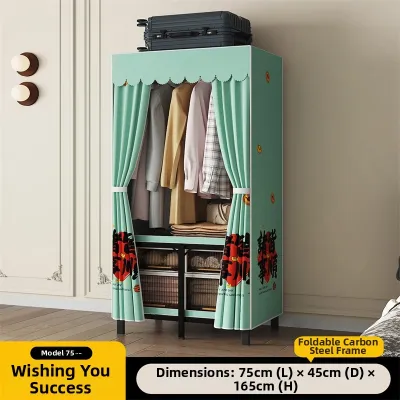
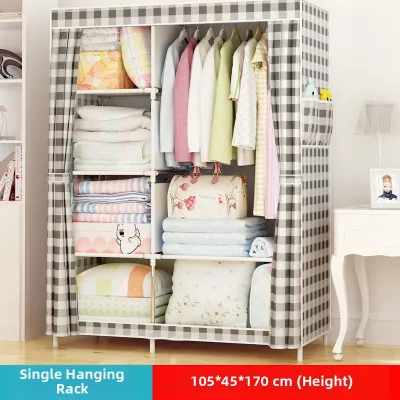
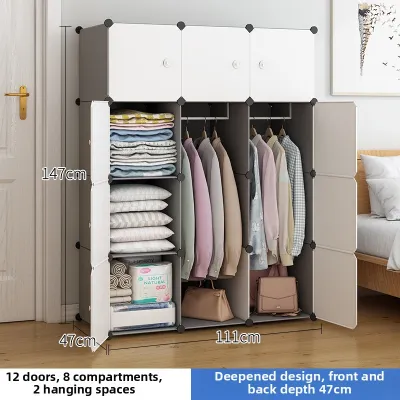
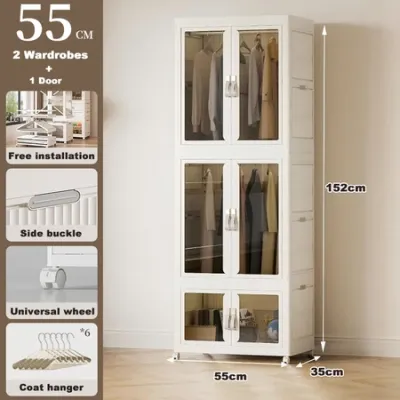
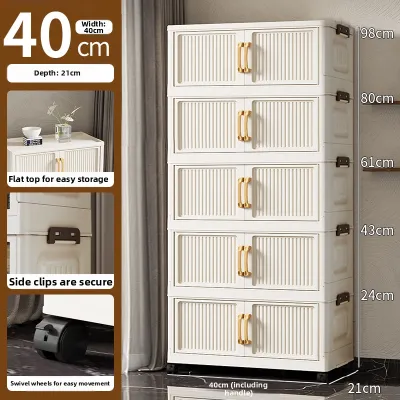
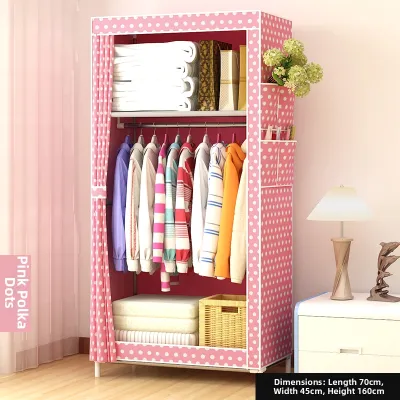
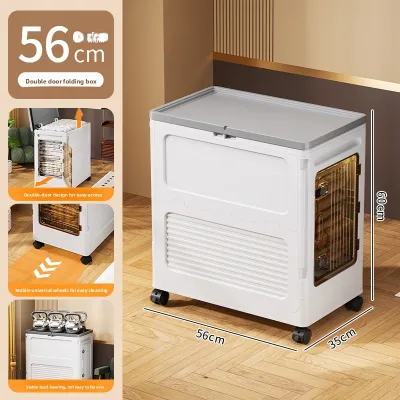

Prices are valid at publication and may change. Please refer to the product page for the latest price.
Finally, calculate the necessary walkway clearance around your bed and other furniture. A comfortable bedroom layout requires at least 60 to 70 centimeters of clear space between the edge of the bed and the portable clothes cabinet. This gap ensures you can move freely, change bed linens easily, and access the cabinet drawers or hanging space without feeling cramped.
Matching Cabinet Proportions to Common HDB Room Layouts
In compact bedrooms, such as the secondary bedrooms of two-room or three-room HDB flats, floor space is at a premium. For these layouts, prioritize narrow and tall portable clothes cabinets that maximize vertical storage without consuming valuable floor area. Selecting a single-column unit or a slim wardrobe allows you to hang essential garments while leaving enough room for a single or queen-sized bed.

Medium to large bedrooms, such as the master bedrooms in four-room, five-room, or executive flats, offer more flexibility but still require careful planning. These spaces can often accommodate wider double-rod wardrobes or units with integrated bottom drawers. However, before choosing a wider model, verify that the extended width does not encroach on the path to the en-suite bathroom or block access to built-in closet doors.
Remember that portable wardrobe dimensions are highly flexible, and you should never rely on generic room size recommendations. Always adjust your choice based on your specific room layout, furniture placement, and personal storage requirements. A master bedroom with a king-sized bed may actually have less available floor space for a portable cabinet than a smaller bedroom with a single bed.
Essential Clearances and Safety Checks
Before finalizing your purchase, verify that the cabinet’s placement will not interfere with door and window swings. If your portable clothes cabinet features a fabric cover with zippered doors, ensure there is enough clearance for the fabric to hang naturally without getting caught in bedroom doors or window frames. Blocking a window can also restrict natural light and limit your ability to open the window for ventilation.
Check the walls behind and beside the proposed wardrobe location for essential utilities. Ensure the cabinet does not cover power outlets, light switches, or internet data points that you need to access regularly. Additionally, avoid placing the wardrobe directly beneath or in front of air conditioning vents, as restricted airflow can lead to uneven cooling and potential moisture buildup on the cabinet fabric.
Structural stability is a critical safety consideration for any freestanding furniture piece. Evaluate the height-to-width ratio of the portable wardrobe; exceptionally tall and narrow units are more prone to tipping if overloaded. To maintain stability, always follow the manufacturer’s guidelines for weight distribution, placing heavier items like shoes and storage boxes on the bottom shelves to lower the center of gravity.
Evaluating Portable Wardrobe Features for Space Optimization
Certain design features can significantly improve how a portable clothes cabinet functions within a tight HDB bedroom. For instance, models equipped with lockable casters allow you to easily roll the wardrobe aside for floor cleaning or temporary room rearrangements. However, keep in mind that wheels add extra height to the overall unit, so you must factor this into your vertical measurements to avoid hitting overhead obstacles.
The type of enclosure also impacts the physical and visual footprint of the wardrobe. External dust covers and zippered fabric doors are excellent for keeping dust off your clothes, but they can bulge outward when the cabinet is fully loaded. Ensure you allow a few extra centimeters of clearance around the sides and front of the unit to accommodate this potential fabric expansion without blocking walkways.
Internal layout flexibility is key to maximizing limited storage space. Look for portable wardrobes with adjustable shelving and modular hanging rods that can be configured to match your specific wardrobe mix. Being able to adjust the height of shelves allows you to store long dresses, folded items, and storage bins efficiently, reducing the need for a larger, bulkier cabinet.
Common Sizing Mistakes to Avoid
One of the most common errors is relying solely on the advertised product dimensions without considering the fully assembled footprint. Plastic corner joints, external frame connectors, and fabric cover overhangs often add a few centimeters to the width and depth of the wardrobe. Always allow a small margin of error—typically two to three centimeters on all sides—when checking if a unit will fit into a tight alcove.
Another frequent mistake is assuming a portable wardrobe will easily slide into narrow gaps beside or under the bed. Without precise measurements, you may find that the bed frame, bedside table, or wall skirting boards prevent the cabinet from sitting flush against the wall. This can result in an awkward, unstable placement that protrudes into your main walking path.
Lastly, avoid the temptation to maximize storage capacity at the expense of bedroom ventilation and comfort. Squeezing the largest possible portable cabinet into a small room can restrict airflow, making the space feel stuffy and humid. Prioritizing a balanced layout with adequate breathing room ensures a more comfortable sleeping environment and prevents moisture from accumulating on your clothes.
Frequently Asked Questions (FAQ)
Can a portable clothes cabinet fit under an HDB window ledge?
Yes, a portable clothes cabinet can fit under an HDB window ledge, provided you measure the exact height from the floor to the bottom of the ledge. You must also account for any curtain drop space, as thick curtains or blinds can push the wardrobe forward if it is placed too close to the wall. Additionally, verify that the height of the cabinet does not interfere with the window’s opening mechanism, especially if you have inward-opening casement windows.
Do I need to anchor a tall portable wardrobe in an HDB flat?
Unlike heavy wooden wardrobes, most lightweight portable clothes cabinets are not designed for traditional wall anchoring. To ensure safety and prevent tipping, you should focus on stabilizing the unit by lowering its center of gravity. Place your heaviest items, such as winter coats, books, or storage boxes, on the bottom shelves, and distribute hanging clothes evenly across the rods while strictly adhering to the manufacturer’s specified load limits.

Community discussion
Share your experience or ask a question. Comments are reviewed before publication.