
Finding the right fabric sofa for a Housing & Development Board (HDB) flat requires balancing comfort, style, and spatial efficiency. Because HDB living rooms often feature compact layouts, structural pillars, or specific walkway requirements, selecting a Hecom sofa involves analyzing how its physical dimensions, configuration, and fabric properties align with your home’s layout. By focusing on precise measurements, clearance zones, and material specifications, you can choose a sofa that maximizes seating without overcrowding your living space.
Assessing Your HDB Living Room Space and Layout
Before browsing the Hecom catalog, you must establish the exact boundaries of your living room’s usable floor area. Start by measuring the primary wall where the sofa will sit, keeping in mind that baseboards and power outlets can reduce the actual available length by a few centimeters. Ensure you account for walking paths; a standard high-traffic corridor requires at least 75 to 90 centimeters of clear space to allow household members to pass comfortably without bumping into furniture. If your living room opens up to a balcony or features floor-to-ceiling windows, measure the swing radius of the doors to prevent the sofa frame from blocking their path.
Visual weight and natural lighting also play a significant role in how a sofa feels within an HDB flat. Rooms with limited natural light or lower ceilings can easily feel cramped if paired with a dark, bulky sofa that sits flush against the floor. Observe where the light enters your room throughout the day and identify potential shadows cast by structural columns or household shelters. Choosing a sofa with a lighter color palette or an elevated base can help mitigate these visual constraints, making the entire room feel more open and airy.
Products mentioned in this guide
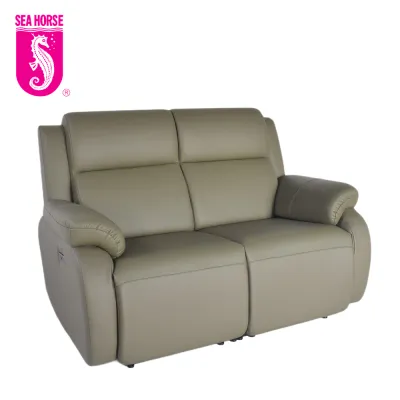
Prices are valid at publication and may change. Please refer to the product page for the latest price.
Additionally, note any fixed structural obstacles that cannot be altered. Built-in cabinets, air-conditioning ledges, wall-mounted distribution boards, and the placement of media consoles all dictate where a sofa can realistically sit. For instance, placing a deep sofa directly in front of a low-mounted power outlet might prevent you from pushing the piece flush against the wall, stealing valuable centimeters from your central walkway. Mapping these obstacles on a simple floor plan before shopping will help you rule out configurations that do not align with your room’s physical realities.
Core Sizing and Configuration Criteria for Hecom Sofas
When evaluating Hecom fabric sofas, the overall depth and seat depth are critical metrics that determine both comfort and walkway clearance. A sofa with an overall depth exceeding 95 centimeters may restrict movement in a narrow 3-room or 4-room HDB living room, leaving little space between the edge of the seat and the television console. Conversely, seat depth—the distance from the front of the cushion to the backrest—should match your household’s physical height preferences. Check the manufacturer’s specification sheet to verify these dimensions, ensuring that the combined depth of the sofa and your coffee table leaves at least 40 centimeters of legroom.

Armrest width and backrest height are equally important when managing visual bulk. Wide, padded armrests can add 20 to 30 centimeters to the overall width of a sofa without providing any extra seating space, which is an inefficient trade-off in tight layouts. For HDB flats with standard ceiling heights, choosing a Hecom model with a low-to-medium backrest height helps maintain an open line of sight across the room. If you prefer high-back support, look for designs with tapered or slim armrests to keep the overall footprint as compact as possible.
The design of the sofa base and leg height also influences both the cleanliness and the perceived spaciousness of your living room. Sofas with high, tapered legs (typically 12 centimeters or more) elevate the frame off the floor, allowing light to pass underneath and making the room feel larger. This clearance is also highly practical for daily maintenance, as it provides sufficient space for standard robot vacuums or manual mops to clean underneath without requiring you to shift heavy furniture. If you select a model that sits flat on the floor, ensure the base material is robust enough to withstand occasional contact with cleaning equipment.
Matching Hecom Sofa Types to Common HDB Floor Plans
Different HDB floor plans demand distinct sofa configurations to optimize seating capacity without disrupting traffic flow. Whether you live in a cozy 3-room flat or a more spacious 5-room unit, matching the sofa’s shape to your wall dimensions is key to a balanced layout.
Compact and 2-Seater Models for Narrow Rooms
For narrow living rooms or smaller 3-room HDB flats, a streamlined 2-seater sofa is often the most practical choice. These models prioritize a shallow overall depth and slim profiles, allowing you to place them against the main wall while preserving a clear path to the kitchen or bedrooms. When reviewing Hecom’s compact options, look for straight-line designs that do not feature excessive padding or flared arms, as these details can consume valuable floor space without adding functional seating.
Multi-functional features can also help maximize utility in limited spaces. Some compact designs incorporate built-in storage compartments beneath the seat cushions or feature reversible chaises that can be swapped from left to right. This flexibility is invaluable if you decide to rearrange your living room layout in the future or move to a different flat, as it prevents the sofa from becoming obsolete due to a fixed orientation. Always verify the weight capacity and mechanism stability of these multi-functional parts before purchasing.
Modular and L-Shaped Options for Open-Concept Areas
In larger 4-room, 5-room, or executive flats with open-concept living and dining areas, modular and L-shaped sofas can serve as excellent spatial dividers. An L-shaped configuration can clearly define the boundary of the living zone without the need for physical walls, keeping the overall space bright and airy. When selecting an L-shaped model, carefully determine the chaise orientation—left-facing or right-facing—by mapping out how household members move from the entryway to the balcony or dining table.
If you opt for a modular Hecom sofa, pay close attention to the connection mechanisms provided by the manufacturer. High-quality modular connectors are essential to prevent individual sections from sliding apart when people sit down or lean against the backrest. Modular designs offer the added benefit of scalability; you can start with a basic configuration and add middle seats or footstools later if your household needs change or if you relocate to a larger home.
Fabric Selection and Everyday Maintenance Checks
The choice of fabric directly impacts the longevity, comfort, and daily upkeep of your sofa in a typical Singapore household. When browsing Hecom’s fabric options, read the material composition labels carefully to assess how well they align with your lifestyle. For homes with pets or young children, look for tightly woven synthetic fibers or specialized performance fabrics that offer enhanced stain resistance and durability. If breathability is your primary concern, natural fiber blends can offer a cooler seating surface, though they may require more careful maintenance to prevent staining.
Ease of cleaning is another critical factor to verify before making a purchase. Check whether the cushion covers—including both seat and back cushions—are fully removable and machine washable. Review the manufacturer’s specific washing instructions, as some fabrics may require dry cleaning or gentle hand washing to prevent shrinkage or color fading. If the covers are non-removable, verify the recommended spot-cleaning methods and check if the fabric is compatible with standard water-based fabric protectors.
Color and texture should also be selected with your home’s environment in mind. While light-colored fabrics can make a small HDB living room feel brighter and more spacious, they are also more prone to showing dirt, dust, and pet hair. If your living room receives direct sunlight through the windows, keep in mind that certain dyed fabrics may fade over time; in such cases, neutral tones or textured weaves can help minimize the visibility of minor wear and dust accumulation.
Pre-Purchase Measurement and Delivery Verification
A perfect sofa choice can quickly turn into a logistical headache if the piece cannot physically enter your home. Before finalizing your Hecom sofa order, you must verify the entire delivery path from the unloading bay to your living room. Measure the height and width of your HDB block’s lift doors, as well as the internal cabin depth and diagonal clearance. If your flat is located on a floor that requires navigating corridors with tight corners or low-hanging pipes, measure these clearances as well to ensure the delivery team can maneuver the sofa safely.
For larger, non-modular sofas that cannot be disassembled, compare these delivery path measurements against the packaged dimensions of the sofa rather than its assembled size. If the lift clearance is insufficient, you may need to opt for a modular design that is delivered in smaller, manageable boxes, or check if the retailer offers professional assembly services inside your flat. Additionally, confirm the delivery terms, including whether the service includes carrying the items up staircases if the lift is temporarily unavailable, and check if they offer old furniture disposal services if you are replacing an existing sofa.
Finally, perform a double-check of all specifications before placing your order. Cross-reference the final product dimensions—including width, depth, height, and packaged size—against your initial room layout sketch. Ensuring that you have left adequate clearance for doors, walkways, and existing furniture will guarantee a smooth delivery and a sofa that fits beautifully into your HDB living room.
Frequently Asked Questions (FAQ)
How do I know if a Hecom sofa will fit through my HDB lift and corridors?
To ensure a smooth delivery, measure the height, width, and diagonal depth of your HDB lift entrance and the interior cabin. Compare these figures with the packaged dimensions of the sofa, which are typically larger than the assembled product dimensions due to protective wrapping. Additionally, check the width of your corridor and any sharp turns leading to your front door; a minimum corridor width of 90 centimeters is generally required for maneuvering standard-sized sofas. If your measurements are tight, consider choosing a modular Hecom model that is delivered in separate, smaller boxes for easier transport.
Are Hecom fabric sofas suitable for Singapore's humid climate?
Yes, provided you select breathable fabric options and maintain a consistent care routine. In Singapore’s humid climate, tightly woven synthetic blends or performance fabrics are often preferred as they resist moisture absorption and are less prone to developing musty odors. To keep your fabric sofa in optimal condition, ensure your living room is well-ventilated, use a dehumidifier during particularly damp seasons, and vacuum the upholstery regularly to remove dust and allergens that can trap moisture. Always refer to the manufacturer’s care label for specific cleaning and maintenance guidelines.

Community discussion
Share your experience or ask a question. Comments are reviewed before publication.